
 Deutschland
 France
 Nederland
 Great Britain
 Sverige
 Danmark
 Suomi
Suomi Italia
 Polska
 España
VS
Mercedes Citan Transporter vs Toyota Proace Transporter comparison
Compare performance (131 HP vs 150 HP), boot space and price (21700 £ vs 31600 £ ) at a glance. Find out which car is the better choice for you – Mercedes Citan Transporter or Toyota Proace Transporter?
Citan Transporter
Costs and Efficiency:
Looking at overall running costs, both models reveal some interesting differences in everyday economy.
Mercedes Citan Transporter has a convincingly advantage in terms of price – it starts at 21700 £ , while the Toyota Proace Transporter costs 31600 £ . That’s a price difference of around 9894 £.
Fuel consumption also shows a difference: Mercedes Citan Transporter manages with 5.10 L and is therefore distinct more efficient than the Toyota Proace Transporter with 6.40 L. The difference is about 1.30 L per 100 km.
In terms of energy consumption, the advantage goes to the Mercedes Citan Transporter: with 18.70 kWh per 100 km, it’s clearly perceptible more efficient than the Toyota Proace Transporter with 23.80 kWh. That’s a difference of about 5.10 kWh.
As for electric range, the Toyota Proace Transporter performs to a small extent better – achieving up to 349 km, about 59 km more than the Mercedes Citan Transporter.
Proace Transporter
Engine and Performance:
Under the bonnet, it becomes clear which model is tuned for sportiness and which one takes the lead when you hit the accelerator.
When it comes to engine power, the Toyota Proace Transporter has a a bit edge – offering 150 HP compared to 131 HP. That’s roughly 19 HP more horsepower.
In acceleration from 0 to 100 km/h, the Mercedes Citan Transporter is minimal quicker – completing the sprint in 11.70 s, while the Toyota Proace Transporter takes 12.10 s. That’s about 0.40 s faster.
In terms of top speed, the Mercedes Citan Transporter performs slight better – reaching 183 km/h, while the Toyota Proace Transporter tops out at 170 km/h. The difference is around 13 km/h.
There’s also a difference in torque: Toyota Proace Transporter pulls noticeable stronger with 370 Nm compared to 270 Nm. That’s about 100 Nm difference.
Space and Everyday Use:
Beyond pure performance, interior space and usability matter most in daily life. This is where you see which car is more practical and versatile.
Seats: Toyota Proace Transporter offers to a small extent more seating capacity – 6 vs 5.
In curb weight, Mercedes Citan Transporter is somewhat lighter – 1381 kg compared to 1656 kg. The difference is around 275 kg.
In maximum load capacity, the Toyota Proace Transporter performs convincingly better – up to 6600 L, which is about 2980 L more than the Mercedes Citan Transporter.
When it comes to payload, Toyota Proace Transporter decisively takes the win – 1323 kg compared to 787 kg. That’s a difference of about 536 kg.
Who wins the race in the data check?
The Toyota Proace Transporter is far ahead overall in the objective data comparison.
This result only shows which model scores more points on paper – not which of the two cars feels right for you.
Mercedes Citan Transporter
Toyota Proace Transporter
Costs and Consumption
View detailed analysis
View detailed analysis
Engine and Performance
View detailed analysis
View detailed analysis
Dimensions and Body
View detailed analysis
View detailed analysis
from about £31,600
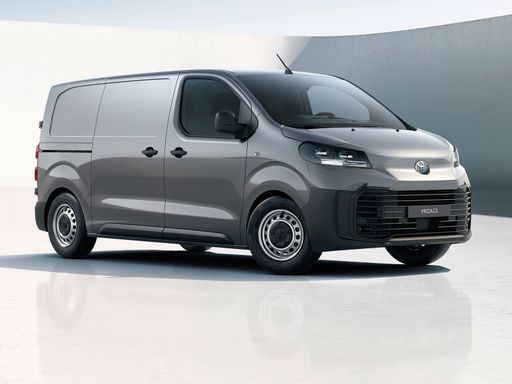
Toyota Proace Transporter
Mercedes Citan Transporter
The Mercedes Citan is a practical, city-friendly van that blends Mercedes' premium touches with sensible commercial utility — it's nimble in tight streets, easy to load, and feels more polished than its price suggests. For small-business owners who want something professional-looking without fuss, the Citan is a dependable workhorse that won’t embarrass you at client meetings and is surprisingly pleasant to drive.
details
Toyota Proace Transporter
The Toyota Proace Transporter is a no-nonsense work van that pairs Toyota’s dependable reputation with smart practicality, so you can load, drive and finish the job without unnecessary drama. It won’t win design awards, but with a comfortable cab, sensible feature set and a focus on getting things done, it quietly keeps fleets and small businesses smiling.
details
Mercedes Citan Transporter
Toyota Proace Transporter
Costs and Consumption |
|
|---|---|
|
Price
21700 - 33300 £
|
Price
31600 - 51000 £
|
|
Consumption L/100km
5.1 - 6.9 L
|
Consumption L/100km
6.4 - 6.7 L
|
|
Consumption kWh/100km
18.7 - 21.1 kWh
|
Consumption kWh/100km
23.8 - 23.9 kWh
|
|
Electric Range
262 - 290 km
|
Electric Range
221 - 349 km
|
|
Battery Capacity
45 kWh
|
Battery Capacity
-
|
|
co2
0 - 156 g/km
|
co2
0 - 177 g/km
|
|
Fuel tank capacity
54 L
|
Fuel tank capacity
69 L
|
Dimensions and Body |
|
|---|---|
|
Body Type
Cargo Van
|
Body Type
Cargo Van
|
|
Seats
2 - 5
|
Seats
3 - 6
|
|
Doors
4 - 5
|
Doors
4 - 5
|
|
Curb weight
1381 - 1939 kg
|
Curb weight
1656 - 2100 kg
|
|
Trunk capacity
-
|
Trunk capacity
-
|
|
Length
4498 - 4922 mm
|
Length
4980 - 5330 mm
|
|
Width
1859 mm
|
Width
1920 mm
|
|
Height
1819 - 1830 mm
|
Height
1895 - 1935 mm
|
|
Max trunk capacity
2900 - 3620 L
|
Max trunk capacity
3200 - 6600 L
|
|
Payload
449 - 787 kg
|
Payload
955 - 1323 kg
|
Engine and Performance |
|
|---|---|
|
Engine Type
Diesel, Petrol, Electric
|
Engine Type
Electric, Diesel
|
|
Transmission
Manuel, Automatic
|
Transmission
Automatic, Manuel
|
|
Transmission Detail
Manual Gearbox, Dual-Clutch Automatic, Reduction Gearbox
|
Transmission Detail
Reduction Gearbox, Manual Gearbox, Automatic Gearbox
|
|
Drive Type
Front-Wheel Drive
|
Drive Type
Front-Wheel Drive
|
|
Power HP
95 - 131 HP
|
Power HP
120 - 150 HP
|
|
Acceleration 0-100km/h
11.7 - 13.8 s
|
Acceleration 0-100km/h
12.1 - 13.3 s
|
|
Max Speed
132 - 183 km/h
|
Max Speed
130 - 170 km/h
|
|
Torque
240 - 270 Nm
|
Torque
260 - 370 Nm
|
|
Number of Cylinders
4
|
Number of Cylinders
4
|
|
Power kW
70 - 96 kW
|
Power kW
88 - 110 kW
|
|
Engine capacity
1332 - 1461 cm3
|
Engine capacity
1499 - 2184 cm3
|
General |
|
|---|---|
|
Model Year
2021 - 2024
|
Model Year
2024 - 2025
|
|
CO2 Efficiency Class
E, F, D, A
|
CO2 Efficiency Class
A
|
|
Brand
Mercedes-Benz
|
Brand
Toyota
|
Is the Mercedes Citan Transporter offered with different drivetrains?
Available configurations include Front-Wheel Drive.
The prices shown are estimates based on German list prices, adjusted for local VAT. Local registration taxes (e.g. NoVA, BPM or CO2 malus) are not included. This information is not legally binding.