
 Deutschland
 France
 Nederland
 Great Britain
 Sverige
 Norge
Norge Danmark
 Suomi
Suomi Italia
 Polska
 España
VS
Mercedes EQB vs Renault Clio – Which model is better for everyday use?
EQB
@ Mercedes-Benz Group Media
Costs and Efficiency:
Price and efficiency are often the first things buyers look at. Here it becomes clear which model has the long-term edge – whether at the pump, the plug, or in purchase price.
Renault Clio has a clearly advantage in terms of price – it starts at 16600 £, while the Mercedes EQB costs 45900 £. That’s a price difference of around 29284 £.
Clio
@ Renault Group Media
Engine and Performance:
Power, torque and acceleration are the classic benchmarks for car enthusiasts – and here, some clear differences start to show.
When it comes to engine power, the Mercedes EQB has a decisively edge – offering 292 HP compared to 158 HP. That’s roughly 134 HP more horsepower.
In acceleration from 0 to 100 km/h, the Mercedes EQB is evident quicker – completing the sprint in 6.20 s, while the Renault Clio takes 8.30 s. That’s about 2.10 s faster.
In terms of top speed, the Renault Clio performs somewhat better – reaching 180 km/h, while the Mercedes EQB tops out at 160 km/h. The difference is around 20 km/h.
There’s also a difference in torque: Mercedes EQB pulls decisively stronger with 520 Nm compared to 205 Nm. That’s about 315 Nm difference.
EQB
@ Mercedes-Benz Group Media
Space and Everyday Use:
Cabin size, boot volume and payload all play a role in everyday practicality. Here, comfort and flexibility make the difference.
Both vehicles offer seating for 5 people.
In curb weight, Renault Clio is clearly lighter – 1124 kg compared to 2105 kg. The difference is around 981 kg.
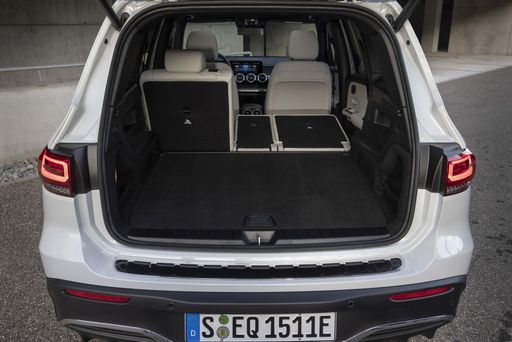
In terms of boot space, the Mercedes EQB offers noticeable more room – 495 L compared to 391 L. That’s a difference of about 104 L.
In maximum load capacity, the Mercedes EQB performs distinct better – up to 1710 L, which is about 534 L more than the Renault Clio.
When it comes to payload, Renault Clio barely noticeable takes the win – 463 kg compared to 435 kg. That’s a difference of about 28 kg.
Who comes out on top?
Overall, the Mercedes EQB shows itself to be is largely superior and secures the title of DriveDuel Champion.
It convinces with the more balanced overall package and proves to be the more versatile choice for everyday use.
Mercedes EQB
Renault Clio
Costs and Consumption
View detailed analysis
View detailed analysis
Engine and Performance
View detailed analysis
View detailed analysis
Dimensions and Body
View detailed analysis
View detailed analysis
from about £45,900
 @ Mercedes-Benz Group Media
Mercedes EQB
Mercedes EQB
3 (1 Reviews)
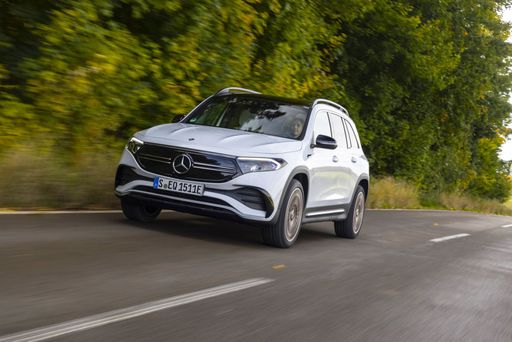
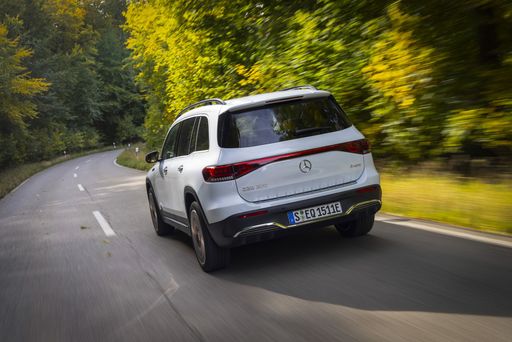
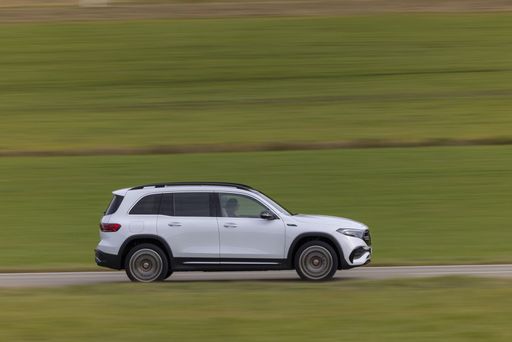
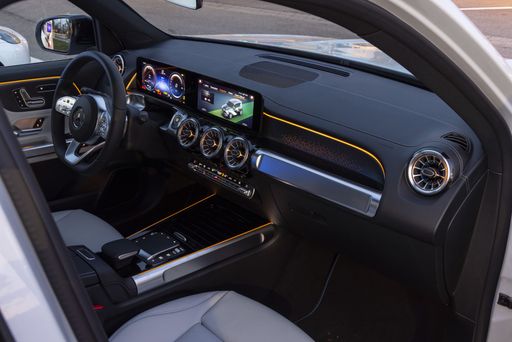
The Mercedes EQB is an electric compact SUV that dresses Mercedes' premium feel in practical clothing, with flexible seating and a serene, composed ride that turns everyday errands into a small luxury. It won't thrill the enthusiast, but for buyers who want a smart, spacious and well-made EV with tasteful tech and real-world usability, the EQB is a sensible, slightly buttoned-up choice that impresses without shouting.
details
@ Mercedes-Benz Group Media
 @ Mercedes-Benz Group Media
 @ Mercedes-Benz Group Media
 @ Mercedes-Benz Group Media
 @ Mercedes-Benz Group Media
Renault Clio
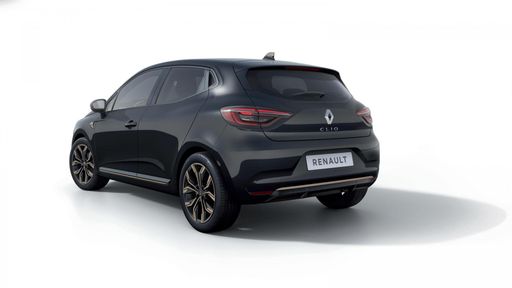
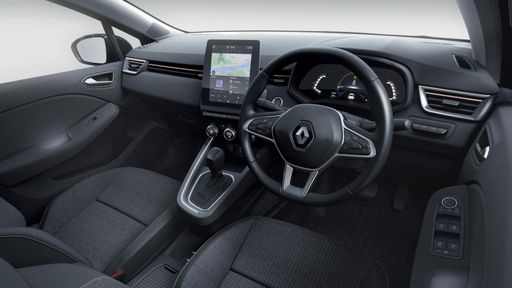
The Clio punches above its weight with chic French styling and a surprisingly grown-up cabin that makes city driving feel effortlessly stylish. It's an easy-to-live-with choice that keeps ownership simple and even manages to put a grin on your face when the traffic gets dull.
details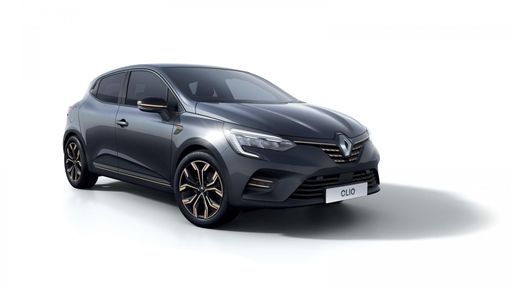 @ Renault Group Media
 @ Renault Group Media
 @ Renault Group Media
Mercedes EQB
Renault Clio
|
@ Mercedes-Benz Group Media
|
@ Renault Group Media
|
|
|
|
Costs and Consumption |
|
|---|---|
|
Price
45900 - 58900 £
|
Price
16600 - 23700 £
|
|
Consumption L/100km
-
|
Consumption L/100km
4.1 - 5.3 L
|
|
Consumption kWh/100km
15.2 - 17.2 kWh
|
Consumption kWh/100km
-
|
|
Electric Range
468 - 535 km
|
Electric Range
-
|
|
Battery Capacity
70.50 kWh
|
Battery Capacity
0.60 kWh
|
|
co2
0 g/km
|
co2
92 - 121 g/km
|
|
Fuel tank capacity
-
|
Fuel tank capacity
39 - 42 L
|
Dimensions and Body |
|
|---|---|
|
Body Type
SUV
|
Body Type
Hatchback
|
|
Seats
5
|
Seats
5
|
|
Doors
5
|
Doors
5
|
|
Curb weight
2105 - 2170 kg
|
Curb weight
1124 - 1331 kg
|
|
Trunk capacity
495 L
|
Trunk capacity
301 - 391 L
|
|
Length
4684 mm
|
Length
4053 - 4116 mm
|
|
Width
1834 mm
|
Width
1768 - 1798 mm
|
|
Height
1654 - 1689 mm
|
Height
1440 - 1451 mm
|
|
Max trunk capacity
1710 L
|
Max trunk capacity
979 - 1176 L
|
|
Payload
435 kg
|
Payload
398 - 463 kg
|
Engine and Performance |
|
|---|---|
|
Engine Type
Electric
|
Engine Type
Full Hybrid, Petrol
|
|
Transmission
Automatic
|
Transmission
Automatic, Manuel
|
|
Transmission Detail
Reduction Gearbox
|
Transmission Detail
Automatic Gearbox, Manual Gearbox, Dual-Clutch Automatic
|
|
Drive Type
Front-Wheel Drive, All-Wheel Drive
|
Drive Type
Front-Wheel Drive
|
|
Power HP
190 - 292 HP
|
Power HP
67 - 158 HP
|
|
Acceleration 0-100km/h
6.2 - 8.9 s
|
Acceleration 0-100km/h
8.3 - 17.1 s
|
|
Max Speed
160 km/h
|
Max Speed
160 - 180 km/h
|
|
Torque
385 - 520 Nm
|
Torque
95 - 205 Nm
|
|
Number of Cylinders
-
|
Number of Cylinders
3 - 4
|
|
Power kW
140 - 215 kW
|
Power kW
49 - 116 kW
|
|
Engine capacity
-
|
Engine capacity
999 - 1789 cm3
|
General |
|
|---|---|
|
Model Year
2024 - 2025
|
Model Year
2023 - 2026
|
|
CO2 Efficiency Class
A
|
CO2 Efficiency Class
C, D, B
|
|
Brand
Mercedes-Benz
|
Brand
Renault
|
What drive types are available for the Mercedes EQB?
The Mercedes EQB is available as Front-Wheel Drive or All-Wheel Drive.
The prices and data displayed are estimates based on German list prices and may vary by country. This information is not legally binding.