VS

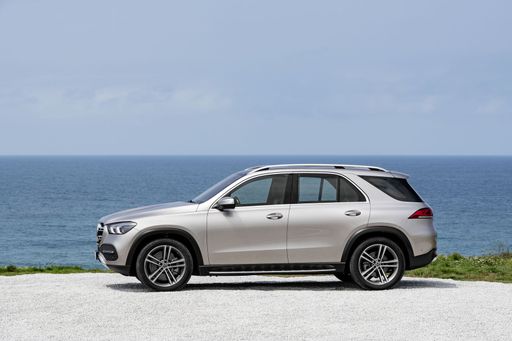
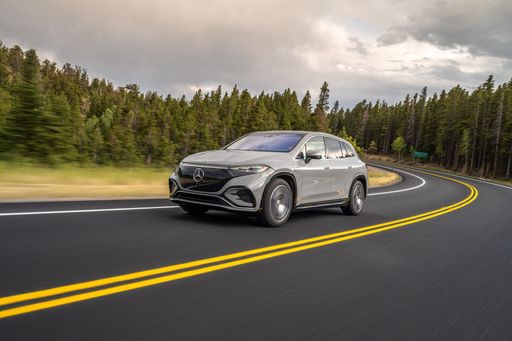
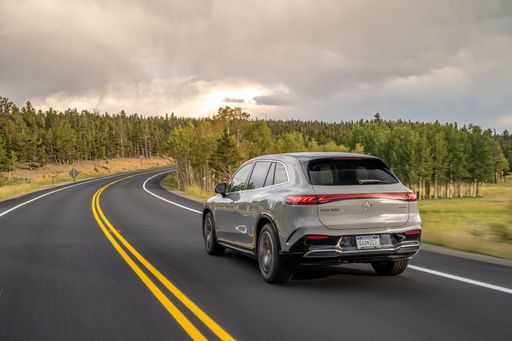
Mercedes EQS SUV vs Mercedes GLE comparison

Compare performance (658 HP vs 634 HP), boot space and price (95,000 £ vs 76,300 £ ) at a glance. Find out which car is the better choice for you – Mercedes EQS SUV or Mercedes GLE?

Mercedes EQS SUV vs Mercedes GLE: Key differences

Mercedes EQS SUV

  • marginally more power
  • clearly more electric range

Mercedes GLE

  • clearly cheaper
  • slightly quicker 0–100 km/h
  • somewhat lighter
  • only slightly more trunk space
EQS SUV

The Clash of Titans: Mercedes EQS SUV vs. Mercedes GLE

The luxury SUV market is ever-evolving, and the battle for supremacy has taken an exciting turn with Mercedes-Benz pitting the fully electric EQS SUV against the versatile GLE. In this thrilling encounter, both models exemplify Mercedes-Benz’s commitment to innovation, luxury, and performance. But how do they stack up against each other? Let's dive into a detailed comparison based on technical specifications, innovations, and overall appeal.
GLE

Power and Performance

The EQS SUV, powered purely by electricity, dazzles with multiple powertrains ranging from 360 HP to a commanding 658 HP. Its all-wheel drive ensures a smooth ride and optimal traction, offering an acceleration time from 0 to 100 km/h that spans 4.4 to 6.8 seconds depending on the variant. Complementing its speed, the EQS SUV provides an impressive electric range of up to 709 km, supported by a robust battery capacity of 118 kWh or 108.4 kWh, depending on the configuration.

Conversely, the GLE offers a more traditional approach, with options that include diesel, petrol, and plug-in hybrid variants. Its power ranges from 289 to 634 HP, and though slightly slower off the mark, the GLE makes up for it with a higher top speed in some variants, reaching up to 280 km/h. Notably, the plug-in hybrid models boast a substantial electric range of up to 114 km, highlighting its versatility and commitment to efficiency.

EQS SUV

Innovation and Technology

In terms of innovation, the EQS SUV stands out with its next-generation electric powertrain technology, promoting zero-emission driving with a CO2 output of 0 g/km. This model is equipped with advanced features like a reduction gearbox, ensuring seamless power delivery and further enhancing energy efficiency through cutting-edge aerodynamics and regenerative braking systems.

The GLE, while traditional in many respects, shines as a tech-savvy SUV with its hybrid models offering a bridge between gasoline reliability and electric innovation. With CO2 outputs ranging from as low as 14 g/km, the GLE brings mild hybrid electric vehicle (MHEV) technology to the forefront, along with features like dynamic select drive modes that accommodate various driving conditions and preferences.

GLE

Interior Comfort and Space

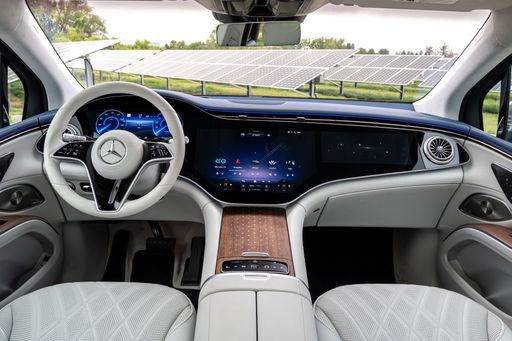
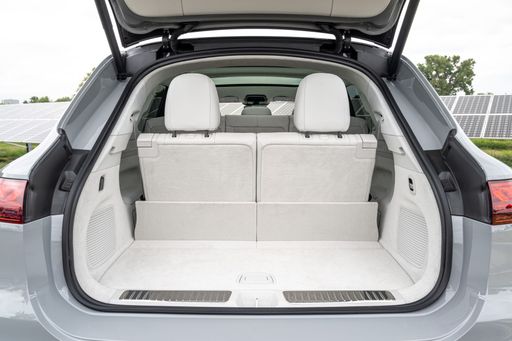
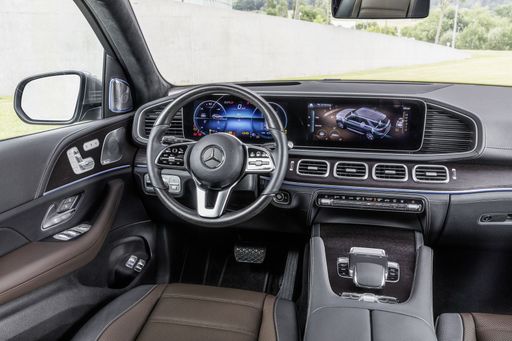
Stepping inside either the EQS SUV or the GLE is a treat for luxury seekers. The EQS SUV offers seats for four to five passengers and presents a trunk capacity of 645 liters, ensuring ample room for both passengers and luggage. Meanwhile, the sophisticated cabin layout is highlighted by the intuitive MBUX infotainment system, showcasing touchscreen interfaces and AI-driven features designed to enhance the driving experience.

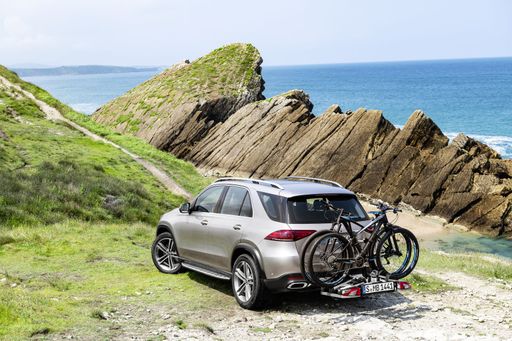
The GLE provides similar luxury with a seating capacity for five adults and a slightly more extensive trunk space of up to 655 liters, ideal for family trips or hefty shopping hauls. Both models offer plush interiors adorned with high-quality materials and the latest in infotainment technology, catering to every passenger’s comfort and entertainment needs.

EQS SUV

Conclusion

The choice between the EQS SUV and the GLE ultimately depends on one’s preference for powertrain technology and driving priorities. The EQS SUV is the mark of modern electric mobility, providing exceptional range and eco-friendly credentials. On the other hand, the GLE embraces the versatility of traditional and hybrid power with its robust performance and innovative optional features.

Mercedes-Benz, with these two titans, affirms its ability to lead in luxury, performance, and cutting-edge technology. Whether you’re inclined towards the sustainable future heralded by the EQS SUV or the dynamic prowess of the GLE, these models represent the pinnacle of what the luxury SUV segment has to offer.

Here’s where it gets real: The technical differences in detail

EQS SUV

Costs and Efficiency:

Price and efficiency are key factors when choosing a car – and this is often where the real differences emerge.

Mercedes GLE is clearly cheaper – starting at 76,300 £ , while the Mercedes EQS SUV costs 95,000 £ . That’s a price difference of around 18,702 £.

As for electric range, the Mercedes EQS SUV offers clearly more range – reaching up to 695 km, about 581 km more than the Mercedes GLE.

GLE

Engine and Performance:

Power, torque and acceleration say a lot about how a car feels on the road. This is where you see which model delivers more driving dynamics.

When it comes to engine power, the Mercedes EQS SUV offers marginally more power – delivering 658 HP compared to 634 HP. That’s roughly 24 HP more horsepower.

When accelerating from 0 to 100 km/h, the Mercedes GLE is slightly quicker – completing the sprint in 3.9 s, while the Mercedes EQS SUV takes 4.4 s. That’s about 0.5 s quicker.

Looking at top speed, the Mercedes GLE is noticeably faster – reaching 280 km/h, while the Mercedes EQS SUV tops out at 210 km/h. The difference is around 70 km/h.

There’s also a difference in torque: the Mercedes EQS SUV delivers slightly more torque with 950 Nm compared to 850 Nm. That’s about 100 Nm more.

EQS SUV

Space and Everyday Use:

Cabin size, boot volume and payload all play a role in everyday practicality. Here, comfort and flexibility make the difference.

Both vehicles offer seating for 5 people.

In terms of curb weight, Mercedes GLE is somewhat lighter – 2,310 kg compared to 2,695 kg. The difference is around 385 kg.

Looking at boot space, the Mercedes GLE offers only slightly more boot space – 655 L compared to 645 L. That’s a difference of about 10 L.

For maximum load capacity, the Mercedes EQS SUV offers only slightly more capacity – up to 2,100 L, about 45 L more than the Mercedes GLE.

When it comes to payload, the Mercedes GLE carries moderately more – 705 kg compared to 570 kg. That’s a difference of about 135 kg.

Who wins the race in the data check?

The Mercedes EQS SUV holds a decisive overall lead in the objective data comparison.
This result only shows which model scores more points on paper – not which of the two cars feels right for you.

from £95,000
EQS SUV

Mercedes EQS SUV

  • Engine Type : Electric
  • Transmission : Automatic
  • Drive Type : All-Wheel Drive, Rear-Wheel Drive
  • Power HP : 360 - 658 HP
  • Consumption kWh/100km : 19.6 - 21.9 kWh/100km
  • Electric Range : 615 - 695 km
Mercedes EQS SUV
Mercedes GLE

Costs and Consumption

View detailed analysis

Engine and Performance

View detailed analysis

Dimensions and Body

View detailed analysis

Mercedes EQS SUV

The Mercedes EQS SUV blends limousine-level quiet and luxury with the commanding presence of an SUV, wrapping passengers in sumptuous materials and a futuristic, screen-dominated cabin. It drives with serene confidence and delivers the kind of effortless refinement that makes city commutes and long trips feel like first-class experiences — just be prepared for attention wherever you park it.

details

Mercedes GLE

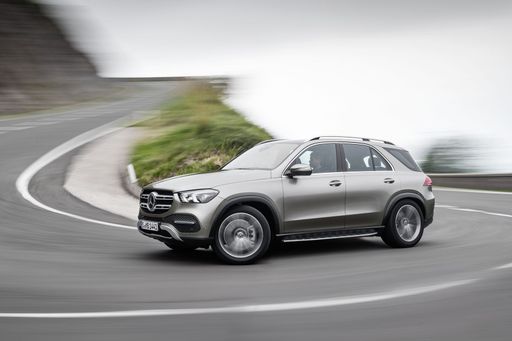
The Mercedes GLE blends luxurious comfort with a confident road presence, wrapping tech and refinement in an SUV shape that still knows how to behave on a twisty back road. Inside it's plush and quiet, with clever storage and driver aids that make long trips effortless — plus the badge gives it that easy-to-respect curb appeal.

details
Mercedes EQS SUV
Mercedes GLE

Costs and Consumption

Price
95,000 - 212,100 £
Price
76,300 - 175,800 £
Consumption L/100km
-
Consumption L/100km
2 - 12.5 L/100km
Consumption kWh/100km
19.6 - 21.9 kWh/100km
Consumption kWh/100km
-
Electric Range
615 - 695 km
Electric Range
89 - 114 km
Battery Capacity
108.4 - 118 kWh
Battery Capacity
24.8 - 25 kWh
co2
0 g/km
co2
53 - 284 g/km
Fuel tank capacity
-
Fuel tank capacity
65 - 85 L

Dimensions and Body

Body Type
SUV
Body Type
SUV
Seats
4 - 5
Seats
5
Doors
5
Doors
5
Curb weight
2,695 - 3,075 kg
Curb weight
2,310 - 2,800 kg
Trunk capacity
440 - 645 L
Trunk capacity
490 - 655 L
Length
5,125 mm
Length
4,924 - 4,961 mm
Width
1,959 - 2,034 mm
Width
1,947 mm
Height
1,718 - 1,721 mm
Height
1,716 - 1,797 mm
Max trunk capacity
2,100 L
Max trunk capacity
1,645 - 2,055 L
Payload
425 - 570 kg
Payload
460 - 705 kg

Engine and Performance

Engine Type
Electric
Engine Type
Petrol MHEV, Plugin Hybrid, Diesel MHEV
Transmission
Automatic
Transmission
Automatic
Transmission Detail
Reduction Gearbox
Transmission Detail
Automatic Gearbox
Drive Type
All-Wheel Drive, Rear-Wheel Drive
Drive Type
All-Wheel Drive
Power HP
360 - 658 HP
Power HP
289 - 634 HP
Acceleration 0-100km/h
4.4 - 6.8 s
Acceleration 0-100km/h
3.9 - 6.9 s
Max Speed
210 km/h
Max Speed
210 - 280 km/h
Torque
568 - 950 Nm
Torque
500 - 850 Nm
Number of Cylinders
-
Number of Cylinders
4 - 8
Power kW
265 - 484 kW
Power kW
213 - 466 kW
Engine capacity
-
Engine capacity
1,993 - 3,982 cm3

General

Model Year
2,024
Model Year
2,024 - 2,025
CO2 Efficiency Class
A
CO2 Efficiency Class
G, B, F
Brand
Mercedes-Benz
Brand
Mercedes-Benz
DriveDuel uses data analysis and artificial intelligence to evaluate vehicle data and create content. Content is regularly reviewed and improved. The displayed prices are estimates based on German list prices, adjusted to the respective country’s VAT. Country-specific registration taxes are not included. This information is not legally binding.