VS

Mercedes G Class vs Land Rover Range Rover Sport - Differences and prices compared

Compare performance (605 HP vs 635 HP), boot space and price (106600 £ vs 78600 £ ) at a glance. Find out which car is the better choice for you – Mercedes G Class or Land Rover Range Rover Sport?

G Class

The Ultimate Off-Roader Showdown: Mercedes G-Klasse vs Land Rover Range Rover Sport

For those in pursuit of rugged luxury, few competitions excite more than a clash between the iconic Mercedes G-Klasse and the sophisticated Land Rover Range Rover Sport. These titans of the auto world pull out all the stops, delivering in both performance and prestige. Let's dive deep into what makes each of these vehicles a standout in their own right.
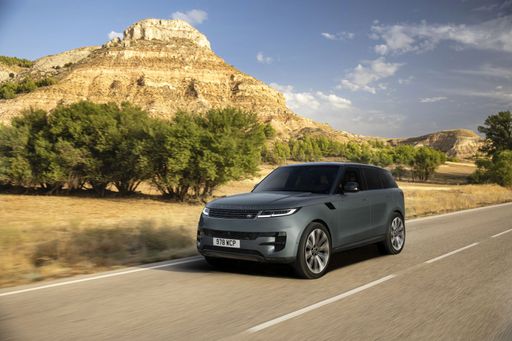
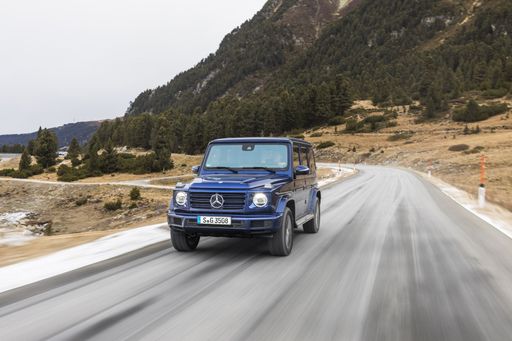
Range Rover Sport

Performance and Power

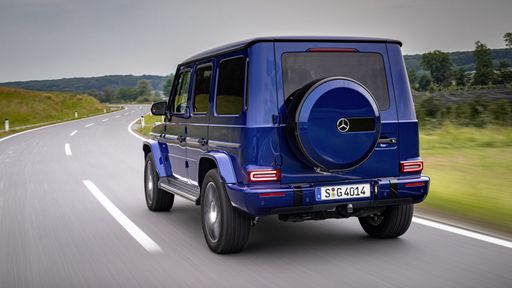
The Mercedes G-Klasse, renowned for its formidable off-roader capabilities, comes equipped with a variety of engine options. Featuring robust petrol mild hybrid (MHEV), diesel MHEV, and electric engines, its top-end variant pushes an impressive 605 HP, accelerated by 1050 Nm of torque. This translates into a brisk acceleration of 0-100 km/h in just 4.4 seconds. Despite its hefty curb weight, the G-Klasse maintains a max speed of 220 km/h.

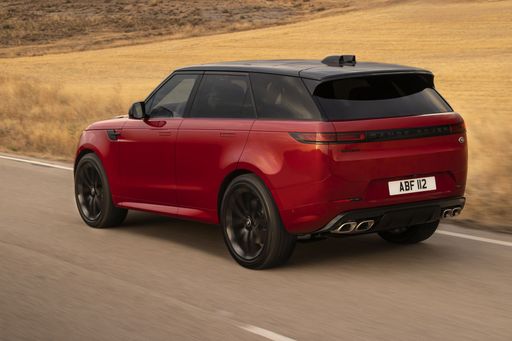
On the flip side, the Range Rover Sport doesn’t shy away from the competition. It features a broad selection of engines, including diesel MHEV, plugin hybrids, and powerful petrol MHEV models. The star of the range clocks an exhilarating 635 HP coupled with 750 Nm of torque. This spec launches the Sport from 0-100 km/h in a mere 3.9 seconds, reaching a top speed of 290 km/h.

G Class

Fuel Efficiency and Range

Efficiency discussions highlight the G-Klasse's broad spectrum. While the petrol engines guzzle fuel at 14.7 L/100km, their electric variant boasts a consumption rate of 28 kWh/100km with an electric range extending to 468 km. The Range Rover Sport counterbalances with a commendable plugin hybrid offering a remarkable fuel consumption rate of 0.7 L/100km and an electric range of 122 km, showcasing its hybrid prowess and efficiency leadership.

Range Rover Sport

Design and Practicality

When it comes to design, the G-Klasse retains its legendary boxy silhouette, which is ever-functional for off-road adventures. This off-roader, with its towering height of 1976 mm, ensures a commanding presence on any terrain. Practicality is accentuated with a generous trunk capacity of 640 liters.

Contrastingly, the Range Rover Sport smoothly combines athleticism with elegance. Measuring a length of 4970 mm, it promises both spaciousness and an elegant external profile. With a trunk capacity slightly ahead at 647 liters, it caters effortlessly to families and explorers alike.

G Class

Luxurious Interiors and Features

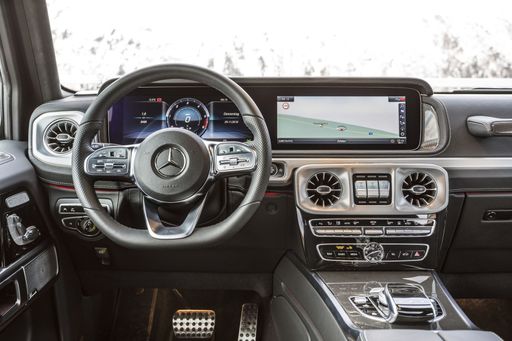
Both vehicles cocoon their passengers in an array of luxury. The G-Klasse comes equipped with the plush experience one expects from Mercedes, integrating advanced technology and premium materials. A snug seating capacity for five makes it versatile for both urban and wild excursions.

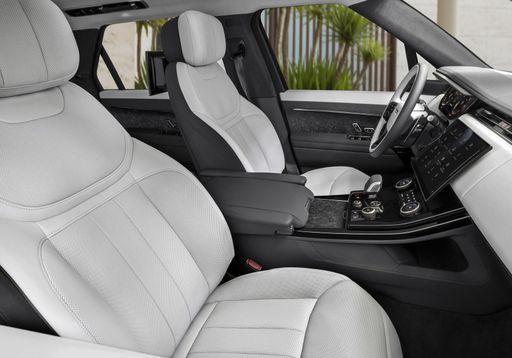
The Range Rover Sport, though, takes modern luxury a step further. It blends intuitive technology with opulent interiors, offering cutting-edge infotainment systems and innovative driver-assistance features. The seamless integration of functionality and luxury is its undeniable hallmark.

Range Rover Sport

Verdict

Deciding between the Mercedes G-Klasse and the Land Rover Range Rover Sport boils down to preferences. For die-hard off-road enthusiasts yearning for a vehicle that embodies tradition with robust reliability, the G-Klasse stands as a formidable option. Yet, for adventurers seeking a blend of power, luxury, and sustainability, the Range Rover Sport shines brightly, earning its stripes with hybrid efficiency and cutting-edge luxury.

Ultimately, both these automotive titans hold their ground in the competitive landscape, making this comparison an exhilarating exploration of automotive mastery.

Mercedes G Class

Land Rover Range Rover Sport

Here’s where it gets real: The technical differences in detail

Costs and Efficiency:

Price and efficiency are key factors when choosing a car – and this is often where the real differences emerge.

Land Rover Range Rover Sport has a noticeable advantage in terms of price – it starts at 78600 £ , while the Mercedes G Class costs 106600 £ . That’s a price difference of around 27990 £.

Fuel consumption also shows a difference: Land Rover Range Rover Sport manages with 2.70 L and is therefore clearly more efficient than the Mercedes G Class with 8.70 L. The difference is about 6 L per 100 km.

As for electric range, the Mercedes G Class performs convincingly better – achieving up to 468 km, about 350 km more than the Land Rover Range Rover Sport.

Engine and Performance:

Under the bonnet, it becomes clear which model is tuned for sportiness and which one takes the lead when you hit the accelerator.

When it comes to engine power, the Land Rover Range Rover Sport has a minimal edge – offering 635 HP compared to 605 HP. That’s roughly 30 HP more horsepower.

In acceleration from 0 to 100 km/h, the Land Rover Range Rover Sport is somewhat quicker – completing the sprint in 3.80 s, while the Mercedes G Class takes 4.40 s. That’s about 0.60 s faster.

In terms of top speed, the Land Rover Range Rover Sport performs distinct better – reaching 290 km/h, while the Mercedes G Class tops out at 220 km/h. The difference is around 70 km/h.

There’s also a difference in torque: Mercedes G Class pulls distinct stronger with 1164 Nm compared to 800 Nm. That’s about 364 Nm difference.

Space and Everyday Use:

Beyond pure performance, interior space and usability matter most in daily life. This is where you see which car is more practical and versatile.

Both vehicles offer seating for 5 people.

In curb weight, Land Rover Range Rover Sport is minimal lighter – 2390 kg compared to 2485 kg. The difference is around 95 kg.

In terms of boot space, the Land Rover Range Rover Sport offers slight more room – 647 L compared to 640 L. That’s a difference of about 7 L.

In maximum load capacity, the Mercedes G Class performs evident better – up to 2010 L, which is about 519 L more than the Land Rover Range Rover Sport.

When it comes to payload, Land Rover Range Rover Sport slightly takes the win – 830 kg compared to 715 kg. That’s a difference of about 115 kg.

Who wins the race in the data check?

The Land Rover Range Rover Sport is decisively ahead in the objective data comparison.
This result only shows which model scores more points on paper – not which of the two cars feels right for you.

Mercedes G Class
Land Rover Range Rover Sport

Costs and Consumption

View detailed analysis

Engine and Performance

View detailed analysis

Dimensions and Body

View detailed analysis
from about £78,600
Range Rover Sport

Land Rover Range Rover Sport

  • Engine Type : Plugin Hybrid, Petrol MHEV, Diesel MHEV
  • Transmission : Automatic
  • Drive Type : All-Wheel Drive
  • Power HP : 249 - 635 HP
  • Consumption L/100km : 2.7 - 11.7 L
  • Electric Range : 116 - 118 km

Mercedes G Class

The G-Class, often called the G‑Wagen, is a blocky icon that blends unapologetic off-road prowess with a plush, modern cabin, announcing your arrival before you even step out. It’s equally at home crawling over rocks or cruising city streets, and owning one feels like adopting a very expensive, very capable personality.

details

Land Rover Range Rover Sport

The Range Rover Sport pairs unapologetic presence with genuine capability, looking like it belongs on a red carpet while quietly promising to tackle rough tracks when called upon. Inside, the cabin pampers with plush materials and thoughtful tech, making it an irresistible choice for buyers who want luxury, confidence and a touch of adventure.

details
Mercedes G Class
Land Rover Range Rover Sport

Costs and Consumption

Price
106600 - 171000 £
Price
78600 - 175700 £
Consumption L/100km
8.7 - 14.7 L
Consumption L/100km
2.7 - 11.7 L
Consumption kWh/100km
28 kWh
Consumption kWh/100km
-
Electric Range
468 km
Electric Range
116 - 118 km
Battery Capacity
116 kWh
Battery Capacity
-
co2
0 - 336 g/km
co2
61 - 266 g/km
Fuel tank capacity
100 L
Fuel tank capacity
90 L

Dimensions and Body

Body Type
Off-Roader
Body Type
SUV
Seats
5
Seats
5
Doors
5
Doors
5
Curb weight
2485 - 3085 kg
Curb weight
2390 - 2810 kg
Trunk capacity
620 - 640 L
Trunk capacity
647 L
Length
4624 - 4873 mm
Length
4970 mm
Width
1931 - 1984 mm
Width
2043 mm
Height
1973 - 1983 mm
Height
1814 mm
Max trunk capacity
1990 - 2010 L
Max trunk capacity
1491 L
Payload
415 - 715 kg
Payload
640 - 830 kg

Engine and Performance

Engine Type
Electric, Petrol MHEV, Diesel MHEV
Engine Type
Plugin Hybrid, Petrol MHEV, Diesel MHEV
Transmission
Automatic
Transmission
Automatic
Transmission Detail
Reduction Gearbox, Automatic Gearbox
Transmission Detail
Automatic Gearbox
Drive Type
All-Wheel Drive
Drive Type
All-Wheel Drive
Power HP
387 - 605 HP
Power HP
249 - 635 HP
Acceleration 0-100km/h
4.4 - 5.8 s
Acceleration 0-100km/h
3.8 - 7.7 s
Max Speed
180 - 220 km/h
Max Speed
290 km/h
Torque
760 - 1164 Nm
Torque
570 - 800 Nm
Number of Cylinders
6 - 8
Number of Cylinders
6 - 8
Power kW
285 - 445 kW
Power kW
183 - 467 kW
Engine capacity
2989 - 3982 cm3
Engine capacity
2997 - 4395 cm3

General

Model Year
2024 - 2025
Model Year
2025
CO2 Efficiency Class
A, G
CO2 Efficiency Class
B, G
Brand
Mercedes-Benz
Brand
Land Rover
What drive types are available for the Mercedes G Class?

Available configurations include All-Wheel Drive.

The prices shown are estimates based on German list prices, adjusted for local VAT. Local registration taxes (e.g. NoVA, BPM or CO2 malus) are not included. This information is not legally binding.