VS

Mercedes GLA vs Renault Arkana comparison

Compare performance (421 HP vs 143 HP), boot space and price (38,800 £ vs 28,500 £ ) at a glance. Find out which car is the better choice for you – Mercedes GLA or Renault Arkana?

Mercedes GLA vs Renault Arkana: Key differences

Mercedes GLA

4.6 (3 Reviews)
rate
  • significantly more power
  • substantially more efficient
  • clearly quicker 0–100 km/h

Renault Arkana

3.8 (6 Reviews)
rate
  • markedly cheaper
  • barely lighter
Customer feedback generally presents the Arkana as an economical, stylish and practical family crossover that suits everyday needs. Owners often praise its fuel economy, space and safety, while noting it isn’t a sporty coupe; a few reports of serious mechanical issues and costly repairs also appear. Opinions are mixed enough that broader reliability trends aren’t fully clear from the available comments.

All details on performance, efficiency, range and trunk space can be found in the technical comparison below – including user reviews for both models.

GLA

Battle of the Compact SUVs: Mercedes GLA vs. Renault Arkana

In the rapidly evolving world of compact SUVs, two models have stood out for their engineering prowess and innovation: the Mercedes GLA and the Renault Arkana. As urban jungles become more congested and car owners look for vehicles that pack performance and efficiency, we pit these two fierce competitors against each other to see which one claims the throne.
Arkana

Design and Dimensions

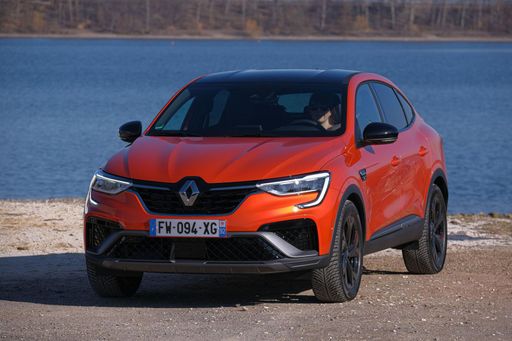
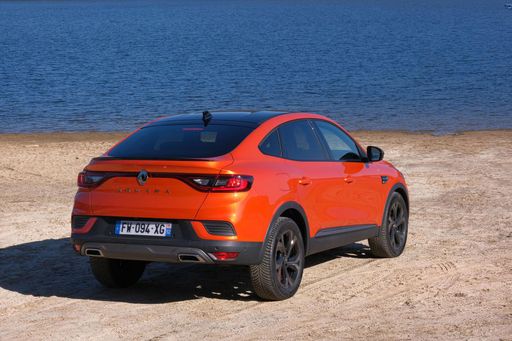
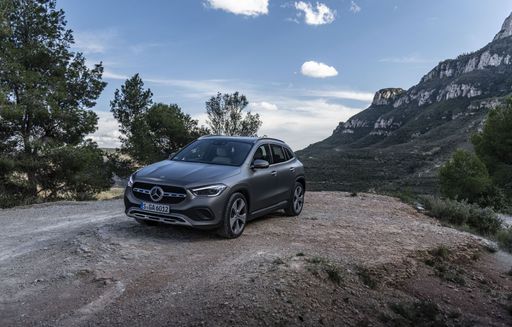
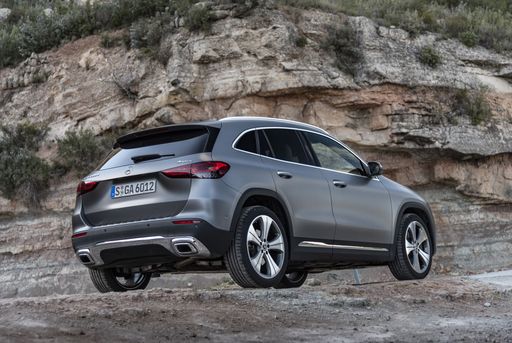
Starting with design, the Mercedes GLA offers a more traditional upscale appearance that the German brand is known for, with its dimensions measuring 4412 to 4443 mm in length, 1834 to 1849 mm in width, and 1590 to 1616 mm in height. Meanwhile, the Renault Arkana strikes a bolder and sportier silhouette with a length of 4568 mm, a width of 1821 mm, and a height of 1576 mm, making it slightly larger overall.

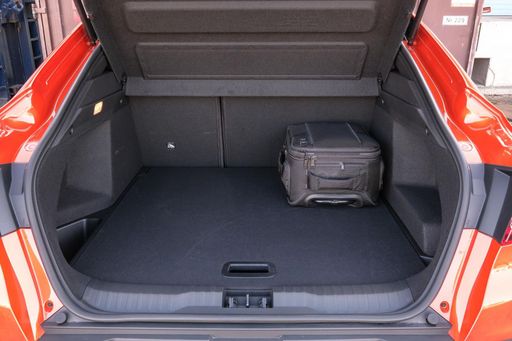
The trunk capacity is another critical factor for SUV owners. The Arkana leads in this regard, offering up to 513 liters compared to the GLA's 385 to 435 liters, giving families and adventurers extra space for their needs.

GLA

Performance and Efficiency

Both vehicles feature a variety of engine options, but the GLA's lineup is more extensive, catering to those who crave both performance and efficiency. The Mercedes GLA comes with petrol MHEV, diesel, plug-in hybrid, and regular petrol engines. It can produce from 116 HP up to a powerful AMG variant at 421 HP, accelerating from 0-100 km/h in as little as 4.3 seconds. Although it’s pricier, the all-wheel-drive option offers enhanced handling and grip.

In contrast, Renault Arkana focuses on a harmonious blend of performance and efficiency, boasting full hybrid and petrol MHEV engines. With output ranging from 140 to 158 HP, the Arkana's acceleration isn’t as quick, with a 0-100 km/h time between 9.1 and 10.8 seconds. However, it impresses in fuel efficiency with consumption figures from 4.7 to 6 L/100km compared to the GLA's 1 to 9.5 L/100km, thanks in part to its lighter curb weight of 1411 to 1510 kg.

Arkana

Technological Advancements

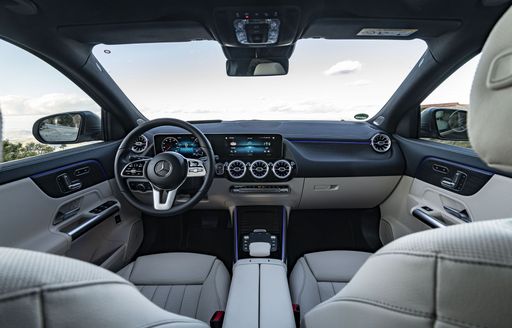
Mercedes enjoys a reputation for innovation, showcased in the GLA's advanced MBUX infotainment system, voice-controlled functions, and various driving assists that make every journey both enjoyable and safe. Features like AI-driven navigation and adaptive cruise control align with the expectations of premium SUV drivers.

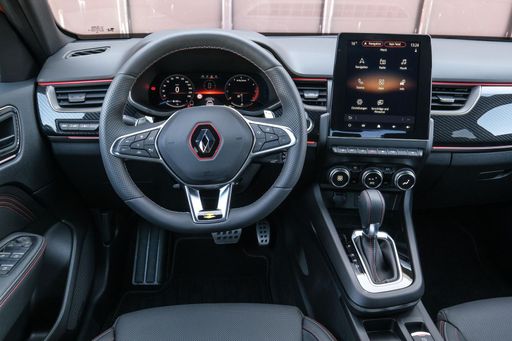
The Renault Arkana incorporates a more straightforward, user-friendly interface with its systems. Its standout includes the EASY LINK multimedia system that impressively handles connectivity, navigation, and safety features. Even with its more affordable price point, Renault ensures that Arkana’s tech doesn't lag much behind luxury lines.

GLA

Driving Comfort and Interior Experience

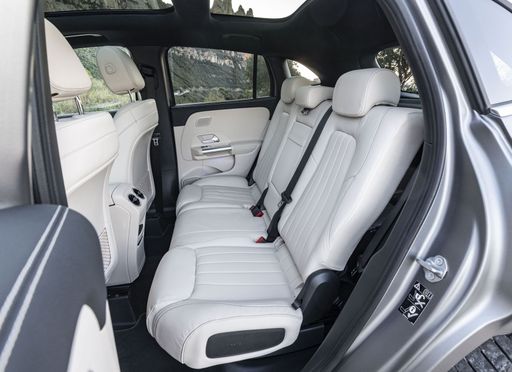
Inside, the GLA radiates luxury with high-quality materials and a focus on passenger comfort and convenience. The seats are supportive, and the cabin is well-insulated from external noise, contributing to a premium drive experience.

Arkana's interior strikes a balance between style and functionality, offering a comfortable ride that accommodates five passengers. Its spacious interior doesn’t skimp on quality, providing a comfortable environment across its lineup.

Arkana

Final Verdict

Both the Mercedes GLA and Renault Arkana deliver unique benefits that cater to different audiences. The GLA is perfect for those who prioritize higher performance and luxury, justified by a steeper price tag, while the Arkana is ideal for buyers looking for practicality without sacrificing style or technological convenience.

In this battle of compact SUVs, the winner truly depends on personal preferences. Whether you're drawn to the Mercedes GLA with its power and tech-savvy aura or the Renault Arkana with its efficiency and bold aesthetics, both vehicles are commendable choices for modern drivers.

Here’s where it gets real: The technical differences in detail

GLA

Costs and Efficiency:

Price and efficiency are often the first things buyers look at. Here it becomes clear which model has the long-term edge – whether at the pump, the plug, or in purchase price.

Renault Arkana is markedly cheaper – starting at 28,500 £ , while the Mercedes GLA costs 38,800 £ . That’s a price difference of around 10,379 £.

Fuel consumption also shows a difference: the Mercedes GLA uses 2.9 L/100km and is substantially more efficient than the Renault Arkana with 4.7 L/100km. The difference is about 1.8 L/100km.

Arkana

Engine and Performance:

Under the bonnet, it becomes clear which model is tuned for sportiness and which one takes the lead when you hit the accelerator.

When it comes to engine power, the Mercedes GLA offers significantly more power – delivering 421 HP compared to 143 HP. That’s roughly 278 HP more horsepower.

When accelerating from 0 to 100 km/h, the Mercedes GLA is clearly quicker – completing the sprint in 4.3 s, while the Renault Arkana takes 10.8 s. That’s about 6.5 s quicker.

There’s also a difference in torque: the Mercedes GLA delivers considerably more torque with 500 Nm compared to 205 Nm. That’s about 295 Nm more.

GLA

Space and Everyday Use:

Whether family car or daily driver – which one offers more room, flexibility and comfort?

Both vehicles offer seating for 5 people.

In terms of curb weight, Renault Arkana is barely lighter – 1,510 kg compared to 1,570 kg. The difference is around 60 kg.

When it comes to payload, the Mercedes GLA carries barely more – 500 kg compared to 451 kg. That’s a difference of about 49 kg.

Who wins the race in the data check?

The Mercedes GLA holds a decisive overall lead in the objective data comparison.
This result only shows which model scores more points on paper – not which of the two cars feels right for you.

from £38,800
GLA

Mercedes GLA

  • Engine Type : Plugin Hybrid, Petrol MHEV, Diesel, Petrol
  • Transmission : Automatic
  • Drive Type : Front-Wheel Drive, All-Wheel Drive
  • Power HP : 116 - 421 HP
  • Consumption L/100km : 2.9 - 9.5 L/100km
  • Electric Range : 74 km
Mercedes GLA
Renault Arkana

Costs and Consumption

View detailed analysis

Engine and Performance

View detailed analysis

Dimensions and Body

View detailed analysis

Mercedes GLA

The Mercedes GLA blends Mercedes style with compact crossover practicality, looking sharper than its size suggests while still feeling purposeful around town. Inside it serves up premium materials and tech-forward ergonomics, and the composed ride makes it an appealing pick for buyers who want luxury wrapped in a city-friendly package with a wink of adventurous spirit.

details

Renault Arkana

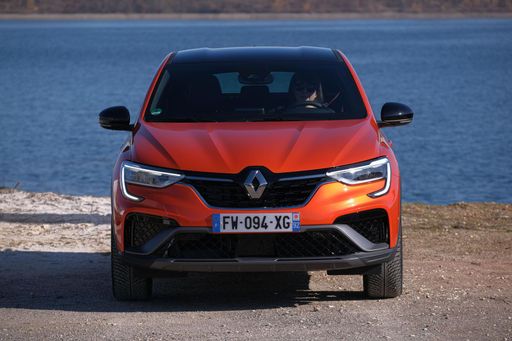
The Arkana stands out with its striking coupe-SUV design, blending sporty aesthetics with practicality. Its bold silhouette and high ride height offer a unique presence on the road, attracting attention wherever it goes. Inside, the Arkana combines modern technology with comfort, making it a versatile choice for both city driving and weekend getaways.

details
Mercedes GLA
Renault Arkana

Costs and Consumption

Price
38,800 - 75,300 £
Price
28,500 - 31,900 £
Consumption L/100km
2.9 - 9.5 L/100km
Consumption L/100km
4.7 L/100km
Consumption kWh/100km
-
Consumption kWh/100km
-
Electric Range
74 km
Electric Range
-
Battery Capacity
12.9 kWh
Battery Capacity
-
co2
66 - 216 g/km
co2
106 g/km
Fuel tank capacity
35 L
Fuel tank capacity
-

Dimensions and Body

Body Type
SUV
Body Type
SUV
Seats
5
Seats
5
Doors
5
Doors
-
Curb weight
1,570 - 1,810 kg
Curb weight
1,510 kg
Trunk capacity
385 - 435 L
Trunk capacity
-
Length
4,412 mm
Length
-
Width
1,834 - 1,849 mm
Width
1,821 mm
Height
1,616 mm
Height
-
Max trunk capacity
1,385 L
Max trunk capacity
-
Payload
480 - 500 kg
Payload
451 kg

Engine and Performance

Engine Type
Plugin Hybrid, Petrol MHEV, Diesel, Petrol
Engine Type
Full Hybrid
Transmission
Automatic
Transmission
Automatic
Transmission Detail
Dual-Clutch Automatic
Transmission Detail
Automatic Gearbox
Drive Type
Front-Wheel Drive, All-Wheel Drive
Drive Type
Front-Wheel Drive
Power HP
116 - 421 HP
Power HP
143 HP
Acceleration 0-100km/h
4.3 - 11 s
Acceleration 0-100km/h
10.8 s
Max Speed
210 km/h
Max Speed
-
Torque
230 - 500 Nm
Torque
205 Nm
Number of Cylinders
4
Number of Cylinders
4
Power kW
85 - 310 kW
Power kW
105 kW
Engine capacity
1,332 - 1,991 cm3
Engine capacity
1,598 cm3

General

Model Year
2,024 - 2,025
Model Year
2,025
CO2 Efficiency Class
B, E, F, G
CO2 Efficiency Class
C
Brand
Mercedes-Benz
Brand
Renault
DriveDuel uses data analysis and artificial intelligence to evaluate vehicle data and create content. Content is regularly reviewed and improved. The displayed prices are estimates based on German list prices, adjusted to the respective country’s VAT. Country-specific registration taxes are not included. This information is not legally binding.