VS

Mercedes GLB vs Audi Q5 comparison

Compare performance (354 HP vs 367 HP), boot space and price (43,200 £ vs 46,400 £ ) at a glance. Find out which car is the better choice for you – Mercedes GLB or Audi Q5?

Mercedes GLB vs Audi Q5: Key differences

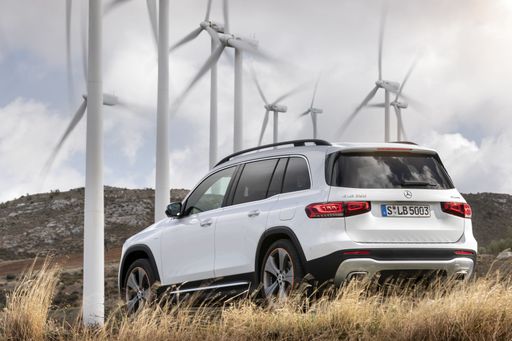
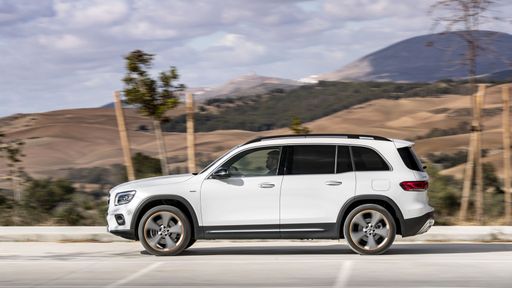
Mercedes GLB

3.6 (4 Reviews)
rate
  • marginally cheaper
  • clearly more electric range
  • marginally lighter
  • marginally more trunk space
details

Audi Q5

4.5 (7 Reviews)
rate
  • barely more power
  • considerably more efficient
  • noticeably quicker 0–100 km/h
details

All details on performance, efficiency, range and trunk space can be found in the technical comparison below – including user reviews for both models.

By Achim Sedelmaier

GLB

Battle of the Luxury SUVs: Audi Q5 vs Mercedes GLB

In the world of luxury SUVs, two names often stand out: the Audi Q5 and the Mercedes GLB. Both vehicles showcase a blend of elegance, performance, and the latest automotive technology. In this comparison, we'll delve into the technical aspects, innovative features, and performance metrics of these two titans, offering insights into what each model brings to the road.
Q5

Engines and Performance

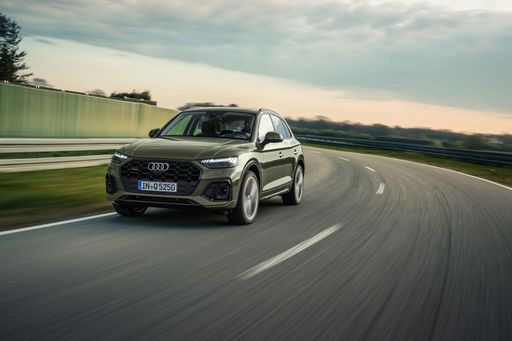
The Audi Q5 is offered with a variety of engine options, including diesel MHEV, petrol MHEV, and a plug-in hybrid. Its power output ranges from 163 HP to a thrilling 367 HP, thanks to options with up to six cylinders. The Q5's multifaceted lineup is complemented by a dual-clutch automatic transmission and an optionally available all-wheel drive, ensuring tailored performance for diverse driving styles. The SUV can accelerate from 0 to 100 km/h in as quick as 4.5 seconds, making it a lively choice for those who crave speed.

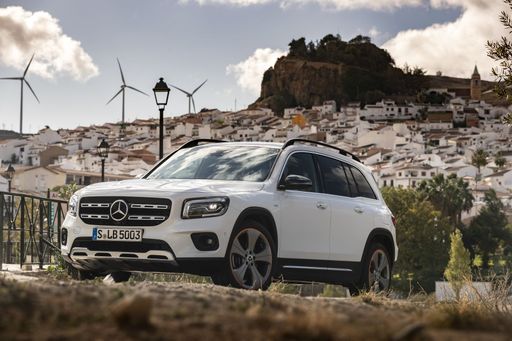
On the other hand, the Mercedes GLB comes with either a petrol MHEV or diesel engine, capable of delivering 116 HP to 320 HP. Although it typically sticks to four cylinders, the GLB impresses with its dual-clutch automatic transmission and all-wheel drive options. While slightly less rapid than its Audi counterpart, the GLB still offers a respectable 0 to 100 km/h acceleration in 5.5 seconds.

GLB

Fuel Efficiency and Emissions

The Audi Q5's fuel consumption ranges from 1.5 L/100 km (plug-in hybrid variant) to 8.4 L/100 km, with its CO2 emissions labeled across various efficiency classes. Exceptionally efficient plug-in models offer an electric range of up to 62 km, contributing to lower emissions and reduced fuel usage.

Conversely, the Mercedes GLB exhibits consumption between 5.6 to 9 L/100 km. Its CO2 efficiency spans from class E to G. The wider spread in efficiency reflects its intent to offer choices aligned with the driving habits of its users.

Q5

Design and Dimensions

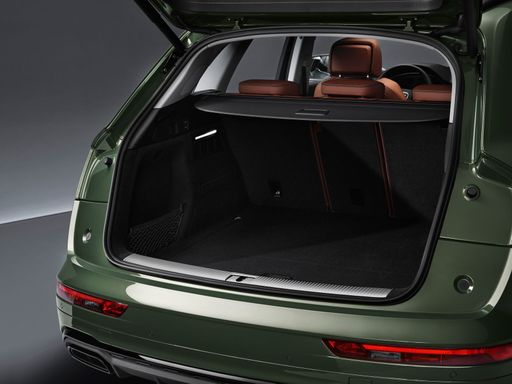
Villainous in stance, the Audi Q5 measures up with a length between 4682 mm and 4717 mm and a width of about 1900 mm. Trunk capacity stands between 455 and 520 liters, accommodating practical needs without compromising style. Its curb weight varies from 1810 kg to 2150 kg, depending on the selected model and configuration.

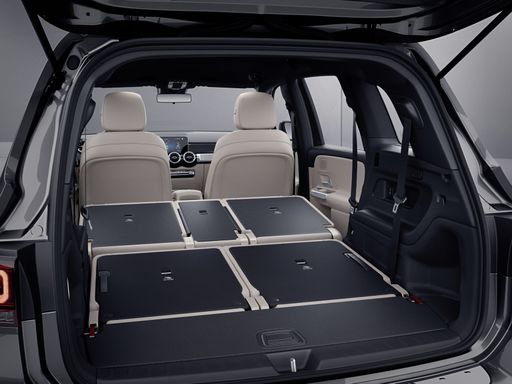
The Mercedes GLB prefers a slightly more compact frame, with a length of up to 4650 mm and a width of 1850 mm. Notably, it boasts a larger trunk capacity ranging from 565 to 570 liters. The GLB’s curb weight ranges from 1640 kg to 1820 kg, emphasizing its efficiency and maneuverability in urban environments.

GLB

Innovations and Technology

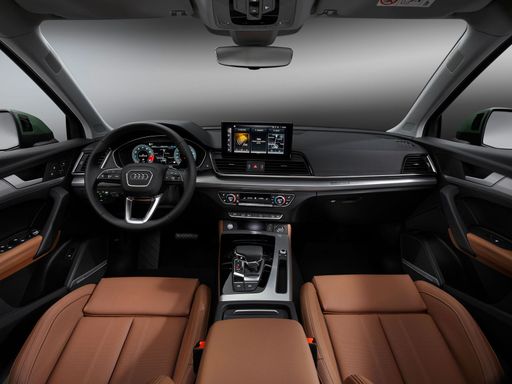
The Audi Q5 is equipped with the latest in infotainment and driver assistance technology, offering features like advanced navigation systems, adaptive cruise control, and semi-autonomous driving capabilities. The tech-forward dashboard provides a user-friendly interface for a modern driving experience.

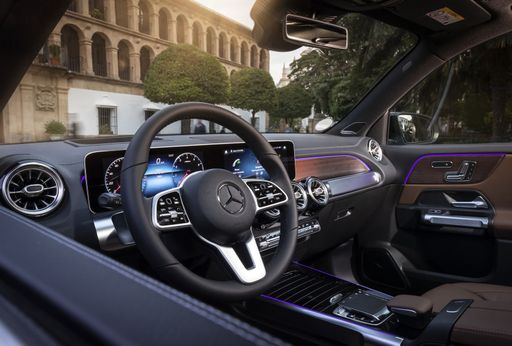
Mercedes GLB stands out with its MBUX infotainment system, which includes voice control and an optional augmented reality navigation setup. The system ensures a seamless connection between driver and vehicle, placing emphasis on safety with features like active lane-keeping assist and an advanced braking system.

Q5

Conclusion

Both the Audi Q5 and Mercedes GLB provide compelling options in the SUV segment. For those seeking more engine variety and a sportier experience, the Q5 is a remarkable contender. Alternatively, if interior space and cutting-edge interface technology are higher priorities, the GLB makes a strong case. Ultimately, the choice between these two luxury SUVs depends on personal preference, driving needs, and lifestyle alignment.

Here’s where it gets real: The technical differences in detail

GLB

Costs and Efficiency:

When it comes to price and running costs, the biggest differences usually appear. This is often where you see which car fits your budget better in the long run.

Mercedes GLB is marginally cheaper – starting at 43,200 £ , while the Audi Q5 costs 46,400 £ . That’s a price difference of around 3,174 £.

Fuel consumption also shows a difference: the Audi Q5 uses 2.5 L/100km and is considerably more efficient than the Mercedes GLB with 5.7 L/100km. The difference is about 3.2 L/100km.

As for electric range, the Mercedes GLB offers clearly more range – reaching up to 631 km, about 531 km more than the Audi Q5.

Q5

Engine and Performance:

Power, torque and acceleration are the classic benchmarks for car enthusiasts – and here, some clear differences start to show.

When it comes to engine power, the Audi Q5 offers barely more power – delivering 367 HP compared to 354 HP. That’s roughly 13 HP more horsepower.

When accelerating from 0 to 100 km/h, the Audi Q5 is noticeably quicker – completing the sprint in 4.5 s, while the Mercedes GLB takes 5.5 s. That’s about 1 s quicker.

There’s also a difference in torque: the Audi Q5 delivers slightly more torque with 580 Nm compared to 515 Nm. That’s about 65 Nm more.

GLB

Space and Everyday Use:

Cabin size, boot volume and payload all play a role in everyday practicality. Here, comfort and flexibility make the difference.

Both vehicles offer seating for 5 people.

In terms of curb weight, Mercedes GLB is marginally lighter – 1,840 kg compared to 1,910 kg. The difference is around 70 kg.

Looking at boot space, the Mercedes GLB offers marginally more boot space – 540 L compared to 520 L. That’s a difference of about 20 L.

When it comes to payload, the Audi Q5 carries a bit more – 565 kg compared to 505 kg. That’s a difference of about 60 kg.

Who wins the race in the data check?

The Audi Q5 stands well ahead of its rival in the objective data comparison.
This result only shows which model scores more points on paper – not which of the two cars feels right for you.

from £46,400
Q5

Audi Q5

  • Engine Type Plugin Hybrid, Petrol MHEV, Diesel MHEV
  • Transmission Automatic
  • Drive Type All-Wheel Drive, Front-Wheel Drive
  • Power HP 204 - 367 HP
  • Consumption L/100km 2.5 - 8.3 L/100km
  • Electric Range 92 - 100 km
Mercedes GLB
Audi Q5

Costs and Consumption

View detailed analysis

Engine and Performance

View detailed analysis

Dimensions and Body

View detailed analysis

Mercedes GLB

The Mercedes GLB is a compact luxury SUV that blends smart packaging with a polished, composed driving experience. Its flexible interior and premium feel make it a sensible pick for buyers who want Mercedes comfort and practicality in a smaller footprint.

details

Audi Q5

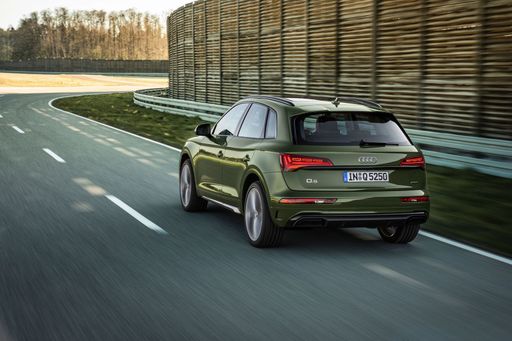
The Audi Q5 is a refined compact luxury SUV that blends a plush, well-appointed interior with confident, composed handling suited to everyday driving. It’s a strong choice if you want a comfortable, technology-rich cabin and a practical, upscale package that feels polished on both city streets and longer trips.

details
Mercedes GLB
Audi Q5

Costs and Consumption

Price
43,200 - 62,400 £
Price
46,400 - 79,600 £
Consumption L/100km
5.7 - 6.1 L/100km
Consumption L/100km
2.5 - 8.3 L/100km
Consumption kWh/100km
15.4 - 15.9 kWh/100km
Consumption kWh/100km
-
Electric Range
431 - 631 km
Electric Range
92 - 100 km
Battery Capacity
-
Battery Capacity
-
co2
0 - 138 g/km
co2
56 - 189 g/km
Fuel tank capacity
-
Fuel tank capacity
-

Dimensions and Body

Body Type
SUV
Body Type
SUV
Seats
5
Seats
5
Doors
-
Doors
-
Curb weight
1,840 - 2,280 kg
Curb weight
1,910 - 2,245 kg
Trunk capacity
540 L
Trunk capacity
433 - 520 L
Length
-
Length
-
Width
1,861 mm
Width
1,900 mm
Height
-
Height
-
Max trunk capacity
-
Max trunk capacity
-
Payload
485 - 505 kg
Payload
490 - 565 kg

Engine and Performance

Engine Type
Electric, Full Hybrid
Engine Type
Plugin Hybrid, Petrol MHEV, Diesel MHEV
Transmission
Automatic
Transmission
Automatic
Transmission Detail
Reduction Gearbox
Transmission Detail
Dual-Clutch Automatic
Drive Type
Rear-Wheel Drive, All-Wheel Drive
Drive Type
All-Wheel Drive, Front-Wheel Drive
Power HP
156 - 354 HP
Power HP
204 - 367 HP
Acceleration 0-100km/h
5.5 - 9.7 s
Acceleration 0-100km/h
4.5 - 8.6 s
Max Speed
-
Max Speed
-
Torque
280 - 515 Nm
Torque
340 - 580 Nm
Number of Cylinders
4
Number of Cylinders
4 - 6
Power kW
115 - 260 kW
Power kW
150 - 270 kW
Engine capacity
1,499 cm3
Engine capacity
1,968 - 2,995 cm3

General

Model Year
2026
Model Year
2025
CO2 Efficiency Class
A, D, E
CO2 Efficiency Class
B, E, F, G
Brand
Mercedes-Benz
Brand
Audi
DriveDuel uses data analysis and artificial intelligence to evaluate vehicle data and create content. Content is regularly reviewed and improved. The displayed prices are estimates based on German list prices, adjusted to the respective country’s VAT. Country-specific registration taxes are not included. This information is not legally binding.