VS

Mercedes GLB vs BMW X1 comparison

Compare performance (354 HP vs 326 HP), boot space and price (50,600 £ vs 38,200 £ ) at a glance. Find out which car is the better choice for you – Mercedes GLB or BMW X1?

Mercedes GLB vs BMW X1: Key differences

Mercedes GLB

3.2 (3 Reviews)
rate
  • very slightly more power
  • substantially more electric range

BMW X1

4.2 (6 Reviews)
rate
  • markedly cheaper
  • marginally quicker 0–100 km/h
  • clearly lighter

All details on performance, efficiency, range and trunk space can be found in the technical comparison below – including user reviews for both models.

GLB

The rivalry between German automotive giants BMW and Mercedes-Benz continues to captivate car enthusiasts, particularly with the latest models of the BMW X1 and the Mercedes GLB. Both SUVs cater to a similar market segment but offer unique features and innovations that deserve a thorough comparison. This article will dissect the technical aspects, performance metrics, and interior amenities of these leading contenders in the compact luxury SUV category.
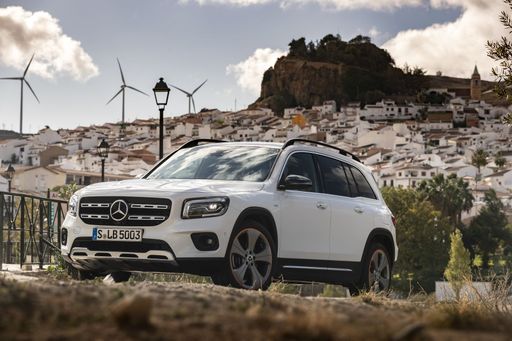
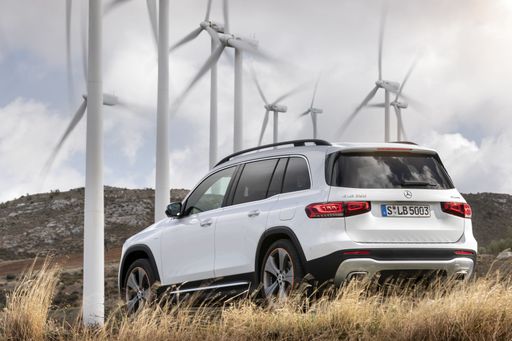
X1

Design and Dimensions

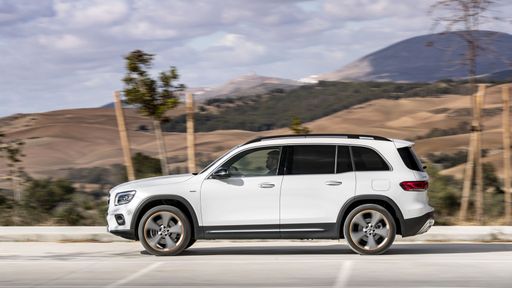
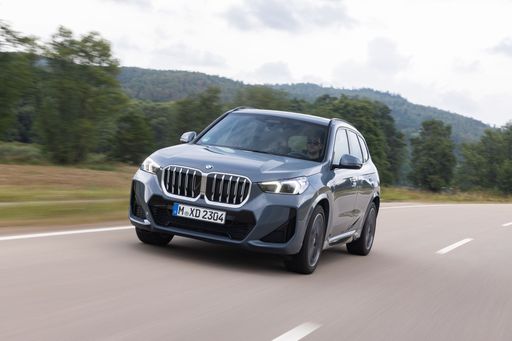
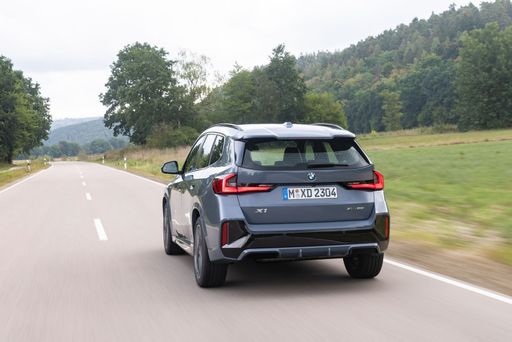
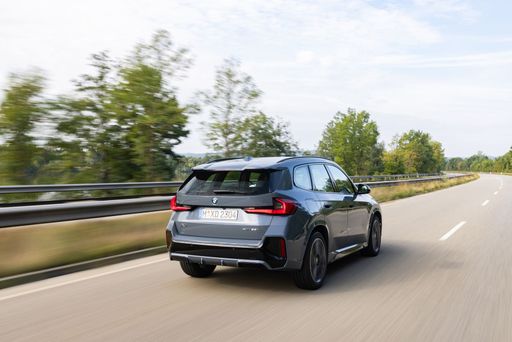
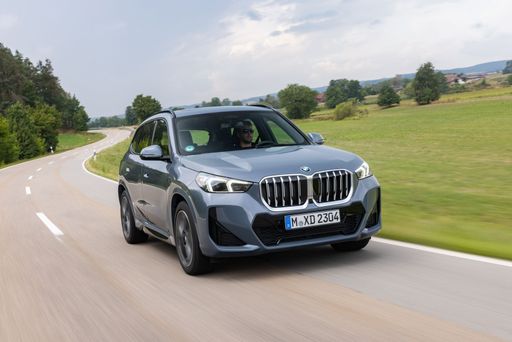
The BMW X1 exudes a sporty elegance with its bold lines and muscular stance. Measuring 4500 mm in length, 1845 mm in width, and up to 1642 mm in height, it boasts a compact but powerful presence on the road. In contrast, the Mercedes GLB stretches slightly longer at 4634-4650 mm, with a wider body ranging from 1834 to 1850 mm and a height of 1665-1692 mm. This additional size contributes to a more substantial cabin and a slightly higher cargo capacity, reaching up to 570 liters compared to the X1’s maximum of 540 liters.

GLB

Powertrains and Performance

The BMW X1 offers a variety of engine options, including diesel, petrol, and hybrid powertrains, with power outputs ranging from 150 HP to a robust 326 HP. The dual-clutch automatic transmission is standard, ensuring smooth gear shifts. Acceleration from 0-100 km/h varies significantly across models, with a quick 5.4 seconds noted for the most powerful version. Fuel consumption ranges from an efficient 4.6 L/100 km for hybrids to 6.5 L for the petrol versions.

Meanwhile, the Mercedes GLB also showcases a diverse lineup of engines, including petrol and diesel hybrids. Power figures in the GLB span from 150 HP to 320 HP, and acceleration from 0-100 km/h offers a competitive edge, peaking at just 5.5 seconds. Its fuel efficiency reaches an impressive 5.6 L/100 km for the diesel variant, while some petrol engines touch 7 L/100 km.

X1

Drivetrain and Handling

Both the BMW X1 and Mercedes GLB are available in front-wheel and all-wheel-drive configurations, appealing to various driving preferences. The X1's agile handling is attributed to its lower curb weight, ranging from 1575 kg to 1935 kg, enabling a sportier driving experience. On the flip side, the GLB’s weight varies between 1640 kg to 1820 kg, slightly impacting agility but offering enhanced stability, especially during high-speed maneuvers.

GLB

Innovative Technology and Features

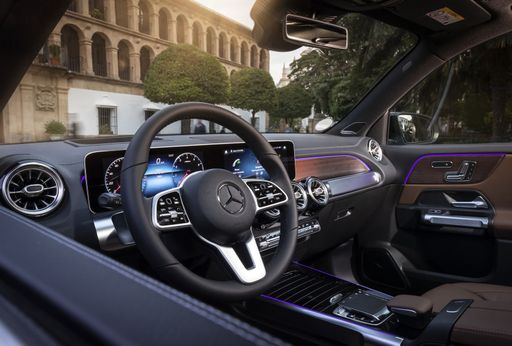
Inside, both SUVs boast advanced technology suites. The BMW X1 incorporates the latest iDrive system, featuring a large touchscreen and voice command capabilities, a hallmark of BMW's commitment to user-friendly technology. The Mercedes GLB shines with its MBUX infotainment system, recognizing natural language commands and offering seamless smartphone integration. Both models come equipped with advanced driver-assistance systems, enhancing safety and ease of driving.

X1

Interior Comfort and Cargo Space

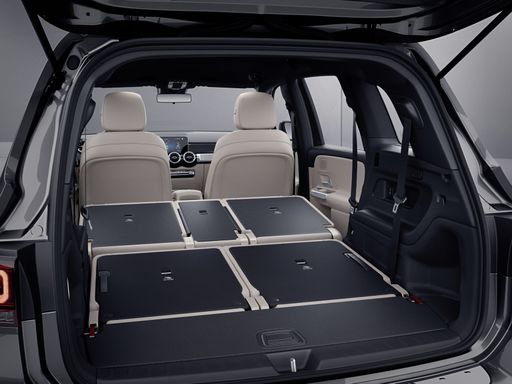
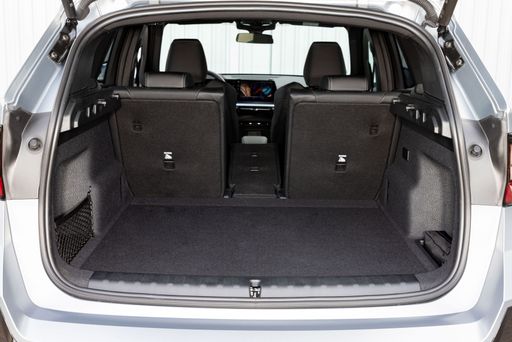
Both vehicles can comfortably seat five passengers, prioritizing comfort and luxury. The GLB, however, edges out in interior space and versatility, offering more headroom and legroom. The X1, with its premium materials and thoughtful layout, provides a driver-centric cockpit that feels both refined and functional.

GLB

Conclusion: Which Should You Choose?

In the battle of the BMW X1 versus the Mercedes GLB, both SUVs present compelling cases for consumers seeking luxury and performance in a compact package. The BMW X1 leans more towards sporty performance with its agile handling and robust engine lineup, while the Mercedes GLB offers superior interior space and cutting-edge technology.

Your choice ultimately comes down to personal preference—whether you favor the spirited dynamism of the BMW or the spacious, tech-savvy comfort of the Mercedes. Whichever path you choose, both models stand as prime examples of automotive excellence in the luxury compact SUV sector.

Here’s where it gets real: The technical differences in detail

GLB

Costs and Efficiency:

Price and efficiency are often the first things buyers look at. Here it becomes clear which model has the long-term edge – whether at the pump, the plug, or in purchase price.

BMW X1 is markedly cheaper – starting at 38,200 £ , while the Mercedes GLB costs 50,600 £ . That’s a price difference of around 12,384 £.

As for electric range, the Mercedes GLB offers substantially more range – reaching up to 631 km, about 550 km more than the BMW X1.

X1

Engine and Performance:

Power, torque and acceleration are the classic benchmarks for car enthusiasts – and here, some clear differences start to show.

When it comes to engine power, the Mercedes GLB offers very slightly more power – delivering 354 HP compared to 326 HP. That’s roughly 28 HP more horsepower.

When accelerating from 0 to 100 km/h, the BMW X1 is marginally quicker – completing the sprint in 5.4 s, while the Mercedes GLB takes 5.5 s. That’s about 0.1 s quicker.

There’s also a difference in torque: the Mercedes GLB delivers very slightly more torque with 515 Nm compared to 477 Nm. That’s about 38 Nm more.

GLB

Space and Everyday Use:

Cabin size, boot volume and payload all play a role in everyday practicality. Here, comfort and flexibility make the difference.

Both vehicles offer seating for 5 people.

In terms of curb weight, BMW X1 is clearly lighter – 1,575 kg compared to 2,200 kg. The difference is around 625 kg.

Boot capacity is identical – both offer 540 L of storage.

Maximum payload is identical – both can carry up to 500 kg.

Who wins the race in the data check?

The Mercedes GLB stands well ahead of its rival in the objective data comparison.
This result only shows which model scores more points on paper – not which of the two cars feels right for you.

from £50,600
GLB

Mercedes GLB

  • Engine Type : Electric
  • Transmission : Automatic
  • Drive Type : Rear-Wheel Drive, All-Wheel Drive
  • Power HP : 272 - 354 HP
  • Consumption kWh/100km : 15.8 - 15.9 kWh/100km
  • Electric Range : 614 - 631 km
Mercedes GLB
BMW X1

Costs and Consumption

View detailed analysis

Engine and Performance

View detailed analysis

Dimensions and Body

View detailed analysis

Mercedes GLB

The Mercedes GLB is a practical compact SUV that mixes boxy, family-friendly space with premium German polish, making it an appealing choice for buyers who want usefulness without pretension. It drives with a confident, composed feel and somehow manages to look both rugged and refined — the grown-up SUV that still likes to have fun.

details

BMW X1

The BMW X1 brings a premium feel to compact crossover life, wrapping practical space and agile handling into a tidy, upscale package. It’s ideal for buyers who want BMW driving dynamics without the bulk, offering everyday comfort and a few clever tricks to keep the commute interesting.

details
Mercedes GLB
BMW X1

Costs and Consumption

Price
50,600 - 62,400 £
Price
38,200 - 55,500 £
Consumption L/100km
-
Consumption L/100km
2.5 - 7.7 L/100km
Consumption kWh/100km
15.8 - 15.9 kWh/100km
Consumption kWh/100km
-
Electric Range
614 - 631 km
Electric Range
81 km
Battery Capacity
-
Battery Capacity
14.2 kWh
co2
0 g/km
co2
57 - 175 g/km
Fuel tank capacity
-
Fuel tank capacity
47 - 54 L

Dimensions and Body

Body Type
SUV
Body Type
SUV
Seats
5
Seats
5
Doors
-
Doors
5
Curb weight
2,200 - 2,280 kg
Curb weight
1,575 - 1,935 kg
Trunk capacity
540 L
Trunk capacity
490 - 540 L
Length
-
Length
4,500 mm
Width
1,861 mm
Width
1,845 mm
Height
-
Height
1,630 - 1,642 mm
Max trunk capacity
-
Max trunk capacity
1,495 - 1,545 L
Payload
500 kg
Payload
490 - 500 kg

Engine and Performance

Engine Type
Electric
Engine Type
Diesel MHEV, Petrol MHEV, Petrol, Diesel, Plugin Hybrid
Transmission
Automatic
Transmission
Automatic
Transmission Detail
Reduction Gearbox
Transmission Detail
Dual-Clutch Automatic
Drive Type
Rear-Wheel Drive, All-Wheel Drive
Drive Type
Front-Wheel Drive, All-Wheel Drive
Power HP
272 - 354 HP
Power HP
136 - 326 HP
Acceleration 0-100km/h
5.5 - 7.4 s
Acceleration 0-100km/h
5.4 - 9.2 s
Max Speed
-
Max Speed
190 - 233 km/h
Torque
335 - 515 Nm
Torque
230 - 477 Nm
Number of Cylinders
-
Number of Cylinders
3 - 4
Power kW
200 - 260 kW
Power kW
100 - 240 kW
Engine capacity
-
Engine capacity
1,499 - 1,998 cm3

General

Model Year
2,026
Model Year
2,024 - 2,025
CO2 Efficiency Class
A
CO2 Efficiency Class
D, E, F, B
Brand
Mercedes-Benz
Brand
BMW
DriveDuel uses data analysis and artificial intelligence to evaluate vehicle data and create content. Content is regularly reviewed and improved. The displayed prices are estimates based on German list prices, adjusted to the respective country’s VAT. Country-specific registration taxes are not included. This information is not legally binding.