VS

Mercedes Sprinter Bus vs Fiat Ducato comparison

Compare performance (190 HP vs 140 HP), boot space and price (41,400 £ vs 34,300 £ ) at a glance. Find out which car is the better choice for you – Mercedes Sprinter Bus or Fiat Ducato?

Mercedes Sprinter Bus vs Fiat Ducato: Key differences

Mercedes Sprinter Bus

  • noticeably more power
details

Fiat Ducato

  • noticeably cheaper
  • noticeably more efficient
  • a bit lighter
details

By Achim Sedelmaier

Sprinter Bus

When comparing commercial vehicles, two giants often come to mind: the Fiat Ducato and the Mercedes Sprinter Bus. Both models are celebrated for their versatility, efficiency, and innovation. However, their distinct characteristics and features cater to different preferences and needs. This article explores the technical aspects and innovations that set them apart.

Ducato

Engine Performance and Options

The Fiat Ducato boasts a range of engine options that cater to a variety of business needs. Available with both diesel and electric engines, the Ducato offers power outputs ranging from 120 to a robust 270 HP. This flexibility is complemented by its front-wheel drive system, enhancing fuel efficiency and cost-effectiveness. The Ducato also shows impressive fuel consumption figures, averaging between 7.2 to 9.3 liters per 100 km, making it economical for long-distance travel.

In contrast, the Mercedes Sprinter Bus uses a more traditional diesel-based lineup, featuring engines that range from 114 to 190 HP. The Sprinter offers either rear-wheel drive or all-wheel drive, giving it an edge in handling and traction under various conditions. However, the fuel consumption is slightly higher, averaging between 9.3 to 12.3 liters per 100 km, which may be a consideration for cost-sensitive businesses.


Transmission Systems

Both vehicles provide a choice between manual and automatic transmissions, which cater to different driver preferences. The Ducato features manual gearboxes as well as automatic options that enhance driving comfort, particularly in urban areas. The Mercedes Sprinter Bus, while similar in this regard, focuses on a more robust automatic gearbox system, which provides smoother shifts and may contribute to a more luxurious driving experience.

Dimensions and Payload Capacity

The dimensions of these vehicles play a critical role in their usability. The Fiat Ducato ranges from 5413 mm to 6678 mm in length, accommodating a variety of cargo configurations. With payload capacities peaking at 2020 kg, the Ducato is tailored for businesses that require carrying heavier loads efficiently.

The Mercedes Sprinter Bus is larger, measuring up to 6967 mm in length and offers a maximum payload capacity of 1249 kg. This difference in payload and size means the Ducato may be better suited for cargo transport, while the Sprinter is ideal for passenger-related services.

Comfort and Seating

Comfort is an essential factor for any vehicle designed for extensive use. The Fiat Ducato typically seats three occupants, focusing primarily on driver and companion comfort. Innovations in interior materials and ergonomic design enhance the driving experience, making long hours on the road more bearable.

The Mercedes Sprinter Bus, on the other hand, offers a minimalist but functional two-seat configuration when driver-centric designs are employed. It’s worth noting, however, that the Sprinter allows for greater customization in passenger configurations, making it a favorite for shuttle services and public transportation.

Innovations and Additional Features

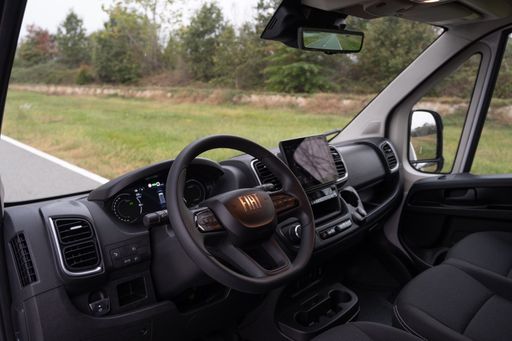
Both models integrate various technological advancements that cater to modern driving standards. The Ducato features smart connectivity enhancements, including infotainment systems that facilitate navigation and operational efficiency. Additionally, safety features like advanced driver-assistance systems are becoming standard across the lineup.

The Mercedes Sprinter Bus takes a step further in the luxuries it offers, with a state-of-the-art dashboard display and optional enhanced driver-assistance features such as adaptive cruise control and lane-keeping assist. These innovations improve both safety and the overall driving experience, showcasing Mercedes' dedication to catering to the luxury end of the commercial market.

Conclusion

In summary, choosing between the Fiat Ducato and the Mercedes Sprinter Bus ultimately depends on specific business needs and preferences. The Ducato excels in fuel efficiency, payload capacity, and versatility for cargo transport, while the Sprinter Bus shines in advanced technology, passenger comfort, and overall driving performance. Both vehicles embody the essence of modern commercial transportation, but their differences highlight how each can serve unique market segments effectively.

Here’s where it gets real: The technical differences in detail

Sprinter Bus

Costs and Efficiency:

Price and efficiency are key factors when choosing a car – and this is often where the real differences emerge.

Fiat Ducato is noticeably cheaper – starting at 34,300 £ , while the Mercedes Sprinter Bus costs 41,400 £ . That’s a price difference of around 7,060 £.

Fuel consumption also shows a difference: the Fiat Ducato uses 7.5 L/100km and is noticeably more efficient than the Mercedes Sprinter Bus with 9.3 L/100km. The difference is about 1.8 L/100km.

Ducato

Engine and Performance:

Under the bonnet, it becomes clear which model is tuned for sportiness and which one takes the lead when you hit the accelerator.

When it comes to engine power, the Mercedes Sprinter Bus offers noticeably more power – delivering 190 HP compared to 140 HP. That’s roughly 50 HP more horsepower.

There’s also a difference in torque: the Mercedes Sprinter Bus delivers markedly more torque with 450 Nm compared to 350 Nm. That’s about 100 Nm more.

Space and Everyday Use:

Beyond pure performance, interior space and usability matter most in daily life. This is where you see which car is more practical and versatile.

Seats: Fiat Ducato offers more seats – 3 vs 2.

In terms of curb weight, Fiat Ducato is a bit lighter – 2,125 kg compared to 2,356 kg. The difference is around 231 kg.

When it comes to payload, the Fiat Ducato carries significantly more – 2,020 kg compared to 1,144 kg. That’s a difference of about 876 kg.

Who wins the race in the data check?

The Fiat Ducato holds a decisive overall lead in the objective data comparison.
This result only shows which model scores more points on paper – not which of the two cars feels right for you.

from £34,300
Ducato

Fiat Ducato

  • Engine Type : Diesel
  • Transmission : Manuel, Automatic
  • Drive Type : Front-Wheel Drive
  • Power HP : 120 - 140 HP
  • Consumption L/100km : 7.5 - 8.2 L/100km
Mercedes Sprinter Bus
Fiat Ducato

Costs and Consumption

View detailed analysis

Engine and Performance

View detailed analysis

Dimensions and Body

View detailed analysis

Mercedes Sprinter Bus

The Mercedes Sprinter is the go-to people-mover for operators and families who want robust practicality wrapped in a premium feel, with a flexible interior that can be tailored from shuttle to mobile office without breaking a sweat. Sporting the three-pointed star and the driving manners of a tall estate, the Sprinter Bus is comfortable, dependable and refreshingly easy to live with day after day.

details

Fiat Ducato

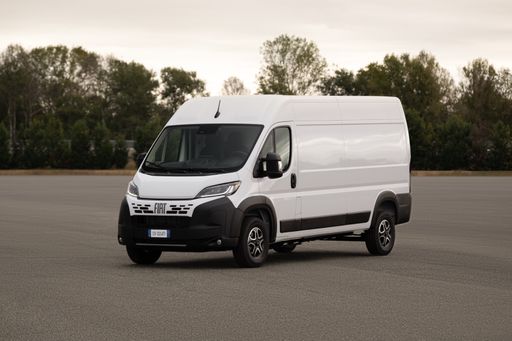
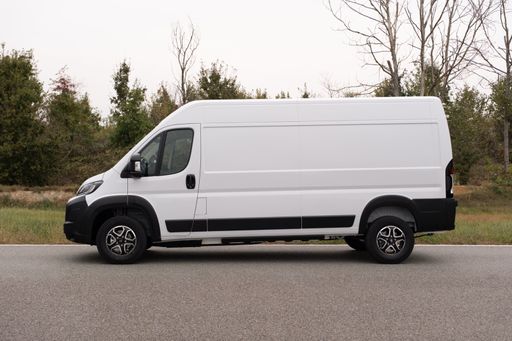
The Fiat Ducato is a no-nonsense workhorse that turns practicality into an artform, with a cavernous, flexible load area and predictable, car-like driving manners that make long days behind the wheel far less tedious. It’s equally at home with a tradesman’s kit or a camper conversion, offering sensible packaging, easy servicing and the sort of reliability that keeps surprises—and down-time—to a minimum.

details
Mercedes Sprinter Bus
Fiat Ducato

Costs and Consumption

Price
41,400 - 55,900 £
Price
34,300 - 43,900 £
Consumption L/100km
9.3 - 12.3 L/100km
Consumption L/100km
7.5 - 8.2 L/100km
Consumption kWh/100km
-
Consumption kWh/100km
-
Electric Range
-
Electric Range
-
Battery Capacity
-
Battery Capacity
-
co2
244 - 322 g/km
co2
198 - 217 g/km
Fuel tank capacity
71 L
Fuel tank capacity
-

Dimensions and Body

Body Type
Bus
Body Type
Cargo Van
Seats
2
Seats
3
Doors
4
Doors
-
Curb weight
2,356 - 2,559 kg
Curb weight
2,125 - 2,230 kg
Trunk capacity
-
Trunk capacity
-
Length
5,932 - 6,967 mm
Length
-
Width
1,993 mm
Width
2,050 mm
Height
2,633 - 2,659 mm
Height
-
Max trunk capacity
-
Max trunk capacity
-
Payload
814 - 1,144 kg
Payload
650 - 2,020 kg

Engine and Performance

Engine Type
Diesel
Engine Type
Diesel
Transmission
Manuel, Automatic
Transmission
Manuel, Automatic
Transmission Detail
Manual Gearbox, Automatic Gearbox
Transmission Detail
Manual Gearbox, Automatic Gearbox
Drive Type
Rear-Wheel Drive, All-Wheel Drive
Drive Type
Front-Wheel Drive
Power HP
114 - 190 HP
Power HP
120 - 140 HP
Acceleration 0-100km/h
-
Acceleration 0-100km/h
-
Max Speed
150 - 159 km/h
Max Speed
-
Torque
300 - 450 Nm
Torque
320 - 350 Nm
Number of Cylinders
4
Number of Cylinders
4
Power kW
84 - 140 kW
Power kW
88 - 103 kW
Engine capacity
1,950 cm3
Engine capacity
2,184 cm3

General

Model Year
2,024 - 2,025
Model Year
2025
CO2 Efficiency Class
G
CO2 Efficiency Class
G
Brand
Mercedes-Benz
Brand
Fiat
DriveDuel uses data analysis and artificial intelligence to evaluate vehicle data and create content. Content is regularly reviewed and improved. The displayed prices are estimates based on German list prices, adjusted to the respective country’s VAT. Country-specific registration taxes are not included. This information is not legally binding.