VS

Mercedes T Class vs Peugeot Rifter comparison

Compare performance (131 HP vs 130 HP), boot space and price (23,000 £ vs 22,900 £ ) at a glance. Find out which car is the better choice for you – Mercedes T Class or Peugeot Rifter?

Mercedes T Class vs Peugeot Rifter: Key differences

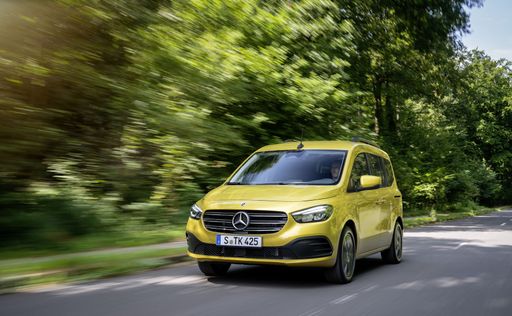
Mercedes T Class

  • very slightly more power
  • very slightly more efficient
details

Peugeot Rifter

4.6 (2 Reviews)
rate
  • very slightly cheaper
  • very slightly quicker 0–100 km/h
  • marginally lighter
details

All details on performance, efficiency, range and trunk space can be found in the technical comparison below – including user reviews for both models.

By Achim Sedelmaier

T Class

High Roof Contenders: Mercedes T-Klasse vs. Peugeot Rifter

In the world of high roof wagons, two models stand out for their reliability, performance, and innovation: the Mercedes T-Klasse and the Peugeot Rifter. Both belong to a segment that emphasizes practicality and versatility, appealing to families and businesses alike. In this article, we dissect the technical aspects and innovations that set these two contenders apart.
Rifter

Engine Types and Performance

The Mercedes T-Klasse comes with both diesel and petrol engine options, while the Peugeot Rifter offers petrol, diesel, and an all-electric variant. The T-Klasse engine options range from 95 to 131 HP, providing adequate power for everyday driving. Conversely, the Rifter’s power output ranges from 102 to 136 HP, with the electric model delivering the highest horsepower.

For acceleration, the Rifter leads slightly with a 0-100 km/h time as low as 10.8 seconds for some models, compared to the T-Klasse’s best time of 11.6 seconds. The choice between electric and conventional powertrains, particularly for the Rifter, offers consumers more flexibility depending on their driving needs.

T Class

Transmission and Drive Type

Both models feature front-wheel-drive capabilities, which are standard in this segment for enhanced fuel efficiency and handling. The Mercedes T-Klasse offers a choice between manual and dual-clutch automatic transmissions, catering to both traditional and modern driving preferences. The Peugeot Rifter matches this with its manual and automatic gearbox options, including a specialized reduction gearbox for their electric model.

Rifter

Dimensions and Interior Space

The T-Klasse measures up to 4,922 mm in length, offering a generous cabin space, which is slightly longer than the Rifter’s longest measurement of 4,755 mm. Both models accommodate five passengers comfortably, although the Rifter also provides 7-seat configurations for larger families or those needing extra space.

Trunk capacity is another key differentiator. The T-Klasse offers a commendable 520 liters, whereas the Rifter boasts up to 1,050 liters, providing superior cargo-carrying abilities — a notable advantage for those who prioritize storage.

T Class

Sustainability and Efficiency

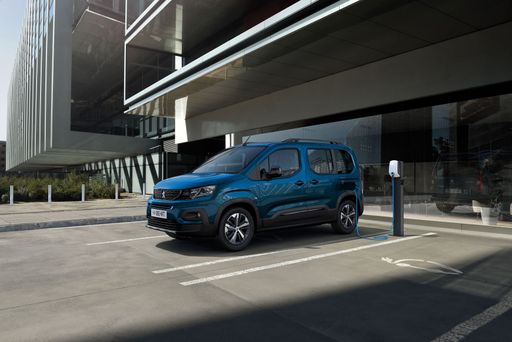
When it comes to sustainability, the Peugeot Rifter takes a progressive leap with its electric variant that provides a range of up to 340 km. This model aligns with the current shift towards low-emission vehicles, showcasing Peugeot’s commitment to sustainability. In contrast, the T-Klasse continues to provide respectable CO2 efficiency but cannot yet offer a zero-emissions option.

Fuel consumption for both models remains competitive, with the T-Klasse providing a diesel consumption starting at 5.1 L/100km, while the Rifter ranges from 5.4 to 6.9 L/100km depending on the engine choice.

Rifter

Conclusion

Both the Mercedes T-Klasse and Peugeot Rifter provide robust options in the high roof wagon category, balancing performance, efficiency, and comfort. The choice between these two could boil down to personal preferences — whether it's the flexibility and innovation of the Rifter’s electric model, or the steady performance and sophistication associated with the T-Klasse.

Ultimately, both models showcase the strides made in automotive technology and design, making them worthy considerations for anyone looking for a reliable high roof wagon.

Here’s where it gets real: The technical differences in detail

T Class

Costs and Efficiency:

Price and efficiency are often the first things buyers look at. Here it becomes clear which model has the long-term edge – whether at the pump, the plug, or in purchase price.

Peugeot Rifter is very slightly cheaper – starting at 22,900 £ , while the Mercedes T Class costs 23,000 £ . That’s a price difference of around 107 £.

Fuel consumption also shows a difference: the Mercedes T Class uses 5.1 L/100km and is very slightly more efficient than the Peugeot Rifter with 5.4 L/100km. The difference is about 0.3 L/100km.

Rifter

Engine and Performance:

Under the bonnet, it becomes clear which model is tuned for sportiness and which one takes the lead when you hit the accelerator.

When it comes to engine power, the Mercedes T Class offers very slightly more power – delivering 131 HP compared to 130 HP. That’s roughly 1 HP more horsepower.

When accelerating from 0 to 100 km/h, the Peugeot Rifter is very slightly quicker – completing the sprint in 11.3 s, while the Mercedes T Class takes 11.6 s. That’s about 0.3 s quicker.

There’s also a difference in torque: the Peugeot Rifter delivers only slightly more torque with 300 Nm compared to 270 Nm. That’s about 30 Nm more.

T Class

Space and Everyday Use:

Cabin size, boot volume and payload all play a role in everyday practicality. Here, comfort and flexibility make the difference.

Seats: Peugeot Rifter offers more seats – 7 vs 5.

In terms of curb weight, Peugeot Rifter is marginally lighter – 1,498 kg compared to 1,556 kg. The difference is around 58 kg.

When it comes to payload, the Peugeot Rifter carries markedly more – 814 kg compared to 630 kg. That’s a difference of about 184 kg.

Who wins the race in the data check?

The Peugeot Rifter leads convincingly in the objective data comparison.
This result only shows which model scores more points on paper – not which of the two cars feels right for you.

from £22,900
Rifter

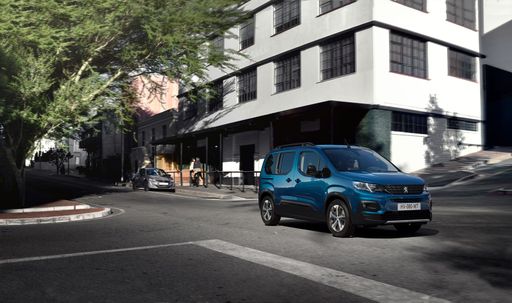
Peugeot Rifter

  • Engine Type : Petrol, Diesel
  • Transmission : Manuel, Automatic
  • Drive Type : Front-Wheel Drive
  • Power HP : 102 - 130 HP
  • Consumption L/100km : 5.4 - 6.5 L/100km
Mercedes T Class
Peugeot Rifter

Costs and Consumption

View detailed analysis

Engine and Performance

View detailed analysis

Dimensions and Body

View detailed analysis

Mercedes T Class

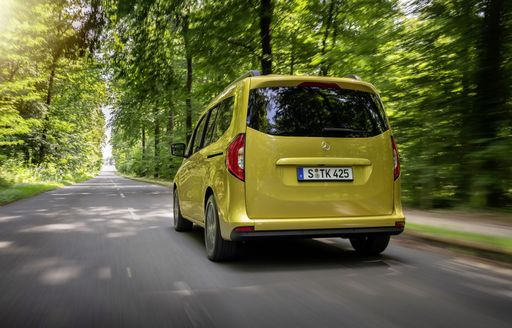
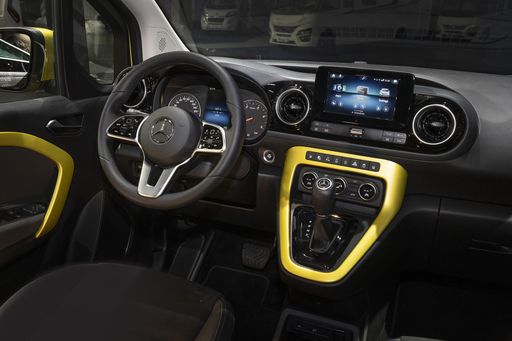
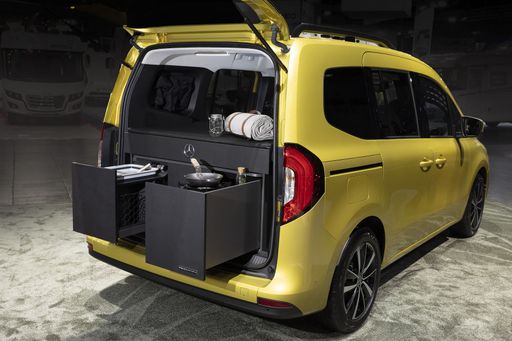
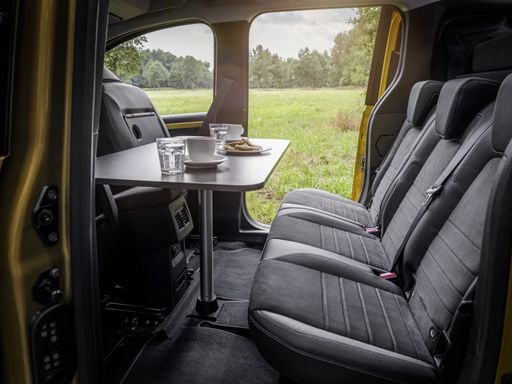
The Mercedes T-Class dresses everyday practicality in a premium suit, blending the sensible utility of a small van with the refinement you expect from the three-pointed star. Its flexible interior and clever details make it a brilliantly pragmatic choice for families and active owners who want comfort and usefulness without the fuss.

details

Peugeot Rifter

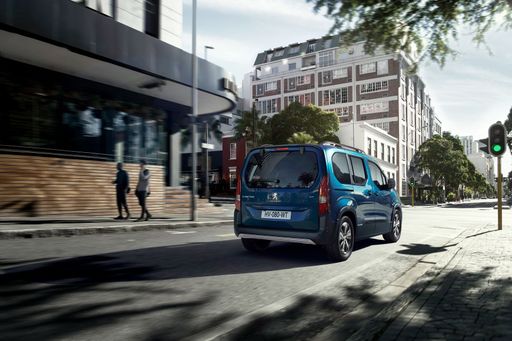
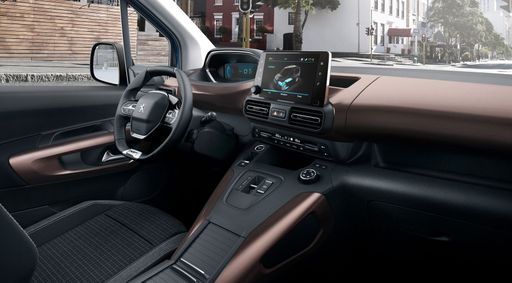
The Peugeot Rifter is a practical, family-friendly people carrier that makes everyday errands and weekend escapes feel effortless thanks to its airy cabin and clever, flexible interior. With chunky, purposeful styling and storage solutions everywhere, the Rifter manages to be both unashamedly useful and unexpectedly likeable.

details
Mercedes T Class
Peugeot Rifter

Costs and Consumption

Price
23,000 - 30,500 £
Price
22,900 - 30,100 £
Consumption L/100km
5.1 - 7.4 L/100km
Consumption L/100km
5.4 - 6.5 L/100km
Consumption kWh/100km
-
Consumption kWh/100km
-
Electric Range
-
Electric Range
-
Battery Capacity
-
Battery Capacity
-
co2
135 - 167 g/km
co2
142 - 157 g/km
Fuel tank capacity
-
Fuel tank capacity
-

Dimensions and Body

Body Type
High Roof Estate
Body Type
High Roof Estate
Seats
5
Seats
5 - 7
Doors
-
Doors
-
Curb weight
1,556 - 1,678 kg
Curb weight
1,498 - 1,694 kg
Trunk capacity
-
Trunk capacity
-
Length
-
Length
-
Width
1,859 mm
Width
1,848 mm
Height
-
Height
-
Max trunk capacity
-
Max trunk capacity
-
Payload
521 - 630 kg
Payload
518 - 814 kg

Engine and Performance

Engine Type
Petrol, Diesel
Engine Type
Petrol, Diesel
Transmission
Manuel, Automatic
Transmission
Manuel, Automatic
Transmission Detail
Manual Gearbox, Dual-Clutch Automatic
Transmission Detail
Manual Gearbox, Automatic Gearbox
Drive Type
Front-Wheel Drive
Drive Type
Front-Wheel Drive
Power HP
95 - 131 HP
Power HP
102 - 130 HP
Acceleration 0-100km/h
11.6 - 15.1 s
Acceleration 0-100km/h
11.3 - 13.5 s
Max Speed
-
Max Speed
-
Torque
200 - 270 Nm
Torque
205 - 300 Nm
Number of Cylinders
4
Number of Cylinders
3 - 4
Power kW
70 - 96 kW
Power kW
75 - 96 kW
Engine capacity
1,332 - 1,461 cm3
Engine capacity
1,199 - 1,499 cm3

General

Model Year
2025
Model Year
2026
CO2 Efficiency Class
F, D, E
CO2 Efficiency Class
E, F
Brand
Mercedes-Benz
Brand
Peugeot
DriveDuel uses data analysis and artificial intelligence to evaluate vehicle data and create content. Content is regularly reviewed and improved. The displayed prices are estimates based on German list prices, adjusted to the respective country’s VAT. Country-specific registration taxes are not included. This information is not legally binding.