VS

Mitsubishi Space Star vs Mitsubishi Colt comparison

Compare performance (71 HP vs 143 HP), boot space and price (11,600 £ vs 18,200 £ ) at a glance. Find out which car is the better choice for you – Mitsubishi Space Star or Mitsubishi Colt?

Mitsubishi Space Star vs Mitsubishi Colt: Key differences

Mitsubishi Space Star

  • substantially cheaper
  • visibly lighter

Mitsubishi Colt

  • substantially more power
  • a bit more efficient
  • substantially quicker 0–100 km/h
  • visibly more trunk space
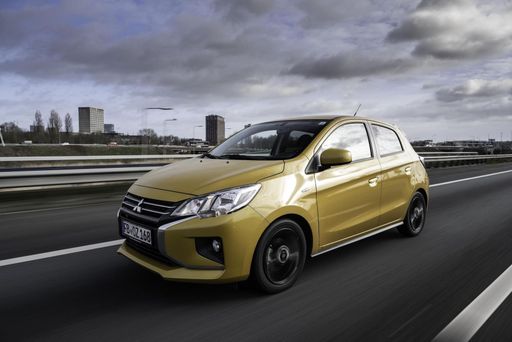
Space Star

The automotive market is always buzzing with fresh contenders, and Mitsubishi’s offerings, the Colt and the Space Star, are no exception. Both these hatchbacks cater to different segments, showcasing unique features, technical specifications, and innovations. In this comparison, we will delve into the key aspects of both vehicles to help you decide which one suits your needs better.
Colt

Design and Dimensions

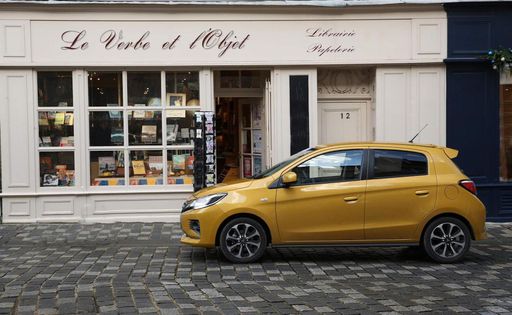
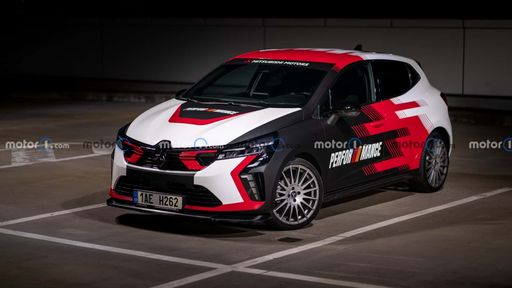
When it comes to design, both the Mitsubishi Colt and the Space Star exhibit sleek hatchback aesthetics, but they differ in size. The Colt measures 4053 mm in length, 1798 mm in width, and stands at 1439 mm tall. In contrast, the Space Star is more compact with a length of 3845 mm, a width of 1665 mm, and a height of 1505 mm. The larger dimensions of the Colt promise a roomier interior, while the Space Star's smaller form makes it a more agile option for city driving.

Space Star

Engine Choices and Performance

The Mitsubishi Colt offers a diverse lineup of engines. Customers can choose between petrol and full hybrid options, featuring a dual offering of power outputs ranging from 67 HP to an impressive 143 HP. The Space Star, on the other hand, boasts a singular yet capable 71 HP petrol engine. In terms of acceleration, the Colt performs admirably, with the sportier variant reaching 100 km/h in just 9.3 seconds, compared to the Space Star, which takes a more leisurely 14.1 seconds.

Fuel Efficiency and Emissions

Consumers today are increasingly concerned about fuel efficiency and environmental impact. The Colt showcases better fuel consumption rates, with figures as low as 4.2 L/100km in its hybrid variant, while the Space Star manages a commendable 4.9 L/100km. In terms of CO2 emissions, the Colt again offers an edge; its lowest emission is rated at just 96 g/km compared to the Space Star's best at 112 g/km.

Transmission and Driving Experience

The Mitsubishi Colt provides buyers with multiple transmission options, including a manual gearbox and an automatic gearbox. More advanced versions even offer a full hybrid variant for those looking for enhanced efficiency. The Space Star limitedly offers a manual gearbox and a CVT, focusing more on delivering a smooth driving experience rather than performance strength.

Interior and Cargo Space

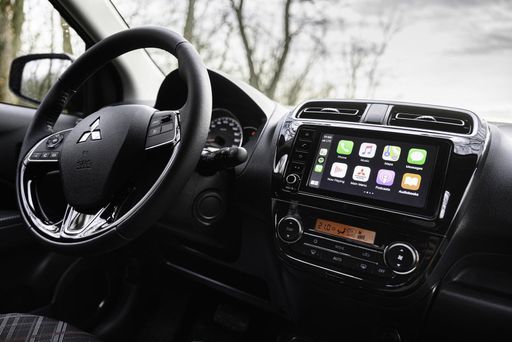
Inside the cabin, both the Colt and Space Star offer seating for five, ensuring that family trips or commuter carpooling don’t sacrifice space. The Colt provides up to 391 liters of trunk capacity, unlike the Space Star’s more modest 235 liters, allowing for more luggage when needed. If you require flexible cargo space, the Colt will be the more accommodating option.

Safety and Technology Features

Safety features and onboard technology play a vital role in the modern automotive landscape. Both models come equipped with essential safety features, but they differ in the level of technology integration. Recent models of the Colt include advanced driver assistance systems, contributing to its reputation for safety. The Space Star, while safe, may not boast the same level of technological sophistication.

Conclusion: Which is Right for You?

Ultimately, choosing between the Mitsubishi Colt and Space Star comes down to individual needs and preferences. The Colt presents a powerful, spacious, and technologically advanced option for those who prioritize performance and versatility. Conversely, the Space Star offers a practical, compact, and efficient choice, perfect for urban dwellers. Depending on your lifestyle and requirements, either choice from Mitsubishi could lead to a satisfying driving experience.

Here’s where it gets real: The technical differences in detail

Space Star

Costs and Efficiency:

Looking at overall running costs, both models reveal some interesting differences in everyday economy.

Mitsubishi Space Star is substantially cheaper – starting at 11,600 £ , while the Mitsubishi Colt costs 18,200 £ . That’s a price difference of around 6,514 £.

Fuel consumption also shows a difference: the Mitsubishi Colt uses 4.2 L/100km and is a bit more efficient than the Mitsubishi Space Star with 4.9 L/100km. The difference is about 0.7 L/100km.

Colt

Engine and Performance:

Under the bonnet, it becomes clear which model is tuned for sportiness and which one takes the lead when you hit the accelerator.

When it comes to engine power, the Mitsubishi Colt offers substantially more power – delivering 143 HP compared to 71 HP. That’s roughly 72 HP more horsepower.

When accelerating from 0 to 100 km/h, the Mitsubishi Colt is substantially quicker – completing the sprint in 9.3 s, while the Mitsubishi Space Star takes 14.1 s. That’s about 4.8 s quicker.

Looking at top speed, the Mitsubishi Colt is marginally faster – reaching 174 km/h, while the Mitsubishi Space Star tops out at 167 km/h. The difference is around 7 km/h.

There’s also a difference in torque: the Mitsubishi Colt delivers markedly more torque with 160 Nm compared to 102 Nm. That’s about 58 Nm more.

Space Star

Space and Everyday Use:

Whether family car or daily driver – which one offers more room, flexibility and comfort?

Both vehicles offer seating for 5 people.

In terms of curb weight, Mitsubishi Space Star is visibly lighter – 940 kg compared to 1,189 kg. The difference is around 249 kg.

Looking at boot space, the Mitsubishi Colt offers visibly more boot space – 391 L compared to 235 L. That’s a difference of about 156 L.

For maximum load capacity, the Mitsubishi Colt offers a bit more capacity – up to 1,069 L, about 157 L more than the Mitsubishi Space Star.

When it comes to payload, the Mitsubishi Space Star carries marginally more – 400 kg compared to 385 kg. That’s a difference of about 15 kg.

Who wins the race in the data check?

The Mitsubishi Colt stands well ahead of its rival in the objective data comparison.
This result only shows which model scores more points on paper – not which of the two cars feels right for you.

from £18,200
Colt

Mitsubishi Colt

  • Engine Type : Petrol, Full Hybrid
  • Transmission : Manuel, Automatic
  • Drive Type : Front-Wheel Drive
  • Power HP : 91 - 143 HP
  • Consumption L/100km : 4.2 - 5.3 L/100km
Mitsubishi Space Star
Mitsubishi Colt

Costs and Consumption

View detailed analysis

Engine and Performance

View detailed analysis

Dimensions and Body

View detailed analysis

Mitsubishi Space Star

The Mitsubishi Space Star is a tidy, no-nonsense city car that squeezes surprising interior space into a compact, easy-to-park package. It's not a thrill-seeker's toy, but for buyers after low running costs, fuss-free reliability and sensible day-to-day practicality, it's a clever and cheerful choice that keeps your wallet and nerves happy.

details

Mitsubishi Colt

The Mitsubishi Colt is a compact city hatch that blends sensible practicality with cheeky, no-nonsense styling, making it a confident companion for tight streets and daily errands. It may not be a playground for driving purists, but its easy-to-live-with manners, modest running costs and surprisingly roomy cabin make it a smart, sensible pick for urban buyers who value reliability over showmanship.

details
Mitsubishi Space Star
Mitsubishi Colt

Costs and Consumption

Price
11,600 - 18,700 £
Price
18,200 - 25,000 £
Consumption L/100km
4.9 - 5.5 L/100km
Consumption L/100km
4.2 - 5.3 L/100km
Consumption kWh/100km
-
Consumption kWh/100km
-
Electric Range
-
Electric Range
-
Battery Capacity
-
Battery Capacity
-
co2
112 - 125 g/km
co2
96 - 119 g/km
Fuel tank capacity
35 L
Fuel tank capacity
39 - 42 L

Dimensions and Body

Body Type
Hatchback
Body Type
Hatchback
Seats
5
Seats
5
Doors
5
Doors
5
Curb weight
940 - 1,011 kg
Curb weight
1,189 - 1,380 kg
Trunk capacity
209 - 235 L
Trunk capacity
301 - 391 L
Length
3,845 mm
Length
4,053 mm
Width
1,665 mm
Width
1,798 mm
Height
1,505 mm
Height
1,439 mm
Max trunk capacity
881 - 912 L
Max trunk capacity
979 - 1,069 L
Payload
359 - 400 kg
Payload
381 - 385 kg

Engine and Performance

Engine Type
Petrol
Engine Type
Petrol, Full Hybrid
Transmission
Manuel, Automatic
Transmission
Manuel, Automatic
Transmission Detail
Manual Gearbox, CVT
Transmission Detail
Manual Gearbox, Automatic Gearbox
Drive Type
Front-Wheel Drive
Drive Type
Front-Wheel Drive
Power HP
71 HP
Power HP
91 - 143 HP
Acceleration 0-100km/h
14.1 - 15.8 s
Acceleration 0-100km/h
9.3 - 12.2 s
Max Speed
163 - 167 km/h
Max Speed
174 km/h
Torque
102 Nm
Torque
148 - 160 Nm
Number of Cylinders
3
Number of Cylinders
3 - 4
Power kW
52 kW
Power kW
67 - 105 kW
Engine capacity
1,193 cm3
Engine capacity
999 - 1,598 cm3

General

Model Year
2,020 - 2,022
Model Year
2,023 - 2,025
CO2 Efficiency Class
C, D
CO2 Efficiency Class
D, C
Brand
Mitsubishi
Brand
Mitsubishi
DriveDuel uses data analysis and artificial intelligence to evaluate vehicle data and create content. Content is regularly reviewed and improved. The displayed prices are estimates based on German list prices, adjusted to the respective country’s VAT. Country-specific registration taxes are not included. This information is not legally binding.