VS

Mitsubishi Space Star vs Toyota Aygo - Differences and prices compared

Compare performance (71 HP vs 116 HP), boot space and price (11600 £ vs 15500 £ ) at a glance. Find out which car is the better choice for you – Mitsubishi Space Star or Toyota Aygo?

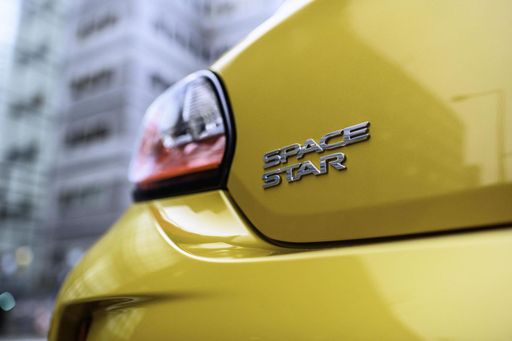
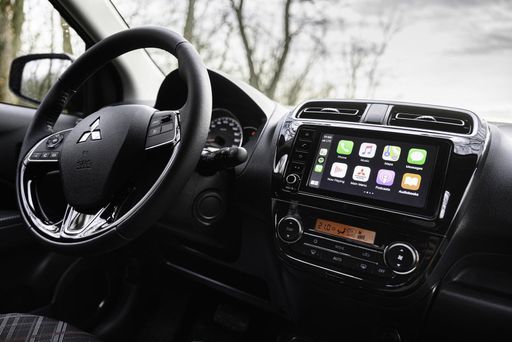
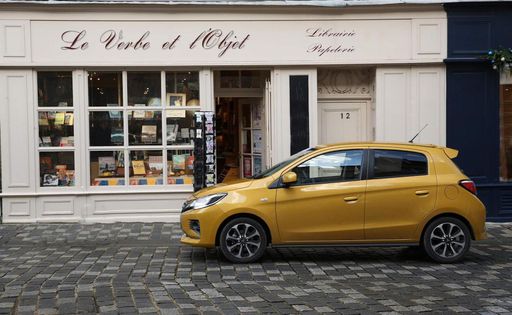
Space Star

In the world of compact cars, the Mitsubishi Space Star and Toyota Aygo are two prominent players vying for the attention of urban drivers. Both models stand out with their unique characteristics, appealing designs, and efficient performance. In this article, we will delve into these vehicles from a technical perspective and explore their innovations, helping prospective buyers make an informed choice.
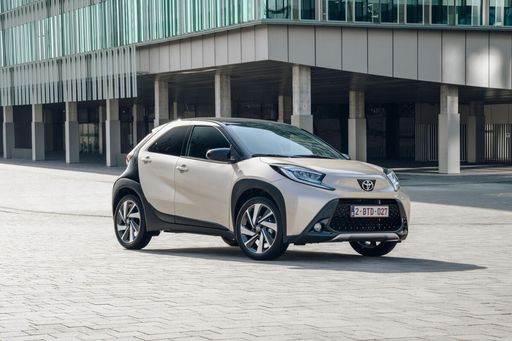
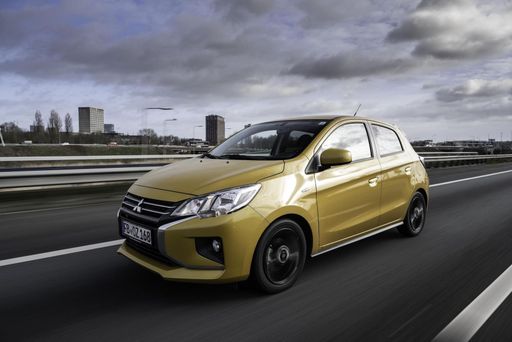
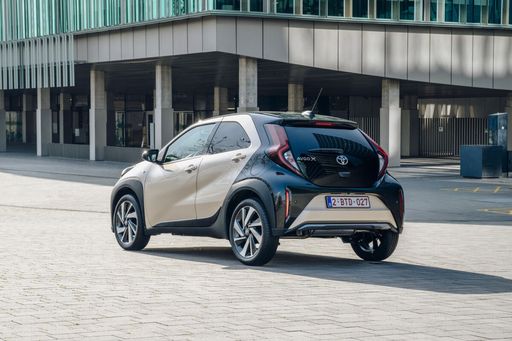
Aygo

Design and Dimensions

The Mitsubishi Space Star, a hatchback, measures 3845 mm in length, 1665 mm in width, and 1505 mm in height. Its compact dimensions make it well-suited for city driving, allowing for easy maneuvering and parking.

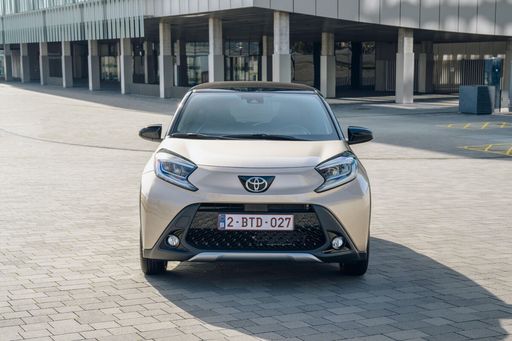
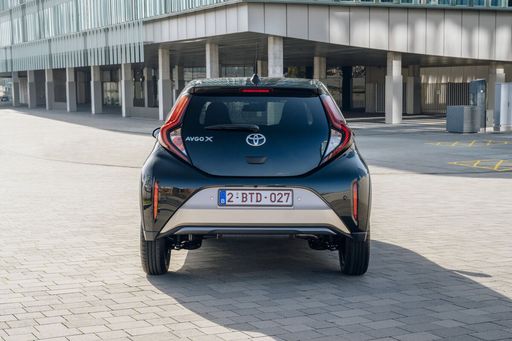
On the other hand, the Toyota Aygo, an SUV, features a slightly shorter length of 3700 mm but is wider at 1740 mm and taller at 1510 mm. This design gives the Aygo a more robust appearance and allows for a spacious interior, despite its smaller overall footprint.

Space Star

Powertrains and Performance

Both vehicles are equipped with petrol engines, offering a good blend of performance and efficiency. The Mitsubishi Space Star's 1.2-liter engine produces 71 HP, delivering a torque of 102 Nm. It can be paired with a manual gearbox or a CVT (Continuously Variable Transmission). With a 0-100 km/h acceleration time of 14.1 seconds, it can reach a top speed of 167 km/h.

Conversely, the Toyota Aygo boasts a slightly more powerful output of 72 HP from its 1.0-liter engine, generating 93 Nm of torque. Similar transmission options are available, and it completes the 0-100 km/h sprint in 15.5 seconds, with a maximum speed of 158 km/h. Both cars come with front-wheel drive, pairing efficiency with adequate performance for everyday commutes.

Aygo

Fuel Efficiency

Fuel economy is a crucial consideration for urban drivers, and both models perform admirably in this department. The Space Star offers fuel consumption figures ranging from 4.9 to 5.5 L/100km, while the Aygo presents marginally better efficiency, achieving figures between 4.8 to 4.9 L/100km. With both vehicles equipped with a fuel tank capacity of 35 liters, they are well-positioned for longer trips without frequent refueling.

Space Star

Cargo Space and Practicality

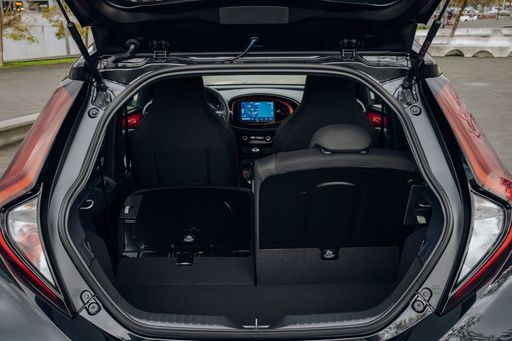
Practicality is another essential feature for city cars. The Mitsubishi Space Star has a trunk capacity of up to 235 liters, making it suitable for grocery runs or a weekend getaway. In comparison, the Toyota Aygo offers a slightly smaller trunk space of 231 liters, which still provides adequate room for daily essentials.

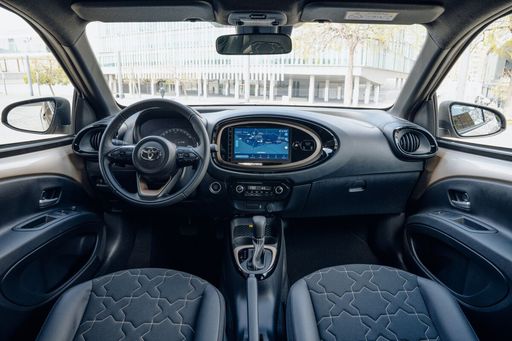
Both cars are designed with a 5-door configuration, enhancing accessibility for passengers and cargo alike. However, the Space Star seats five occupants comfortably, while the Aygo can accommodate four adults, which may influence buyer preference based on space needs.

Aygo

Environmental Considerations

With increasing emphasis on environmental friendliness, both the Space Star and Aygo offer low CO2 emissions. The Space Star produces between 112 to 125 g/km CO2, categorizing it in the C and D efficiency classes. In contrast, the Aygo stands out with emissions between 108 to 112 g/km, placing it firmly in the C efficiency class, which could appeal to eco-conscious drivers.

Space Star

Conclusion and Final Thoughts

In conclusion, the Mitsubishi Space Star and the Toyota Aygo have their own strengths, catering to different driver preferences. The Space Star impresses with its power, space, and a slight edge in performance, while the Aygo offers better fuel efficiency and lower emissions. As urbanization continues to grow, both vehicles are well-equipped to serve commuters seeking an efficient and compact solution. Ultimately, the choice may boil down to personal preference and brand loyalty, making a test drive an essential next step in deciding between these two noteworthy contenders.

Mitsubishi Space Star

Toyota Aygo

5 (1 Reviews)
rate

Here’s where it gets real: The technical differences in detail

Aygo

Costs and Efficiency:

Price and efficiency are often the first things buyers look at. Here it becomes clear which model has the long-term edge – whether at the pump, the plug, or in purchase price.

Mitsubishi Space Star has a distinct advantage in terms of price – it starts at 11600 £ , while the Toyota Aygo costs 15500 £ . That’s a price difference of around 3857 £.

Fuel consumption also shows a difference: Toyota Aygo manages with 3.70 L and is therefore distinct more efficient than the Mitsubishi Space Star with 4.90 L. The difference is about 1.20 L per 100 km.

Engine and Performance:

Power, torque and acceleration say a lot about how a car feels on the road. This is where you see which model delivers more driving dynamics.

When it comes to engine power, the Toyota Aygo has a evident edge – offering 116 HP compared to 71 HP. That’s roughly 45 HP more horsepower.

In acceleration from 0 to 100 km/h, the Toyota Aygo is significantly quicker – completing the sprint in 9.20 s, while the Mitsubishi Space Star takes 14.10 s. That’s about 4.90 s faster.

In terms of top speed, the Mitsubishi Space Star performs hardly perceptible better – reaching 167 km/h, while the Toyota Aygo tops out at 158 km/h. The difference is around 9 km/h.

There’s also a difference in torque: Toyota Aygo pulls a bit stronger with 120 Nm compared to 102 Nm. That’s about 18 Nm difference.

Space and Everyday Use:

Whether family car or daily driver – which one offers more room, flexibility and comfort?

Seats: Mitsubishi Space Star offers somewhat more seating capacity – 5 vs 4.

In curb weight, Mitsubishi Space Star is hardly perceptible lighter – 940 kg compared to 1015 kg. The difference is around 75 kg.

In terms of boot space, the Mitsubishi Space Star offers hardly perceptible more room – 235 L compared to 231 L. That’s a difference of about 4 L.

In maximum load capacity, the Mitsubishi Space Star performs barely noticeable better – up to 912 L, which is about 83 L more than the Toyota Aygo.

When it comes to payload, Toyota Aygo hardly perceptible takes the win – 420 kg compared to 400 kg. That’s a difference of about 20 kg.

Who wins the race in the data check?

The Toyota Aygo sits well ahead of its rival in the objective data comparison.
This result only shows which model scores more points on paper – not which of the two cars feels right for you.

Mitsubishi Space Star
Toyota Aygo

Costs and Consumption

View detailed analysis

Engine and Performance

View detailed analysis

Dimensions and Body

View detailed analysis
from about £15,500
Aygo

Toyota Aygo

  • Engine Type : Petrol, Full Hybrid
  • Transmission : Manuel, Automatic
  • Drive Type : Front-Wheel Drive
  • Power HP : 72 - 116 HP
  • Consumption L/100km : 3.7 - 4.9 L

Mitsubishi Space Star

The Mitsubishi Space Star is a tidy, no-nonsense city car that squeezes surprising interior space into a compact, easy-to-park package. It's not a thrill-seeker's toy, but for buyers after low running costs, fuss-free reliability and sensible day-to-day practicality, it's a clever and cheerful choice that keeps your wallet and nerves happy.

details

Toyota Aygo

5 (1 Reviews)
rate

The Aygo is a cheeky city car that turns congested streets into a playground, with bold styling and sprightly manners that make parking a pleasure rather than a pain. Economical to run and surprisingly well equipped for its size, the Aygo is a smart choice for urban buyers who want personality without a premium price and a car that brings a smile to the daily commute.

details
Mitsubishi Space Star
Toyota Aygo

Costs and Consumption

Price
11600 - 18700 £
Price
15500 - 24300 £
Consumption L/100km
4.9 - 5.5 L
Consumption L/100km
3.7 - 4.9 L
Consumption kWh/100km
-
Consumption kWh/100km
-
Electric Range
-
Electric Range
-
Battery Capacity
-
Battery Capacity
-
co2
112 - 125 g/km
co2
85 - 111 g/km
Fuel tank capacity
35 L
Fuel tank capacity
35 L

Dimensions and Body

Body Type
Hatchback
Body Type
SUV
Seats
5
Seats
4
Doors
5
Doors
5
Curb weight
940 - 1011 kg
Curb weight
1015 - 1090 kg
Trunk capacity
209 - 235 L
Trunk capacity
231 L
Length
3845 mm
Length
3700 mm
Width
1665 mm
Width
1740 mm
Height
1505 mm
Height
1510 mm
Max trunk capacity
881 - 912 L
Max trunk capacity
829 L
Payload
359 - 400 kg
Payload
345 - 420 kg

Engine and Performance

Engine Type
Petrol
Engine Type
Petrol, Full Hybrid
Transmission
Manuel, Automatic
Transmission
Manuel, Automatic
Transmission Detail
Manual Gearbox, CVT
Transmission Detail
Manual Gearbox, CVT
Drive Type
Front-Wheel Drive
Drive Type
Front-Wheel Drive
Power HP
71 HP
Power HP
72 - 116 HP
Acceleration 0-100km/h
14.1 - 15.8 s
Acceleration 0-100km/h
9.2 - 15.6 s
Max Speed
163 - 167 km/h
Max Speed
151 - 158 km/h
Torque
102 Nm
Torque
93 - 120 Nm
Number of Cylinders
3
Number of Cylinders
3
Power kW
52 kW
Power kW
53 - 85 kW
Engine capacity
1193 cm3
Engine capacity
998 - 1490 cm3

General

Model Year
2020 - 2022
Model Year
2024 - 2025
CO2 Efficiency Class
C, D
CO2 Efficiency Class
C, B
Brand
Mitsubishi
Brand
Toyota
What drivetrain options does the Mitsubishi Space Star have?

Available configurations include Front-Wheel Drive.

The prices shown are estimates based on German list prices, adjusted for local VAT. Local registration taxes (e.g. NoVA, BPM or CO2 malus) are not included. This information is not legally binding.