VS

Nissan Juke vs Fiat 600 comparison

Compare performance (143 HP vs 156 HP), boot space and price (21,400 £ vs 21,800 £ ) at a glance. Find out which car is the better choice for you – Nissan Juke or Fiat 600?

Nissan Juke vs Fiat 600: Key differences

Nissan Juke

5 (1 Reviews)
rate
  • only slightly cheaper
  • barely more efficient
  • only slightly lighter
  • marginally more trunk space

Fiat 600

4.8 (3 Reviews)
rate
  • marginally more power
  • somewhat quicker 0–100 km/h

All details on performance, efficiency, range and trunk space can be found in the technical comparison below – including user reviews for both models.

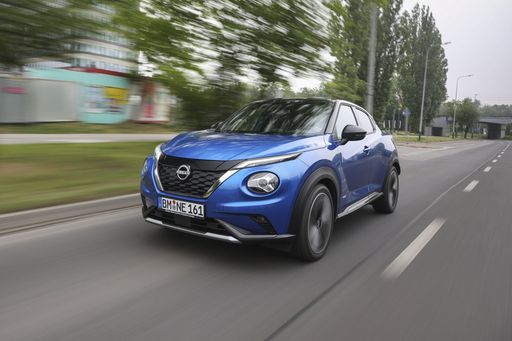
Juke

The automotive world is continuously evolving, and the compact SUV segment is no exception. Among the latest contenders in this increasingly competitive field are the Fiat 600 and Nissan Juke. Both vehicles cater to urban drivers seeking practicality, style, and innovation. In this article, we’ll compare the technical specifications and distinctive features of these two models to help you decide which one reigns supreme.
600

Price and Variants

Price is often a decisive factor when selecting a new vehicle. The Fiat 600 comes with a range of prices starting from €24,990 to €42,490, depending on the features you opt for. This price tier offers various configurations suited for different preferences and budgets.

On the other hand, the Nissan Juke starts at a slightly lower base price of €24,790, going up to €34,890. The Juke also provides several variants, catering to various driving needs and preferences, including petrol and hybrid options. The entry-level Juke models are priced competitively, making them appealing to a broad audience.

Juke

Engine Options and Performance

Under the hood, the Fiat 600 offers a choice of a petrol MHEV engine and a fully electric variant, with power outputs ranging from 100 HP to an impressive 156 HP. The electric range of 409 km is a standout feature, appealing to eco-conscious consumers.

The Nissan Juke, on the other hand, offers a broader range of engines with power ratings from 114 HP to 143 HP. Among its collection, traditional petrol engines and a full hybrid option are available, providing flexibility for those who desire an hybrid driving experience.

Acceleration figures are comparable, with the Fiat 600 achieving 0-100 km/h in as little as 8.5 seconds compared to the Juke’s best time of 10.1 seconds. Both vehicles feature front-wheel-drive systems, which enhance urban maneuverability.

600

Fuel Efficiency and CO2 Emissions

When it comes to fuel efficiency, the Fiat 600 shines with a consumption rate of just 4.8 L/100 km for its petrol engine variants. The electric version produces zero emissions, earning it a Class A CO2 efficiency rating, which is appealing for environmentally aware buyers.

In contrast, the Nissan Juke's fuel consumption ranges from 4.7 to 6 L/100 km, depending on the engine choice, with CO2 emissions between 107 to 137 g/km. While not as efficient as the Fiat, the Juke still holds its ground in terms of efficiency and cost-effectiveness for hybrid options.

Juke

Interior, Comfort, and Technology

Interior dimensions play an essential role in the user experience. The Fiat 600 has a slightly more compact design with a trunk capacity of 385 liters, while the Juke leads in practicality with a more spacious trunk of 422 liters. Both vehicles comfortably seat five, making them suitable for families or groups of friends.

Innovative technology features include the Fiat's advanced infotainment system, which incorporates intuitive smartphone connectivity and modern driver assistance features. Meanwhile, the Nissan Juke is equipped with Nissan's renowned safety and connectivity suite, making it a tech-savvy option.

Dimensions and Design

Dimensionally, the Fiat 600 measures 4178 mm in length, 1779 mm in width, and 1525 mm in height. Conversely, the Juke is slightly longer at 4210 mm and wider at 1800 mm, making it feel more substantial on the road. However, the more compact Fiat may be easier to navigate through tight urban confines.

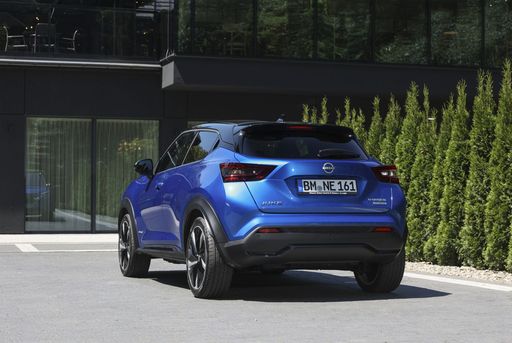
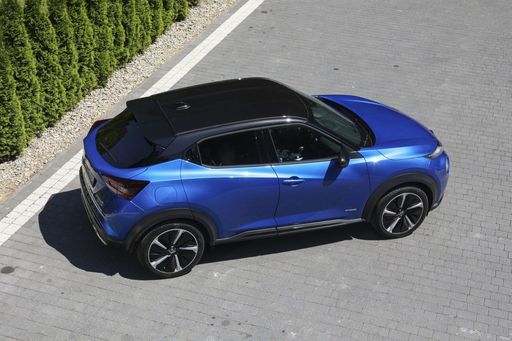
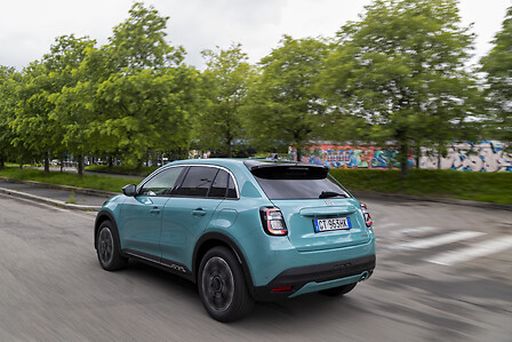
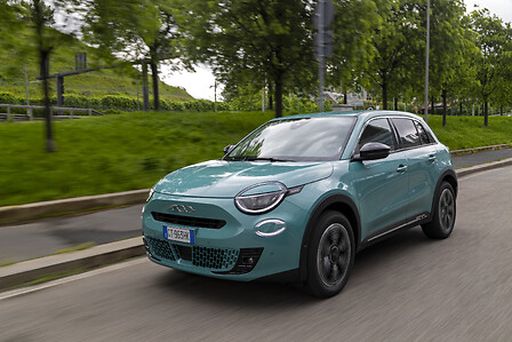
In terms of aesthetics, both vehicles boast modern designs that reflect their brands' identities. The Fiat 600 has a more traditional yet stylish appearance, while the Juke is celebrated for its bold, sporty stance and unique design cues.

Conclusion: Choosing Between the Fiat 600 and Nissan Juke

The comparison between the Fiat 600 and Nissan Juke ultimately boils down to individual needs and preferences. The Fiat 600 may appeal more to eco-conscious buyers and those seeking the latest technology, while the Juke provides a robust range of engine options, striking style, and practical space for families.

Both models offer distinct advantages, proving that the compact SUV market is alive with choices that cater to diverse driving experiences. As you explore these contenders, consider what fits your lifestyle best, and enjoy the journey towards your new car!

Here’s where it gets real: The technical differences in detail

Juke

Costs and Efficiency:

When it comes to price and running costs, the biggest differences usually appear. This is often where you see which car fits your budget better in the long run.

Nissan Juke is only slightly cheaper – starting at 21,400 £ , while the Fiat 600 costs 21,800 £ . That’s a price difference of around 463 £.

Fuel consumption also shows a difference: the Nissan Juke uses 4.7 L/100km and is barely more efficient than the Fiat 600 with 4.8 L/100km. The difference is about 0.1 L/100km.

600

Engine and Performance:

Power, torque and acceleration are the classic benchmarks for car enthusiasts – and here, some clear differences start to show.

When it comes to engine power, the Fiat 600 offers marginally more power – delivering 156 HP compared to 143 HP. That’s roughly 13 HP more horsepower.

When accelerating from 0 to 100 km/h, the Fiat 600 is somewhat quicker – completing the sprint in 8.5 s, while the Nissan Juke takes 10.1 s. That’s about 1.6 s quicker.

There’s also a difference in torque: the Fiat 600 delivers visibly more torque with 260 Nm compared to 200 Nm. That’s about 60 Nm more.

Juke

Space and Everyday Use:

Beyond pure performance, interior space and usability matter most in daily life. This is where you see which car is more practical and versatile.

Both vehicles offer seating for 5 people.

In terms of curb weight, Nissan Juke is only slightly lighter – 1,274 kg compared to 1,355 kg. The difference is around 81 kg.

Looking at boot space, the Nissan Juke offers marginally more boot space – 422 L compared to 385 L. That’s a difference of about 37 L.

When it comes to payload, the Fiat 600 carries marginally more – 430 kg compared to 427 kg. That’s a difference of about 3 kg.

Who wins the race in the data check?

The Fiat 600 stands well ahead of its rival in the objective data comparison.
This result only shows which model scores more points on paper – not which of the two cars feels right for you.

from £21,800
600

Fiat 600

  • Engine Type : Electric, Petrol MHEV
  • Transmission : Automatic
  • Drive Type : Front-Wheel Drive
  • Power HP : 110 - 156 HP
  • Consumption L/100km : 4.8 L/100km
  • Consumption kWh/100km : 15.1 kWh/100km
  • Electric Range : 409 km
Nissan Juke
Fiat 600

Costs and Consumption

View detailed analysis

Engine and Performance

View detailed analysis

Dimensions and Body

View detailed analysis

Nissan Juke

The Nissan Juke is a pocket-sized crossover that refuses to blend in, with quirky styling and a cheeky stance that turns heads at every traffic light. It’s ideal for shoppers who value personality and nimble urban driving over maximum practicality, delivering surprising pep and a well-equipped feel for everyday fun.

details

Fiat 600

The Fiat 600 is small, cheeky and utterly charming, a pocket-sized Italian that packs more personality than its size suggests. Ideal for city buyers who want fuss-free motoring with a playful driving character, it puts smiles ahead of spreadsheets.

details
Nissan Juke
Fiat 600

Costs and Consumption

Price
21,400 - 31,800 £
Price
21,800 - 31,300 £
Consumption L/100km
4.7 - 6 L/100km
Consumption L/100km
4.8 L/100km
Consumption kWh/100km
-
Consumption kWh/100km
15.1 kWh/100km
Electric Range
-
Electric Range
409 km
Battery Capacity
-
Battery Capacity
52 kWh
co2
105 - 136 g/km
co2
0 - 109 g/km
Fuel tank capacity
-
Fuel tank capacity
44 L

Dimensions and Body

Body Type
SUV
Body Type
SUV
Seats
5
Seats
5
Doors
-
Doors
5
Curb weight
1,274 - 1,405 kg
Curb weight
1,355 - 1,595 kg
Trunk capacity
354 - 422 L
Trunk capacity
360 - 385 L
Length
-
Length
4,178 mm
Width
1,800 mm
Width
1,779 mm
Height
-
Height
1,523 - 1,525 mm
Max trunk capacity
-
Max trunk capacity
1,231 - 1,256 L
Payload
405 - 427 kg
Payload
427 - 430 kg

Engine and Performance

Engine Type
Petrol, Full Hybrid
Engine Type
Electric, Petrol MHEV
Transmission
Manuel, Automatic
Transmission
Automatic
Transmission Detail
Manual Gearbox, Dual-Clutch Automatic, Automatic Gearbox
Transmission Detail
Reduction Gearbox, Dual-Clutch Automatic
Drive Type
Front-Wheel Drive
Drive Type
Front-Wheel Drive
Power HP
114 - 143 HP
Power HP
110 - 156 HP
Acceleration 0-100km/h
10.1 - 11.8 s
Acceleration 0-100km/h
8.5 - 10.5 s
Max Speed
-
Max Speed
150 - 200 km/h
Torque
200 Nm
Torque
205 - 260 Nm
Number of Cylinders
3 - 4
Number of Cylinders
3
Power kW
84 - 105 kW
Power kW
81 - 115 kW
Engine capacity
999 - 1,598 cm3
Engine capacity
1,199 cm3

General

Model Year
2,025
Model Year
2,023 - 2,025
CO2 Efficiency Class
D, E, C
CO2 Efficiency Class
A, C
Brand
Nissan
Brand
Fiat
DriveDuel uses data analysis and artificial intelligence to evaluate vehicle data and create content. Content is regularly reviewed and improved. The displayed prices are estimates based on German list prices, adjusted to the respective country’s VAT. Country-specific registration taxes are not included. This information is not legally binding.