
 Deutschland
 France
 Nederland
 Great Britain
 Sverige
 Norge
Norge Danmark
 Suomi
Suomi Italia
 Polska
 España
VS
Nissan Leaf vs SsangYong Korando - Differences and prices compared
Compare performance (217 HP vs 190 HP), boot space and price (30800 £ vs 27000 £ ) at a glance. Find out which car is the better choice for you – Nissan Leaf or SsangYong Korando?
Leaf
Costs and Efficiency:
Looking at overall running costs, both models reveal some interesting differences in everyday economy.
SsangYong Korando has a a bit advantage in terms of price – it starts at 27000 £ , while the Nissan Leaf costs 30800 £ . That’s a price difference of around 3780 £.
In terms of energy consumption, the advantage goes to the Nissan Leaf: with 16.70 kWh per 100 km, it’s barely noticeable more efficient than the SsangYong Korando with 16.80 kWh. That’s a difference of about 0.10 kWh.
As for electric range, the Nissan Leaf performs to a small extent better – achieving up to 385 km, about 46 km more than the SsangYong Korando.
Korando
Engine and Performance:
Under the bonnet, it becomes clear which model is tuned for sportiness and which one takes the lead when you hit the accelerator.
When it comes to engine power, the Nissan Leaf has a somewhat edge – offering 217 HP compared to 190 HP. That’s roughly 27 HP more horsepower.
In acceleration from 0 to 100 km/h, the Nissan Leaf is noticeable quicker – completing the sprint in 6.90 s, while the SsangYong Korando takes 8.40 s. That’s about 1.50 s faster.
In terms of top speed, the SsangYong Korando performs to a small extent better – reaching 191 km/h, while the Nissan Leaf tops out at 157 km/h. The difference is around 34 km/h.
There’s also a difference in torque: SsangYong Korando pulls minimal stronger with 360 Nm compared to 340 Nm. That’s about 20 Nm difference.
Ad · Affiliate


As an Amazon Associate, we earn from qualifying purchases.
Leaf
Space and Everyday Use:
Beyond pure performance, interior space and usability matter most in daily life. This is where you see which car is more practical and versatile.
Both vehicles offer seating for 5 people.
In curb weight, SsangYong Korando is minimal lighter – 1517 kg compared to 1580 kg. The difference is around 63 kg.
In terms of boot space, the SsangYong Korando offers distinct more room – 551 L compared to 394 L. That’s a difference of about 157 L.
In maximum load capacity, the SsangYong Korando performs noticeable better – up to 1248 L, which is about 458 L more than the Nissan Leaf.
When it comes to payload, SsangYong Korando slightly takes the win – 463 kg compared to 415 kg. That’s a difference of about 48 kg.
Who comes out on top?
Overall, the SsangYong Korando shows itself to be offers a more balanced package and secures the title of DriveDuel Champion.
It convinces with the more balanced overall package and proves to be the more versatile choice for everyday use.
from about £27,000
SsangYong Korando
Nissan Leaf
SsangYong Korando
Costs and Consumption
View detailed analysis
View detailed analysis
Engine and Performance
View detailed analysis
View detailed analysis
Dimensions and Body
View detailed analysis
View detailed analysis
Nissan Leaf
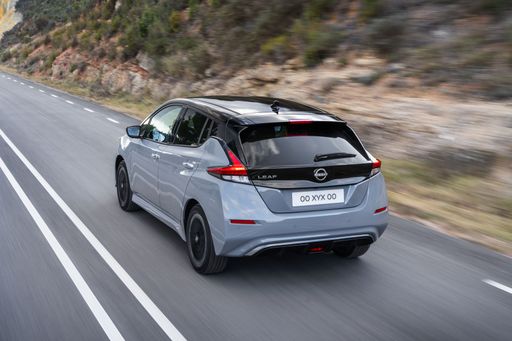
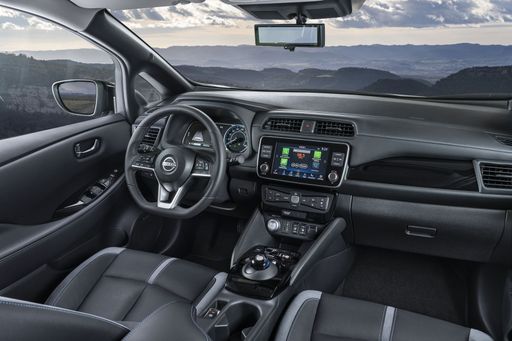
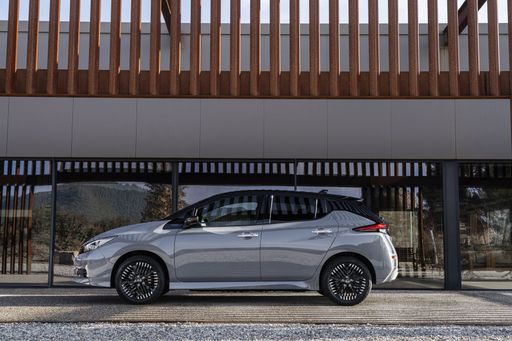
The Nissan Leaf is a practical, easygoing electric hatch that turns daily commutes into a quiet, effortless affair while offering more cabin space than it lets on. It’s a sensible, wallet-friendly step into electrification for buyers who value comfort and simplicity over sporty drama, though those chasing long-distance thrills might look elsewhere.
details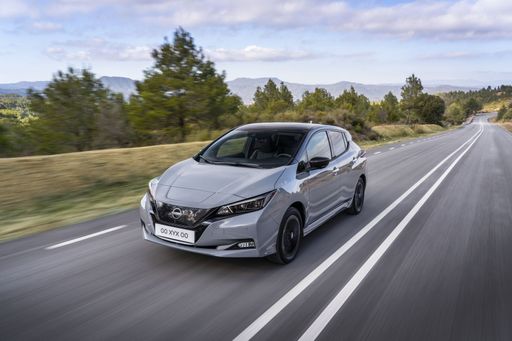
SsangYong Korando
4.4 (1 Reviews)
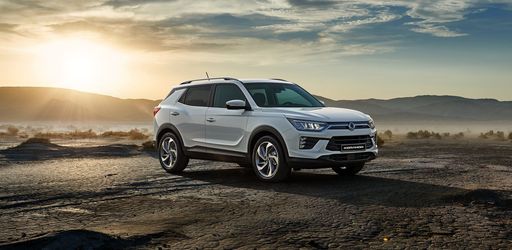
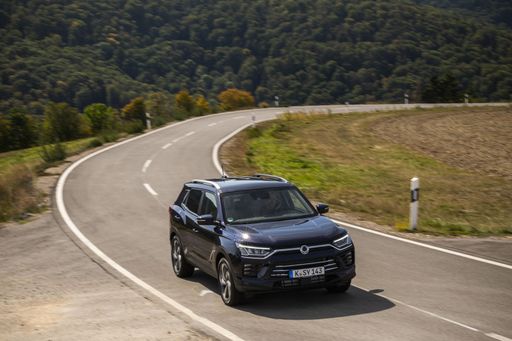
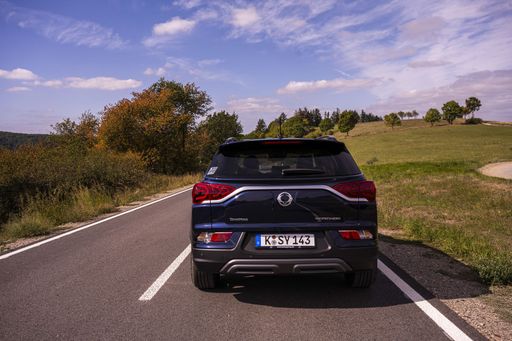
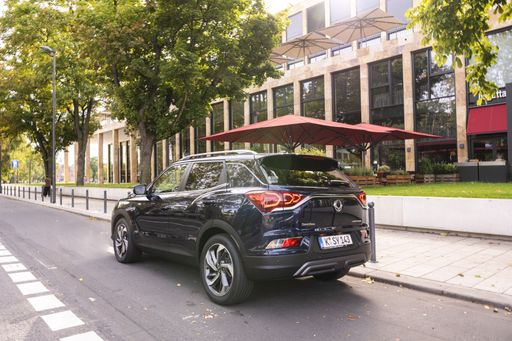
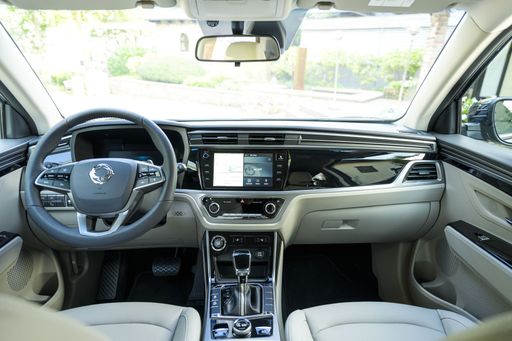
The SsangYong Korando pairs bold, modern styling with a surprisingly roomy and practical cabin, so it looks confident at the lights and handles the daily grind without fuss. It swaps flashy badges for honest value, offering a composed ride, useful equipment and wallet-friendly running that make it an appealing pick for buyers who'd rather spend on weekends than on extravagant finance packages.
details
Nissan Leaf
SsangYong Korando
Costs and Consumption |
|
|---|---|
|
Price
30800 - 37200 £
|
Price
27000 - 42000 £
|
|
Consumption L/100km
-
|
Consumption L/100km
7.5 - 8.6 L
|
|
Consumption kWh/100km
16.7 - 17.8 kWh
|
Consumption kWh/100km
16.80 kWh
|
|
Electric Range
270 - 385 km
|
Electric Range
339 km
|
|
Battery Capacity
39 - 59 kWh
|
Battery Capacity
-
|
|
co2
0 g/km
|
co2
0 - 197 g/km
|
|
Fuel tank capacity
-
|
Fuel tank capacity
50 L
|
Dimensions and Body |
|
|---|---|
|
Body Type
Hatchback
|
Body Type
SUV
|
|
Seats
5
|
Seats
5
|
|
Doors
5
|
Doors
5
|
|
Curb weight
1580 - 1756 kg
|
Curb weight
1517 - 1840 kg
|
|
Trunk capacity
385 - 394 L
|
Trunk capacity
551 L
|
|
Length
4490 mm
|
Length
4450 - 4465 mm
|
|
Width
1788 mm
|
Width
1870 mm
|
|
Height
1540 - 1545 mm
|
Height
1620 - 1645 mm
|
|
Max trunk capacity
790 L
|
Max trunk capacity
1248 L
|
|
Payload
384 - 415 kg
|
Payload
410 - 463 kg
|
Engine and Performance |
|
|---|---|
|
Engine Type
Electric
|
Engine Type
Petrol, Electric
|
|
Transmission
Automatic
|
Transmission
Manuel, Automatic
|
|
Transmission Detail
Reduction Gearbox
|
Transmission Detail
Manual Gearbox, Automatic Gearbox, Reduction Gearbox
|
|
Drive Type
Front-Wheel Drive
|
Drive Type
Front-Wheel Drive, All-Wheel Drive
|
|
Power HP
150 - 217 HP
|
Power HP
163 - 190 HP
|
|
Acceleration 0-100km/h
6.9 - 7.9 s
|
Acceleration 0-100km/h
8.40 s
|
|
Max Speed
144 - 157 km/h
|
Max Speed
156 - 191 km/h
|
|
Torque
320 - 340 Nm
|
Torque
260 - 360 Nm
|
|
Number of Cylinders
-
|
Number of Cylinders
4
|
|
Power kW
110 - 160 kW
|
Power kW
120 - 140 kW
|
|
Engine capacity
-
|
Engine capacity
1497 cm3
|
General |
|
|---|---|
|
Model Year
2019
|
Model Year
2021 - 2023
|
|
CO2 Efficiency Class
A
|
CO2 Efficiency Class
F, G, A
|
|
Brand
Nissan
|
Brand
SsangYong
|
What drivetrain options does the Nissan Leaf have?
Available configurations include Front-Wheel Drive.
The prices shown are estimates based on German list prices, adjusted for local VAT. Local registration taxes (e.g. NoVA, BPM or CO2 malus) are not included. This information is not legally binding.