VS

Nissan Micra vs Fiat 600 comparison

Compare performance (150 HP vs 156 HP), boot space and price (24,000 £ vs 21,000 £ ) at a glance. Find out which car is the better choice for you – Nissan Micra or Fiat 600?

Nissan Micra vs Fiat 600: Key differences

Nissan Micra

  • barely more efficient
  • barely more electric range
  • only slightly quicker 0–100 km/h
details

Fiat 600

4.8 (3 Reviews)
rate
  • a bit cheaper
  • marginally more power
  • somewhat lighter
details

All details on performance, efficiency, range and trunk space can be found in the technical comparison below – including user reviews for both models.

By Achim Sedelmaier

Micra

Fiat 600 VS Nissan Micra — quick snapshot

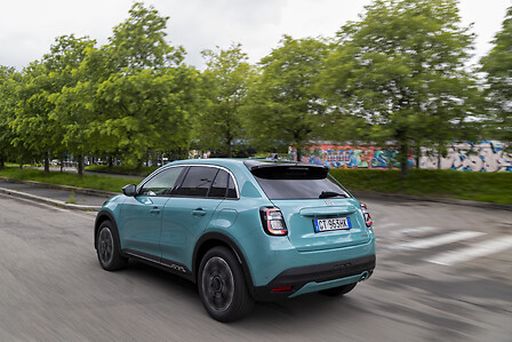
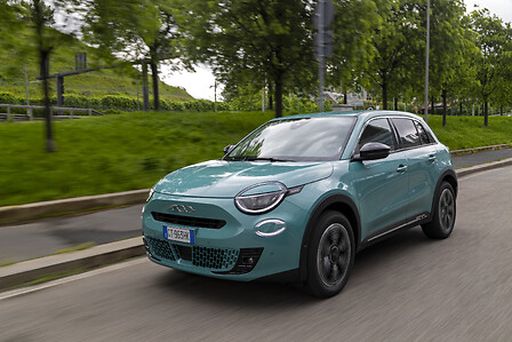
Fiat 600 and Nissan Micra arrive at the same buyer problems from very different directions: the Fiat trades on retro charm and city-focused usability (offered as both a hybrid and an electric), while the Micra is a pragmatic, quietly refined small EV with tidy tech and efficiency. The 600 pitches personality, simple physical controls and a lower entry price; the Micra answers with a composed ride, Google‑based infotainment and better long‑distance manners for an EV. Both are compact and easy to park, but the choice is essentially stylistic plus practical priorities rather than sheer capability. Read on for how that split shapes comfort, practicality and everyday ownership trade‑offs.
600

Character and driving feel

The Fiat 600 feels deliberately relaxed and friendly — steering is very light, responses are urbane rather than sporty, and the whole car leans into charm more than sharpness. The Nissan Micra, by contrast, drives with a grown‑up composure: its damping smooths bumps more confidently and the EV drivetrain’s one‑pedal control gives a composed, efficient cadence through town. Neither car is aimed at an enthusiast who wants tactile feedback or razor‑sharp handling; if you prize immediacy the Micra’s steadier, more predictable behavior will feel more grown‑up, while the 600 will reward buyers who want easy, cheerful city driving. In short, choose Fiat for personality and fuss‑free urban manners, Micra for tidy, assured everyday driving.

Comfort and long‑distance behavior

On long runs the Micra shows its strengths: quieter at speed for sustained cruising and a slightly more efficient electric package that reduces range anxiety on mixed trips, plus integrated navigation that helps manage charging stops. The Fiat’s electric version is happiest in town — remarkably silent at low speeds but it becomes livelier and thirstier on sustained motorway trips, while the hybrid avoids charging fuss and remains predictable on longer stages at the cost of engine noise under load. Seats and rear packaging make both cars better for shorter journeys; if you often cover motorway kilometres the Micra’s calmer long‑distance temperament is the practical choice, while the Fiat Hybrid is a better compromise for drivers who want to skip public charging entirely. Either way, expect both to be comfortable for two adults up front and less forgiving for three abreast in the rear.

Practicality and everyday usability

Practical differences matter: the Micra’s boot is straightforward and reliably usable for weekly shopping, but a high loading lip and no frunk make bulky items slightly awkward to stow. The Fiat counters with clever touches like a variable load floor on some versions and, in hybrid form, a bit more everyday payload flexibility — it’s better when you need to cram a couple of odd items in and forget about charging. Rear passenger space is a squeeze in both cars; growing families will notice limited knee room and only short‑haul comfort for adults in the back. If cargo handling and level loading are priorities, neither is class‑leading but each solves the job differently: Micra with a practical, honest cargo bay, Fiat with modularity and city‑oriented convenience.

Cabin feel, controls and perceived quality

The Fiat 600 sells an emotional package inside: playful styling, lots of physical buttons and an immediately likeable layout, but many surfaces are hard plastic and the overall finish feels intentionally modest. The Micra aims at a cleaner, more restrained cabin with sensible material choices and a more cohesive infotainment logic — its Google integration and one‑pedal setup simplify real‑world use. Both cabins are functional, but they give different impressions: the Fiat feels more cheerful and accessible, the Micra more neutral and slightly more solid. Buyers who care about tactile polish and a calmer presentation will tilt toward the Micra; those prioritising character and straightforward controls will prefer the Fiat.

Who should choose which car?

If you live mostly in town, value design and want the easiest ownership cost for short hops — or prefer the option of a hybrid to avoid public charging — the Fiat 600 is a natural fit: compact, charming and priced to attract lifestyle buyers. If your driving mixes city and longer runs, you want quieter high‑speed manners, integrated charging/navigation and a more subdued, practical interior, the Nissan Micra will suit you better as a pragmatic small EV. Families who regularly carry three adults or need big boots should look elsewhere; for urban singles or couples the decision comes down to whether you prioritise personality and a lower entry cost (Fiat) or composure, tech and EV efficiency (Micra). The technical comparison that follows will make the performance, range and charging trade‑offs behind these recommendations concrete for your use case.

Here’s where it gets real: The technical differences in detail

Micra

Costs and Efficiency:

Looking at overall running costs, both models reveal some interesting differences in everyday economy.

Fiat 600 is a bit cheaper – starting at 21,000 £ , while the Nissan Micra costs 24,000 £ . That’s a price difference of around 3,000 £.

In terms of energy consumption, the Nissan Micra is barely more efficient: consuming 14.2 kWh/100km compared to 15.1 kWh/100km for the Fiat 600. That’s a difference of about 0.9 kWh/100km.

As for electric range, the Nissan Micra offers barely more range – reaching up to 416 km, about 7 km more than the Fiat 600.

600

Engine and Performance:

Power, torque and acceleration say a lot about how a car feels on the road. This is where you see which model delivers more driving dynamics.

When it comes to engine power, the Fiat 600 offers marginally more power – delivering 156 HP compared to 150 HP. That’s roughly 6 HP more horsepower.

When accelerating from 0 to 100 km/h, the Nissan Micra is only slightly quicker – completing the sprint in 8 s, while the Fiat 600 takes 8.5 s. That’s about 0.5 s quicker.

There’s also a difference in torque: the Fiat 600 delivers barely more torque with 260 Nm compared to 245 Nm. That’s about 15 Nm more.

Space and Everyday Use:

Beyond pure performance, interior space and usability matter most in daily life. This is where you see which car is more practical and versatile.

Both vehicles offer seating for 5 people.

In terms of curb weight, Fiat 600 is somewhat lighter – 1,265 kg compared to 1,452 kg. The difference is around 187 kg.

When it comes to payload, the Fiat 600 carries noticeably more – 517 kg compared to 408 kg. That’s a difference of about 109 kg.

Who wins the race in the data check?

The Fiat 600 leads convincingly in the objective data comparison.
This result only shows which model scores more points on paper – not which of the two cars feels right for you.

from £21,000
600

Fiat 600

  • Engine Type Petrol MHEV, Electric, Petrol
  • Transmission Automatic, Manuel
  • Drive Type Front-Wheel Drive
  • Power HP 100 - 156 HP
  • Consumption L/100km 4.8 - 5.7 L/100km
  • Consumption kWh/100km 15.1 kWh/100km
  • Electric Range 409 km
Nissan Micra
Fiat 600

Costs and Consumption

View detailed analysis

Engine and Performance

View detailed analysis

Dimensions and Body

View detailed analysis

Nissan Micra

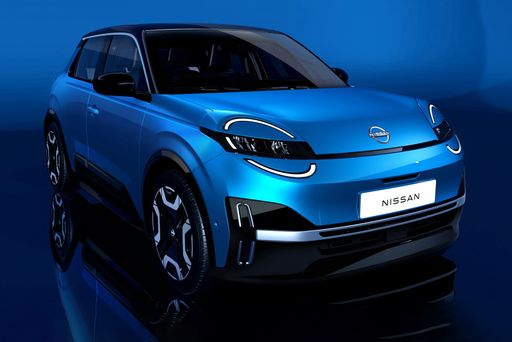
The Nissan Micra is a compact hatchback renowned for its agile handling and city-friendly dimensions. With a design that blends sleek curves with a practical layout, it appeals to urban drivers who value style and efficiency. Inside, the car offers a surprising amount of room and useful tech features, making it both a convenient and comfortable ride for daily commutes.

details

Fiat 600

The Fiat 600 is small, cheeky and utterly charming, a pocket-sized Italian that packs more personality than its size suggests. Ideal for city buyers who want fuss-free motoring with a playful driving character, it puts smiles ahead of spreadsheets.

details
Nissan Micra
Fiat 600

Costs and Consumption

Price
24,000 - 29,900 £
Price
21,000 - 31,300 £
Consumption L/100km
-
Consumption L/100km
4.8 - 5.7 L/100km
Consumption kWh/100km
14.2 - 14.7 kWh/100km
Consumption kWh/100km
15.1 kWh/100km
Electric Range
317 - 416 km
Electric Range
409 km
Battery Capacity
-
Battery Capacity
-
co2
0 g/km
co2
0 - 129 g/km
Fuel tank capacity
-
Fuel tank capacity
-

Dimensions and Body

Body Type
Hatchback
Body Type
SUV
Seats
5
Seats
5
Doors
-
Doors
-
Curb weight
1,452 - 1,527 kg
Curb weight
1,265 - 1,595 kg
Trunk capacity
-
Trunk capacity
360 - 385 L
Length
-
Length
-
Width
1,774 mm
Width
1,779 mm
Height
-
Height
-
Max trunk capacity
-
Max trunk capacity
-
Payload
403 - 408 kg
Payload
427 - 517 kg

Engine and Performance

Engine Type
Electric
Engine Type
Petrol MHEV, Electric, Petrol
Transmission
Automatic
Transmission
Automatic, Manuel
Transmission Detail
Reduction Gearbox
Transmission Detail
Dual-Clutch Automatic, Reduction Gearbox, Manual Gearbox
Drive Type
Front-Wheel Drive
Drive Type
Front-Wheel Drive
Power HP
122 - 150 HP
Power HP
100 - 156 HP
Acceleration 0-100km/h
8 - 9 s
Acceleration 0-100km/h
8.5 - 10.6 s
Max Speed
-
Max Speed
-
Torque
225 - 245 Nm
Torque
205 - 260 Nm
Number of Cylinders
-
Number of Cylinders
3
Power kW
90 - 110 kW
Power kW
74 - 115 kW
Engine capacity
-
Engine capacity
1,199 cm3

General

Model Year
2026
Model Year
2,025 - 2,026
CO2 Efficiency Class
A
CO2 Efficiency Class
C, A, D
Brand
Nissan
Brand
Fiat
DriveDuel uses data analysis and artificial intelligence to evaluate vehicle data and create content. Content is regularly reviewed and improved. The displayed prices are estimates based on German list prices, adjusted to the respective country’s VAT. Country-specific registration taxes are not included. This information is not legally binding.