VS

Nissan X-Trail vs Mazda CX-5 comparison

Compare performance (213 HP vs 141 HP), boot space and price (34,200 £ vs 30,000 £ ) at a glance. Find out which car is the better choice for you – Nissan X-Trail or Mazda CX-5?

Nissan X-Trail vs Mazda CX-5: Key differences

Nissan X-Trail

4.6 (5 Reviews)
rate
  • clearly more power
  • markedly more efficient
  • clearly quicker 0–100 km/h
  • barely more trunk space

Mazda CX-5

4.6 (7 Reviews)
rate
  • moderately cheaper
  • only slightly lighter

All details on performance, efficiency, range and trunk space can be found in the technical comparison below – including user reviews for both models.

X-Trail

When it comes to compact SUVs, the Mazda CX-5 and Nissan X-Trail are two popular choices that cater to a broad range of buyers. Both models boast a unique set of features, technologies, and performance capabilities that can confuse any potential buyer trying to decide between the two. In this comparison, we’ll delve into technical aspects, innovations, and other vital considerations that could influence your purchase decision.
CX-5

Design and Dimensions

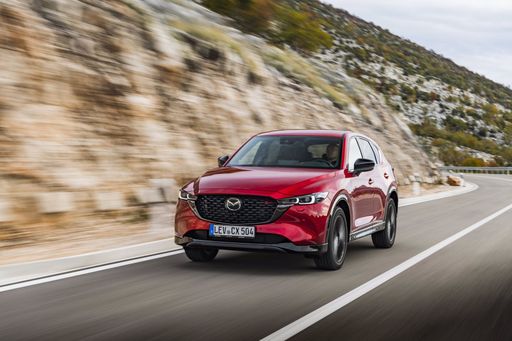
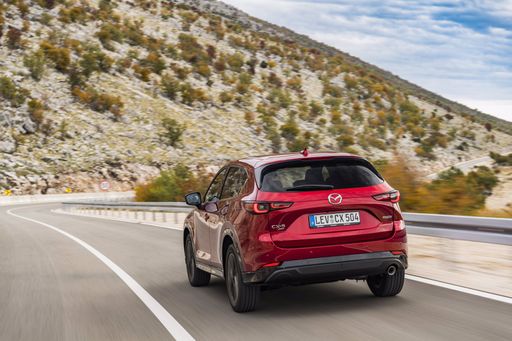
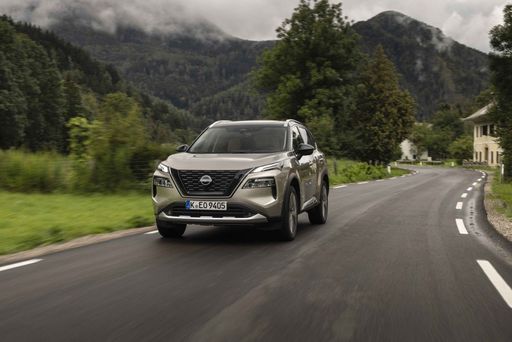
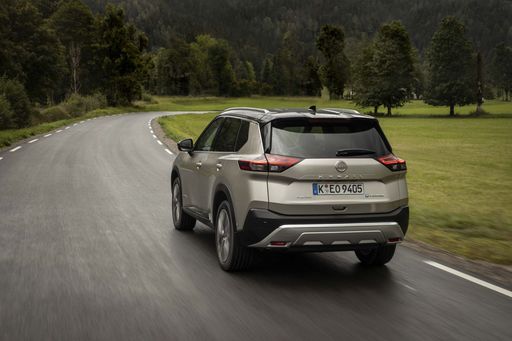
The Mazda CX-5 measures 4575 mm in length, 1845 mm in width, and stands at a height of 1680 mm. It offers a classy and sporty design language that's synonymous with the Mazda brand. The Nissan X-Trail, on the other hand, is slightly longer at 4680 mm, wider at 1840 mm, and taller at 1720 mm. This added height could provide the X-Trail with a more commanding view of the road, appealing to drivers seeking enhanced visibility.

X-Trail

Engine and Performance

The CX-5 comes equipped with multiple power trains including petrol MHEV and diesel options, delivering power outputs ranging from 150 to 194 HP. With a variety of transmissions available, including both manual and automatic, the CX-5 allows drivers to choose based on their preference. In contrast, the X-Trail primarily offers petrol MHEV and full hybrid configurations producing up to 213 HP. These models feature a CVT transmission, which aims to provide a smoother driving experience and better fuel efficiency.

CX-5

Fuel Efficiency

Fuel consumption is an essential aspect for many buyers, and the CX-5 offers an impressive range from 5.6 to 7.6 L/100km, making it quite competitive. The X-Trail also holds its ground with a range from 5.7 to 6.9 L/100km. This puts both vehicles within a reasonable range of efficiency, appealing to eco-conscious consumers.

X-Trail

Acceleration and Handling

Acceleration is where both vehicles showcase their capabilities. The CX-5, with its best acceleration time of 9.2 seconds for the 0-100 km/h range, provides a sporty driving feel. The X-Trail, however, edges ahead with its best time of just 7 seconds, signifying superior performance, particularly in urban settings or merging onto highways.

CX-5

Interior and Comfort

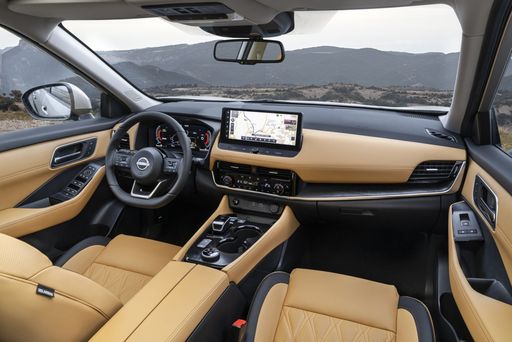
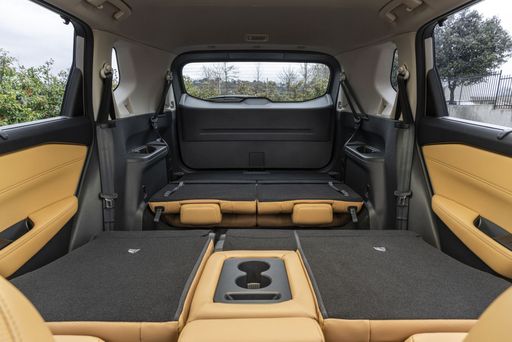
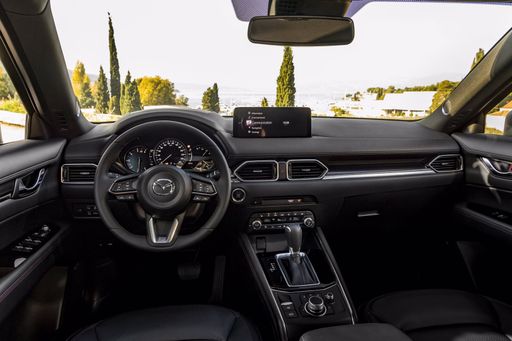
Inside, both models offer a comfortable and spacious cabin that can seat up to five passengers, although the X-Trail also has a seven-seat option. The Mazda CX-5 emphasizes a driver-focused interior with upscale materials, while the X-Trail offers versatility with plenty of storage compartments and enhanced trunk space, with capacities ranging from 575 to 585 litres – slightly more than the CX-5's 510 to 522 litres.

X-Trail

Safety Features

Both the CX-5 and X-Trail come equipped with a variety of advanced safety features, including lane departure warnings, adaptive cruise control, and emergency braking systems. These enhancements are essential in today’s driving environment where safety is a priority. Mazda's 'i-Activsense' and Nissan's 'ProPILOT Assist' technologies reflect the brands' commitments to driver safety and assistance.

Technological Innovations

The CX-5 includes Mazda's latest infotainment system, featuring a high-resolution display and connectivity options that support both Apple CarPlay and Android Auto. Nissan’s X-Trail also offers intuitive tech, such as a similar infotainment system, but with added features like a 360-degree camera view that enhances parking and maneuvering capabilities.

Conclusion

Choosing between the Mazda CX-5 and Nissan X-Trail ultimately comes down to personal preferences and specific requirements. The CX-5 appeals to those who desire a sporty and refined driving experience, while the X-Trail offers a versatile family-friendly alternative, especially for those needing more space or advanced safety features. Both models present worthy arguments, ensuring buyers will not be disappointed regardless of their choice.

Here’s where it gets real: The technical differences in detail

X-Trail

Costs and Efficiency:

When it comes to price and running costs, the biggest differences usually appear. This is often where you see which car fits your budget better in the long run.

Mazda CX-5 is moderately cheaper – starting at 30,000 £ , while the Nissan X-Trail costs 34,200 £ . That’s a price difference of around 4,166 £.

Fuel consumption also shows a difference: the Nissan X-Trail uses 5.7 L/100km and is markedly more efficient than the Mazda CX-5 with 7 L/100km. The difference is about 1.3 L/100km.

CX-5

Engine and Performance:

Under the bonnet, it becomes clear which model is tuned for sportiness and which one takes the lead when you hit the accelerator.

When it comes to engine power, the Nissan X-Trail offers clearly more power – delivering 213 HP compared to 141 HP. That’s roughly 72 HP more horsepower.

When accelerating from 0 to 100 km/h, the Nissan X-Trail is clearly quicker – completing the sprint in 7 s, while the Mazda CX-5 takes 10.5 s. That’s about 3.5 s quicker.

There’s also a difference in torque: the Nissan X-Trail delivers significantly more torque with 525 Nm compared to 238 Nm. That’s about 287 Nm more.

X-Trail

Space and Everyday Use:

Beyond pure performance, interior space and usability matter most in daily life. This is where you see which car is more practical and versatile.

Seats: Nissan X-Trail offers more seats – 7 vs 5.

In terms of curb weight, Mazda CX-5 is only slightly lighter – 1,629 kg compared to 1,668 kg. The difference is around 39 kg.

Looking at boot space, the Nissan X-Trail offers barely more boot space – 585 L compared to 583 L. That’s a difference of about 2 L.

When it comes to payload, the Mazda CX-5 carries marginally more – 601 kg compared to 574 kg. That’s a difference of about 27 kg.

Who wins the race in the data check?

The Nissan X-Trail is decisively ahead in the objective data comparison.
This result only shows which model scores more points on paper – not which of the two cars feels right for you.

from £34,200
X-Trail

Nissan X-Trail

  • Engine Type : Petrol MHEV, Full Hybrid
  • Transmission : Automatic
  • Drive Type : Front-Wheel Drive, All-Wheel Drive
  • Power HP : 163 - 213 HP
  • Consumption L/100km : 5.7 - 6.9 L/100km
Nissan X-Trail
Mazda CX-5

Costs and Consumption

View detailed analysis

Engine and Performance

View detailed analysis

Dimensions and Body

View detailed analysis

Nissan X-Trail

The Nissan X-Trail is a roomy, no-nonsense family SUV that mixes sensible practicality with a quietly modern look, making it an easy choice for busy lives and weekend escapes. It drives with calm confidence, delivers a comfortable ride and sensible tech, and won’t demand drama while doing the everyday heavy lifting.

details

Mazda CX-5

The Mazda CX-5 blends elegant, athletic styling with a surprisingly engaging driving character, turning routine trips into small, satisfying adventures. Inside it feels thoughtfully built and comfortable, offering sensible practicality and a premium feel that punches above its price.

details
Nissan X-Trail
Mazda CX-5

Costs and Consumption

Price
34,200 - 50,500 £
Price
30,000 - 39,500 £
Consumption L/100km
5.7 - 6.9 L/100km
Consumption L/100km
7 - 7.4 L/100km
Consumption kWh/100km
-
Consumption kWh/100km
-
Electric Range
-
Electric Range
-
Battery Capacity
-
Battery Capacity
-
co2
131 - 161 g/km
co2
157 - 168 g/km
Fuel tank capacity
-
Fuel tank capacity
56 - 58 L

Dimensions and Body

Body Type
SUV
Body Type
SUV
Seats
5 - 7
Seats
5
Doors
-
Doors
5
Curb weight
1,668 - 1,961 kg
Curb weight
1,629 - 1,671 kg
Trunk capacity
177 - 585 L
Trunk capacity
466 - 583 L
Length
-
Length
4,690 mm
Width
1,840 mm
Width
1,860 mm
Height
-
Height
1,695 mm
Max trunk capacity
-
Max trunk capacity
2,019 L
Payload
432 - 574 kg
Payload
601 kg

Engine and Performance

Engine Type
Petrol MHEV, Full Hybrid
Engine Type
Petrol MHEV
Transmission
Automatic
Transmission
Automatic
Transmission Detail
CVT, Reduction Gearbox
Transmission Detail
Automatic Gearbox
Drive Type
Front-Wheel Drive, All-Wheel Drive
Drive Type
Front-Wheel Drive, All-Wheel Drive
Power HP
163 - 213 HP
Power HP
141 HP
Acceleration 0-100km/h
7 - 9.6 s
Acceleration 0-100km/h
10.5 - 10.9 s
Max Speed
-
Max Speed
195 km/h
Torque
300 - 525 Nm
Torque
238 Nm
Number of Cylinders
3
Number of Cylinders
4
Power kW
120 - 157 kW
Power kW
104 kW
Engine capacity
1,497 cm3
Engine capacity
2,488 cm3

General

Model Year
2,025
Model Year
2,025
CO2 Efficiency Class
F, D, E
CO2 Efficiency Class
F
Brand
Nissan
Brand
Mazda
DriveDuel uses data analysis and artificial intelligence to evaluate vehicle data and create content. Content is regularly reviewed and improved. The displayed prices are estimates based on German list prices, adjusted to the respective country’s VAT. Country-specific registration taxes are not included. This information is not legally binding.