VS

Nissan X-Trail vs Peugeot 5008 comparison

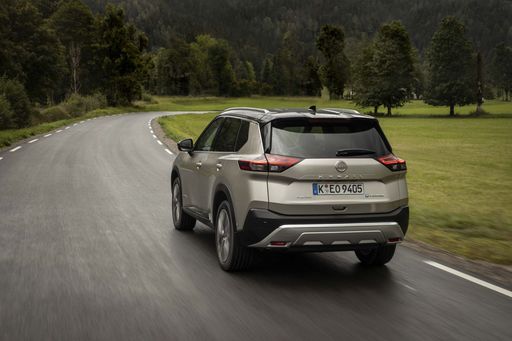
Compare performance (213 HP vs 325 HP), boot space and price (34,200 £ vs 39,300 £ ) at a glance. Find out which car is the better choice for you – Nissan X-Trail or Peugeot 5008?

Nissan X-Trail vs Peugeot 5008: Key differences

Nissan X-Trail

4.6 (5 Reviews)
rate
  • slightly cheaper
  • marginally lighter
  • clearly more trunk space
details

Peugeot 5008

4.7 (1 Reviews)
rate
  • visibly more power
  • clearly more efficient
  • marginally quicker 0–100 km/h
details

All details on performance, efficiency, range and trunk space can be found in the technical comparison below – including user reviews for both models.

By Achim Sedelmaier

X-Trail

Nissan X-Trail vs Peugeot 5008: The SUV Showdown

In the world of SUVs, the quest for the perfect balance between performance, efficiency, and innovation can be daunting. Today, we pit two formidable contenders against each other, the Nissan X-Trail and the Peugeot 5008, both representing the 2024 model year. Let’s delve into the intricacies and discover which vehicle stands out.
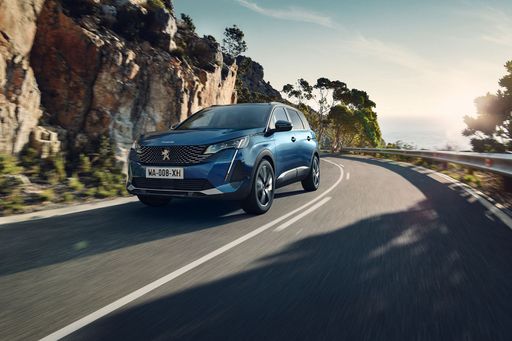
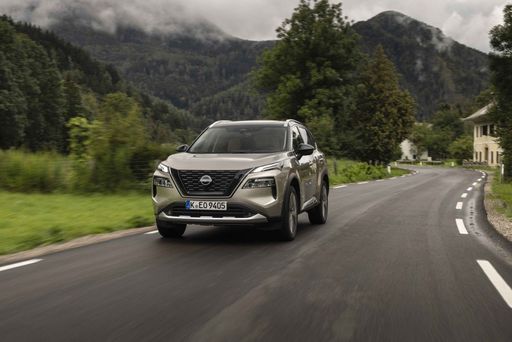
5008

Power and Performance

The Nissan X-Trail comes with a range of powertrain options, including a Petrol MHEV and a Full Hybrid variant. With power outputs ranging from 163 HP to 213 HP, the X-Trail offers a 3-cylinder engine that pairs with either a CVT or a Reduction Gearbox. For driving dynamics, buyers can choose between Front-Wheel Drive and All-Wheel Drive configurations. The X-Trail accelerates from 0 to 100 km/h in as fast as 7 seconds, with top speeds reaching up to 200 km/h, making it an agile companion on the road.

On the other hand, the Peugeot 5008 offers an equally compelling lineup with Petrol MHEV, Plugin Hybrid, and Electric options. Power ranges from 136 HP up to 231 HP, depending on the variant. The 5008 efficiently utilizes a Dual-Clutch Automatic or Reduction Gearbox, focusing on Front-Wheel Drive. With a 0 to 100 km/h dash in as little as 8.8 seconds for some models and a max speed hitting 220 km/h, the 5008 delivers a lively driving experience.

X-Trail

Fuel Efficiency and Environment

Efficiency is a critical consideration. The X-Trail delivers a consumption rate between 5.7 and 6.9 L/100km, with CO2 emissions ranging from 131 to 161 g/km, placing it in CO2 efficiency classes F to D.

Conversely, the Peugeot 5008 shines with a broader spectrum of efficiency, especially for those prioritizing eco-friendly driving. Its Plugin Hybrid variant boasts an impressively low 1 L/100km and CO2 emissions as minimal as 23 g/km, while the Electric version produces zero CO2 emissions, earning it a B to A efficiency class rating.

5008

Space and Practicality

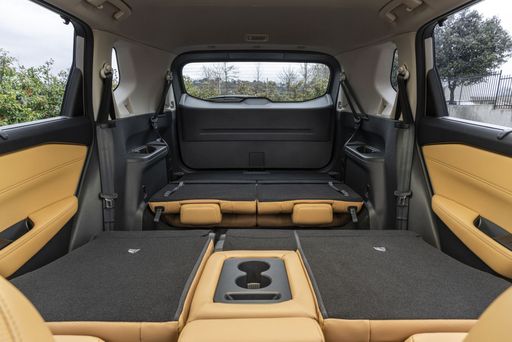
The Nissan X-Trail offers versatility with the option of 5 to 7 seats and a trunk capacity ranging from 177 to 585 liters, making it suitable for either daily commutes or family getaways. Its dimensions — 4680 mm in length, 1840 mm in width, and 1720 mm in height — ensure a spacious interior.

In contrast, the Peugeot 5008, a 7-seater by default, boasts a larger trunk capacity of 748 liters, providing ample space for luggage. Its larger body at 4791 mm in length, 1895 mm in width, and 1694 mm in height offers extra roominess, ensuring passenger comfort during long journeys.

X-Trail

Technological Innovations

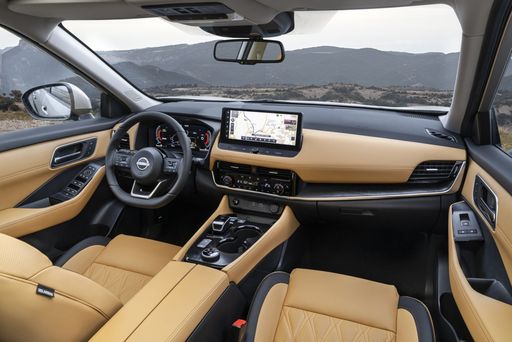
The tech-savvy buyer will find much to appreciate in both models. With the inclusion of advanced hybrid systems, the X-Trail comes equipped with modern tech to enhance fuel efficiency and driving pleasure. Meanwhile, Peugeot's 5008 has integrated state-of-the-art electric technology, allowing an impressive electric range reaching up to 664 km, setting a high bar for innovation in the SUV segment.

5008

Conclusion

The choice between the Nissan X-Trail and Peugeot 5008 ultimately boils down to individual preferences and priorities. For those leaning towards technological advancement and environmental consciousness coupled with spacious interiors, the Peugeot 5008 proves to be an excellent choice. Meanwhile, the Nissan X-Trail appeals to those seeking varied drivetrain options with a focus on dynamic performance and versatility. Either way, both 2024 models exemplify the ever-evolving landscape of SUVs, marking significant strides in innovation and design.

Here’s where it gets real: The technical differences in detail

X-Trail

Costs and Efficiency:

Price and efficiency are key factors when choosing a car – and this is often where the real differences emerge.

Nissan X-Trail is slightly cheaper – starting at 34,200 £ , while the Peugeot 5008 costs 39,300 £ . That’s a price difference of around 5,151 £.

Fuel consumption also shows a difference: the Peugeot 5008 uses 2.7 L/100km and is clearly more efficient than the Nissan X-Trail with 5.7 L/100km. The difference is about 3 L/100km.

5008

Engine and Performance:

Under the bonnet, it becomes clear which model is tuned for sportiness and which one takes the lead when you hit the accelerator.

When it comes to engine power, the Peugeot 5008 offers visibly more power – delivering 325 HP compared to 213 HP. That’s roughly 112 HP more horsepower.

When accelerating from 0 to 100 km/h, the Peugeot 5008 is marginally quicker – completing the sprint in 6.5 s, while the Nissan X-Trail takes 7 s. That’s about 0.5 s quicker.

There’s also a difference in torque: the Nissan X-Trail delivers very slightly more torque with 525 Nm compared to 511 Nm. That’s about 14 Nm more.

X-Trail

Space and Everyday Use:

Beyond pure performance, interior space and usability matter most in daily life. This is where you see which car is more practical and versatile.

Both vehicles offer seating for 7 people.

In terms of curb weight, Nissan X-Trail is marginally lighter – 1,668 kg compared to 1,700 kg. The difference is around 32 kg.

Looking at boot space, the Nissan X-Trail offers clearly more boot space – 585 L compared to 348 L. That’s a difference of about 237 L.

When it comes to payload, the Peugeot 5008 carries somewhat more – 640 kg compared to 574 kg. That’s a difference of about 66 kg.

Who wins the race in the data check?

The Peugeot 5008 holds a decisive overall lead in the objective data comparison.
This result only shows which model scores more points on paper – not which of the two cars feels right for you.

from £39,300
5008

Peugeot 5008

  • Engine Type Electric, Petrol MHEV, Plugin Hybrid
  • Transmission Automatic
  • Drive Type Front-Wheel Drive, All-Wheel Drive
  • Power HP 145 - 325 HP
  • Consumption L/100km 2.7 - 5.6 L/100km
  • Consumption kWh/100km 17.8 - 18.1 kWh/100km
  • Electric Range 78 - 669 km
Nissan X-Trail
Peugeot 5008

Costs and Consumption

View detailed analysis

Engine and Performance

View detailed analysis

Dimensions and Body

View detailed analysis

Nissan X-Trail

The Nissan X-Trail is a roomy, no-nonsense family SUV that mixes sensible practicality with a quietly modern look, making it an easy choice for busy lives and weekend escapes. It drives with calm confidence, delivers a comfortable ride and sensible tech, and won’t demand drama while doing the everyday heavy lifting.

details

Peugeot 5008

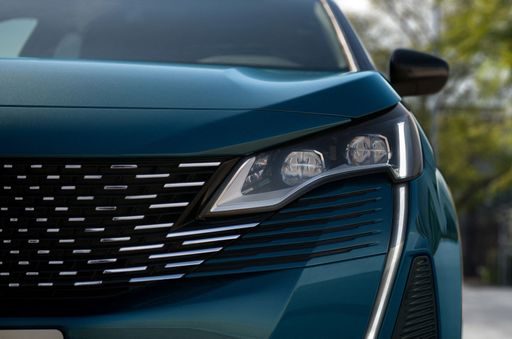
The Peugeot 5008 blends Peugeot's sharp design with the space and versatility families actually need, wrapping clever packaging and a premium-feeling cabin in a crisp, SUV-like silhouette. It drives with more poise than you'd expect from a people carrier, serves up practical touches and flexible seating for everyday chaos, and still looks good when parked outside the school gates.

details
Nissan X-Trail
Peugeot 5008

Costs and Consumption

Price
34,200 - 50,500 £
Price
39,300 - 54,300 £
Consumption L/100km
5.7 - 6.9 L/100km
Consumption L/100km
2.7 - 5.6 L/100km
Consumption kWh/100km
-
Consumption kWh/100km
17.8 - 18.1 kWh/100km
Electric Range
-
Electric Range
78 - 669 km
Battery Capacity
-
Battery Capacity
-
co2
131 - 161 g/km
co2
0 - 127 g/km
Fuel tank capacity
-
Fuel tank capacity
-

Dimensions and Body

Body Type
SUV
Body Type
SUV
Seats
5 - 7
Seats
7
Doors
-
Doors
-
Curb weight
1,668 - 1,961 kg
Curb weight
1,700 - 2,344 kg
Trunk capacity
177 - 585 L
Trunk capacity
294 - 348 L
Length
-
Length
-
Width
1,840 mm
Width
1,895 mm
Height
-
Height
-
Max trunk capacity
-
Max trunk capacity
-
Payload
432 - 574 kg
Payload
596 - 640 kg

Engine and Performance

Engine Type
Petrol MHEV, Full Hybrid
Engine Type
Electric, Petrol MHEV, Plugin Hybrid
Transmission
Automatic
Transmission
Automatic
Transmission Detail
CVT, Reduction Gearbox
Transmission Detail
Reduction Gearbox, Dual-Clutch Automatic
Drive Type
Front-Wheel Drive, All-Wheel Drive
Drive Type
Front-Wheel Drive, All-Wheel Drive
Power HP
163 - 213 HP
Power HP
145 - 325 HP
Acceleration 0-100km/h
7 - 9.6 s
Acceleration 0-100km/h
6.5 - 10.2 s
Max Speed
-
Max Speed
-
Torque
300 - 525 Nm
Torque
230 - 511 Nm
Number of Cylinders
3
Number of Cylinders
3 - 4
Power kW
120 - 157 kW
Power kW
107 - 239 kW
Engine capacity
1,497 cm3
Engine capacity
1,199 - 1,598 cm3

General

Model Year
2025
Model Year
2,024 - 2,026
CO2 Efficiency Class
F, D, E
CO2 Efficiency Class
A, D, B
Brand
Nissan
Brand
Peugeot
DriveDuel uses data analysis and artificial intelligence to evaluate vehicle data and create content. Content is regularly reviewed and improved. The displayed prices are estimates based on German list prices, adjusted to the respective country’s VAT. Country-specific registration taxes are not included. This information is not legally binding.