VS

Omoda 9 vs MG MGS9 comparison

Compare performance (537 HP vs 299 HP), boot space and price (45,300 £ vs 38,600 £ ) at a glance. Find out which car is the better choice for you – Omoda 9 or MG MGS9?

Omoda 9 vs MG MGS9: Key differences

Omoda 9

5 (1 Reviews)
rate
  • substantially more power
  • considerably more efficient
  • noticeably more electric range
  • substantially quicker 0–100 km/h
  • markedly more trunk space
details

MG MGS9

5 (1 Reviews)
rate
  • somewhat cheaper
  • marginally lighter
details

All details on performance, efficiency, range and trunk space can be found in the technical comparison below – including user reviews for both models.

By Achim Sedelmaier

9

MG MGS9 VS Omoda 9 — which big PHEV SUV fits your life?

MG MGS9 VS Omoda 9 pits a roomy, value‑focused 7‑seater against a tech‑rich, comfort‑oriented five‑seat cruiser. The MG MGS9 arrives as a pragmatic family machine that stretches equipment and seating into a surprisingly affordable package, while the Omoda 9 leans into long electric runs, refinement and a “fast‑premium” feel. Both aim at buyers who want electric driving most days, but they approach the job differently — one by packing people and kit, the other by stretching electric range and features. Read on to see how those different priorities change the everyday experience and which situations favour each car.
MGS9

Cabin comfort and perceived quality

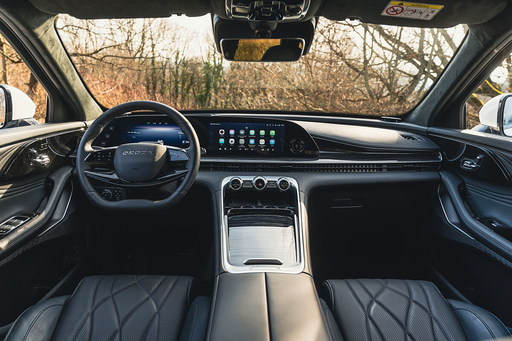
The Omoda 9 deliberately courts a near‑premium atmosphere: softer seats, quieter cruising and extras like ventilated rear seats that make long trips feel less tiring. The MG MGS9 counters with a thoroughly practical cabin — high equipment levels, three‑zone climate and thoughtful touches — that feels robust rather than luxurious. In everyday use the Omoda’s materials and quieter backdrop give a stronger sense of refinement, whereas the MGS9 trades that subtlety for functionality and more usable rear room. Infotainment is a sore spot for both: Omoda’s system is feature‑rich but menu‑heavy, MG’s is more straightforward but occasionally laggy, so each frustrates in different ways. If perceived quality and serenity matter more, Omoda leans premium; if thoughtful features and a family‑centric layout matter more, MG wins on substance.

9

Practicality and family usability

The MG MGS9 is built around carrying people: it genuinely offers seven seats with a sliding second row and useful towing and payload options that make it a true family workhorse. The Omoda 9 is roomier for four or five passengers and offers a larger, flatter boot, but it isn’t a seven‑seater and its cargo space is shallower in practice — useful for large suitcases but less flexible for awkward loads. Child‑seat mounting and second‑row comfort feel different too: the MG’s sliding seats help rear passengers, but it only has two ISOFIX anchors in the middle row, whereas the Omoda’s broad bench and flat floor simplify installation for most families. If you need genuine seven‑seat versatility or plan to tow, the MG MGS9 is the practical choice; if you carry people in the back often but seldom need a third row, the Omoda 9 gives a more comfortable, luggage‑friendly experience.

Driving character and long‑distance behavior

On the move the Omoda 9 presents itself as a calm, confident cruiser with a noticeably stronger electric reach and the ability to recharge quickly on long runs, which changes the trip planning equation. The MG MGS9 feels quieter and more composed around town thanks to its PHEV tuning that often behaves like an EV, but without the same rapid‑charging capability it reverts to hybrid mode for long motorway stretches. Steering and handling are another divide: MG’s setup is surprisingly assured for its class and encourages steady, predictable driving, while Omoda sacrifices sharpness for comfort and a laid‑back on‑road demeanor. For buyers who want fewer fuel stops and more sustained electric driving on long journeys, Omoda pulls ahead; for those prioritising calm, everyday electric driving around town and a relaxed highway demeanor without performance pretence, the MG suits better.

City friendliness and everyday usability

Both cars are big and require attention in tight urban environments, but they help in different ways: the Omoda 9 offsets bulk with a comprehensive camera suite and quiet, low‑vibration EV mode that makes parking and commutes pleasant. The MG MGS9 also benefits from silent electric running and useful parking aids, yet its length and third‑row access complicate city manoeuvres and day‑to‑day loading when all seats are in use. Controls diverge too — Omoda includes helpful physical knobs for climate and some convenience functions that reduce menu dives, while MG’s feature list is extensive but some touch functions are sluggish. If you live in a city and value serene EV drives and camera support, the Omoda 9 feels friendlier; if you need to haul a family and equipment around town, the MG MGS9’s practicality keeps it usable despite the size.

Buyer fit — who should choose which model?

Choose the MG MGS9 if your priority is maximum people‑carrying flexibility, a lower upfront cost and features tailored to family life: it’s the one that makes seven seats and towing usable without premium prices. Opt for the Omoda 9 if you place a premium on extended electric driving, rapid recharging on the road and a quieter, more feature‑rich cabin for long distances. Both cars can suit commuters who can charge at home, but the trade is clear — MG trades some refinement and charging convenience for space and payload, while Omoda trades a third row for a more refined electric experience. The technical comparison that follows will make those trade‑offs explicit in power, range, boot and price so you can match the numbers to the everyday priorities described here.

Here’s where it gets real: The technical differences in detail

9

Costs and Efficiency:

Price and efficiency are often the first things buyers look at. Here it becomes clear which model has the long-term edge – whether at the pump, the plug, or in purchase price.

MG MGS9 is somewhat cheaper – starting at 38,600 £ , while the Omoda 9 costs 45,300 £ . That’s a price difference of around 6,780 £.

Fuel consumption also shows a difference: the Omoda 9 uses 1.6 L/100km and is considerably more efficient than the MG MGS9 with 2.4 L/100km. The difference is about 0.8 L/100km.

As for electric range, the Omoda 9 offers noticeably more range – reaching up to 145 km, about 45 km more than the MG MGS9.

MGS9

Engine and Performance:

Power, torque and acceleration say a lot about how a car feels on the road. This is where you see which model delivers more driving dynamics.

When it comes to engine power, the Omoda 9 offers substantially more power – delivering 537 HP compared to 299 HP. That’s roughly 238 HP more horsepower.

When accelerating from 0 to 100 km/h, the Omoda 9 is substantially quicker – completing the sprint in 4.9 s, while the MG MGS9 takes 9.6 s. That’s about 4.7 s quicker.

There’s also a difference in torque: the Omoda 9 delivers clearly more torque with 650 Nm compared to 390 Nm. That’s about 260 Nm more.

9

Space and Everyday Use:

Whether family car or daily driver – which one offers more room, flexibility and comfort?

Seats: MG MGS9 offers more seats – 7 vs 5.

In terms of curb weight, MG MGS9 is marginally lighter – 2,160 kg compared to 2,270 kg. The difference is around 110 kg.

Looking at boot space, the Omoda 9 offers markedly more boot space – 471 L compared to 332 L. That’s a difference of about 139 L.

When it comes to payload, the MG MGS9 carries somewhat more – 557 kg compared to 447 kg. That’s a difference of about 110 kg.

Who wins the race in the data check?

The Omoda 9 is far ahead overall in the objective data comparison.
This result only shows which model scores more points on paper – not which of the two cars feels right for you.

£45,342
9

Omoda 9

  • Engine Type Plugin Hybrid
  • Transmission Automatic
  • Drive Type All-Wheel Drive
  • Power HP 537 HP
  • Consumption L/100km 1.6 L/100km
  • Electric Range 145 km
Omoda 9
MG MGS9

Costs and Consumption

View detailed analysis

Engine and Performance

View detailed analysis

Dimensions and Body

View detailed analysis

Omoda 9

The Omoda 9 blends bold, contemporary styling with a surprisingly spacious and well-appointed interior that punches above its class. It offers a composed, comfortable ride and modern infotainment and safety features that make it a strong choice for buyers wanting a practical yet stylish family crossover.

details

MG MGS9

The MG MGS9 presents itself as a stylish, value-focused flagship SUV with a roomy, well-equipped cabin and contemporary infotainment. It balances a comfortable ride with engaging handling, making it a compelling choice for buyers seeking a feature-rich alternative to established rivals.

details
Omoda 9
MG MGS9

Costs and Consumption

Price
45,300 £
Price
38,600 - 41,800 £
Consumption L/100km
1.6 L/100km
Consumption L/100km
2.4 L/100km
Consumption kWh/100km
-
Consumption kWh/100km
-
Electric Range
145 km
Electric Range
100 km
Battery Capacity
-
Battery Capacity
-
co2
38 g/km
co2
54 g/km
Fuel tank capacity
-
Fuel tank capacity
-

Dimensions and Body

Body Type
SUV
Body Type
SUV
Seats
5
Seats
7
Doors
-
Doors
-
Curb weight
2,270 kg
Curb weight
2,160 kg
Trunk capacity
471 L
Trunk capacity
332 L
Length
-
Length
-
Width
1,920 mm
Width
1,967 mm
Height
-
Height
-
Max trunk capacity
-
Max trunk capacity
-
Payload
447 kg
Payload
557 kg

Engine and Performance

Engine Type
Plugin Hybrid
Engine Type
Plugin Hybrid
Transmission
Automatic
Transmission
Automatic
Transmission Detail
Automatic Gearbox
Transmission Detail
Automatic Gearbox
Drive Type
All-Wheel Drive
Drive Type
Front-Wheel Drive
Power HP
537 HP
Power HP
299 HP
Acceleration 0-100km/h
4.9 s
Acceleration 0-100km/h
9.6 s
Max Speed
-
Max Speed
-
Torque
650 Nm
Torque
390 Nm
Number of Cylinders
4
Number of Cylinders
4
Power kW
395 kW
Power kW
220 kW
Engine capacity
1,499 cm3
Engine capacity
1,496 cm3

General

Model Year
2026
Model Year
2026
CO2 Efficiency Class
B
CO2 Efficiency Class
B
Brand
Omoda
Brand
MG
DriveDuel uses data analysis and artificial intelligence to evaluate vehicle data and create content. Content is regularly reviewed and improved. The displayed prices are estimates based on German list prices, adjusted to the respective country’s VAT. Country-specific registration taxes are not included. This information is not legally binding.