VS

Omoda 9 vs Toyota RAV4 comparison

Compare performance (537 HP vs 309 HP), boot space and price (45,300 £ vs 37,700 £ ) at a glance. Find out which car is the better choice for you – Omoda 9 or Toyota RAV4?

Omoda 9 vs Toyota RAV4: Key differences

Omoda 9

5 (1 Reviews)
rate
  • clearly more power
  • marginally more electric range
  • moderately quicker 0–100 km/h
details

Toyota RAV4

4.7 (11 Reviews)
rate
  • noticeably cheaper
  • markedly more efficient
  • visibly lighter
  • only slightly more trunk space
details

All details on performance, efficiency, range and trunk space can be found in the technical comparison below – including user reviews for both models.

By Achim Sedelmaier

9

Toyota RAV4 VS Omoda 9 — quick editorial snapshot

Toyota RAV4 and Omoda 9 occupy similar SUV footprints but aim at different real‑world priorities: the RAV4 leans on proven efficiency, roomy practicality and a calm, familiar feel, while the Omoda 9 sells a tech‑heavy, comfort‑focused plug‑in experience with more electric range and stronger on‑demand performance. The RAV4 feels like the conservative choice you won’t get tired of—simple controls, good rear space and predictably low running costs—whereas the Omoda 9 is trying to deliver “fast‑premium” equipment and longer electric driving for less money than true premium rivals. Price and specification play into the decision: the Omoda 9 brings more kit and EV focus for a higher outlay, the RAV4 returns savings across ownership thanks to its efficient drivetrain and reputation. Read on for how those differences matter day‑to‑day, from parking in town to hauling kids and luggage on holiday.
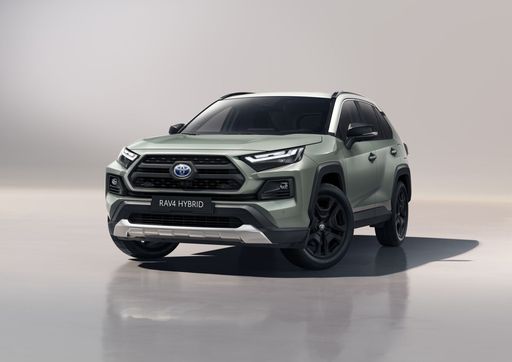
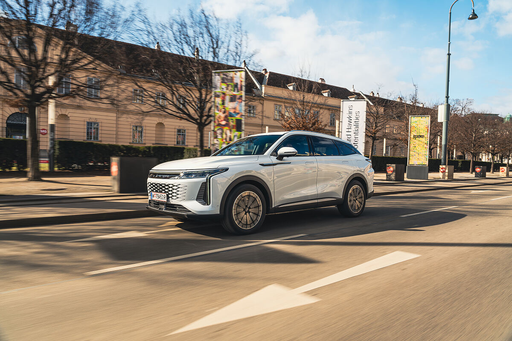
RAV4

Character and driving dynamics

Toyota RAV4 drives with a steady, composed character—gentle throttle response, predictable handling and a relaxed suspension bias that favours comfort over excitement. The Omoda 9, by contrast, feels more like a silent cruiser when you use its electric range: quicker when you want it and engineered to glide over long distances, but with a softer, less communicative steering feel. If you prefer confident, linear reactions and low running costs the RAV4’s hybrid setup rewards calm driving; if you prize shove and silent EV pull for overtakes or motorway merging the Omoda 9 delivers more immediacy. Both cars trade sportiness for serenity, but Toyota’s predictability suits drivers who value low stress, while Omoda’s shove and silence suit those who want modern EV sensations without premium pricing.

9

Comfort and cabin atmosphere

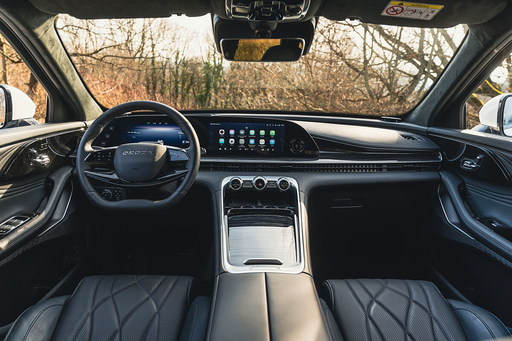
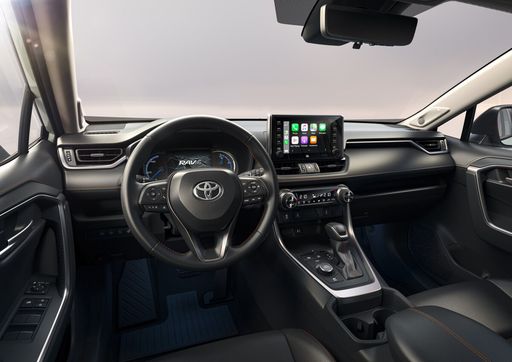
Toyota RAV4 presents a pragmatic cabin: roomy, easy to live with and ergonomically straightforward, but the materials tend toward hard, durable plastics that underline functionality rather than luxury. Omoda 9 aims higher on perceived comfort with softer seating, more rear comfort features and a fuller standard spec that makes the interior feel closer to the “almost premium” end of the segment. In everyday terms, RAV4 passengers get generous legroom and an uncomplicated layout that’s forgiving for kids and car seats, while Omoda 9 rear occupants benefit from adjustable backrests and ventilation, improving long‑haul comfort. The trade‑off is that Omoda’s extra features and glossier surfaces feel less proven and can expose small ergonomic niggles; RAV4 keeps things simple and reliably comfortable over years of use.

RAV4

Practicality and family usability

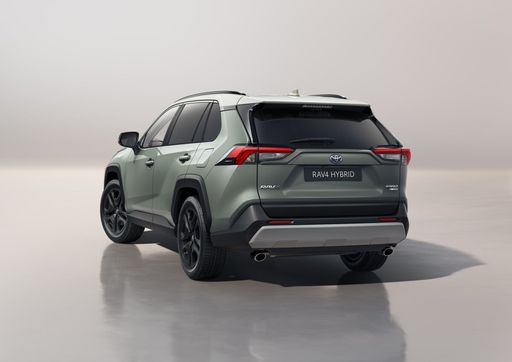
For straightforward family duties the Toyota RAV4 wins on usable boot shape, strong rear head‑ and legroom and a layout that makes loading children and luggage fuss‑free. The Omoda 9 offers a roomy, flat rear floor and clever rear comfort features that appeal to passenger‑first households, but its boot is a bit shallower and the floor layout limits flexible underfloor storage. RAV4’s straightforward packaging and generous payload make it easier if you regularly carry bulky items, whereas Omoda 9’s rear comfort and tech extras make it better for families who prioritise passenger amenities over maximum cargo versatility. Both have 60:40 rear splits and handle everyday family life well, but the RAV4 remains the more workmanlike, load‑friendly option while the Omoda 9 emphasises passenger comfort and electric range.

City friendliness versus motorway behaviour

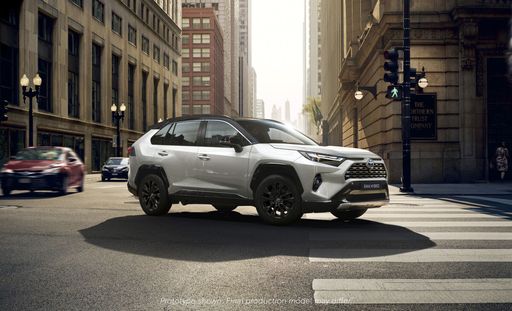
In urban use the Toyota RAV4’s hybrid driveline and light steering make stop‑start traffic and tight parking feel undemanding, and its high seating position helps visibility in busy streets. The Omoda 9 is quieter and more refined in pure electric city driving and benefits from a larger electric range, but its broader stance and longer turning circle make it less nimble in narrow lanes and old town centres. On motorways both cars settle into calm cruising, though the RAV4’s composed NVH and proven long‑distance manners feel slightly more insulated at sustained speeds, while Omoda 9 trades a whisper‑quiet cabin for a touch more road noise at higher speeds. If most miles are urban commutes with regular charging, Omoda 9’s EV focus rewards you; if you do a lot of mixed highway work without always charging, the RAV4’s hybrid efficiency and refinement are more practical.

Who each car suits — buyer fit and trade‑offs

Choose the Toyota RAV4 if you want a straightforward, cost‑sensible family SUV: low real‑world running costs, roomy rear seats and a no‑nonsense cabin that will feel familiar and reliable over time. The Omoda 9 is a better fit if you prioritise electric range, a high level of standard equipment and a quieter EV experience for daily commuting, and you’re willing to accept a softer ride, a wider footprint and a slightly more complicated infotainment setup. Both cars avoid sporty thrills: the RAV4 sacrifices excitement for calm efficiency while the Omoda 9 sacrifices steering feel for comfort and tech. With those buyer fits clear, the technical comparison that follows will help you match exact range, power and charging behaviours to your routine without naming an overall winner.

Here’s where it gets real: The technical differences in detail

9

Costs and Efficiency:

Price and efficiency are key factors when choosing a car – and this is often where the real differences emerge.

Toyota RAV4 is noticeably cheaper – starting at 37,700 £ , while the Omoda 9 costs 45,300 £ . That’s a price difference of around 7,637 £.

Fuel consumption also shows a difference: the Toyota RAV4 uses 1.3 L/100km and is markedly more efficient than the Omoda 9 with 1.6 L/100km. The difference is about 0.3 L/100km.

As for electric range, the Omoda 9 offers marginally more range – reaching up to 145 km, about 8 km more than the Toyota RAV4.

RAV4

Engine and Performance:

Power, torque and acceleration are the classic benchmarks for car enthusiasts – and here, some clear differences start to show.

When it comes to engine power, the Omoda 9 offers clearly more power – delivering 537 HP compared to 309 HP. That’s roughly 228 HP more horsepower.

When accelerating from 0 to 100 km/h, the Omoda 9 is moderately quicker – completing the sprint in 4.9 s, while the Toyota RAV4 takes 5.8 s. That’s about 0.9 s quicker.

9

Space and Everyday Use:

Whether family car or daily driver – which one offers more room, flexibility and comfort?

Both vehicles offer seating for 5 people.

In terms of curb weight, Toyota RAV4 is visibly lighter – 1,655 kg compared to 2,270 kg. The difference is around 615 kg.

Looking at boot space, the Toyota RAV4 offers only slightly more boot space – 514 L compared to 471 L. That’s a difference of about 43 L.

When it comes to payload, the Toyota RAV4 carries markedly more – 610 kg compared to 447 kg. That’s a difference of about 163 kg.

Who wins the race in the data check?

The Toyota RAV4 is decisively ahead in the objective data comparison.
This result only shows which model scores more points on paper – not which of the two cars feels right for you.

from £37,700
RAV4

Toyota RAV4

  • Engine Type Full Hybrid, Plugin Hybrid
  • Transmission Automatic
  • Drive Type Front-Wheel Drive, All-Wheel Drive
  • Power HP 185 - 309 HP
  • Consumption L/100km 1.3 - 5.3 L/100km
  • Electric Range 133 - 137 km
Omoda 9
Toyota RAV4

Costs and Consumption

View detailed analysis

Engine and Performance

View detailed analysis

Dimensions and Body

View detailed analysis

Omoda 9

The Omoda 9 blends bold, contemporary styling with a surprisingly spacious and well-appointed interior that punches above its class. It offers a composed, comfortable ride and modern infotainment and safety features that make it a strong choice for buyers wanting a practical yet stylish family crossover.

details

Toyota RAV4

The Toyota RAV4 is a well-rounded compact SUV that pairs everyday practicality with a comfortable, composed ride and generous cargo space, making it a sensible choice for families and active lifestyles. Its strong reputation for reliability, efficient drivetrains, and straightforward technology gives it wide appeal whether you value economy, comfort, or capability.

details
Omoda 9
Toyota RAV4

Costs and Consumption

Price
45,300 £
Price
37,700 - 54,200 £
Consumption L/100km
1.6 L/100km
Consumption L/100km
1.3 - 5.3 L/100km
Consumption kWh/100km
-
Consumption kWh/100km
-
Electric Range
145 km
Electric Range
133 - 137 km
Battery Capacity
-
Battery Capacity
-
co2
38 g/km
co2
30 - 121 g/km
Fuel tank capacity
-
Fuel tank capacity
-

Dimensions and Body

Body Type
SUV
Body Type
SUV
Seats
5
Seats
5
Doors
-
Doors
-
Curb weight
2,270 kg
Curb weight
1,655 - 1,960 kg
Trunk capacity
471 L
Trunk capacity
446 - 514 L
Length
-
Length
-
Width
1,920 mm
Width
1,880 mm
Height
-
Height
-
Max trunk capacity
-
Max trunk capacity
-
Payload
447 kg
Payload
515 - 610 kg

Engine and Performance

Engine Type
Plugin Hybrid
Engine Type
Full Hybrid, Plugin Hybrid
Transmission
Automatic
Transmission
Automatic
Transmission Detail
Automatic Gearbox
Transmission Detail
CVT
Drive Type
All-Wheel Drive
Drive Type
Front-Wheel Drive, All-Wheel Drive
Power HP
537 HP
Power HP
185 - 309 HP
Acceleration 0-100km/h
4.9 s
Acceleration 0-100km/h
5.8 - 8 s
Max Speed
-
Max Speed
-
Torque
650 Nm
Torque
-
Number of Cylinders
4
Number of Cylinders
4
Power kW
395 kW
Power kW
136 - 227 kW
Engine capacity
1,499 cm3
Engine capacity
2,487 cm3

General

Model Year
2026
Model Year
2026
CO2 Efficiency Class
B
CO2 Efficiency Class
C, D, B
Brand
Omoda
Brand
Toyota
DriveDuel uses data analysis and artificial intelligence to evaluate vehicle data and create content. Content is regularly reviewed and improved. The displayed prices are estimates based on German list prices, adjusted to the respective country’s VAT. Country-specific registration taxes are not included. This information is not legally binding.