VS

Vauxhall Astra vs Peugeot 508 SW comparison

Compare performance (196 HP vs 360 HP), boot space and price (28,300 £ vs 45,600 £ ) at a glance. Find out which car is the better choice for you – Vauxhall Astra or Peugeot 508 SW?

Vauxhall Astra vs Peugeot 508 SW: Key differences

Vauxhall Astra

4.7 (1 Reviews)
rate
  • significantly cheaper
  • substantially more electric range
  • clearly lighter
details

Peugeot 508 SW

4.7 (1 Reviews)
rate
  • substantially more power
  • noticeably more efficient
  • substantially quicker 0–100 km/h
  • noticeably more trunk space
details

By Achim Sedelmaier

Astra

In the competitive world of European automobiles, the Opel Astra and Peugeot 508 SW stand out as two compelling options for buyers seeking something practical yet stylish. Both models boast their unique technical aspects and innovations, making this comparison worth exploring for potential owners.
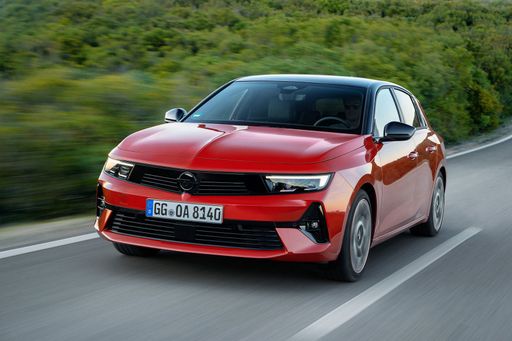
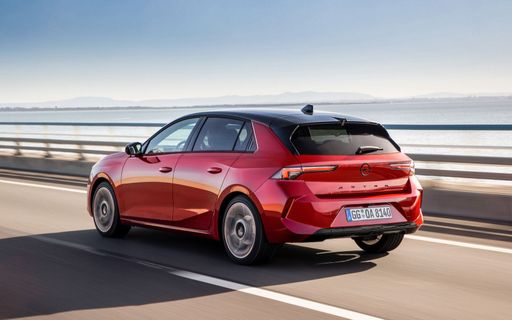
508 SW

Design and Dimensions

The Opel Astra, known for its hatchback design, measures 4,374 mm in length, 1,860 mm in width, and stands 1,441 mm high. With its sleek form and modern aesthetics, it embodies the spirit of a dynamic hatchback.

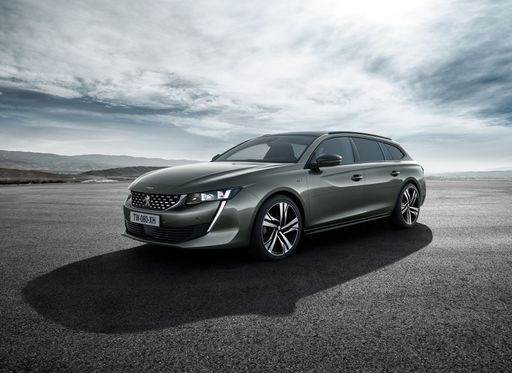
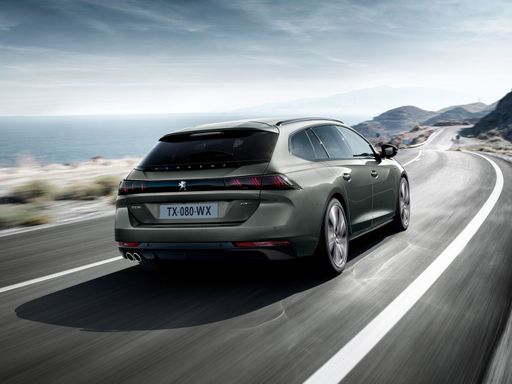
In contrast, the Peugeot 508 SW is a wagon that clearly prioritizes space and practicality, measuring 4,778 mm in length and 1,859 mm in width, with a lower height of 1,420 mm. This gives the 508 SW a more elongated profile, ideal for families or individuals needing extra cargo room.

Astra

Performance: Engine Options and Transmissions

The Astra offers a variety of engine types, including petrol, diesel, mild-hybrid, plug-in hybrid models, and even an electric variant. With power outputs ranging from 110 HP in its base petrol engine to an impressive 225 HP in the top-tier version, it provides a robust range for various driving needs. The Astra also features various transmission options, including automatic (dual-clutch and standard) and manual gearboxes.

On the other hand, the Peugeot 508 SW comes with powerful plug-in hybrid engines, delivering between 180 HP to 360 HP. With a single automatic transmission available, the focus here is on delivering seamless performance. Notably, the 508 SW can come equipped with all-wheel drive for enhanced traction and stability.

508 SW

Efficiency and Fuel Consumption

Fuel efficiency is crucial in today's automotive market, and both vehicles make impressive offerings. The Astra’s consumption ranges from 1.3 L/100 km for its plug-in hybrid variant to around 5.8 L/100 km for its petrol models, while its electric range can reach up to 418 km.

The Peugeot 508 SW shines in the efficiency department with a maximum consumption as low as 1.4 L/100 km, making it an enticing option for eco-conscious drivers. Its electric range, however, tops at 46 km, which is a bit limited compared to the Astra's hybrid offerings.

Astra

Interior and Comfort

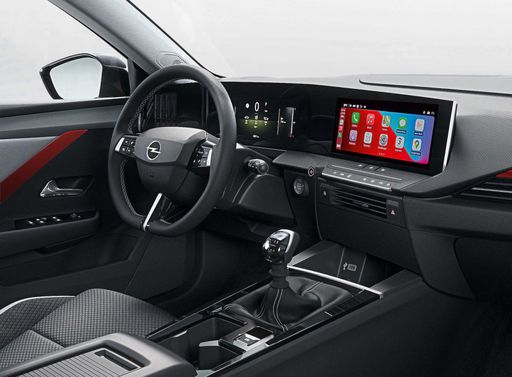
Within the Opel Astra lies a well-designed cabin that comfortably seats five, offering quality materials and intuitive technology integration. The cargo space is practical, boasting 422 liters of trunk capacity, making it suitable for everyday use.

In comparison, the 508 SW excels in interior space, providing ample room for passengers and their belongings, with a trunk capacity of 530 liters. This additional space is particularly beneficial for families or those who frequently embark on road trips.

508 SW

Technological Innovations

Both models come equipped with a range of technological features designed to enhance driving experience and safety. The Astra includes advanced driver assistance systems, infotainment options with touchscreen interfaces, and smartphone integration capabilities.

The Peugeot 508 SW, meanwhile, integrates cutting-edge technology such as a high-resolution digital cockpit, advanced navigation features, and a suite of safety measures that include autonomous emergency braking and lane-keeping assistance. Its emphasis on driver comfort and high-tech features offers a more luxurious feel.

Conclusion: Which One Should You Choose?

Choosing between the Opel Astra and the Peugeot 508 SW ultimately hinges on your individual needs and preferences. If you prioritize fuel efficiency, advanced hybrid technology, and a compact form-factor, the Astra may be your ideal companion. Conversely, if you seek space, innovation, and the luxury of a stylish wagon, the 508 SW is hard to overlook.

Both vehicles have their strengths, ensuring they cater to a diverse range of drivers in today’s dynamic automotive market. Whether you're commuting daily or setting out on longer journeys, either vehicle can offer you a reliable and enjoyable driving experience.

Here’s where it gets real: The technical differences in detail

Astra

Costs and Efficiency:

Price and efficiency are key factors when choosing a car – and this is often where the real differences emerge.

Vauxhall Astra is significantly cheaper – starting at 28,300 £ , while the Peugeot 508 SW costs 45,600 £ . That’s a price difference of around 17,323 £.

Fuel consumption also shows a difference: the Peugeot 508 SW uses 1.7 L/100km and is noticeably more efficient than the Vauxhall Astra with 2.2 L/100km. The difference is about 0.5 L/100km.

As for electric range, the Vauxhall Astra offers substantially more range – reaching up to 454 km, about 402 km more than the Peugeot 508 SW.

508 SW

Engine and Performance:

Under the bonnet, it becomes clear which model is tuned for sportiness and which one takes the lead when you hit the accelerator.

When it comes to engine power, the Peugeot 508 SW offers substantially more power – delivering 360 HP compared to 196 HP. That’s roughly 164 HP more horsepower.

When accelerating from 0 to 100 km/h, the Peugeot 508 SW is substantially quicker – completing the sprint in 5.2 s, while the Vauxhall Astra takes 7.6 s. That’s about 2.4 s quicker.

There’s also a difference in torque: the Peugeot 508 SW delivers clearly more torque with 520 Nm compared to 360 Nm. That’s about 160 Nm more.

Astra

Space and Everyday Use:

Whether family car or daily driver – which one offers more room, flexibility and comfort?

Both vehicles offer seating for 5 people.

In terms of curb weight, Vauxhall Astra is clearly lighter – 1,438 kg compared to 1,846 kg. The difference is around 408 kg.

Looking at boot space, the Peugeot 508 SW offers noticeably more boot space – 530 L compared to 422 L. That’s a difference of about 108 L.

When it comes to payload, the Vauxhall Astra carries barely more – 502 kg compared to 454 kg. That’s a difference of about 48 kg.

Who wins the race in the data check?

The Vauxhall Astra is decisively ahead in the objective data comparison.
This result only shows which model scores more points on paper – not which of the two cars feels right for you.

from £28,300
Astra

Vauxhall Astra

  • Engine Type : Petrol MHEV, Plugin Hybrid, Diesel, Electric
  • Transmission : Automatic
  • Drive Type : Front-Wheel Drive
  • Power HP : 130 - 196 HP
  • Consumption L/100km : 2.2 - 4.9 L/100km
  • Consumption kWh/100km : 15.3 kWh/100km
  • Electric Range : 83 - 454 km
Vauxhall Astra
Peugeot 508 SW

Costs and Consumption

View detailed analysis

Engine and Performance

View detailed analysis

Dimensions and Body

View detailed analysis

Vauxhall Astra

The Opel Astra strikes a neat balance between everyday practicality and engaging handling, so the daily grind suddenly feels a bit less dull. Inside it's intelligently packaged with modern kit and comfortable seating, making it a very sensible pick for buyers who want a dependable hatchback that doesn't take itself too seriously.

details

Peugeot 508 SW

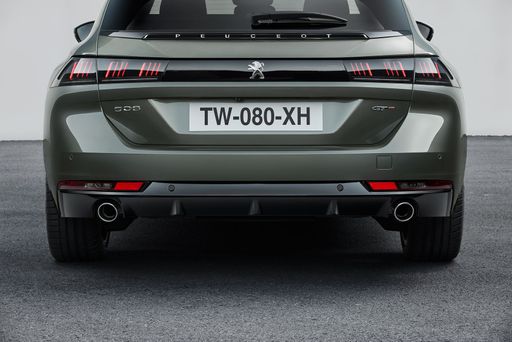
The Peugeot 508 SW dresses up as a sleek estate, blending Parisian flair with usable loadspace so you don't have to choose between style and weekend practicality. Inside it's a driver-focused cabin with quality materials and clever packaging that makes it a sensible, slightly mischievous choice for buyers who want an executive feel without the buttoned-up seriousness.

details
Vauxhall Astra
Peugeot 508 SW

Costs and Consumption

Price
28,300 - 37,900 £
Price
45,600 - 61,800 £
Consumption L/100km
2.2 - 4.9 L/100km
Consumption L/100km
1.7 - 2 L/100km
Consumption kWh/100km
15.3 kWh/100km
Consumption kWh/100km
-
Electric Range
83 - 454 km
Electric Range
46 - 52 km
Battery Capacity
-
Battery Capacity
-
co2
0 - 130 g/km
co2
38 - 45 g/km
Fuel tank capacity
-
Fuel tank capacity
43 L

Dimensions and Body

Body Type
Hatchback
Body Type
Estate
Seats
5
Seats
5
Doors
-
Doors
5
Curb weight
1,438 - 1,733 kg
Curb weight
1,846 - 1,967 kg
Trunk capacity
310 - 422 L
Trunk capacity
530 L
Length
-
Length
4,778 mm
Width
1,859 mm
Width
1,859 mm
Height
-
Height
1,420 mm
Max trunk capacity
-
Max trunk capacity
1,780 L
Payload
438 - 502 kg
Payload
373 - 454 kg

Engine and Performance

Engine Type
Petrol MHEV, Plugin Hybrid, Diesel, Electric
Engine Type
Plugin Hybrid
Transmission
Automatic
Transmission
Automatic
Transmission Detail
Dual-Clutch Automatic, Automatic Gearbox, Reduction Gearbox
Transmission Detail
Automatic Gearbox
Drive Type
Front-Wheel Drive
Drive Type
Front-Wheel Drive, All-Wheel Drive
Power HP
130 - 196 HP
Power HP
180 - 360 HP
Acceleration 0-100km/h
7.6 - 10.6 s
Acceleration 0-100km/h
5.2 - 8.3 s
Max Speed
-
Max Speed
230 - 250 km/h
Torque
230 - 360 Nm
Torque
360 - 520 Nm
Number of Cylinders
3 - 4
Number of Cylinders
4
Power kW
96 - 144 kW
Power kW
133 - 265 kW
Engine capacity
1,199 - 1,598 cm3
Engine capacity
1,598 cm3

General

Model Year
2026
Model Year
2024
CO2 Efficiency Class
C, B, D, A
CO2 Efficiency Class
B
Brand
Vauxhall
Brand
Peugeot
DriveDuel uses data analysis and artificial intelligence to evaluate vehicle data and create content. Content is regularly reviewed and improved. The displayed prices are estimates based on German list prices, adjusted to the respective country’s VAT. Country-specific registration taxes are not included. This information is not legally binding.