VS

Vauxhall Corsa vs Fiat Panda comparison

Compare performance (156 HP vs 70 HP), boot space and price (19,600 £ vs 14,100 £ ) at a glance. Find out which car is the better choice for you – Vauxhall Corsa or Fiat Panda?

Vauxhall Corsa vs Fiat Panda: Key differences

Vauxhall Corsa

  • clearly more power
  • only slightly more efficient
  • clearly quicker 0–100 km/h
  • noticeably more trunk space

Fiat Panda

4.5 (2 Reviews)
rate
  • markedly cheaper
  • slightly lighter
Corsa

Fiat Panda vs. Opel Corsa: A Comprehensive Comparison

The automotive landscape is fiercely competitive, especially among hatchbacks designed for urban driving, and two strong contenders in 2024 are the Fiat Panda and the Opel Corsa. Each vehicle has its unique flair, technology, and driving dynamics, but how do they stack up against each other? In this article, we will explore technical specifications, innovations, and performance metrics to help you decide which hatchback best suits your needs.
Panda

Design and Dimensions

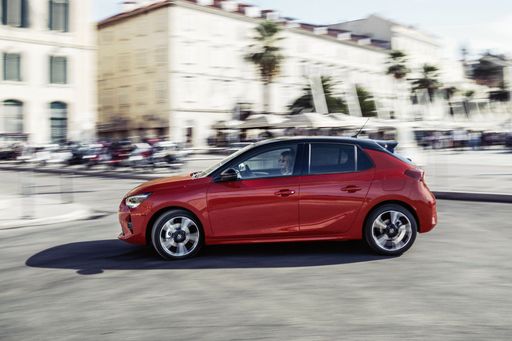
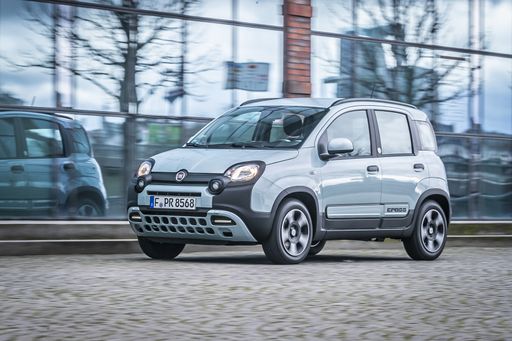
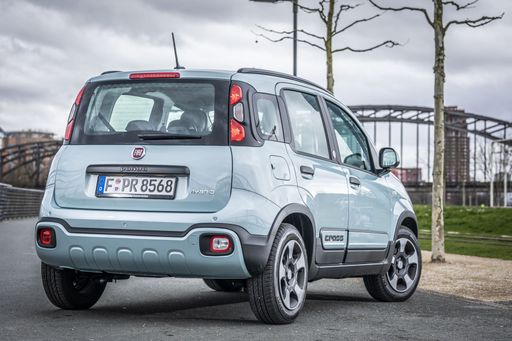
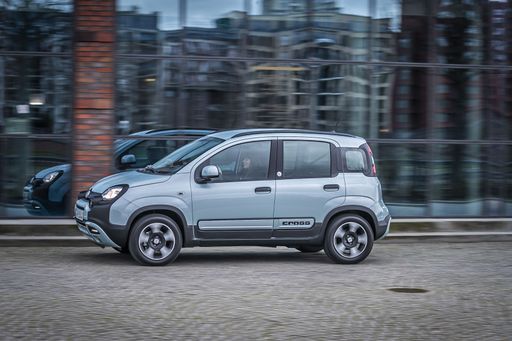
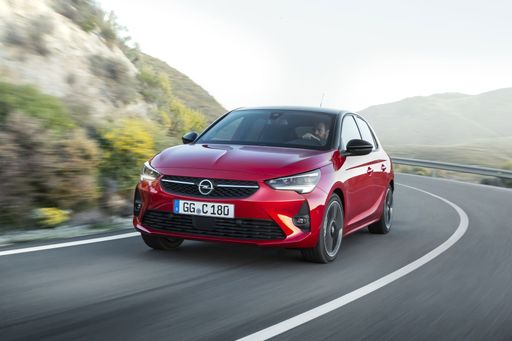
Both the Fiat Panda and the Opel Corsa are compact hatchbacks, perfect for city driving. The Fiat Panda measures 3,653 mm in length, 1,643 mm in width, and stands 1,551 mm tall, providing a compact yet spacious cabin sufficient for up to five passengers. In contrast, the Opel Corsa is slightly larger at 4,061 mm in length and 1,765 mm in width, offering a more expansive interior and a trunk capacity of up to 309 liters.

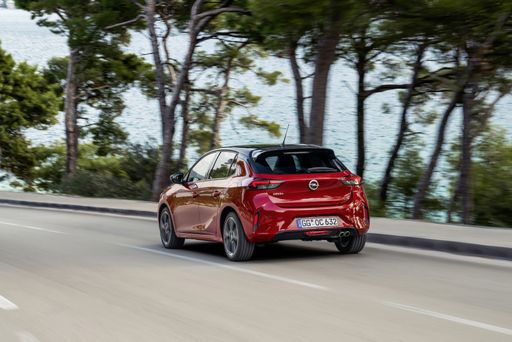
In terms of design, the Corsa leans towards a modern, sleek aesthetic with sharper lines, while the Panda retains a more quirky, boxy silhouette that is synonymous with the Fiat brand. This distinctive styling gives the Panda a playful edge in urban environments.

Corsa

Performance and Engine Options

When it comes to powertrains, the Fiat Panda comes equipped with a petrol MHEV engine, generating 70 HP from a 999 cm³ three-cylinder unit. It accelerates from 0 to 100 km/h in 13.9 seconds, offering a top speed of 164 km/h. The Opel Corsa, on the other hand, boasts a more potent lineup of engine options, starting from a 100 HP petrol variant and reaching up to 156 HP in higher trims. The Corsa's best acceleration time of 7.9 seconds reflects its sporty capabilities.

The Panda's fuel consumption stands at approximately 5.1 L/100 km, while the Corsa offers more efficient options, with some variants achieving as low as 4.5 L/100 km. This makes the Corsa potentially the better choice for budget-conscious drivers looking to minimize fuel costs.

Panda

Technological Innovations

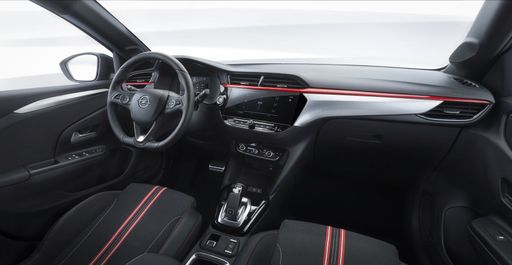
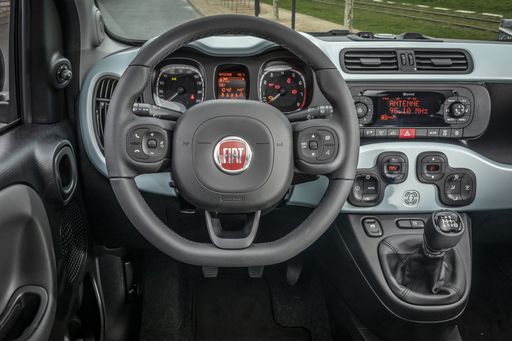
Innovation is critical in today's automotive sector, and both models offer a range of features to enhance the driving experience. The Fiat Panda provides basic yet functional technology, focusing on practicality and ease of use. However, the Opel Corsa steps ahead with advanced technological offerings, including options for an automatic transmission and dual-clutch gearbox, enhancing driving dynamics and efficiency.

Moreover, the Corsa offers electric variants with impressive electric ranges of up to 405 km, catering to the growing demand for environmentally friendly vehicles. In terms of connectivity, the Corsa also features a more advanced infotainment system compared to the Panda, boasting smartphone integration and modern multimedia capabilities.

Corsa

Safety and Efficiency

Safety is paramount when choosing a vehicle, and both the Fiat Panda and Opel Corsa come equipped with essential safety features. The Corsa's higher safety ratings, attributed to its robust construction and advanced driver assistance technologies, position it as a safer option. In terms of CO2 emissions, the Panda ranges between 113 to 116 g/km, classified in efficiency classes C and D, while the Corsa benefits from better classifications, with some electrified models offering zero emissions, marking it as environmentally friendlier.

Panda

Conclusion: Which Hatchback Reigns Supreme?

The Fiat Panda and Opel Corsa each present compelling arguments to prospective buyers. The Panda celebrates its practicality, compactness, and affordability, making it an ideal choice for those who value simplicity and functionality. Meanwhile, the Corsa shines with its diverse engine options, technological advancements, and safety features, appealing to individuals seeking a more feature-rich and performance-oriented drive.

Ultimately, the choice between the Fiat Panda and Opel Corsa will depend on personal preferences, lifestyle needs, and budget considerations. Each vehicle offers a unique blend of characteristics that make it worth a test drive. Happy driving!

Here’s where it gets real: The technical differences in detail

Corsa

Costs and Efficiency:

Price and efficiency are often the first things buyers look at. Here it becomes clear which model has the long-term edge – whether at the pump, the plug, or in purchase price.

Fiat Panda is markedly cheaper – starting at 14,100 £ , while the Vauxhall Corsa costs 19,600 £ . That’s a price difference of around 5,486 £.

Fuel consumption also shows a difference: the Vauxhall Corsa uses 4.6 L/100km and is only slightly more efficient than the Fiat Panda with 5 L/100km. The difference is about 0.4 L/100km.

Panda

Engine and Performance:

Power, torque and acceleration say a lot about how a car feels on the road. This is where you see which model delivers more driving dynamics.

When it comes to engine power, the Vauxhall Corsa offers clearly more power – delivering 156 HP compared to 70 HP. That’s roughly 86 HP more horsepower.

When accelerating from 0 to 100 km/h, the Vauxhall Corsa is clearly quicker – completing the sprint in 7.9 s, while the Fiat Panda takes 13.9 s. That’s about 6 s quicker.

Looking at top speed, the Vauxhall Corsa is clearly faster – reaching 210 km/h, while the Fiat Panda tops out at 164 km/h. The difference is around 46 km/h.

There’s also a difference in torque: the Vauxhall Corsa delivers significantly more torque with 260 Nm compared to 92 Nm. That’s about 168 Nm more.

Corsa

Space and Everyday Use:

Beyond pure performance, interior space and usability matter most in daily life. This is where you see which car is more practical and versatile.

Seats: Vauxhall Corsa offers more seats – 5 vs 4.

In terms of curb weight, Fiat Panda is slightly lighter – 1,055 kg compared to 1,175 kg. The difference is around 120 kg.

Looking at boot space, the Vauxhall Corsa offers noticeably more boot space – 309 L compared to 225 L. That’s a difference of about 84 L.

For maximum load capacity, the Vauxhall Corsa offers moderately more capacity – up to 1,042 L, about 172 L more than the Fiat Panda.

When it comes to payload, the Vauxhall Corsa carries moderately more – 445 kg compared to 365 kg. That’s a difference of about 80 kg.

Who wins the race in the data check?

The Vauxhall Corsa is clearly superior overall in the objective data comparison.
This result only shows which model scores more points on paper – not which of the two cars feels right for you.

from £19,600
Corsa

Vauxhall Corsa

  • Engine Type : Electric, Petrol MHEV, Petrol
  • Transmission : Automatic, Manuel
  • Drive Type : Front-Wheel Drive
  • Power HP : 100 - 156 HP
  • Consumption L/100km : 4.6 - 5.2 L/100km
  • Consumption kWh/100km : 14.4 - 16.2 kWh/100km
  • Electric Range : 347 - 424 km
Vauxhall Corsa
Fiat Panda

Costs and Consumption

View detailed analysis

Engine and Performance

View detailed analysis

Dimensions and Body

View detailed analysis

Vauxhall Corsa

The Opel Corsa is a tidy little package that blends cheeky styling with sensible practicality, perfect for city streets and weekend escapes alike. It’s easy to live with, economical to run and just lively enough to make daily driving a bit more fun.

details

Fiat Panda

The Panda is a charming, no-nonsense city companion that mixes cheerful Italian flair with genuinely useful practicality, making tight streets and daily errands feel less of a chore. Its honest simplicity, clever packaging and a dash of cheeky character make it a smart, low-stress buy for people who prefer sensible perks over showroom flash.

details
Vauxhall Corsa
Fiat Panda

Costs and Consumption

Price
19,600 - 30,600 £
Price
14,100 £
Consumption L/100km
4.6 - 5.2 L/100km
Consumption L/100km
5 L/100km
Consumption kWh/100km
14.4 - 16.2 kWh/100km
Consumption kWh/100km
-
Electric Range
347 - 424 km
Electric Range
-
Battery Capacity
46 - 51 kWh
Battery Capacity
-
co2
0 - 116 g/km
co2
113 g/km
Fuel tank capacity
44 L
Fuel tank capacity
38 L

Dimensions and Body

Body Type
Hatchback
Body Type
Hatchback
Seats
5
Seats
4
Doors
5
Doors
5
Curb weight
1,175 - 1,544 kg
Curb weight
1,055 kg
Trunk capacity
267 - 309 L
Trunk capacity
225 L
Length
4,061 mm
Length
3,635 mm
Width
1,765 mm
Width
1,643 mm
Height
1,435 mm
Height
1,551 mm
Max trunk capacity
1,004 - 1,042 L
Max trunk capacity
870 L
Payload
376 - 445 kg
Payload
365 kg

Engine and Performance

Engine Type
Electric, Petrol MHEV, Petrol
Engine Type
Petrol MHEV
Transmission
Automatic, Manuel
Transmission
Manuel
Transmission Detail
Reduction Gearbox, Dual-Clutch Automatic, Manual Gearbox
Transmission Detail
Manual Gearbox
Drive Type
Front-Wheel Drive
Drive Type
Front-Wheel Drive
Power HP
100 - 156 HP
Power HP
70 HP
Acceleration 0-100km/h
7.9 - 9.9 s
Acceleration 0-100km/h
13.9 s
Max Speed
150 - 210 km/h
Max Speed
164 km/h
Torque
205 - 260 Nm
Torque
92 Nm
Number of Cylinders
3
Number of Cylinders
3
Power kW
74 - 115 kW
Power kW
51 kW
Engine capacity
1,199 cm3
Engine capacity
999 cm3

General

Model Year
2,024 - 2,025
Model Year
2,024
CO2 Efficiency Class
A, C, D
CO2 Efficiency Class
C
Brand
Vauxhall
Brand
Fiat
DriveDuel uses data analysis and artificial intelligence to evaluate vehicle data and create content. Content is regularly reviewed and improved. The displayed prices are estimates based on German list prices, adjusted to the respective country’s VAT. Country-specific registration taxes are not included. This information is not legally binding.