VS

Vauxhall Corsa vs Peugeot 308 comparison

Compare performance (156 HP vs 195 HP), boot space and price (19,600 £ vs 29,200 £ ) at a glance. Find out which car is the better choice for you – Vauxhall Corsa or Peugeot 308?

Vauxhall Corsa vs Peugeot 308: Key differences

Vauxhall Corsa

  • significantly cheaper
  • barely more efficient
  • clearly lighter
details

Peugeot 308

5 (1 Reviews)
rate
  • a bit more power
  • considerably more efficient
  • barely more electric range
  • only slightly quicker 0–100 km/h
  • visibly more trunk space
details

By Achim Sedelmaier

Corsa

The Compact Warriors: Corsa vs 308

In the bustling world of hatchbacks, two European titans stand out: the Vauxhall Corsa and the Peugeot 308. Both models have undergone significant transformations over their life spans, incorporating advanced technology and improved performance. Let's delve into these compact wonders to see how they stack up against each other in the battle of the hatchbacks.
308

Innovative Powertrains

The Vauxhall Corsa offers a diverse array of powertrains, ensuring there is something for everyone. From the standard petrol engines to the mild-hybrids (MHEV) and the all-electric models, choices are abundant. The electric Corsa boasts a range of up to 405 km, thanks to its 51 kWh battery, making it a strong contender for eco-friendly commuting.

In contrast, the Peugeot 308 matches this variety with its lineup of petrol, diesel, plugin hybrids, and pure electric versions. The electric variant of the 308 presents a competitive range of 419 km on a single charge, slightly edging out the Corsa. Additionally, the plugin hybrid offers a strategically powerful combination of up to 225 HP, catering to a more dynamic driving experience.

Corsa

Performance and Efficiency

When it comes to performance, both hatchbacks pack a punch. The Corsa's gasoline engines can deliver up to 156 HP, with acceleration from 0-100 km/h in as little as 7.9 seconds. Its maximum speed peaks at 210 km/h, which is impressive for a vehicle in this segment. The electric model offers an immediate torque advantage with 115 kW of power.

The Peugeot 308 competes fiercely with petrol engines outputting up to 225 HP. The car can rocket from 0-100 km/h in just 7.5 seconds. Its top speed of 235 km/h surpasses that of the Corsa, appealing to those craving some adrenalin rush on open roads. Both cars maintain fuel efficiency, with mixed usage petrol consumption around 5-5.9 L/100km for the 308 and slightly higher for the Corsa due to its diverse powertrains.

308

Exterior and Interior Dimensions

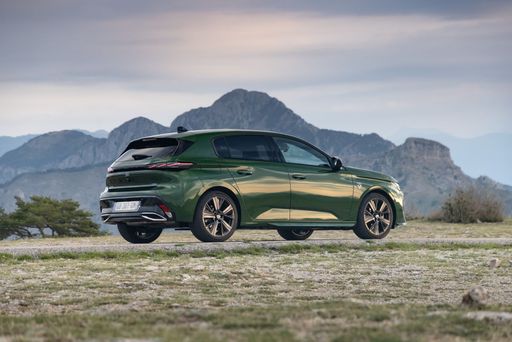
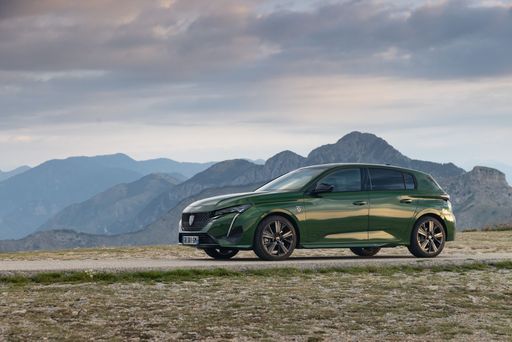
Size-wise, the Peugeot 308 exudes a greater presence with a length of 4367 mm and width of 1852 mm, compared to the Corsa's 4061 mm length and 1765 mm width. This translates to more spacious cabins and additional trunk space, with the 308 offering up to 412 liters versus the Corsa’s 309 liters. For those with a family or requiring ample luggage space, the 308 holds a distinct advantage.

Corsa

Technological Features and Innovations

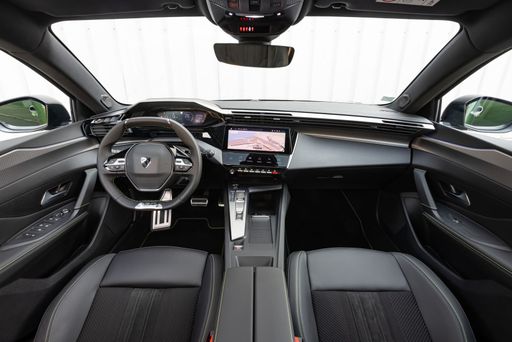
Both models are tech-savvy, with a suite of safety and driver-assistance features. From adaptive cruise control to advanced infotainment systems, these hatchbacks integrate the latest technology for enhanced driving comfort. The Peugeot 308, with its more extensive list of features, appeals to tech enthusiasts seeking a smarter drive. Meanwhile, the Corsa's user-friendly interfaces and practical features provide simplicity combined with modern conveniences.

308

Conclusion: The Winning Edge

The choice between the Vauxhall Corsa and Peugeot 308 ultimately hinges on individual needs and preferences. For those seeking efficient urban transport with the option of electric commuting, the Corsa fits the bill perfectly. On the other hand, the 308 stands out for those who desire a more substantial vehicle with advanced driving dynamics and enhanced storage capacities.

Both vehicles embody modern hatchback advancements, offering reliable performance and thoughtful designs. Whichever you choose, both are commendable in handling cityscapes and beyond, ensuring a pleasurable ride in any journey.

Here’s where it gets real: The technical differences in detail

Corsa

Costs and Efficiency:

Looking at overall running costs, both models reveal some interesting differences in everyday economy.

Vauxhall Corsa is significantly cheaper – starting at 19,600 £ , while the Peugeot 308 costs 29,200 £ . That’s a price difference of around 9,617 £.

Fuel consumption also shows a difference: the Peugeot 308 uses 2.3 L/100km and is considerably more efficient than the Vauxhall Corsa with 4.5 L/100km. The difference is about 2.2 L/100km.

In terms of energy consumption, the Vauxhall Corsa is barely more efficient: consuming 14.2 kWh/100km compared to 15.6 kWh/100km for the Peugeot 308. That’s a difference of about 1.4 kWh/100km.

As for electric range, the Peugeot 308 offers barely more range – reaching up to 450 km, about 21 km more than the Vauxhall Corsa.

308

Engine and Performance:

Under the bonnet, it becomes clear which model is tuned for sportiness and which one takes the lead when you hit the accelerator.

When it comes to engine power, the Peugeot 308 offers a bit more power – delivering 195 HP compared to 156 HP. That’s roughly 39 HP more horsepower.

When accelerating from 0 to 100 km/h, the Peugeot 308 is only slightly quicker – completing the sprint in 7.6 s, while the Vauxhall Corsa takes 7.9 s. That’s about 0.3 s quicker.

There’s also a difference in torque: the Peugeot 308 delivers moderately more torque with 300 Nm compared to 260 Nm. That’s about 40 Nm more.

Corsa

Space and Everyday Use:

Cabin size, boot volume and payload all play a role in everyday practicality. Here, comfort and flexibility make the difference.

Both vehicles offer seating for 5 people.

In terms of curb weight, Vauxhall Corsa is clearly lighter – 1,175 kg compared to 1,453 kg. The difference is around 278 kg.

Looking at boot space, the Peugeot 308 offers visibly more boot space – 412 L compared to 309 L. That’s a difference of about 103 L.

When it comes to payload, the Peugeot 308 carries moderately more – 503 kg compared to 445 kg. That’s a difference of about 58 kg.

Who wins the race in the data check?

The Peugeot 308 is clearly superior overall in the objective data comparison.
This result only shows which model scores more points on paper – not which of the two cars feels right for you.

from £29,200
308

Peugeot 308

  • Engine Type : Petrol MHEV, Diesel, Plugin Hybrid, Electric
  • Transmission : Automatic
  • Drive Type : Front-Wheel Drive
  • Power HP : 131 - 195 HP
  • Consumption L/100km : 2.3 - 5.1 L/100km
  • Consumption kWh/100km : 15.6 kWh/100km
  • Electric Range : 81 - 450 km
Vauxhall Corsa
Peugeot 308

Costs and Consumption

View detailed analysis

Engine and Performance

View detailed analysis

Dimensions and Body

View detailed analysis

Vauxhall Corsa

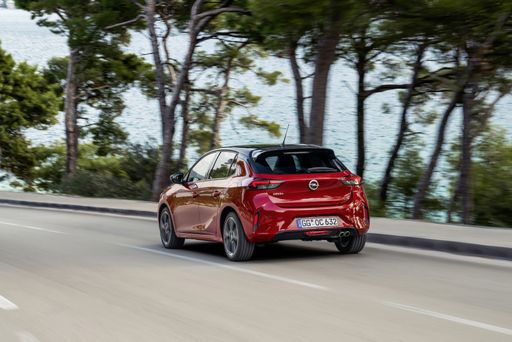
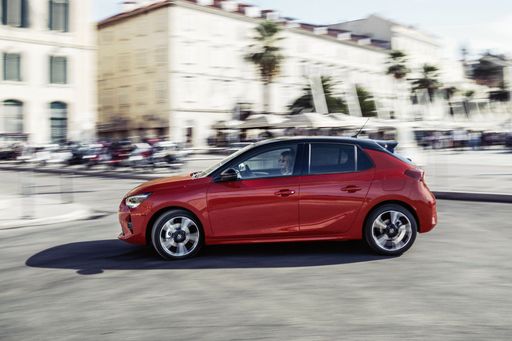
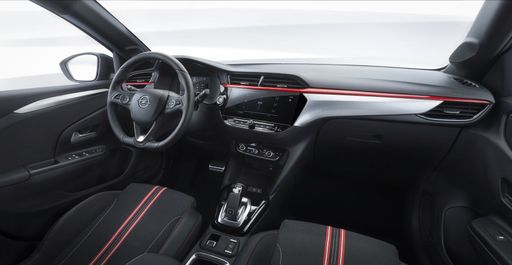
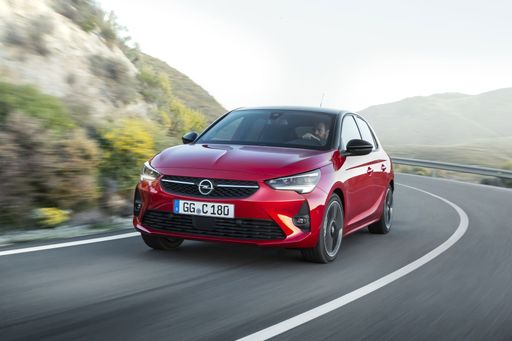
The Opel Corsa is a tidy little package that blends cheeky styling with sensible practicality, perfect for city streets and weekend escapes alike. It’s easy to live with, economical to run and just lively enough to make daily driving a bit more fun.

details

Peugeot 308

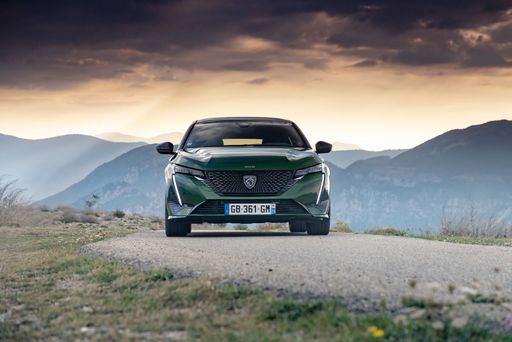
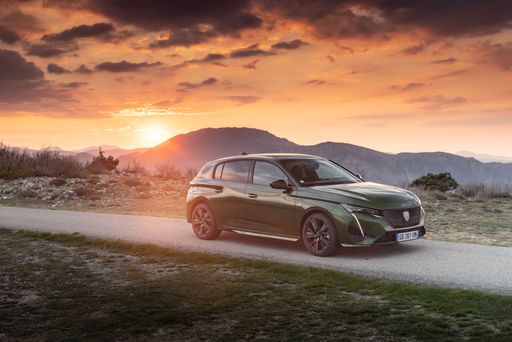
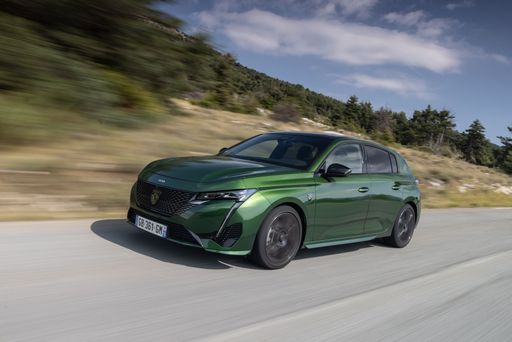
The Peugeot 308 brings a sleek, feline profile and an unexpectedly upscale cabin, with clever packaging and materials that feel a touch more premium than you might expect. It’s composed on the road, easy to live with for daily life, and a smart choice if you want a stylish hatch that still behaves when the road gets interesting.

details
Vauxhall Corsa
Peugeot 308

Costs and Consumption

Price
19,600 - 30,600 £
Price
29,200 - 42,600 £
Consumption L/100km
4.5 - 5.2 L/100km
Consumption L/100km
2.3 - 5.1 L/100km
Consumption kWh/100km
14.2 - 16.2 kWh/100km
Consumption kWh/100km
15.6 kWh/100km
Electric Range
347 - 429 km
Electric Range
81 - 450 km
Battery Capacity
46 kWh
Battery Capacity
-
co2
0 - 116 g/km
co2
0 - 133 g/km
Fuel tank capacity
-
Fuel tank capacity
-

Dimensions and Body

Body Type
Hatchback
Body Type
Hatchback
Seats
5
Seats
5
Doors
5
Doors
-
Curb weight
1,175 - 1,544 kg
Curb weight
1,453 - 1,749 kg
Trunk capacity
267 - 309 L
Trunk capacity
314 - 412 L
Length
4,061 mm
Length
-
Width
1,765 mm
Width
1,852 mm
Height
1,435 mm
Height
-
Max trunk capacity
1,042 L
Max trunk capacity
-
Payload
376 - 445 kg
Payload
430 - 503 kg

Engine and Performance

Engine Type
Electric, Petrol MHEV, Petrol
Engine Type
Petrol MHEV, Diesel, Plugin Hybrid, Electric
Transmission
Automatic, Manuel
Transmission
Automatic
Transmission Detail
Reduction Gearbox, Dual-Clutch Automatic, Manual Gearbox
Transmission Detail
Dual-Clutch Automatic, Automatic Gearbox, Reduction Gearbox
Drive Type
Front-Wheel Drive
Drive Type
Front-Wheel Drive
Power HP
100 - 156 HP
Power HP
131 - 195 HP
Acceleration 0-100km/h
7.9 - 9.9 s
Acceleration 0-100km/h
7.6 - 10.6 s
Max Speed
150 km/h
Max Speed
-
Torque
205 - 260 Nm
Torque
230 - 300 Nm
Number of Cylinders
3
Number of Cylinders
3 - 4
Power kW
74 - 115 kW
Power kW
96 - 144 kW
Engine capacity
1,199 cm3
Engine capacity
1,199 - 1,598 cm3

General

Model Year
2,024 - 2,025
Model Year
2,025 - 2,026
CO2 Efficiency Class
A, C, D
CO2 Efficiency Class
C, D, B, A
Brand
Vauxhall
Brand
Peugeot
DriveDuel uses data analysis and artificial intelligence to evaluate vehicle data and create content. Content is regularly reviewed and improved. The displayed prices are estimates based on German list prices, adjusted to the respective country’s VAT. Country-specific registration taxes are not included. This information is not legally binding.