
VS

Vauxhall Vivaro vs Fiat Scudo comparison

Compare performance (180 HP vs 180 HP), boot space and price (33,200 £ vs 30,900 £ ) at a glance. Find out which car is the better choice for you – Vauxhall Vivaro or Fiat Scudo?

Vauxhall Vivaro vs Fiat Scudo: Key differences

Vauxhall Vivaro

Fiat Scudo

  • marginally cheaper
Vivaro

The Battle of the Vans: Fiat Scudo vs. Vauxhall Vivaro

If you're in the market for a reliable, robust cargo van, two names are likely to top your list: Fiat Scudo and Vauxhall Vivaro. Both offer remarkable features and customizable options, making them key players in commercial fleets. But which emerges as the better choice for 2024? Let's dive into a head-to-head comparison focused on technical aspects and innovations.
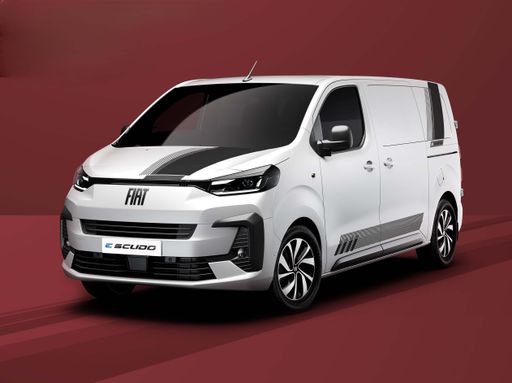
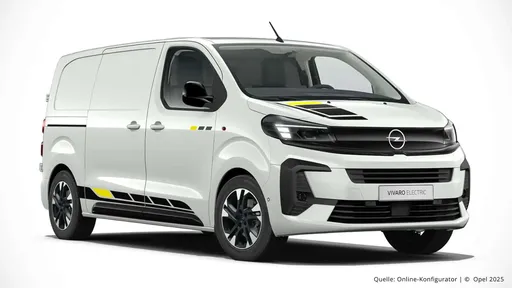
Scudo

Design and Dimensions

Both the Fiat Scudo and the Vauxhall Vivaro boast a sturdy cargo van design, ideal for handling fair-sized loads. The Scudo measures between 4609 mm to 5330 mm in length, while the Vivaro varies from 4959 mm to 5330 mm, offering a bit more loading room for businesses requiring larger cargo dimensions. In terms of width, the Vivaro takes a slight edge with dimensions of up to 2010 mm compared to Scudo's 1920 mm, providing a tad more elbow room during loading and unloading scenarios.

Engine and Performance

The Fiat Scudo offers versatility in power with a range of diesel and electric engines, featuring power outputs between 100 HP and 180 HP for diesel options and up to 177 HP for electric models. The Vivaro matches this with both diesel and electric powertrains, boasting horsepower from 120 to 177, ensuring a punchy performance similar to the Scudo's. For those interested in green driving, both models have compelling electric ranges with the Scudo reaching up to 352 km, whereas Vivaro offers slightly less with a top range of 351 km.

Fuel Efficiency

For businesses conscious of fuel expenses, the Fiat Scudo stands out with a fuel consumption spectrum starting at 6.5 L/100km. The Vauxhall Vivaro is equally competitive with consumption figures beginning at 6.6 L/100km. Both vans also shine in the electric segment with near-identical energy consumption figures, making either a smart choice for those looking to minimize environmental impact without breaking the bank.

Comfort and Configuration

When it comes to seating configurations, Scudo offers more flexibility with options that include 2, 3, 5, or 6 seats, while the Vivaro offers either 3 or 6 seats. Cargo van users will find seating options particularly important depending on crew needs. Getting in and out is convenient with both models featuring four-door designs.

Payload and Durability

Payload capacity often dictates the effectiveness of a cargo van. The Scudo supports between 840 kg to 1333 kg, while the Vivaro offers a broader range from 912 kg to 1333 kg, catering to various commercial demands. Both vans exhibit solid build quality aimed at durability and long-term use, ideal for extensive fleet usage.

The Verdict

Choosing between the Fiat Scudo and Vauxhall Vivaro ultimately depends on specific business or personal requirements. The Scudo is attractive for those wanting varied seating and a marginally tighter energy efficiency package. Meanwhile, the Vivaro appeals to businesses needing more loading space and width. Both vans shine in areas of reliability, comfort, and versatility. In the battle between the Scudo's innovation and the Vivaro's practicality, it's ultimately a win-win for buyers prioritizing different aspects.

Here’s where it gets real: The technical differences in detail

Vivaro

Costs and Efficiency:

When it comes to price and running costs, the biggest differences usually appear. This is often where you see which car fits your budget better in the long run.

Fiat Scudo is marginally cheaper – starting at 30,900 £ , while the Vauxhall Vivaro costs 33,200 £ . That’s a price difference of around 2,295 £.

Both cars consume an average of 6.2 L/100km – no difference here.

When it comes to electricity consumption, both models perform equally – each averaging 23.6 kWh/100km.

The electric range is almost identical – both manage about 352 km on a single charge.

Scudo

Engine and Performance:

Power, torque and acceleration say a lot about how a car feels on the road. This is where you see which model delivers more driving dynamics.

Both models deliver identical power – 180 HP each.

Both models accelerate almost equally fast – 10.5 s from 0 to 100 km/h.

Both models offer the same torque – 400 Nm.

Space and Everyday Use:

Cabin size, boot volume and payload all play a role in everyday practicality. Here, comfort and flexibility make the difference.

Both vehicles offer seating for 6 people.

Both models weigh roughly the same – around 1,722 kg.

When it comes to payload, the Fiat Scudo carries clearly more – 1,805 kg compared to 1,226 kg. That’s a difference of about 579 kg.

Who wins the race in the data check?

The Fiat Scudo has the upper hand in the objective data comparison.
This result only shows which model scores more points on paper – not which of the two cars feels right for you.

from £30,900
Scudo

Fiat Scudo

  • Engine Type : Electric, Diesel
  • Transmission : Automatic, Manuel
  • Drive Type : Front-Wheel Drive
  • Power HP : 120 - 180 HP
  • Consumption L/100km : 6.2 - 6.5 L/100km
  • Consumption kWh/100km : 23.6 - 24 kWh/100km
  • Electric Range : 221 - 352 km
Vauxhall Vivaro
Fiat Scudo

Costs and Consumption

View detailed analysis

Engine and Performance

View detailed analysis

Dimensions and Body

View detailed analysis

Vauxhall Vivaro

The Opel Vivaro is a workhorse with a surprisingly civilised demeanour, blending rugged practicality with enough style and comfort to keep drivers happy on any job. With clever packaging and sensible features that simplify loading, commuting and family duties, it’s the no-nonsense van for buyers who want functionality without the fuss — honest, dependable and just smart enough to make the day easier.

details

Fiat Scudo

The Fiat Scudo is a practical and unpretentious van that balances hardworking utility with a surprisingly polished cabin, making it a sensible choice for tradespeople and families who need space without fuss. It doesn't pretend to be flashy, but its clever packaging, sensible driving manners and affordable running costs make the Scudo a dependable partner for the daily grind and weekend projects — and it even manages to look tidy in the car park.

details
Vauxhall Vivaro
Fiat Scudo

Costs and Consumption

Price
33,200 - 52,500 £
Price
30,900 - 51,300 £
Consumption L/100km
6.2 - 6.5 L/100km
Consumption L/100km
6.2 - 6.5 L/100km
Consumption kWh/100km
23.6 - 24 kWh/100km
Consumption kWh/100km
23.6 - 24 kWh/100km
Electric Range
221 - 352 km
Electric Range
221 - 352 km
Battery Capacity
-
Battery Capacity
-
co2
0 - 172 g/km
co2
0 - 172 g/km
Fuel tank capacity
-
Fuel tank capacity
-

Dimensions and Body

Body Type
Cargo Van
Body Type
Cargo Van
Seats
3 - 6
Seats
2 - 6
Doors
4
Doors
-
Curb weight
1,722 - 2,260 kg
Curb weight
1,722 - 2,260 kg
Trunk capacity
-
Trunk capacity
-
Length
4,980 - 5,330 mm
Length
-
Width
1,920 mm
Width
1,920 mm
Height
1,895 - 1,935 mm
Height
-
Max trunk capacity
3,200 - 6,100 L
Max trunk capacity
-
Payload
840 - 1,226 kg
Payload
840 - 1,805 kg

Engine and Performance

Engine Type
Electric, Diesel
Engine Type
Electric, Diesel
Transmission
Automatic, Manuel
Transmission
Automatic, Manuel
Transmission Detail
Reduction Gearbox, Manual Gearbox, Automatic Gearbox
Transmission Detail
Reduction Gearbox, Manual Gearbox, Automatic Gearbox
Drive Type
Front-Wheel Drive
Drive Type
Front-Wheel Drive
Power HP
120 - 180 HP
Power HP
120 - 180 HP
Acceleration 0-100km/h
10.5 - 14.3 s
Acceleration 0-100km/h
10.5 - 11.2 s
Max Speed
130 km/h
Max Speed
-
Torque
260 - 400 Nm
Torque
260 - 400 Nm
Number of Cylinders
4
Number of Cylinders
4
Power kW
88 - 132 kW
Power kW
88 - 132 kW
Engine capacity
1,499 - 2,184 cm3
Engine capacity
1,499 - 2,184 cm3

General

Model Year
2,024 - 2,025
Model Year
2,024 - 2,025
CO2 Efficiency Class
A, F
CO2 Efficiency Class
A, F
Brand
Vauxhall
Brand
Fiat
DriveDuel uses data analysis and artificial intelligence to evaluate vehicle data and create content. Content is regularly reviewed and improved. The displayed prices are estimates based on German list prices, adjusted to the respective country’s VAT. Country-specific registration taxes are not included. This information is not legally binding.








