VS

Vauxhall Vivaro vs Ford Transit Custom Transporter comparison

Compare performance (180 HP vs 286 HP), boot space and price (33,200 £ vs 36,300 £ ) at a glance. Find out which car is the better choice for you – Vauxhall Vivaro or Ford Transit Custom Transporter?

Vauxhall Vivaro vs Ford Transit Custom Transporter: Key differences

Vauxhall Vivaro

  • barely cheaper
  • clearly quicker 0–100 km/h
  • barely lighter

Ford Transit Custom Transporter

  • clearly more power
Vivaro

Ford Transit Custom Transporter vs. Opel Vivaro: The Workhorse Comparison

When it comes to commercial vans, the Ford Transit Custom and the Opel Vivaro have carved out a significant niche for themselves. Both vehicles combine practicality with performance, making them top choices for businesses of all sizes. In this article, we’ll dive deep into a comparison of these two heavyweights, focusing on their technical specifications, innovations, and what sets them apart in the competitive world of cargo vans.
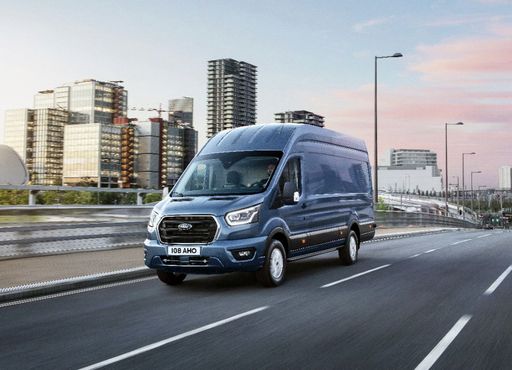
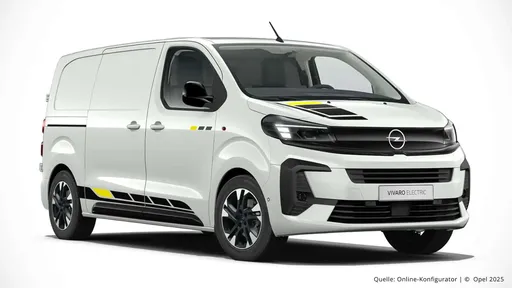
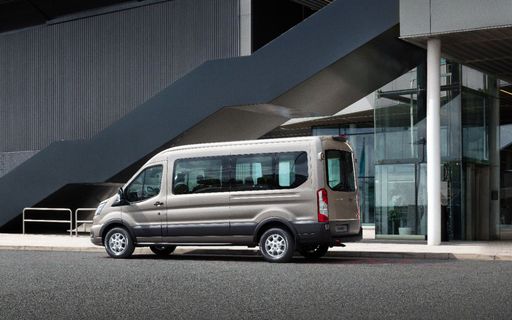
Transit Custom Transporter

Powertrains and Performance

The Ford Transit Custom Transporter offers a versatile range of engines, including electric, diesel, and plug-in hybrid options. With power outputs ranging from 110 HP to an impressive 286 HP, drivers can select the engine that best meets their needs. The electric variant boasts a remarkable electric range of up to 327 km, catering to the growing demand for greener transportation solutions.

In contrast, the Opel Vivaro focuses primarily on diesel and electric engines, with power outputs between 120 HP and 177 HP. While it does not quite match the Transit Custom’s highest power levels, the Vivaro still offers a reliable and robust performance. Its electric range can extend up to 351 km, which is highly competitive. Both models are available with automatic and manual transmissions, providing flexibility to drivers who prefer specific gear choices.

Fuel Efficiency and Emissions

Fuel efficiency is paramount for any commercial vehicle, and both the Ford Transit Custom and Opel Vivaro demonstrate strong numbers in this area. The Transit Custom leads the way with a diesel consumption rate as low as 1.6 L/100km, making it a highly economical option for long-haul deliveries. On the electric side, its energy consumption is rated between 22.4 kWh and 24.5 kWh per 100 km.

The Vivaro, while slightly less efficient, still offers commendable diesel consumption figures ranging from 6.6 to 7.7 L/100km. It also has an electric consumption range from approximately 23.6 to 24.8 kWh/100 km, which positions it well in the modern marketplace focused on sustainability.

Size and Capacity

Dimensions play a crucial role in the utility of cargo vans. The Ford Transit Custom measures between 5050 mm and 5450 mm in length, featuring a width of 2032 mm and a height of 1958 mm. This ample size allows for significant cargo space and payload capabilities, with maximum payload options reaching up to 1332 kg, depending on the configuration.

On the other hand, the Opel Vivaro measures between 4959 mm and 5309 mm long, with a slightly narrower width of 2010 mm. It offers a solid payload capacity that goes up to 1333 kg, making it equally competitive for heavy-duty carrying. Furthermore, the Vivaro’s dimensions make it slightly easier to maneuver in tight urban environments.

Technological Innovations

Both vehicles are equipped with advanced technology aimed at enhancing driver comfort and safety. The Ford Transit Custom comes with features such as Ford’s SYNC infotainment system, which integrates navigation, hands-free phone usage, and music controls seamlessly. Additionally, it offers advanced driver-assistance systems like lane-keeping aid and adaptive cruise control.

Meanwhile, the Opel Vivaro incorporates a user-friendly multimedia system with smartphone integration. With features like parking assist and a rear-view camera, navigating tight spaces is made easier. The Vivaro also emphasizes comfort, with an ergonomic cabin design that reduces driver fatigue during long drives.

Verdict: Which One Will You Choose?

Selecting between the Ford Transit Custom and the Opel Vivaro ultimately comes down to personal preference and specific business needs. If maximum power and electric range are priorities, the Transit Custom may be the way to go. However, for those looking for a more compact option with strong technology offerings, the Vivaro shines bright.

Ultimately, both models embody the qualities that today's businesses need: reliability, efficiency, and smart technology. Whether you choose the Ford or the Opel, you can be confident in a solid investment that will support your logistical needs.

Here’s where it gets real: The technical differences in detail

Vivaro

Costs and Efficiency:

When it comes to price and running costs, the biggest differences usually appear. This is often where you see which car fits your budget better in the long run.

Vauxhall Vivaro is barely cheaper – starting at 33,200 £ , while the Ford Transit Custom Transporter costs 36,300 £ . That’s a price difference of around 3,060 £.

Transit Custom Transporter

Engine and Performance:

Power, torque and acceleration say a lot about how a car feels on the road. This is where you see which model delivers more driving dynamics.

When it comes to engine power, the Ford Transit Custom Transporter offers clearly more power – delivering 286 HP compared to 180 HP. That’s roughly 106 HP more horsepower.

When accelerating from 0 to 100 km/h, the Vauxhall Vivaro is clearly quicker – completing the sprint in 10.5 s, while the Ford Transit Custom Transporter takes 13.4 s. That’s about 2.9 s quicker.

There’s also a difference in torque: the Ford Transit Custom Transporter delivers markedly more torque with 630 Nm compared to 400 Nm. That’s about 230 Nm more.

Space and Everyday Use:

Cabin size, boot volume and payload all play a role in everyday practicality. Here, comfort and flexibility make the difference.

Both vehicles offer seating for 6 people.

In terms of curb weight, Vauxhall Vivaro is barely lighter – 1,722 kg compared to 1,893 kg. The difference is around 171 kg.

For maximum load capacity, the Ford Transit Custom Transporter offers a bit more capacity – up to 6,800 L, about 700 L more than the Vauxhall Vivaro.

When it comes to payload, the Ford Transit Custom Transporter carries marginally more – 1,332 kg compared to 1,226 kg. That’s a difference of about 106 kg.

Who wins the race in the data check?

The Ford Transit Custom Transporter is far ahead overall in the objective data comparison.
This result only shows which model scores more points on paper – not which of the two cars feels right for you.

from £36,300
Transit Custom Transporter

Ford Transit Custom Transporter

  • Engine Type : Diesel, Plugin Hybrid, Electric
  • Transmission : Manuel, Automatic
  • Drive Type : Front-Wheel Drive, All-Wheel Drive, Rear-Wheel Drive
  • Power HP : 110 - 286 HP
Vauxhall Vivaro
Ford Transit Custom Transporter

Costs and Consumption

View detailed analysis

Engine and Performance

View detailed analysis

Dimensions and Body

View detailed analysis

Vauxhall Vivaro

The Opel Vivaro is a workhorse with a surprisingly civilised demeanour, blending rugged practicality with enough style and comfort to keep drivers happy on any job. With clever packaging and sensible features that simplify loading, commuting and family duties, it’s the no-nonsense van for buyers who want functionality without the fuss — honest, dependable and just smart enough to make the day easier.

details

Ford Transit Custom Transporter

The Transit Custom is a clever, no-nonsense workhorse that blends roomy practicality with surprisingly car-like driving manners, so your workday feels less like a chore and more like efficient transport. With a sensible interior, smart storage and tidy handling, it’s the kind of van that makes owners smile while they get on with the job — reliable, unfussy and built to keep moving.

details
Vauxhall Vivaro
Ford Transit Custom Transporter

Costs and Consumption

Price
33,200 - 52,500 £
Price
36,300 - 77,400 £
Consumption L/100km
6.2 - 6.5 L/100km
Consumption L/100km
-
Consumption kWh/100km
23.6 - 24 kWh/100km
Consumption kWh/100km
-
Electric Range
221 - 352 km
Electric Range
-
Battery Capacity
-
Battery Capacity
11.8 kWh
co2
0 - 172 g/km
co2
0 g/km
Fuel tank capacity
-
Fuel tank capacity
55 - 63 L

Dimensions and Body

Body Type
Cargo Van
Body Type
Cargo Van
Seats
3 - 6
Seats
3 - 6
Doors
4
Doors
4
Curb weight
1,722 - 2,260 kg
Curb weight
1,893 - 2,122 kg
Trunk capacity
-
Trunk capacity
-
Length
4,980 - 5,330 mm
Length
5,050 - 5,450 mm
Width
1,920 mm
Width
2,032 mm
Height
1,895 - 1,935 mm
Height
1,958 - 1,959 mm
Max trunk capacity
3,200 - 6,100 L
Max trunk capacity
5,800 - 6,800 L
Payload
840 - 1,226 kg
Payload
802 - 1,332 kg

Engine and Performance

Engine Type
Electric, Diesel
Engine Type
Diesel, Plugin Hybrid, Electric
Transmission
Automatic, Manuel
Transmission
Manuel, Automatic
Transmission Detail
Reduction Gearbox, Manual Gearbox, Automatic Gearbox
Transmission Detail
Manual Gearbox, Automatic Gearbox, CVT, Reduction Gearbox
Drive Type
Front-Wheel Drive
Drive Type
Front-Wheel Drive, All-Wheel Drive, Rear-Wheel Drive
Power HP
120 - 180 HP
Power HP
110 - 286 HP
Acceleration 0-100km/h
10.5 - 14.3 s
Acceleration 0-100km/h
13.4 - 16.9 s
Max Speed
130 km/h
Max Speed
-
Torque
260 - 400 Nm
Torque
310 - 630 Nm
Number of Cylinders
4
Number of Cylinders
4
Power kW
88 - 132 kW
Power kW
81 - 210 kW
Engine capacity
1,499 - 2,184 cm3
Engine capacity
1,996 - 2,488 cm3

General

Model Year
2,024 - 2,025
Model Year
2,023 - 2,025
CO2 Efficiency Class
A, F
CO2 Efficiency Class
A
Brand
Vauxhall
Brand
Ford
DriveDuel uses data analysis and artificial intelligence to evaluate vehicle data and create content. Content is regularly reviewed and improved. The displayed prices are estimates based on German list prices, adjusted to the respective country’s VAT. Country-specific registration taxes are not included. This information is not legally binding.