VS

Vauxhall Vivaro vs Mercedes Vito Transporter comparison

Compare performance (180 HP vs 237 HP), boot space and price (33,200 £ vs 28,800 £ ) at a glance. Find out which car is the better choice for you – Vauxhall Vivaro or Mercedes Vito Transporter?

Vauxhall Vivaro vs Mercedes Vito Transporter: Key differences

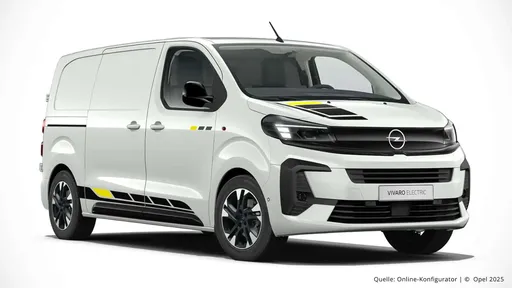
Vauxhall Vivaro

  • very slightly more efficient
  • moderately lighter

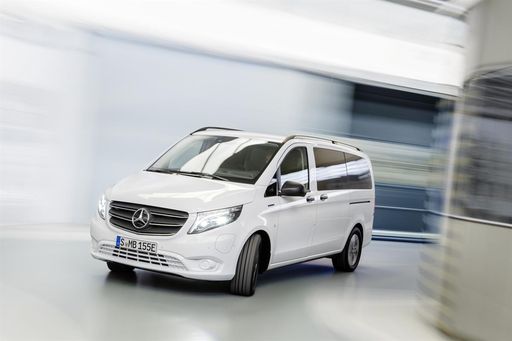
Mercedes Vito Transporter

  • slightly cheaper
  • clearly more power
  • moderately more efficient
  • noticeably more electric range
Vivaro

The automotive segment of cargo vans is ever-evolving, with companies competing to deliver the best in efficiency, capability, and technology. Among the leading contenders in this category are the Mercedes Vito Transporter and the Opel Vivaro. Each offers distinct features catering to various business needs, making a direct comparison essential for potential buyers.

Vito Transporter

Design and Build Quality

Both the Mercedes Vito Transporter and the Opel Vivaro are designed with durability and functionality in mind. The Vito features a robust and aerodynamic body that measures between 4895 mm to 5370 mm in length, providing an excellent balance between cargo space and maneuverability. The Opel Vivaro, with a width of 2010 mm and a height of up to 1935 mm, offers a spacious interior tailored for heavy-duty use. While the Vito is equipped with a conventional cargo van design, the Vivaro leans towards a more modern aesthetic that appeals to various user preferences.

Powertrain Options

When it comes to engine choices, the Vito Transporter provides versatility with its diesel and electric power options. The diesel engine range includes units producing between 102 and 237 HP, while the electric variant offers a remarkable range of up to 313 km on a single charge, supported by a 60 kWh battery capacity. In contrast, the Opel Vivaro's diesel engines range from 120 to 177 HP, highlighting its robust performance. Notably, the Vivaro also provides an electric range of up to 351 km, surpassing the Vito's electric capabilities in certain configurations.

Fuel Efficiency

Fuel consumption is critical for fleet operators concerned with running costs. The Mercedes Vito records consumption figures ranging from 6.8 to 7.9 L/100km, while its electric counterpart consumes around 21.1 kWh/100km. The Opel Vivaro, however, shows slightly higher consumption figures, ranging between 6.6 to 7.7 L/100km for its diesel engines and 23.6 to 24.8 kWh/100km for electric versions. This data suggests that the Vito may edge out slightly in terms of traditional fuel efficiency.

Driving Dynamics

The Vito is available in various drive types, including rear-wheel drive and all-wheel drive options. This flexibility allows buyers to tailor their vehicle's setup based on specific driving conditions and loads. On the other hand, the Vivaro sticks with a front-wheel-drive system that may limit performance in adverse conditions but offers enhanced stability during urban driving.

Payload and Cargo Capacity

In the competitive world of cargo vans, payload capacity directly affects productivity. The Mercedes Vito has a payload range between 849 kg to 1000 kg depending on the configuration. Conversely, the Opel Vivaro offers a higher payload, with values topping out at an impressive 1333 kg. This aspect is crucial for businesses that require maximum load-carrying capacity without compromising efficiency.

Technological Innovations

Both models boast modern technological advancements, focusing on safety and convenience. The Vito Transporter is equipped with advanced safety features, including Active Braking Assist and a superior infotainment system. Similarly, the Opel Vivaro includes technologies like automatic emergency braking, lane assist, and an intuitive touchscreen interface, ensuring that drivers remain connected and safe on the road.

Conclusion: Which One Wins?

Choosing between the Mercedes Vito Transporter and the Opel Vivaro ultimately depends on your specific needs. If you prioritize a balanced combination of fuel efficiency, advanced safety features, and electric options, the Vito is an excellent choice. However, if a higher payload capacity and an attractive design are crucial to your operations, the Vivaro stands out as a strong alternative. Both vehicles promise to deliver on performance and reliability, assuring that businesses can meet their transportation needs efficiently.

Here’s where it gets real: The technical differences in detail

Vivaro

Costs and Efficiency:

When it comes to price and running costs, the biggest differences usually appear. This is often where you see which car fits your budget better in the long run.

Mercedes Vito Transporter is slightly cheaper – starting at 28,800 £ , while the Vauxhall Vivaro costs 33,200 £ . That’s a price difference of around 4,419 £.

Fuel consumption also shows a difference: the Vauxhall Vivaro uses 6.2 L/100km and is very slightly more efficient than the Mercedes Vito Transporter with 6.8 L/100km. The difference is about 0.6 L/100km.

In terms of energy consumption, the Mercedes Vito Transporter is moderately more efficient: consuming 21.2 kWh/100km compared to 23.6 kWh/100km for the Vauxhall Vivaro. That’s a difference of about 2.4 kWh/100km.

As for electric range, the Mercedes Vito Transporter offers noticeably more range – reaching up to 474 km, about 122 km more than the Vauxhall Vivaro.


Vito Transporter

Engine and Performance:

Power, torque and acceleration are the classic benchmarks for car enthusiasts – and here, some clear differences start to show.

When it comes to engine power, the Mercedes Vito Transporter offers clearly more power – delivering 237 HP compared to 180 HP. That’s roughly 57 HP more horsepower.

Looking at top speed, the Mercedes Vito Transporter is only slightly faster – reaching 140 km/h, while the Vauxhall Vivaro tops out at 130 km/h. The difference is around 10 km/h.

There’s also a difference in torque: the Mercedes Vito Transporter delivers slightly more torque with 500 Nm compared to 400 Nm. That’s about 100 Nm more.

Space and Everyday Use:

Whether family car or daily driver – which one offers more room, flexibility and comfort?

Seats: Vauxhall Vivaro offers more seats – 6 vs 5.

In terms of curb weight, Vauxhall Vivaro is moderately lighter – 1,722 kg compared to 1,916 kg. The difference is around 194 kg.

For maximum load capacity, the Mercedes Vito Transporter offers barely more capacity – up to 6,600 L, about 500 L more than the Vauxhall Vivaro.

When it comes to payload, the Vauxhall Vivaro carries noticeably more – 1,226 kg compared to 884 kg. That’s a difference of about 342 kg.

Who wins the race in the data check?

The Mercedes Vito Transporter is far ahead overall in the objective data comparison.
This result only shows which model scores more points on paper – not which of the two cars feels right for you.

from £28,800
Vito Transporter

Mercedes Vito Transporter

  • Engine Type : Diesel, Electric, Petrol
  • Transmission : Manuel, Automatic
  • Drive Type : Rear-Wheel Drive, Front-Wheel Drive, All-Wheel Drive
  • Power HP : 102 - 237 HP
  • Consumption L/100km : 6.8 - 9.7 L/100km
  • Consumption kWh/100km : 21.2 - 26.5 kWh/100km
  • Electric Range : 304 - 474 km
Vauxhall Vivaro
Mercedes Vito Transporter

Costs and Consumption

View detailed analysis

Engine and Performance

View detailed analysis

Dimensions and Body

View detailed analysis

Vauxhall Vivaro

The Opel Vivaro is a workhorse with a surprisingly civilised demeanour, blending rugged practicality with enough style and comfort to keep drivers happy on any job. With clever packaging and sensible features that simplify loading, commuting and family duties, it’s the no-nonsense van for buyers who want functionality without the fuss — honest, dependable and just smart enough to make the day easier.

details

Mercedes Vito Transporter

The Mercedes Vito Transporter is a supremely practical workhorse that blends Mercedes refinement with van-like utility, making long days on the road feel surprisingly civilized. With a cleverly thought-out interior and a drive that won’t wear you out, the Vito is the ideal choice for businesses that want capability without sacrificing comfort — and yes, it still looks sharper than most vans at a client meeting.

details
Vauxhall Vivaro
Mercedes Vito Transporter

Costs and Consumption

Price
33,200 - 52,500 £
Price
28,800 - 51,600 £
Consumption L/100km
6.2 - 6.5 L/100km
Consumption L/100km
6.8 - 9.7 L/100km
Consumption kWh/100km
23.6 - 24 kWh/100km
Consumption kWh/100km
21.2 - 26.5 kWh/100km
Electric Range
221 - 352 km
Electric Range
304 - 474 km
Battery Capacity
-
Battery Capacity
60 - 90 kWh
co2
0 - 172 g/km
co2
0 - 222 g/km
Fuel tank capacity
-
Fuel tank capacity
57 - 70 L

Dimensions and Body

Body Type
Cargo Van
Body Type
Cargo Van
Seats
3 - 6
Seats
2 - 5
Doors
4
Doors
4
Curb weight
1,722 - 2,260 kg
Curb weight
1,916 - 2,518 kg
Trunk capacity
-
Trunk capacity
-
Length
4,980 - 5,330 mm
Length
4,895 - 5,390 mm
Width
1,920 mm
Width
1,928 mm
Height
1,895 - 1,935 mm
Height
1,910 - 1,945 mm
Max trunk capacity
3,200 - 6,100 L
Max trunk capacity
3,100 - 6,600 L
Payload
840 - 1,226 kg
Payload
547 - 884 kg

Engine and Performance

Engine Type
Electric, Diesel
Engine Type
Diesel, Electric, Petrol
Transmission
Automatic, Manuel
Transmission
Manuel, Automatic
Transmission Detail
Reduction Gearbox, Manual Gearbox, Automatic Gearbox
Transmission Detail
Manual Gearbox, Reduction Gearbox, Automatic Gearbox
Drive Type
Front-Wheel Drive
Drive Type
Rear-Wheel Drive, Front-Wheel Drive, All-Wheel Drive
Power HP
120 - 180 HP
Power HP
102 - 237 HP
Acceleration 0-100km/h
10.5 - 14.3 s
Acceleration 0-100km/h
-
Max Speed
130 km/h
Max Speed
120 - 140 km/h
Torque
260 - 400 Nm
Torque
270 - 500 Nm
Number of Cylinders
4
Number of Cylinders
4
Power kW
88 - 132 kW
Power kW
75 - 174 kW
Engine capacity
1,499 - 2,184 cm3
Engine capacity
1,950 - 1,999 cm3

General

Model Year
2,024 - 2,025
Model Year
2,024 - 2,025
CO2 Efficiency Class
A, F
CO2 Efficiency Class
G, A
Brand
Vauxhall
Brand
Mercedes-Benz
DriveDuel uses data analysis and artificial intelligence to evaluate vehicle data and create content. Content is regularly reviewed and improved. The displayed prices are estimates based on German list prices, adjusted to the respective country’s VAT. Country-specific registration taxes are not included. This information is not legally binding.