VS

Vauxhall Vivaro vs VW Caddy comparison

Compare performance (180 HP vs 150 HP), boot space and price (33,200 £ vs 27,800 £ ) at a glance. Find out which car is the better choice for you – Vauxhall Vivaro or VW Caddy?

Vauxhall Vivaro vs VW Caddy: Key differences

Vauxhall Vivaro

  • somewhat more power
  • substantially more electric range
  • marginally quicker 0–100 km/h

VW Caddy

  • a bit cheaper
  • significantly more efficient
  • marginally lighter
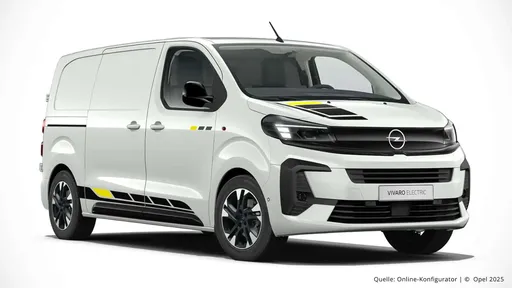
Vivaro

Head-to-Head: Vauxhall Vivaro vs VW Caddy

In the competitive world of commercial vehicles, the Vauxhall Vivaro and VW Caddy stand out as two strong contenders. Designed for utility and efficiency, both models bring their unique set of features to the table. This article delves into the technical aspects and innovations of each to help you make an informed choice.
Caddy

Design and Utility

The Vauxhall Vivaro is a robust cargo van that emphasizes functionality with its extensive space and adaptability, offering configurations for both three and six seats. With body lengths of 5309 mm, 4959 mm, and 5330 mm, the Vivaro provides ample room for cargo and team transport.

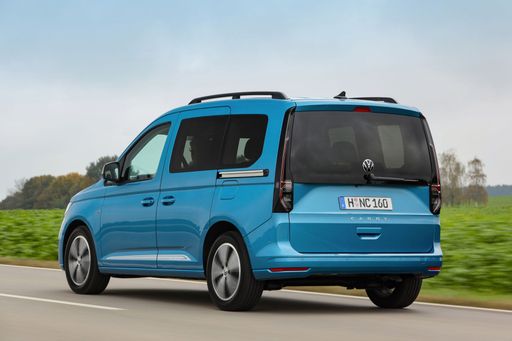
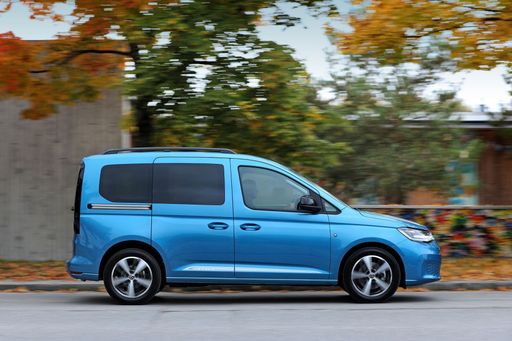
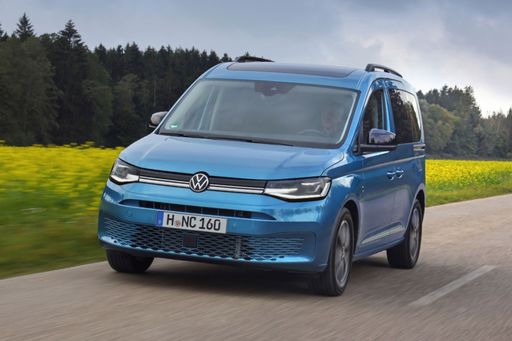
The VW Caddy, categorized as a high roof wagon, offers a more compact design with lengths ranging from 4500 mm to 4853 mm. With high versatility, Caddy accommodates up to seven seats, making it ideal for passengers and light cargo transport. Its width of 1855 mm and height variations from 1819 mm to 1860 mm ensure ease of navigation through urban settings.

Power and Performance

The Vauxhall Vivaro presents several engine options, including diesel and electric variants. Its power ranges from 120 to 177 HP, supported by front-wheel drive. The manual and automatic transmission options promise a tailored driving experience with torque figures between 260 and 400 Nm. On the efficiency spectrum, the Vivaro diesel engines boast fuel consumption ranging from 6.6 to 7.7 L/100km, while electric variants consume 23.6 to 24.8 kWh/100km, offering an impressive electric range from 212 to 351 km.

In contrast, the VW Caddy also promises a blend of petrol, diesel, and plug-in hybrid options, delivering power from 102 to 150 HP. Available in both front-wheel and all-wheel drive, the Caddy supports versatile driving conditions. The fuel consumption is competitive, ranging from 5.3 to 6.9 L/100km, with plug-in hybrid options indicating a mere 0.5 L/100km consumption and an electric range up to 121 km.

Technical Innovations

The Vivaro and Caddy both incorporate noteworthy innovations. The Vivaro's electric models are equipped with advanced power management systems, enhancing performance and range efficiency. On the diesel side, its CO2 emissions are managed efficiently, classified between classes A to G.

The VW Caddy emphasizes its hybrid technology, seamlessly integrating electric power for urban commutes. Its dual-clutch automatic transmission ensures smooth transitions and improved fuel efficiency. Additionally, the Caddy's CO2 class ranges from B to F, signaling its environmental consideration.

Practicality and Efficiency

For payload capacity, the Vauxhall Vivaro shines with a maximum payload of 1333 kg, catering to heavy-duty requirements. The VW Caddy, while not matching that, offers significant payload versatility up to 703 kg, favoring lighter commercial tasks and family outings.

Both models prioritize fuel efficiency, with the Vivaro's fuel tank capacity of up to 70 L ensuring fewer stops during long hauls. The Caddy’s smaller 50 L tank is complemented by its lower consumption rates, making it economical for short-distance urban travel.

Final Verdict

Choosing between the Vauxhall Vivaro and VW Caddy ultimately hinges on your specific needs. If your tasks demand greater cargo capacity and heavy-duty performance, the Vivaro takes the lead with its vast engine options and robust payload capability. On the other hand, if you require a versatile, city-friendly vehicle with advanced hybrid options, the VW Caddy presents a compelling case.

Both vehicles stand out with their innovation and engineering excellence, ensuring they remain favorites in the commercial vehicle world. Whether for business or personal use, both deliver on their promise of reliability and performance.

Here’s where it gets real: The technical differences in detail

Vivaro

Costs and Efficiency:

Looking at overall running costs, both models reveal some interesting differences in everyday economy.

VW Caddy is a bit cheaper – starting at 27,800 £ , while the Vauxhall Vivaro costs 33,200 £ . That’s a price difference of around 5,442 £.

Fuel consumption also shows a difference: the VW Caddy uses 0.5 L/100km and is significantly more efficient than the Vauxhall Vivaro with 6.2 L/100km. The difference is about 5.7 L/100km.

As for electric range, the Vauxhall Vivaro offers substantially more range – reaching up to 352 km, about 231 km more than the VW Caddy.

Caddy

Engine and Performance:

Under the bonnet, it becomes clear which model is tuned for sportiness and which one takes the lead when you hit the accelerator.

When it comes to engine power, the Vauxhall Vivaro offers somewhat more power – delivering 180 HP compared to 150 HP. That’s roughly 30 HP more horsepower.

When accelerating from 0 to 100 km/h, the Vauxhall Vivaro is marginally quicker – completing the sprint in 10.5 s, while the VW Caddy takes 11.4 s. That’s about 0.9 s quicker.

Looking at top speed, the VW Caddy is clearly faster – reaching 186 km/h, while the Vauxhall Vivaro tops out at 130 km/h. The difference is around 56 km/h.

There’s also a difference in torque: the Vauxhall Vivaro delivers somewhat more torque with 400 Nm compared to 320 Nm. That’s about 80 Nm more.

Space and Everyday Use:

Whether family car or daily driver – which one offers more room, flexibility and comfort?

Seats: VW Caddy offers more seats – 7 vs 6.

In terms of curb weight, VW Caddy is marginally lighter – 1,575 kg compared to 1,722 kg. The difference is around 147 kg.

For maximum load capacity, the Vauxhall Vivaro offers noticeably more capacity – up to 6,100 L, about 2,400 L more than the VW Caddy.

When it comes to payload, the Vauxhall Vivaro carries significantly more – 1,226 kg compared to 710 kg. That’s a difference of about 516 kg.

Who wins the race in the data check?

The VW Caddy is far ahead overall in the objective data comparison.
This result only shows which model scores more points on paper – not which of the two cars feels right for you.

from £27,800
Caddy

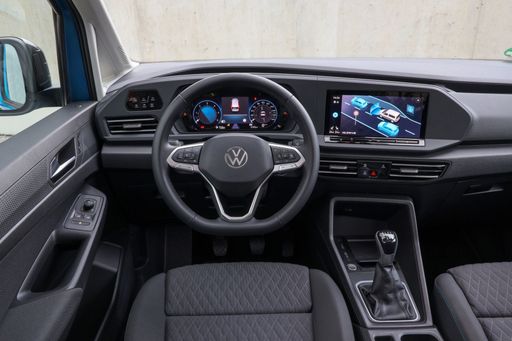
VW Caddy

  • Engine Type : Petrol, Diesel, Plugin Hybrid
  • Transmission : Manuel, Automatic
  • Drive Type : Front-Wheel Drive, All-Wheel Drive
  • Power HP : 102 - 150 HP
  • Consumption L/100km : 0.5 - 6.9 L/100km
  • Electric Range : 116 - 121 km
Vauxhall Vivaro
VW Caddy

Costs and Consumption

View detailed analysis

Engine and Performance

View detailed analysis

Dimensions and Body

View detailed analysis

Vauxhall Vivaro

The Opel Vivaro is a workhorse with a surprisingly civilised demeanour, blending rugged practicality with enough style and comfort to keep drivers happy on any job. With clever packaging and sensible features that simplify loading, commuting and family duties, it’s the no-nonsense van for buyers who want functionality without the fuss — honest, dependable and just smart enough to make the day easier.

details

VW Caddy

The VW Caddy is the Swiss-army knife of compact vans — practical, surprisingly refined, and ready to swap a weekend adventure for a grocery run without breaking a sweat. It’s user-friendly, comfortable enough for daily driving, and sensible for buyers who want utility with a dash of style and no drama.

details
Vauxhall Vivaro
VW Caddy

Costs and Consumption

Price
33,200 - 52,500 £
Price
27,800 - 45,900 £
Consumption L/100km
6.2 - 6.5 L/100km
Consumption L/100km
0.5 - 6.9 L/100km
Consumption kWh/100km
23.6 - 24 kWh/100km
Consumption kWh/100km
-
Electric Range
221 - 352 km
Electric Range
116 - 121 km
Battery Capacity
-
Battery Capacity
19.7 kWh
co2
0 - 172 g/km
co2
10 - 165 g/km
Fuel tank capacity
-
Fuel tank capacity
50 L

Dimensions and Body

Body Type
Cargo Van
Body Type
High Roof Estate
Seats
3 - 6
Seats
5 - 7
Doors
4
Doors
5
Curb weight
1,722 - 2,260 kg
Curb weight
1,575 - 1,998 kg
Trunk capacity
-
Trunk capacity
-
Length
4,980 - 5,330 mm
Length
4,500 - 4,853 mm
Width
1,920 mm
Width
1,855 mm
Height
1,895 - 1,935 mm
Height
1,819 - 1,860 mm
Max trunk capacity
3,200 - 6,100 L
Max trunk capacity
2,556 - 3,700 L
Payload
840 - 1,226 kg
Payload
501 - 710 kg

Engine and Performance

Engine Type
Electric, Diesel
Engine Type
Petrol, Diesel, Plugin Hybrid
Transmission
Automatic, Manuel
Transmission
Manuel, Automatic
Transmission Detail
Reduction Gearbox, Manual Gearbox, Automatic Gearbox
Transmission Detail
Manual Gearbox, Dual-Clutch Automatic
Drive Type
Front-Wheel Drive
Drive Type
Front-Wheel Drive, All-Wheel Drive
Power HP
120 - 180 HP
Power HP
102 - 150 HP
Acceleration 0-100km/h
10.5 - 14.3 s
Acceleration 0-100km/h
11.4 - 14 s
Max Speed
130 km/h
Max Speed
173 - 186 km/h
Torque
260 - 400 Nm
Torque
220 - 320 Nm
Number of Cylinders
4
Number of Cylinders
4
Power kW
88 - 132 kW
Power kW
75 - 110 kW
Engine capacity
1,499 - 2,184 cm3
Engine capacity
1,498 - 1,968 cm3

General

Model Year
2,024 - 2,025
Model Year
2,024
CO2 Efficiency Class
A, F
CO2 Efficiency Class
E, F, B
Brand
Vauxhall
Brand
VW
DriveDuel uses data analysis and artificial intelligence to evaluate vehicle data and create content. Content is regularly reviewed and improved. The displayed prices are estimates based on German list prices, adjusted to the respective country’s VAT. Country-specific registration taxes are not included. This information is not legally binding.