VS

Vauxhall Zafira Life vs Toyota Proace Bus - Differences and prices compared

Compare performance (180 HP vs 180 HP), boot space and price (36000 £ vs 31600 £ ) at a glance. Find out which car is the better choice for you – Vauxhall Zafira Life or Toyota Proace Bus?

Zafira Life

In the realm of family vans and people carriers, both the Opel Zafira Life and the Toyota Proace Bus stand out with innovative designs, impressive functionalities, and commendable performances. As we delve into a comprehensive comparison, we will explore their technical specifications, unique features, and driving experiences.
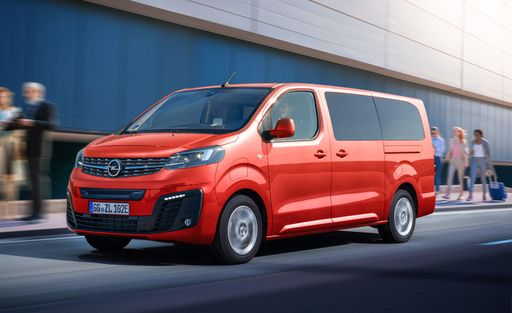
Zafira Life

Design and Build Quality

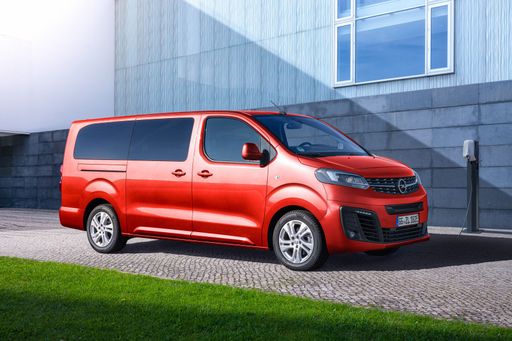
The Opel Zafira Life presents a practical yet stylish approach to modern commuting. With a length varying from 4,981 mm to 5,331 mm and a width of 2,010 mm, this bus accommodates up to 8 passengers comfortably. Its robust build is complemented by a height of 1,890 mm, ensuring ample headroom for all occupants.

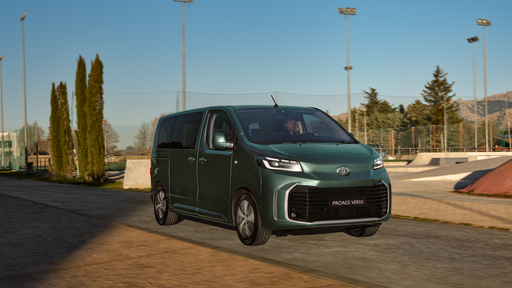
Conversely, the Toyota Proace Bus measures in at 4,983 mm to 5,333 mm in length and 1,920 mm in width. Also designed for passenger comfort, it offers seating configurations for up to 9 passengers, allowing for versatile loading options. With the same height as the Zafira Life, the Proace Bus also provides a spacious environment for passengers and cargo alike.

Zafira Life

Powertrain and Performance

Powering the Opel Zafira Life is a smooth electric drivetrain that delivers 136 HP with 260 Nm of torque, providing silent yet efficient performance. The automatic transmission features a reduction gearbox, contributing to a seamless driving experience. With a 0-100 km/h acceleration time of 13.1 to 14.3 seconds and a top speed of 130 km/h, the Zafira Life offers a humble yet sufficient performance for city and highway driving.

The Toyota Proace Bus offers greater versatility in its engine options, featuring both electric and diesel powertrains. The electric variant similarly delivers 136 HP, closely matching the Zafira Life. However, the Proace also boasts diesel engines with power ratings of 144 HP and 177 HP for those requiring more robust performance. Acceleration is slightly slower, clocking at around 13.3 seconds for the electric variant, but it also boasts a top speed of up to 170 km/h for the diesel configurations.

Zafira Life

Efficiency and Range

The Opel Zafira Life excels in energy efficiency, with an electric consumption rate of 24.6 to 24.9 kWh/100 km, making it an attractive choice for eco-conscious drivers. Its electric range of up to 347 km ensures sufficient longevity for city commutes and family outings.

On the other hand, the Toyota Proace Bus showcases a competitive edge, featuring a slightly better electric consumption of 24.2 to 24.4 kWh/100 km and an electric range of up to 343 km. However, its diesel counterparts consume approximately 7.3 to 7.4 L/100 km, which may better suit those who frequently drive longer distances without charger availability.

Zafira Life

Technology and Features

Both vehicles are equipped with modern technological features aimed at enhancing comfort and convenience. The Opel Zafira Life comes with advanced infotainment systems, connectivity options, and safety features that promote a secure driving experience for families.

The Toyota Proace Bus, while sharing a similar suite of technological advancements, takes things a step further with additional driver assistance systems and optional advanced safety features. The choice between manual and automatic transmissions across various powertrains provides flexibility for different driving preferences.

Conclusion

When comparing the Opel Zafira Life and the Toyota Proace Bus, prospective buyers will find both vehicles excel in various areas. The Zafira Life is particularly appealing for electric vehicle enthusiasts looking for efficiency, while the Proace Bus shines with its diverse powertrains and enhanced technological offerings. Ultimately, the choice will depend on individual preferences regarding performance, usage, and brand loyalty. Both models represent the epitome of practicality in the busy automotive market, catering to the needs of families and commercial users alike.

Vauxhall Zafira Life

Toyota Proace Bus

Here’s where it gets real: The technical differences in detail

Costs and Efficiency:

Price and efficiency are key factors when choosing a car – and this is often where the real differences emerge.

Toyota Proace Bus has a to a small extent advantage in terms of price – it starts at 31600 £ , while the Vauxhall Zafira Life costs 36000 £ . That’s a price difference of around 4427 £.

Fuel consumption also shows a difference: Toyota Proace Bus manages with 6.50 L and is therefore slight more efficient than the Vauxhall Zafira Life with 7.10 L. The difference is about 0.60 L per 100 km.

In terms of energy consumption, the advantage goes to the Toyota Proace Bus: with 24.20 kWh per 100 km, it’s hardly perceptible more efficient than the Vauxhall Zafira Life with 24.70 kWh. That’s a difference of about 0.50 kWh.

As for electric range, the Vauxhall Zafira Life performs hardly perceptible better – achieving up to 347 km, about 4 km more than the Toyota Proace Bus.

Engine and Performance:

Power, torque and acceleration are the classic benchmarks for car enthusiasts – and here, some clear differences start to show.

Both models deliver identical power – 180 HP each.

In acceleration from 0 to 100 km/h, the Vauxhall Zafira Life is noticeable quicker – completing the sprint in 10.60 s, while the Toyota Proace Bus takes 13.30 s. That’s about 2.70 s faster.

In terms of top speed, the Vauxhall Zafira Life performs minimal better – reaching 185 km/h, while the Toyota Proace Bus tops out at 170 km/h. The difference is around 15 km/h.

Both models offer the same torque – 400 Nm.

Space and Everyday Use:

Cabin size, boot volume and payload all play a role in everyday practicality. Here, comfort and flexibility make the difference.

Seats: Toyota Proace Bus offers a bit more seating capacity – 9 vs 8.

In curb weight, Toyota Proace Bus is slight lighter – 1835 kg compared to 1953 kg. The difference is around 118 kg.

Boot capacity is identical – both offer 0 L of storage.

When it comes to payload, Toyota Proace Bus noticeable takes the win – 1265 kg compared to 914 kg. That’s a difference of about 351 kg.

Who wins the race in the data check?

The Toyota Proace Bus comes out modestly ahead in the objective data comparison.
This result only shows which model scores more points on paper – not which of the two cars feels right for you.

Vauxhall Zafira Life
Toyota Proace Bus

Costs and Consumption

View detailed analysis

Engine and Performance

View detailed analysis

Dimensions and Body

View detailed analysis
from about £31,600
default

Toyota Proace Bus

  • Engine Type : Electric, Diesel
  • Transmission : Automatic, Manuel
  • Drive Type : Front-Wheel Drive
  • Power HP : 136 - 180 HP
  • Consumption L/100km : 6.5 - 6.7 L
  • Consumption kWh/100km : 24.2 - 24.4 kWh
  • Electric Range : 218 - 343 km

Vauxhall Zafira Life

The Opel Zafira Life is a practical, no-nonsense people carrier that wraps flexible space and family-friendly features into a tidy, grown-up package. It’s comfy on long runs, easy to live with day to day, and wears its van roots with surprising style — the kind of sensible buy that still manages to smile.

details

Toyota Proace Bus

The Toyota Proace Bus is a pragmatic people‑mover that swallows passengers and luggage with the kind of everyday practicality fleet managers and large families will appreciate. It may not thrill the enthusiast, but its sensible layout, sturdy build and Toyota badge make it a dependable, no-nonsense choice for anyone needing space and reliability rather than flash.

details
Vauxhall Zafira Life
Toyota Proace Bus

Costs and Consumption

Price
36000 - 53200 £
Price
31600 - 57100 £
Consumption L/100km
7.10 L
Consumption L/100km
6.5 - 6.7 L
Consumption kWh/100km
24.7 - 24.8 kWh
Consumption kWh/100km
24.2 - 24.4 kWh
Electric Range
220 - 347 km
Electric Range
218 - 343 km
Battery Capacity
-
Battery Capacity
-
co2
0 - 186 g/km
co2
0 - 177 g/km
Fuel tank capacity
70 L
Fuel tank capacity
69 L

Dimensions and Body

Body Type
Bus
Body Type
Bus
Seats
8
Seats
5 - 9
Doors
5
Doors
4 - 5
Curb weight
1953 - 2240 kg
Curb weight
1835 - 2140 kg
Trunk capacity
0 L
Trunk capacity
0 L
Length
4981 - 5331 mm
Length
4983 - 5333 mm
Width
2010 mm
Width
1920 mm
Height
1890 mm
Height
1890 mm
Max trunk capacity
4200 - 4900 L
Max trunk capacity
-
Payload
850 - 914 kg
Payload
825 - 1265 kg

Engine and Performance

Engine Type
Electric, Diesel
Engine Type
Electric, Diesel
Transmission
Automatic
Transmission
Automatic, Manuel
Transmission Detail
Reduction Gearbox, Automatic Gearbox
Transmission Detail
Reduction Gearbox, Manual Gearbox, Automatic Gearbox
Drive Type
Front-Wheel Drive
Drive Type
Front-Wheel Drive
Power HP
136 - 180 HP
Power HP
136 - 180 HP
Acceleration 0-100km/h
10.6 - 14.3 s
Acceleration 0-100km/h
13.30 s
Max Speed
130 - 185 km/h
Max Speed
130 - 170 km/h
Torque
260 - 400 Nm
Torque
260 - 400 Nm
Number of Cylinders
4
Number of Cylinders
4
Power kW
100 - 132 kW
Power kW
100 - 132 kW
Engine capacity
2184 cm3
Engine capacity
2184 cm3

General

Model Year
2024 - 2025
Model Year
2024 - 2025
CO2 Efficiency Class
A, G
CO2 Efficiency Class
A, F, G
Brand
Vauxhall
Brand
Toyota
What drivetrain options does the Vauxhall Zafira Life have?

The Vauxhall Zafira Life is offered with Front-Wheel Drive.

The prices shown are estimates based on German list prices, adjusted for local VAT. Local registration taxes (e.g. NoVA, BPM or CO2 malus) are not included. This information is not legally binding.