VS

Peugeot 308 SW vs Toyota Corolla comparison

Compare performance (195 HP vs 178 HP), boot space and price (30,100 £ vs 28,600 £ ) at a glance. Find out which car is the better choice for you – Peugeot 308 SW or Toyota Corolla?

Peugeot 308 SW vs Toyota Corolla: Key differences

Peugeot 308 SW

4.5 (2 Reviews)
rate
  • barely more power
  • substantially more efficient
  • noticeably more trunk space

Toyota Corolla

5 (1 Reviews)
rate
  • very slightly cheaper
  • only slightly quicker 0–100 km/h
  • barely lighter

All details on performance, efficiency, range and trunk space can be found in the technical comparison below – including user reviews for both models.

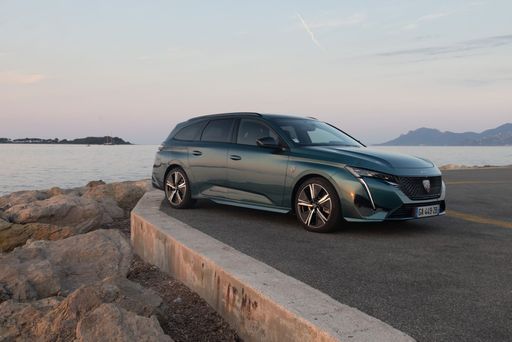
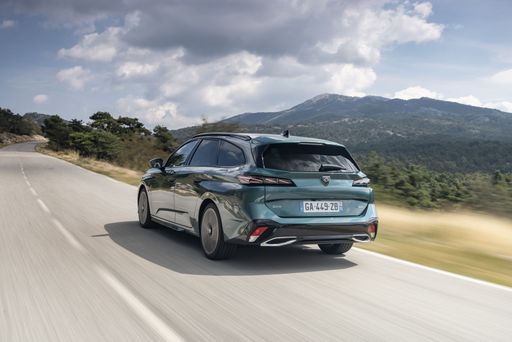
308 SW

The Wagon Renaissance: Peugeot 308 SW Versus Toyota Corolla

In today's automotive landscape, where SUVs bask in popularity, the classic wagon is making a subtle comeback. Two frontrunners in this category are the Peugeot 308 SW and the Toyota Corolla. Both models bring distinct flavors to the table, each laden with innovation and robustness. Let's dive deep into these models' technical specs, ride quality, and the modern comforts they offer.
Corolla

Engine and Performance: Power Meets Efficiency

The Peugeot 308 SW offers an enviable range of engine types including Petrol MHEV, Diesel, Plugin Hybrid, and Electric. With power outputs ranging from 130 to 225 HP, the versatility extends even to transmission options—Manual, Dual-Clutch Automatic, Automatic Gearbox, and Reduction Gearbox. It accelerates from 0-100 km/h between 7.6s and 10.9s, offering a spirited drive.

Contrastingly, the Toyota Corolla embraces a Full Hybrid ethos, offering two variants that deliver 140 and 196 HP respectively. Equipped with a CVT automatic transmission, its acceleration from 0-100 km/h hovers around 7.5 to 9.2 seconds, blending fuel efficiency with satisfactory speed. The superior petrol efficiency at just 4.4-4.6 L/100km is ideal for long urban jaunts.

308 SW

Innovative Technologies: Efficient and Eco-Friendly

Peugeot focuses on varied engine types, including a fully electric version with up to 410 km range, impressive for eco-conscious consumers. CO2 efficiency classes span from A (Electric) to D (Petrol), already indicating a sustainability stride for the brand. Additionally, the car's advanced driver-assistance systems make it a tech-forward choice.

Toyota, on the other hand, has put its trust in the tried-and-tested full hybrid technology, continually refining it over the years. With an outstanding CO2 emission of just 100 g/km, the Corolla is ahead in environmental credentials. Also, its uncomplicated hybrid system offers a seamless driving experience with high fuel savings.

Corolla

Interior and Cargo Capacity: Comfort and Versatility

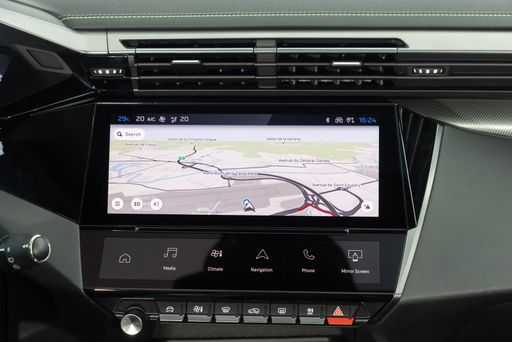
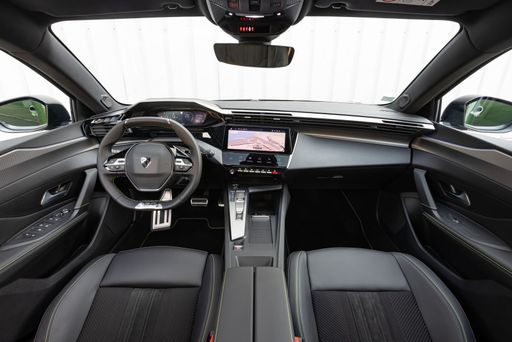
The Peugeot 308 SW excels in passenger comfort with its 5-seat configuration and offers a generous 608 liters of trunk capacity. Its elegant design doesn’t compromise practicality, ideal for families needing extra space without sacrificing style.

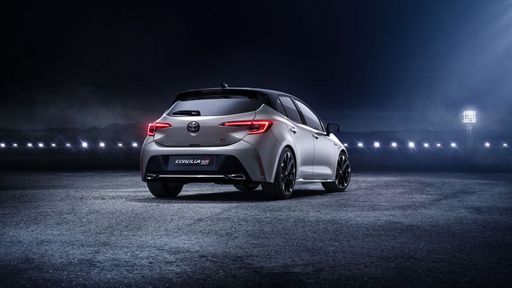
The Toyota Corolla, while sporting a smaller trunk capacity of 361 liters, compensates with an interior that’s thoughtfully designed for comfort. The reduced cargo space points towards a slightly more compact and easier-to-park vehicle, which might attract urban drivers.

308 SW

Dimensions and Aesthetic Appeal

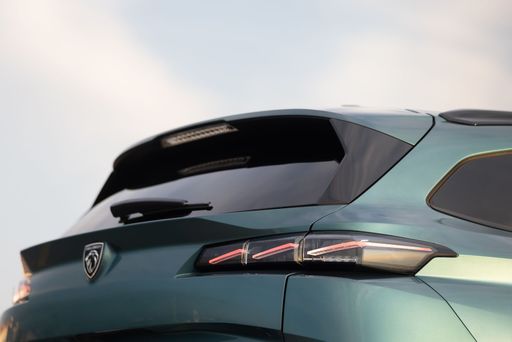
In terms of size, the Peugeot 308 SW stretches to 4636 mm in length, ensuring greater cabin space. Its sleek 1852 mm width and 1442 mm height contribute to its sophisticated stance on the road.

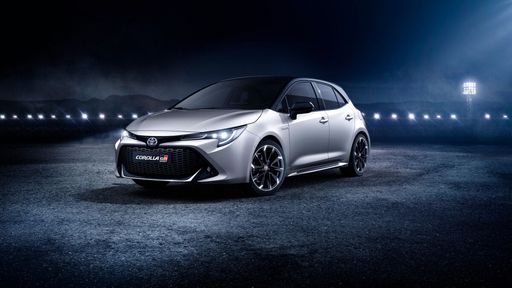
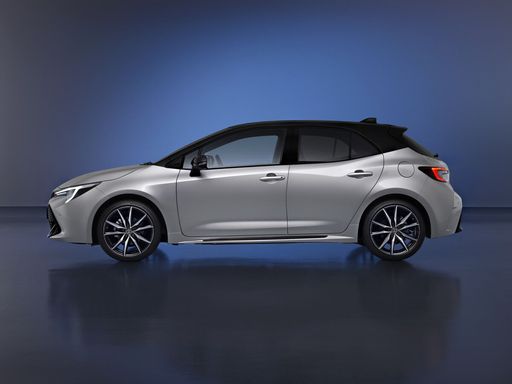
The Toyota Corolla, smaller at 4370 mm in length and 1790 mm in width, is agile and convenient for city navigation while maintaining a stylish, modern exterior that belies its space-saving approach.

Corolla

Conclusion: Choosing Your Ideal Companion

Choosing between the Peugeot 308 SW and the Toyota Corolla ultimately boils down to personal preference and needs. For those prioritizing range and engine variety, the Peugeot is your go-to with its eclectic lineup. Alternatively, the Corolla appeals to eco-friendly consumers with its efficient hybrid technology. Regardless of choice, both vehicles show impressive strides in tech and efficiency, ensuring their relevance in a rapidly evolving market.

Here’s where it gets real: The technical differences in detail

308 SW

Costs and Efficiency:

When it comes to price and running costs, the biggest differences usually appear. This is often where you see which car fits your budget better in the long run.

Toyota Corolla is very slightly cheaper – starting at 28,600 £ , while the Peugeot 308 SW costs 30,100 £ . That’s a price difference of around 1,543 £.

Fuel consumption also shows a difference: the Peugeot 308 SW uses 2.3 L/100km and is substantially more efficient than the Toyota Corolla with 4.4 L/100km. The difference is about 2.1 L/100km.

Corolla

Engine and Performance:

Under the bonnet, it becomes clear which model is tuned for sportiness and which one takes the lead when you hit the accelerator.

When it comes to engine power, the Peugeot 308 SW offers barely more power – delivering 195 HP compared to 178 HP. That’s roughly 17 HP more horsepower.

When accelerating from 0 to 100 km/h, the Toyota Corolla is only slightly quicker – completing the sprint in 7.5 s, while the Peugeot 308 SW takes 7.7 s. That’s about 0.2 s quicker.

Looking at top speed, the Peugeot 308 SW is somewhat faster – reaching 225 km/h, while the Toyota Corolla tops out at 180 km/h. The difference is around 45 km/h.

308 SW

Space and Everyday Use:

Beyond pure performance, interior space and usability matter most in daily life. This is where you see which car is more practical and versatile.

Both vehicles offer seating for 5 people.

In terms of curb weight, Toyota Corolla is barely lighter – 1,420 kg compared to 1,484 kg. The difference is around 64 kg.

Looking at boot space, the Peugeot 308 SW offers noticeably more boot space – 551 L compared to 361 L. That’s a difference of about 190 L.

For maximum load capacity, the Peugeot 308 SW offers noticeably more capacity – up to 1,483 L, about 431 L more than the Toyota Corolla.

When it comes to payload, the Peugeot 308 SW carries a bit more – 508 kg compared to 450 kg. That’s a difference of about 58 kg.

Who wins the race in the data check?

The Peugeot 308 SW holds a decisive overall lead in the objective data comparison.
This result only shows which model scores more points on paper – not which of the two cars feels right for you.

from £30,100
308 SW

Peugeot 308 SW

  • Engine Type : Petrol MHEV, Diesel, Plugin Hybrid, Electric
  • Transmission : Automatic
  • Drive Type : Front-Wheel Drive
  • Power HP : 131 - 195 HP
  • Consumption L/100km : 2.3 - 5.1 L/100km
  • Consumption kWh/100km : 15.2 - 15.7 kWh/100km
  • Electric Range : 78 - 444 km
Peugeot 308 SW
Toyota Corolla

Costs and Consumption

View detailed analysis

Engine and Performance

View detailed analysis

Dimensions and Body

View detailed analysis

Peugeot 308 SW

The Peugeot 308 SW blends French flair with estate practicality, dressing up daily chores in a surprisingly handsome package. Inside it's cleverly laid out and comfortable, and the composed, entertaining drive makes family duty feel a little less like a chore.

details

Toyota Corolla

The Toyota Corolla remains the steady, no-nonsense compact that puts reliability and low running costs at the top of your shopping list, with a comfortable, well-built interior that won't embarrass you at the supermarket. It won't set your pulse racing, but it's an honest, easy-to-live-with car that makes smart sense for buyers who want dependability and sensible value with a dash of modern tech.

details
Peugeot 308 SW
Toyota Corolla

Costs and Consumption

Price
30,100 - 43,800 £
Price
28,600 - 34,900 £
Consumption L/100km
2.3 - 5.1 L/100km
Consumption L/100km
4.4 L/100km
Consumption kWh/100km
15.2 - 15.7 kWh/100km
Consumption kWh/100km
-
Electric Range
78 - 444 km
Electric Range
-
Battery Capacity
0.4 kWh
Battery Capacity
-
co2
0 - 134 g/km
co2
100 g/km
Fuel tank capacity
42 - 52 L
Fuel tank capacity
43 L

Dimensions and Body

Body Type
Estate
Body Type
Hatchback
Seats
5
Seats
5
Doors
5
Doors
5
Curb weight
1,484 - 1,783 kg
Curb weight
1,420 - 1,460 kg
Trunk capacity
467 - 551 L
Trunk capacity
313 - 361 L
Length
4,636 mm
Length
4,370 mm
Width
1,852 mm
Width
1,790 mm
Height
1,438 mm
Height
1,435 mm
Max trunk capacity
1,402 - 1,483 L
Max trunk capacity
1,004 - 1,052 L
Payload
417 - 508 kg
Payload
400 - 450 kg

Engine and Performance

Engine Type
Petrol MHEV, Diesel, Plugin Hybrid, Electric
Engine Type
Full Hybrid
Transmission
Automatic
Transmission
Automatic
Transmission Detail
Dual-Clutch Automatic, Automatic Gearbox, Reduction Gearbox
Transmission Detail
CVT
Drive Type
Front-Wheel Drive
Drive Type
Front-Wheel Drive
Power HP
131 - 195 HP
Power HP
140 - 178 HP
Acceleration 0-100km/h
7.7 - 10.9 s
Acceleration 0-100km/h
7.5 - 9.2 s
Max Speed
170 - 225 km/h
Max Speed
180 km/h
Torque
230 - 300 Nm
Torque
-
Number of Cylinders
3 - 4
Number of Cylinders
4
Power kW
96 - 144 kW
Power kW
103 - 131 kW
Engine capacity
1,199 - 1,598 cm3
Engine capacity
1,798 - 1,987 cm3

General

Model Year
2,025 - 2,026
Model Year
2,025
CO2 Efficiency Class
C, D, B, A
CO2 Efficiency Class
C
Brand
Peugeot
Brand
Toyota
DriveDuel uses data analysis and artificial intelligence to evaluate vehicle data and create content. Content is regularly reviewed and improved. The displayed prices are estimates based on German list prices, adjusted to the respective country’s VAT. Country-specific registration taxes are not included. This information is not legally binding.