VS

Peugeot 5008 vs Peugeot 3008 comparison

Compare performance (325 HP vs 325 HP), boot space and price (37,600 £ vs 35,100 £ ) at a glance. Find out which car is the better choice for you – Peugeot 5008 or Peugeot 3008?

Peugeot 5008 vs Peugeot 3008: Key differences

Peugeot 5008

4.7 (1 Reviews)
rate

Peugeot 3008

3.4 (4 Reviews)
rate
  • marginally cheaper
  • moderately more efficient
  • barely more efficient
  • only slightly more electric range
  • only slightly quicker 0–100 km/h
  • very slightly lighter
  • visibly more trunk space

All details on performance, efficiency, range and trunk space can be found in the technical comparison below – including user reviews for both models.

5008

Compact Versus Spacious: The Peugeot 3008 vs. Peugeot 5008

For those seeking the elegant balance of style, efficiency, and versatility in an SUV, Peugeot has always been a significant contender. Two models that stand out are the Peugeot 3008 and its larger sibling, the Peugeot 5008. With shared attention to innovation and sophisticated design, both vehicles offer distinct advantages and unique features. Let's dive into the details and discover which might be the perfect fit for you.
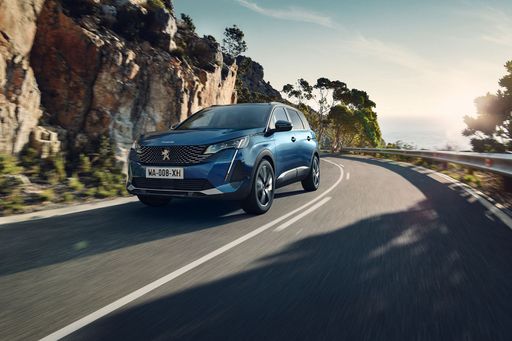
3008

Designed for Different Needs

The Peugeot 3008 is the more compact SUV of the two, measuring 4,542 mm in length. It’s perfect for drivers who prioritize easy maneuverability in urban settings without sacrificing style, thanks to its modern profile and striking design. Meanwhile, the Peugeot 5008 is a spacious alternative with a length of 4,791 mm, ideal for those who require extra room, particularly in terms of seating capacity, offering a generous seven seats compared to the 3008’s five.

5008

Power and Performance

Both models come with similar powertrain options, yet their differences lie in performance and capacity. The Peugeot 3008 offers a range of engine types, including Petrol MHEV, Plug-in Hybrid, and Electric, with power outputs ranging from 136 to 231 HP. This ensures impressive versatility whether for city cruising or highway journeys.

The Peugeot 5008, while similarly endowed in terms of engine variety, slightly upscales its offering with top power at 231 HP, catering to those who seek a more robust driving experience. Both SUVs are equipped with a dual-clutch automatic transmission for smooth shifting, but the 5008 includes an added appeal for larger families or traveling groups with its more accommodating trunk capacity of 748 liters, compared to the 3008's 520 liters.

3008

Innovations in Efficiency

Efficiency is where both models truly shine. With the plug-in hybrid versions, the Peugeot 3008 achieves an outstanding fuel consumption of just 0.9 L/100 km, while the comparable Peugeot 5008 sits slightly higher at 1 L/100 km. For eco-conscious drivers, the electric variants of these SUVs offer viable alternatives, with the 3008 featuring an electric range of up to 698 km, which is higher than the 5008's maximum range of 664 km.

Being part of the 2024 model year means both vehicles boast cutting-edge, eco-friendly technology, offering CO2 emissions as low as 0 g/km in their full-electric versions, reflecting Peugeot's commitment to sustainability.

5008

Interior Elegance and Comfort

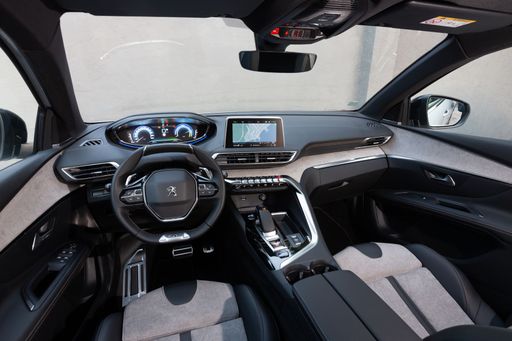
Inside, both the 3008 and 5008 excel in offering luxurious interiors with the latest technology. The i-Cockpit® amplified with a responsive high-definition touchscreen and customizable digital displays elevates the driving experience. Still, the 5008 edges ahead slightly with its larger cabin space, catering to comfort with ease for all passengers.

3008

Conclusion: The Choice Is Yours

Ultimately, the decision between the Peugeot 3008 and Peugeot 5008 will depend on your personal needs. If you're inclined towards a more compact size with nimble handling and excellent electric range, the 3008 makes a compelling case. However, for those who prioritize space, additional seating, and maximum comfort for the whole family, the 5008 stands out as the better choice. Regardless of your preference, Peugeot ensures that both options offer elegance, innovation, and impressive driving dynamics.

Here’s where it gets real: The technical differences in detail

5008

Costs and Efficiency:

When it comes to price and running costs, the biggest differences usually appear. This is often where you see which car fits your budget better in the long run.

Peugeot 3008 is marginally cheaper – starting at 35,100 £ , while the Peugeot 5008 costs 37,600 £ . That’s a price difference of around 2,452 £.

Fuel consumption also shows a difference: the Peugeot 3008 uses 2.4 L/100km and is moderately more efficient than the Peugeot 5008 with 2.7 L/100km. The difference is about 0.3 L/100km.

In terms of energy consumption, the Peugeot 3008 is barely more efficient: consuming 16.9 kWh/100km compared to 17.8 kWh/100km for the Peugeot 5008. That’s a difference of about 0.9 kWh/100km.

As for electric range, the Peugeot 3008 offers only slightly more range – reaching up to 698 km, about 29 km more than the Peugeot 5008.

3008

Engine and Performance:

Power, torque and acceleration say a lot about how a car feels on the road. This is where you see which model delivers more driving dynamics.

Both models deliver identical power – 325 HP each.

When accelerating from 0 to 100 km/h, the Peugeot 3008 is only slightly quicker – completing the sprint in 6 s, while the Peugeot 5008 takes 6.5 s. That’s about 0.5 s quicker.

Looking at top speed, the Peugeot 3008 is barely faster – reaching 201 km/h, while the Peugeot 5008 tops out at 198 km/h. The difference is around 3 km/h.

Both models offer the same torque – 511 Nm.

5008

Space and Everyday Use:

Beyond pure performance, interior space and usability matter most in daily life. This is where you see which car is more practical and versatile.

Seats: Peugeot 5008 offers more seats – 7 vs 5.

In terms of curb weight, Peugeot 3008 is very slightly lighter – 1,648 kg compared to 1,700 kg. The difference is around 52 kg.

Looking at boot space, the Peugeot 3008 offers visibly more boot space – 520 L compared to 348 L. That’s a difference of about 172 L.

For maximum load capacity, the Peugeot 5008 offers markedly more capacity – up to 2,232 L, about 752 L more than the Peugeot 3008.

When it comes to payload, the Peugeot 5008 carries clearly more – 640 kg compared to 467 kg. That’s a difference of about 173 kg.

Who wins the race in the data check?

The Peugeot 5008 has only a minor advantage in the objective data comparison.
This result only shows which model scores more points on paper – not which of the two cars feels right for you.

from £37,600
5008

Peugeot 5008

  • Engine Type : Electric, Petrol MHEV, Plugin Hybrid
  • Transmission : Automatic
  • Drive Type : Front-Wheel Drive, All-Wheel Drive
  • Power HP : 145 - 325 HP
  • Consumption L/100km : 2.7 - 5.6 L/100km
  • Consumption kWh/100km : 17.8 - 18.6 kWh/100km
  • Electric Range : 78 - 669 km
Peugeot 5008
Peugeot 3008

Costs and Consumption

View detailed analysis

Engine and Performance

View detailed analysis

Dimensions and Body

View detailed analysis

Peugeot 5008

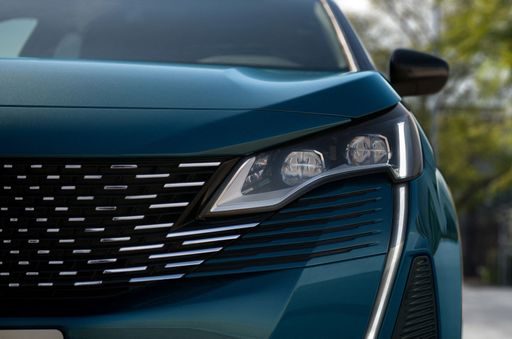
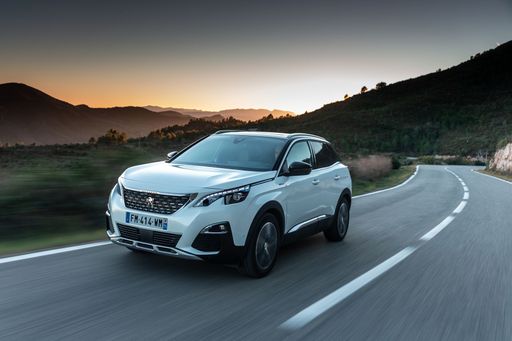
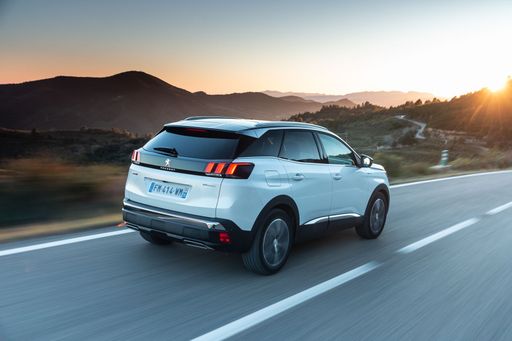
The Peugeot 5008 blends Peugeot's sharp design with the space and versatility families actually need, wrapping clever packaging and a premium-feeling cabin in a crisp, SUV-like silhouette. It drives with more poise than you'd expect from a people carrier, serves up practical touches and flexible seating for everyday chaos, and still looks good when parked outside the school gates.

details

Peugeot 3008

The Peugeot 3008 blends bold French styling with a surprisingly grown-up interior that makes even dull commutes feel a little bit special. Practical enough for family life yet lively to drive, it’s a clever all‑rounder that stands out from the crossover crowd without shouting for attention.

details
Peugeot 5008
Peugeot 3008

Costs and Consumption

Price
37,600 - 54,200 £
Price
35,100 - 52,000 £
Consumption L/100km
2.7 - 5.6 L/100km
Consumption L/100km
2.4 - 5.4 L/100km
Consumption kWh/100km
17.8 - 18.6 kWh/100km
Consumption kWh/100km
16.9 - 17.6 kWh/100km
Electric Range
78 - 669 km
Electric Range
81 - 698 km
Battery Capacity
0.4 - 96.9 kWh
Battery Capacity
0.4 - 96.9 kWh
co2
0 - 127 g/km
co2
0 - 121 g/km
Fuel tank capacity
55 L
Fuel tank capacity
55 L

Dimensions and Body

Body Type
SUV
Body Type
SUV
Seats
7
Seats
5
Doors
5
Doors
5
Curb weight
1,700 - 2,344 kg
Curb weight
1,648 - 2,266 kg
Trunk capacity
294 - 348 L
Trunk capacity
470 - 520 L
Length
4,791 mm
Length
4,542 mm
Width
1,895 mm
Width
1,895 mm
Height
1,694 mm
Height
1,641 mm
Max trunk capacity
2,178 - 2,232 L
Max trunk capacity
1,430 - 1,480 L
Payload
596 - 640 kg
Payload
432 - 467 kg

Engine and Performance

Engine Type
Electric, Petrol MHEV, Plugin Hybrid
Engine Type
Electric, Petrol MHEV, Plugin Hybrid
Transmission
Automatic
Transmission
Automatic
Transmission Detail
Reduction Gearbox, Dual-Clutch Automatic
Transmission Detail
Reduction Gearbox, Dual-Clutch Automatic
Drive Type
Front-Wheel Drive, All-Wheel Drive
Drive Type
Front-Wheel Drive, All-Wheel Drive
Power HP
145 - 325 HP
Power HP
145 - 325 HP
Acceleration 0-100km/h
6.5 - 10.2 s
Acceleration 0-100km/h
6 - 10.2 s
Max Speed
170 - 198 km/h
Max Speed
170 - 201 km/h
Torque
230 - 511 Nm
Torque
230 - 511 Nm
Number of Cylinders
3 - 4
Number of Cylinders
3 - 4
Power kW
107 - 239 kW
Power kW
107 - 239 kW
Engine capacity
1,199 - 1,598 cm3
Engine capacity
1,199 - 1,598 cm3

General

Model Year
2,024 - 2,026
Model Year
2,024 - 2,026
CO2 Efficiency Class
A, D, B
CO2 Efficiency Class
A, D, B
Brand
Peugeot
Brand
Peugeot
DriveDuel uses data analysis and artificial intelligence to evaluate vehicle data and create content. Content is regularly reviewed and improved. The displayed prices are estimates based on German list prices, adjusted to the respective country’s VAT. Country-specific registration taxes are not included. This information is not legally binding.