@ Peugeot / Stellantis Media
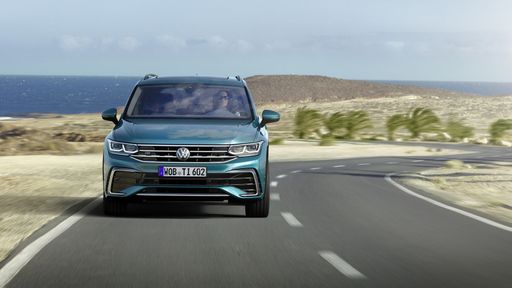
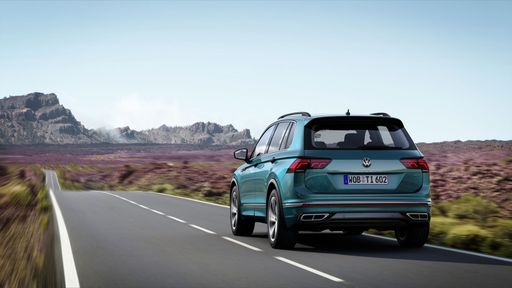
@ Volkswagen AG / VW Media
VS

Peugeot 5008 vs VW Tiguan – Which car suits you better?

Two cars, one duel: Peugeot 5008 meets VW Tiguan.
Which one wins in performance, efficiency and value for money? Find out now!

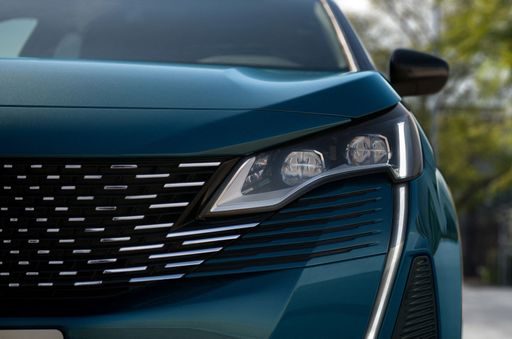
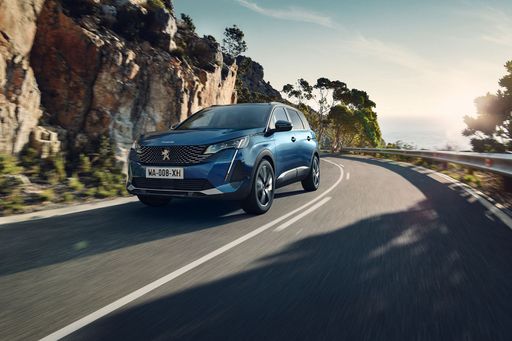
5008 @ Peugeot / Stellantis Media

Driving Dynamics: Peugeot 5008 vs. VW Tiguan

The automotive world has seen rapid advancements, especially in the SUV segment, and the competition between the Peugeot 5008 and the VW Tiguan is a testament to that evolution. Both vehicles bring different elements to the table, enticing enthusiasts and families alike. Let’s dissect these models to see how they stack up against each other in terms of driving dynamics.
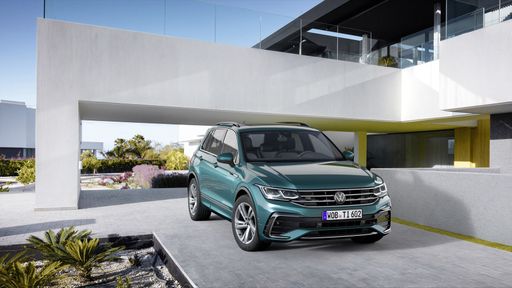
Tiguan @ Volkswagen AG / VW Media

Power and Performance

Under the hood, the Peugeot 5008 offers a variety of engine options including petrol, plug-in hybrid, and electric versions, catering to a wide range of driving preferences. The power output ranges from 136 HP to an impressive 231 HP, ensuring a dynamic driving experience. The model promises seamless acceleration with its dual-clutch automatic transmission, achieving 0-100 km/h in as little as 8.8 seconds for the top-tier variants.

On the other hand, the VW Tiguan presents a strong front with its array of petrol, diesel, and plug-in hybrid engines. The power spectrum ranges from 130 HP to an exhilarating 272 HP. It also boasts a dual-clutch automatic transmission, with the fastest variant reaching 100 km/h in just 5.9 seconds, making it a fierce competitor in the performance department.

5008 @ Peugeot / Stellantis Media

Fuel Efficiency and Range

Both models exhibit impressive fuel efficiency, with each offering plug-in hybrid variants that can significantly reduce fuel consumption. The Peugeot 5008 plugin hybrid achieves a consumption rate as low as 1 L/100km, thanks to its hybrid system that offers an electric range up to 78 km. Meanwhile, its electric counterpart can go up to 664 km on a single charge, with a consumption of 17.8 kWh/100km.

The VW Tiguan’s plug-in hybrid variant boasts an electric range of 113 km, with a notable consumption rate of 0.4 L/100km. This is complemented by its battery capacity of 19.7 kWh, which provides a decent electric-only driving range.

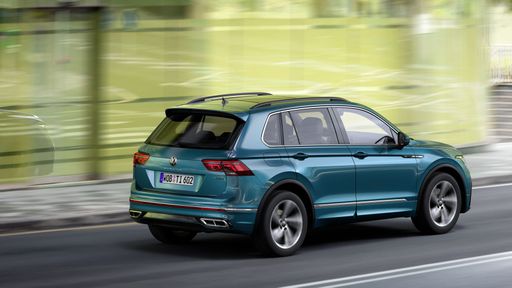
Tiguan @ Volkswagen AG / VW Media

Interior and Cargo Space

The Peugeot 5008 is known for its spacious interior, comfortably seating seven people, which makes it ideal for families. It offers considerable trunk space of 748 liters, supporting the cargo needs for long trips or larger families.

In contrast, the VW Tiguan is slightly more compact, offering seating for five, with a trunk capacity ranging from 490 to 652 liters depending on the variant. This might appeal to smaller families or users prioritizing a more compact SUV.

5008 @ Peugeot / Stellantis Media

Technological Innovations

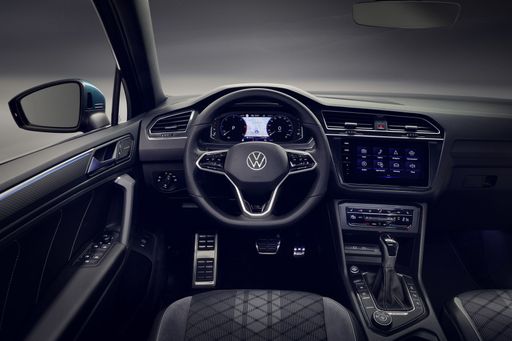
Both SUVs are equipped with advanced safety and driving assist technologies, enhancing the driving experience. The 5008 incorporates the Peugeot i-Cockpit, which delivers a futuristic interface and ensures that all controls are within an easy reach of the driver. This enhances driving comfort and safety.

The VW Tiguan impresses with its digital cockpit and seamless integration of infotainment systems, offering connectivity features and driving assists suitable for tech-savvy drivers.

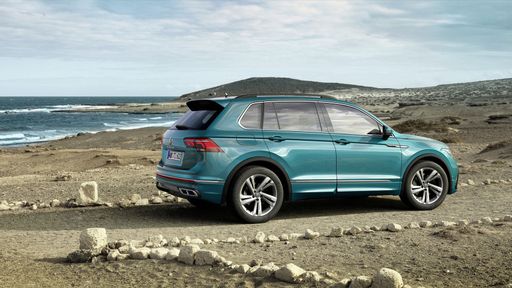
Tiguan @ Volkswagen AG / VW Media

Eco-Friendliness and Emissions

With increasing concern over environmental impact, both models provide options with reduced emissions. The Peugeot 5008 showcases a spectrum of CO2 efficiency classes from D to A, with zero emissions for its electric variant. In contrast, the VW Tiguan spans efficiency classes from E to B, with its hybrid models emitting as low as 8 g/km of CO2.

5008 @ Peugeot / Stellantis Media

The Final Verdict

Ultimately, the choice between the Peugeot 5008 and the VW Tiguan depends on individual needs. If you prioritize space and electric driving capability, the Peugeot 5008 might be your car of choice with its roomy interior and impressive electric range. However, for those seeking higher performance and a mix of efficient hybrid options, the VW Tiguan stands out as the preferred option. Each model continues to assert its strengths, offering a compelling case for drivers in the market for a versatile SUV.

Here’s where it gets real: The technical differences in detail

Tiguan @ Volkswagen AG / VW Media

Costs and Efficiency:

Looking at overall running costs, both models reveal some interesting differences in everyday economy.

VW Tiguan has a a bit advantage in terms of price – it starts at 32800 £, while the Peugeot 5008 costs 37600 £. That’s a price difference of around 4809 £.

Fuel consumption also shows a difference: VW Tiguan manages with 1.40 L and is therefore clearly more efficient than the Peugeot 5008 with 2.70 L. The difference is about 1.30 L per 100 km.

As for range, the Peugeot 5008 performs decisively better – achieving up to 669 km, about 543 km more than the VW Tiguan.

Engine and Performance:

Power, torque and acceleration say a lot about how a car feels on the road. This is where you see which model delivers more driving dynamics.

When it comes to engine power, the Peugeot 5008 has a slightly edge – offering 325 HP compared to 272 HP. That’s roughly 53 HP more horsepower.

In acceleration from 0 to 100 km/h, the VW Tiguan is to a small extent quicker – completing the sprint in 5.90 s, while the Peugeot 5008 takes 6.50 s. That’s about 0.60 s faster.

In terms of top speed, the VW Tiguan performs slight better – reaching 242 km/h, while the Peugeot 5008 tops out at 220 km/h. The difference is around 22 km/h.

There’s also a difference in torque: Peugeot 5008 pulls noticeable stronger with 511 Nm compared to 400 Nm. That’s about 111 Nm difference.

Space and Everyday Use:

Beyond pure performance, interior space and usability matter most in daily life. This is where you see which car is more practical and versatile.

Seats: Peugeot 5008 offers noticeable more seating capacity – 7 vs 5.

In curb weight, VW Tiguan is barely noticeable lighter – 1599 kg compared to 1700 kg. The difference is around 101 kg.

In terms of boot space, the VW Tiguan offers decisively more room – 652 L compared to 348 L. That’s a difference of about 304 L.

In maximum load capacity, the Peugeot 5008 performs noticeable better – up to 2232 L, which is about 582 L more than the VW Tiguan.

When it comes to payload, Peugeot 5008 slightly takes the win – 640 kg compared to 533 kg. That’s a difference of about 107 kg.

Who comes out on top?

Overall, the Peugeot 5008 shows itself to be is largely superior and secures the title of DriveDuel Champion.
It convinces with the more balanced overall package and proves to be the more versatile choice for everyday use.

from about £37,600
5008 @ Peugeot / Stellantis Media

Peugeot 5008

  • Engine Type : Electric, Petrol MHEV, Plugin Hybrid
  • Transmission : Automatic
  • Drive Type : Front-Wheel Drive, All-Wheel Drive
  • Power HP : 145 - 325 HP
  • Consumption L/100km : 2.7 - 5.6 L
  • Consumption kWh/100km : 17.8 - 18.6 kWh
  • Electric Range : 78 - 669 km

Peugeot 5008

The Peugeot 5008 blends Peugeot's sharp design with the space and versatility families actually need, wrapping clever packaging and a premium-feeling cabin in a crisp, SUV-like silhouette. It drives with more poise than you'd expect from a people carrier, serves up practical touches and flexible seating for everyday chaos, and still looks good when parked outside the school gates.

details

VW Tiguan

3.3 (3)
rate

The VW Tiguan blends sensible family practicality with a dash of German polish, delivering a calm, reassuring ride and a cabin that never feels like an afterthought. For buyers who want an SUV that’s easy to live with yet still nicely dressed, the Tiguan is the grown‑up choice that keeps a cheeky wink in reserve.

details
Peugeot 5008
VW Tiguan
5008 @ Peugeot / Stellantis Media
Tiguan @ Volkswagen AG / VW Media

Costs and Consumption

Price
37600 - 54200 £
Price
32800 - 51900 £
Consumption L/100km
2.7 - 5.6 L
Consumption L/100km
1.4 - 8.4 L
Consumption kWh/100km
17.8 - 18.6 kWh
Consumption kWh/100km
-
Electric Range
78 - 669 km
Electric Range
118 - 126 km
Battery Capacity
0.4 - 96.9 kWh
Battery Capacity
19.70 kWh
co2
0 - 127 g/km
co2
32 - 190 g/km
Fuel tank capacity
55 L
Fuel tank capacity
45 - 58 L

Dimensions and Body

Body Type
SUV
Body Type
SUV
Seats
7
Seats
5
Doors
5
Doors
5
Curb weight
1700 - 2344 kg
Curb weight
1599 - 1890 kg
Trunk capacity
294 - 348 L
Trunk capacity
490 - 652 L
Length
4791 mm
Length
4539 mm
Width
1895 mm
Width
1842 - 1859 mm
Height
1694 mm
Height
1656 - 1658 mm
Max trunk capacity
2178 - 2232 L
Max trunk capacity
1486 - 1650 L
Payload
596 - 640 kg
Payload
460 - 533 kg

Engine and Performance

Engine Type
Electric, Petrol MHEV, Plugin Hybrid
Engine Type
Petrol, Petrol MHEV, Diesel, Plugin Hybrid
Transmission
Automatic
Transmission
Automatic
Transmission Detail
Reduction Gearbox, Dual-Clutch Automatic
Transmission Detail
Dual-Clutch Automatic
Drive Type
Front-Wheel Drive, All-Wheel Drive
Drive Type
All-Wheel Drive, Front-Wheel Drive
Power HP
145 - 325 HP
Power HP
130 - 272 HP
Acceleration 0-100km/h
6.5 - 10.2 s
Acceleration 0-100km/h
5.9 - 10.6 s
Max Speed
170 - 220 km/h
Max Speed
198 - 242 km/h
Torque
230 - 511 Nm
Torque
220 - 400 Nm
Number of Cylinders
3 - 4
Number of Cylinders
4
Power kW
107 - 239 kW
Power kW
96 - 200 kW
Engine capacity
1199 - 1598 cm3
Engine capacity
1498 - 1984 cm3

General

Model Year
2024 - 2025
Model Year
2024 - 2025
CO2 Efficiency Class
A, D, B
CO2 Efficiency Class
G, D, E, F, B
Brand
Peugeot
Brand
VW
Is the Peugeot 5008 offered with different drivetrains?

Available configurations include Front-Wheel Drive or All-Wheel Drive.

The prices and data displayed are estimates based on German list prices and may vary by country. This information is not legally binding.