
 Deutschland
 France
 Nederland
 Great Britain
 Sverige
 Norge
Norge Danmark
 Suomi
Suomi Italia
 Polska
 España
VS
Peugeot Partner vs Toyota Yaris – Which model is better for everyday use?
Yaris
@ Toyota Motor Corporation
Costs and Efficiency:
Looking at overall running costs, both models reveal some interesting differences in everyday economy.
Toyota Yaris has a barely noticeable advantage in terms of price – it starts at 21900 £, while the Peugeot Partner costs 22400 £. That’s a price difference of around 532 £.
Fuel consumption also shows a difference: Toyota Yaris manages with 3.80 L and is therefore distinct more efficient than the Peugeot Partner with 5.20 L. The difference is about 1.40 L per 100 km.
Yaris
@ Toyota Motor Corporation
Engine and Performance:
Under the bonnet, it becomes clear which model is tuned for sportiness and which one takes the lead when you hit the accelerator.
When it comes to engine power, the Toyota Yaris has a decisively edge – offering 280 HP compared to 136 HP. That’s roughly 144 HP more horsepower.
In acceleration from 0 to 100 km/h, the Toyota Yaris is significantly quicker – completing the sprint in 5.50 s, while the Peugeot Partner takes 11.20 s. That’s about 5.70 s faster.
In terms of top speed, the Toyota Yaris performs distinct better – reaching 230 km/h, while the Peugeot Partner tops out at 183 km/h. The difference is around 47 km/h.
There’s also a difference in torque: Toyota Yaris pulls clearly perceptible stronger with 390 Nm compared to 300 Nm. That’s about 90 Nm difference.
Space and Everyday Use:
Beyond pure performance, interior space and usability matter most in daily life. This is where you see which car is more practical and versatile.
Both vehicles offer seating for 5 people.
In curb weight, Toyota Yaris is distinct lighter – 1090 kg compared to 1329 kg. The difference is around 239 kg.
In terms of boot space, the Peugeot Partner offers convincingly more room – 1800 L compared to 286 L. That’s a difference of about 1514 L.
In maximum load capacity, the Peugeot Partner performs decisively better – up to 4000 L, which is about 3065 L more than the Toyota Yaris.
When it comes to payload, Peugeot Partner decisively takes the win – 991 kg compared to 525 kg. That’s a difference of about 466 kg.
Who wins the race?
The Peugeot Partner proves to be wins by a narrow margin and therefore becomes our DriveDuel Champion!
Peugeot Partner is the better all-rounder in this comparison.
Peugeot Partner
Toyota Yaris
Costs and Consumption
View detailed analysis
View detailed analysis
Engine and Performance
View detailed analysis
View detailed analysis
Dimensions and Body
View detailed analysis
View detailed analysis
from about £22,400

Peugeot Partner
Peugeot Partner
The Peugeot Partner is a no-nonsense workhorse that doubles as a surprisingly comfy family mover, combining clever storage solutions with an easy-to-live-in cabin. It won’t win any beauty contests, but for small businesses and active families it’s practical, economical and utterly reliable when the day gets busy.
detailsToyota Yaris
2.4 (1 Reviews)
The Toyota Yaris is a sprightly city hatch that packs clever packaging, surprising comfort and fuel-sipping manners into a neat, easy-to-park package. It rewards sensible buyers with low running costs, friendly ergonomics and a forgiving drive, delivered with Japanese reliability and just enough personality to make errands feel a little less ordinary.
details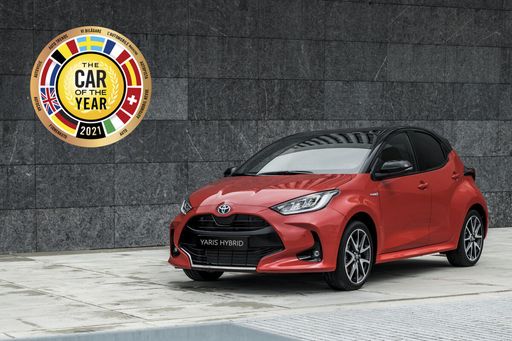 @ Toyota Motor Corporation
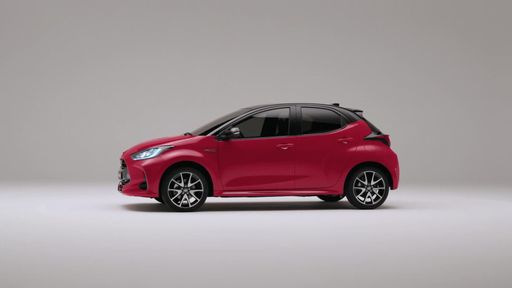 @ Toyota Motor Corporation
Peugeot Partner
Toyota Yaris
|
@ Toyota Motor Corporation
|
|
|
|
|
Costs and Consumption |
|
|---|---|
|
Price
22400 - 33800 £
|
Price
21900 - 46700 £
|
|
Consumption L/100km
5.2 - 6.3 L
|
Consumption L/100km
3.8 - 9.5 L
|
|
Consumption kWh/100km
17.40 kWh
|
Consumption kWh/100km
-
|
|
Electric Range
354 km
|
Electric Range
-
|
|
Battery Capacity
-
|
Battery Capacity
-
|
|
co2
0 - 143 g/km
|
co2
87 - 215 g/km
|
|
Fuel tank capacity
53 - 61 L
|
Fuel tank capacity
36 - 50 L
|
Dimensions and Body |
|
|---|---|
|
Body Type
Cargo Van
|
Body Type
Hatchback
|
|
Seats
2 - 5
|
Seats
4 - 5
|
|
Doors
4 - 5
|
Doors
3 - 5
|
|
Curb weight
1329 - 1813 kg
|
Curb weight
1090 - 1356 kg
|
|
Trunk capacity
1800 L
|
Trunk capacity
141 - 286 L
|
|
Length
4403 - 4753 mm
|
Length
3940 - 3995 mm
|
|
Width
1848 mm
|
Width
1745 - 1805 mm
|
|
Height
1796 - 1812 mm
|
Height
1455 - 1500 mm
|
|
Max trunk capacity
3300 - 4000 L
|
Max trunk capacity
935 L
|
|
Payload
611 - 991 kg
|
Payload
289 - 525 kg
|
Engine and Performance |
|
|---|---|
|
Engine Type
Electric, Diesel, Petrol
|
Engine Type
Full Hybrid, Petrol
|
|
Transmission
Automatic, Manuel
|
Transmission
Automatic, Manuel
|
|
Transmission Detail
Reduction Gearbox, Manual Gearbox, Automatic Gearbox
|
Transmission Detail
CVT, Manual Gearbox, Automatic Gearbox
|
|
Drive Type
Front-Wheel Drive
|
Drive Type
Front-Wheel Drive, All-Wheel Drive
|
|
Power HP
102 - 136 HP
|
Power HP
116 - 280 HP
|
|
Acceleration 0-100km/h
11.20 s
|
Acceleration 0-100km/h
5.5 - 9.7 s
|
|
Max Speed
135 - 183 km/h
|
Max Speed
175 - 230 km/h
|
|
Torque
205 - 300 Nm
|
Torque
390 Nm
|
|
Number of Cylinders
3 - 4
|
Number of Cylinders
3
|
|
Power kW
75 - 100 kW
|
Power kW
85 - 206 kW
|
|
Engine capacity
1199 - 1499 cm3
|
Engine capacity
1490 - 1618 cm3
|
General |
|
|---|---|
|
Model Year
2024 - 2025
|
Model Year
2024 - 2025
|
|
CO2 Efficiency Class
A, E
|
CO2 Efficiency Class
B, G
|
|
Brand
Peugeot
|
Brand
Toyota
|
Is the Peugeot Partner offered with different drivetrains?
Available configurations include Front-Wheel Drive.
The prices and data displayed are estimates based on German list prices and may vary by country. This information is not legally binding.