VS

Peugeot Rifter vs Ford Tourneo Connect comparison

Compare performance (130 HP vs 150 HP), boot space and price (22,900 £ vs 27,300 £ ) at a glance. Find out which car is the better choice for you – Peugeot Rifter or Ford Tourneo Connect?

Peugeot Rifter vs Ford Tourneo Connect: Key differences

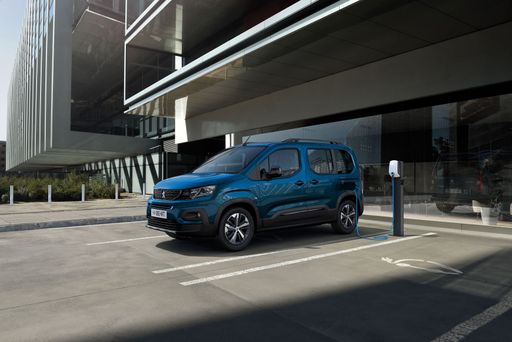
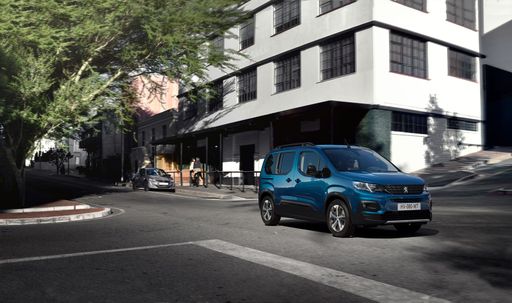
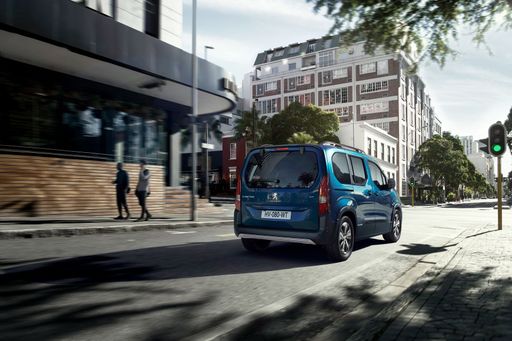
Peugeot Rifter

4.7 (1 Reviews)
rate
  • somewhat cheaper
  • barely lighter
details

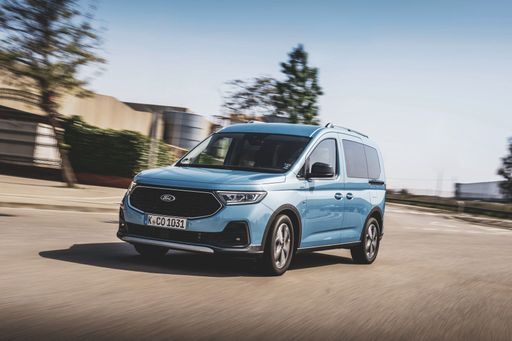
Ford Tourneo Connect

4.9 (1 Reviews)
rate
  • moderately more power
  • considerably more efficient
  • somewhat quicker 0–100 km/h
details

By Achim Sedelmaier

Rifter

The automotive market has witnessed an evolution in the way families and businesses approach transportation, and two contenders standing out in the high-roof wagon segment are the Ford Tourneo Connect and the Peugeot Rifter. These models promise a blend of practicality and performance, but which one emerges victorious? Let's explore the technical aspects and innovations that set them apart.

Tourneo Connect

Design and Dimensions

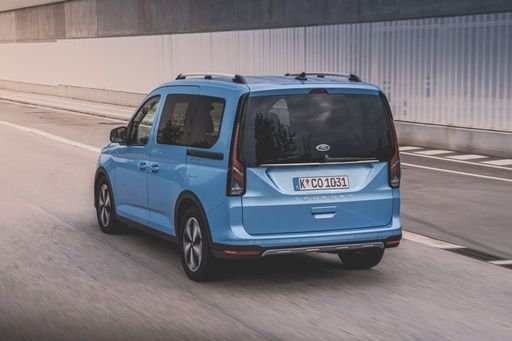
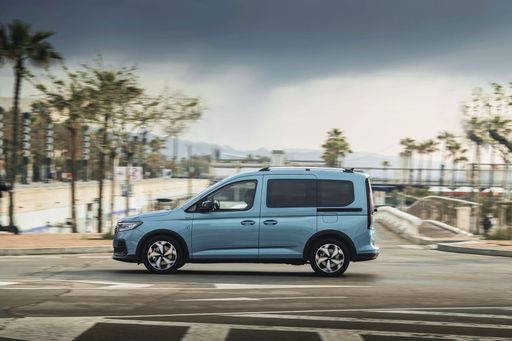
Both the Ford Tourneo Connect and the Peugeot Rifter exemplify spaciousness and versatility. The Tourneo Connect measures approximately 4853 mm in length, 1855 mm in width, and 1833 mm in height, making it a formidable player in the high-roof wagon category. On the other hand, the Rifter has a more compact profile with dimensions ranging from 4405 mm to 4755 mm in length, 1848 mm in width, and a height of either 1818 mm or 1837 mm, depending on the variant.

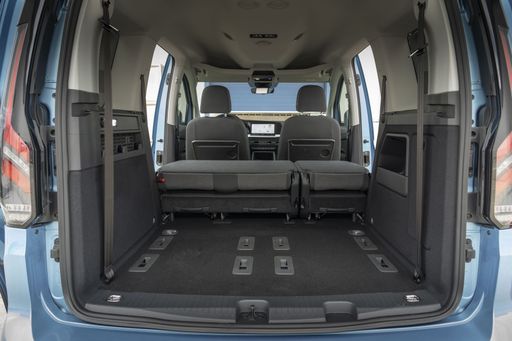
This height gives both vehicles an airy cabin feel, which is ideal for families or groups on the move. The Tourneo Connect also boasts a trunk capacity of up to 1720 liters, significantly outdoing the Rifter's maximum of 1050 liters, making it better suited for hauling larger loads.

Rifter

Powertrains and Performance

When it comes to engine options, both models offer a variety of choices to cater to different driver preferences. The Ford Tourneo Connect offers a diverse lineup, including petrol, diesel, and plug-in hybrid options, with power outputs ranging from 102 HP to 150 HP. Its engines are coupled with either a manual gearbox or an automatic transmission featuring a dual-clutch setup. The maximum torque reaches a robust 350 Nm, giving it commendable performance.

In comparison, the Peugeot Rifter also offers multiple engine types, including electric, petrol, and diesel versions. Power outputs vary from 102 HP to 136 HP. The electric variant boasts an impressive range of up to 340 km, showcasing Peugeot's commitment to eco-friendly driving without compromising functionality. The Rifter’s engines deliver torque ranging from 205 Nm to 300 Nm, ensuring a responsive driving experience.

Acceleration figures are closely matched, with the Ford Tourneo Connect achieving 0-100 km/h in as little as 11.4 seconds while the Rifter manages it in a competitive 10.8 seconds for its quickest variant.

Tourneo Connect

Fuel Efficiency and Environmental Considerations

Fuel economy is a critical factor in today's automotive landscape, and both models strive to be efficient. The Ford Tourneo Connect offers fuel consumption ranging from 5.4 to 7 L/100 km, depending on the engine choice. The efficient plug-in hybrid option underscores Ford's focus on balancing performance with environmental responsibility.

The Peugeot Rifter shines with an electric variant, achieving consumption figures as low as 19.1 kWh/100 km, making it an ideal choice for eco-conscious consumers. The diesel models also deliver competitive figures, ranging from 5.4 to 6.9 L/100 km.

In terms of emissions, the Tourneo Connect achieves a CO2 efficiency class as good as B, while the Rifter can claim an A rating with its electric model, showcasing its green credentials.

Rifter

Interior Comfort and Technology

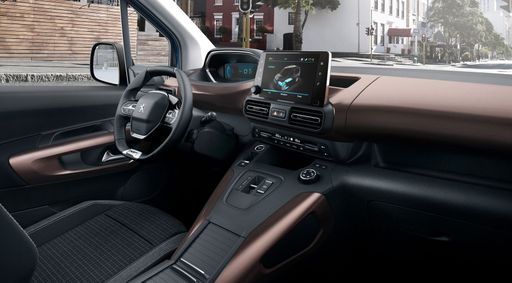
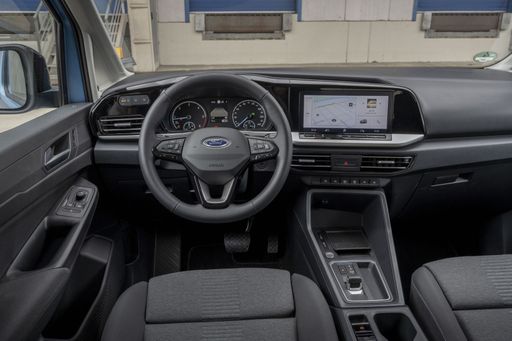
Stepping inside, the interior of the Ford Tourneo Connect emphasizes comfort and technology with generous legroom and high-quality materials. The cockpit features Ford's latest SYNC infotainment system, offering seamless connectivity through Apple CarPlay and Android Auto.

Peugeot's Rifter doesn’t fall short in the tech department either, offering a host of connectivity features, intuitive controls, and customizable ambient lighting, enhancing the overall driving experience for passengers. The cabin space also accommodates seven passengers in certain configurations, ideal for larger families.

Tourneo Connect

Conclusion: Which One to Choose?

Both the Ford Tourneo Connect and the Peugeot Rifter each present unique strengths that cater to different consumer needs. If space, trunk capacity, and engine variety are top priorities, the Tourneo Connect is a worthwhile contender. On the other hand, if eco-friendliness, compactness, and cutting-edge technology are high on your list, the Peugeot Rifter stands out.

Your choice ultimately boils down to personal preference and intended usage, but regardless of the decision, both vehicles promise to deliver an impressive blend of utility and performance in the segment of high-roof wagons.

Here’s where it gets real: The technical differences in detail

Rifter

Costs and Efficiency:

Looking at overall running costs, both models reveal some interesting differences in everyday economy.

Peugeot Rifter is somewhat cheaper – starting at 22,900 £ , while the Ford Tourneo Connect costs 27,300 £ . That’s a price difference of around 4,482 £.

Fuel consumption also shows a difference: the Ford Tourneo Connect uses 0.5 L/100km and is considerably more efficient than the Peugeot Rifter with 5.4 L/100km. The difference is about 4.9 L/100km.

Tourneo Connect

Engine and Performance:

Power, torque and acceleration are the classic benchmarks for car enthusiasts – and here, some clear differences start to show.

When it comes to engine power, the Ford Tourneo Connect offers moderately more power – delivering 150 HP compared to 130 HP. That’s roughly 20 HP more horsepower.

When accelerating from 0 to 100 km/h, the Ford Tourneo Connect is somewhat quicker – completing the sprint in 10.1 s, while the Peugeot Rifter takes 11.3 s. That’s about 1.2 s quicker.

There’s also a difference in torque: the Ford Tourneo Connect delivers moderately more torque with 350 Nm compared to 300 Nm. That’s about 50 Nm more.

Rifter

Space and Everyday Use:

Whether family car or daily driver – which one offers more room, flexibility and comfort?

Seats: Peugeot Rifter offers more seats – 7 vs 5.

In terms of curb weight, Peugeot Rifter is barely lighter – 1,498 kg compared to 1,542 kg. The difference is around 44 kg.

When it comes to payload, the Ford Tourneo Connect carries very slightly more – 818 kg compared to 814 kg. That’s a difference of about 4 kg.

Who wins the race in the data check?

The Ford Tourneo Connect is far ahead overall in the objective data comparison.
This result only shows which model scores more points on paper – not which of the two cars feels right for you.

from £27,300
Tourneo Connect

Ford Tourneo Connect

  • Engine Type : Plugin Hybrid, Petrol, Diesel
  • Transmission : Automatic, Manuel
  • Drive Type : Front-Wheel Drive, All-Wheel Drive
  • Power HP : 102 - 150 HP
  • Consumption L/100km : 0.5 - 6.9 L/100km
  • Electric Range : 116 - 119 km
Peugeot Rifter
Ford Tourneo Connect

Costs and Consumption

View detailed analysis

Engine and Performance

View detailed analysis

Dimensions and Body

View detailed analysis

Peugeot Rifter

The Peugeot Rifter is a practical, family-friendly people carrier that makes everyday errands and weekend escapes feel effortless thanks to its airy cabin and clever, flexible interior. With chunky, purposeful styling and storage solutions everywhere, the Rifter manages to be both unashamedly useful and unexpectedly likeable.

details

Ford Tourneo Connect

The Ford Tourneo Connect is a practical, surprisingly polished people-mover that balances family-friendly flexibility with car-like driving manners. With clever storage, sliding doors and a bright, airy cabin it’s a smart choice for buyers who want sensible versatility without sacrificing everyday comfort — and it’s oddly enjoyable to drive for its size.

details
Peugeot Rifter
Ford Tourneo Connect

Costs and Consumption

Price
22,900 - 30,100 £
Price
27,300 - 41,900 £
Consumption L/100km
5.4 - 6.5 L/100km
Consumption L/100km
0.5 - 6.9 L/100km
Consumption kWh/100km
-
Consumption kWh/100km
-
Electric Range
-
Electric Range
116 - 119 km
Battery Capacity
-
Battery Capacity
-
co2
142 - 157 g/km
co2
11 - 164 g/km
Fuel tank capacity
-
Fuel tank capacity
-

Dimensions and Body

Body Type
High Roof Estate
Body Type
High Roof Estate
Seats
5 - 7
Seats
5
Doors
-
Doors
-
Curb weight
1,498 - 1,694 kg
Curb weight
1,542 - 1,781 kg
Trunk capacity
-
Trunk capacity
1,213 - 1,720 L
Length
-
Length
-
Width
1,848 mm
Width
1,855 mm
Height
-
Height
-
Max trunk capacity
-
Max trunk capacity
-
Payload
518 - 814 kg
Payload
563 - 818 kg

Engine and Performance

Engine Type
Petrol, Diesel
Engine Type
Plugin Hybrid, Petrol, Diesel
Transmission
Manuel, Automatic
Transmission
Automatic, Manuel
Transmission Detail
Manual Gearbox, Automatic Gearbox
Transmission Detail
Dual-Clutch Automatic, Manual Gearbox
Drive Type
Front-Wheel Drive
Drive Type
Front-Wheel Drive, All-Wheel Drive
Power HP
102 - 130 HP
Power HP
102 - 150 HP
Acceleration 0-100km/h
11.3 - 13.5 s
Acceleration 0-100km/h
10.1 - 13.5 s
Max Speed
-
Max Speed
-
Torque
205 - 300 Nm
Torque
220 - 350 Nm
Number of Cylinders
3 - 4
Number of Cylinders
4
Power kW
75 - 96 kW
Power kW
75 - 110 kW
Engine capacity
1,199 - 1,499 cm3
Engine capacity
1,498 - 1,968 cm3

General

Model Year
2026
Model Year
2,024 - 2,025
CO2 Efficiency Class
E, F
CO2 Efficiency Class
B, E, F
Brand
Peugeot
Brand
Ford
DriveDuel uses data analysis and artificial intelligence to evaluate vehicle data and create content. Content is regularly reviewed and improved. The displayed prices are estimates based on German list prices, adjusted to the respective country’s VAT. Country-specific registration taxes are not included. This information is not legally binding.