VS

Porsche Cayenne vs BYD Seal U comparison

Compare performance (1,156 HP vs 324 HP), boot space and price (87,000 £ vs 34,300 £ ) at a glance. Find out which car is the better choice for you – Porsche Cayenne or BYD Seal U?

Porsche Cayenne vs BYD Seal U: Key differences

Porsche Cayenne

3.3 (2 Reviews)
rate
  • substantially more power
  • clearly more electric range
  • considerably quicker 0–100 km/h
  • clearly more trunk space

BYD Seal U

4.1 (7 Reviews)
rate
  • clearly cheaper
  • substantially more efficient
  • very slightly lighter

All details on performance, efficiency, range and trunk space can be found in the technical comparison below – including user reviews for both models.

By Achim Sedelmaier

Cayenne

Street Fashion and Road Stance

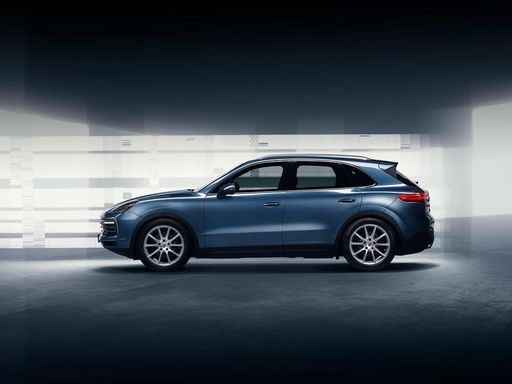
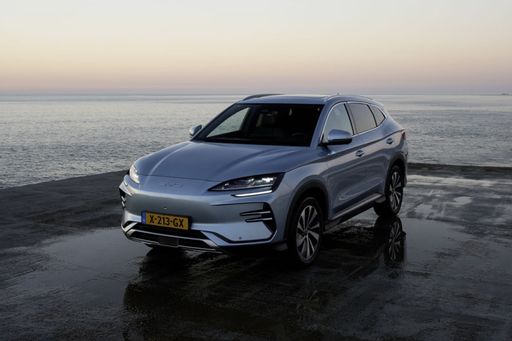
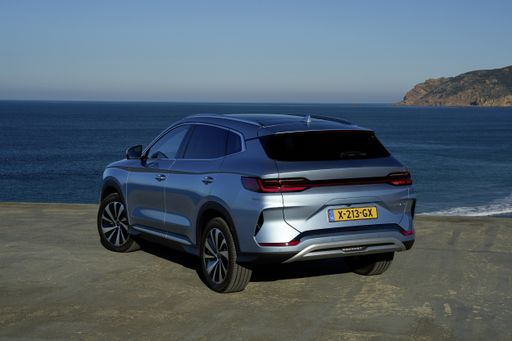
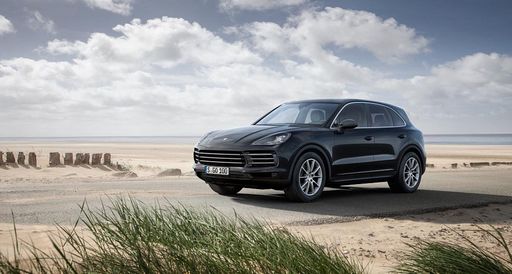
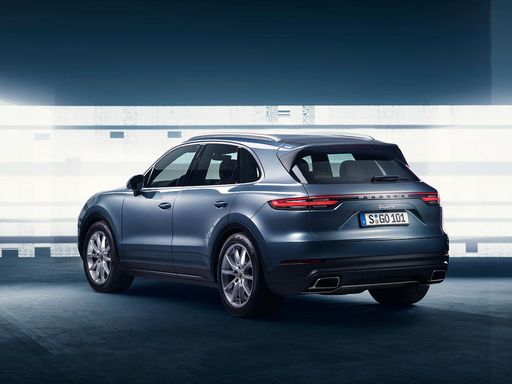
Step close and the contrast is immediate: the BYD Seal U comes across as a tech-first newcomer with sleek, modern lines that announce efficiency and futuristic intent, while the Porsche Cayenne wears athletic presence and traditional luxury like a tailored suit. Both catch glances, but for different reasons — one offers quiet sophistication, the other a muscular promise of performance. For buyers, that first impression often tells you whether you want to be seen as cutting-edge or commanding.
Seal U

Daily Driving: City Hustle or Command Post?

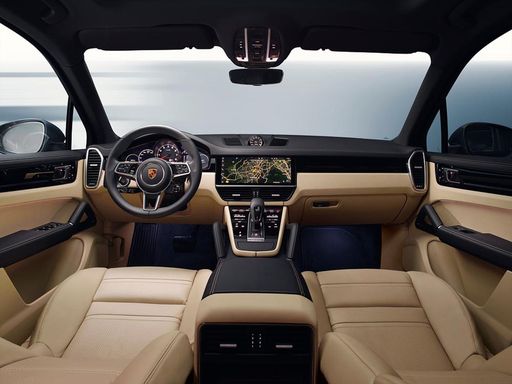
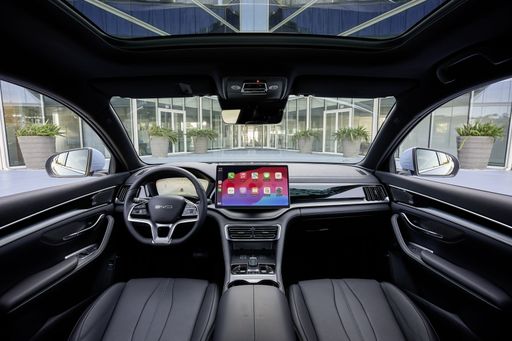
In town the Seal U feels effortless and intuitive, slipping through traffic with a composed, relaxed demeanor that makes stop‑and‑go life less of a chore, whereas the Cayenne turns even mundane errands into a more assertive experience with steering and poise that reward confident inputs. Controls and visibility matter here: one prioritises digital convenience and a minimal fuss cabin, the other clings to a tactile, driver-focused layout that feels reassuring behind the wheel. Pick your priority — ease and economy, or presence and precision.

Cayenne

Long Distance: Comfort Without Compromise

On the motorway the two diverge into different kinds of calm — the Seal U soothes with a pared-back, refined ride and a very steady, insulated cabin, while the Cayenne delivers composed, planted stability that never loses its sporting edge even after hours on the road. Noise, seating comfort and ride tuning shape fatigue more than headline figures: one leans into soothing refinement, the other into dynamic composure that keeps the driver engaged. For regular long hauls, your tolerance for driver involvement will steer your choice.

Seal U

Family Life and Everyday Practicality

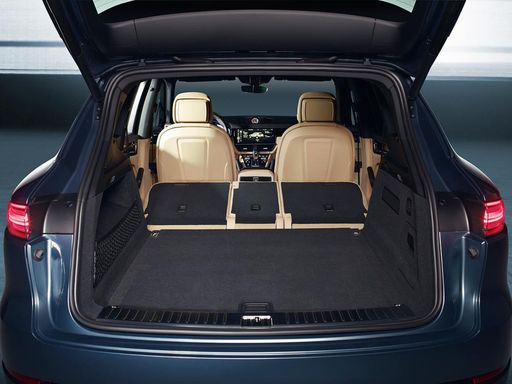
Both cars can carry a family, but they present their practicality differently: the Seal U offers a modern, user‑friendly layout and clever everyday usability that appeals to tech‑minded families, while the Cayenne gives a more traditional, spacious feel with premium finishes that suit those who prioritise material quality and load‑handling. Child seats, groceries and weekend kit will slot in, but ergonomics and ease of use — how doors open, how systems are operated — often determine daily happiness. Think about how you live with a car, not just how it performs on paper.

Cayenne

Character: Quiet Sophistication vs. Engaged Authority

Driving personality is where these two truly show their stripes: the Seal U is calm, efficient and pleasantly unassuming, rewarding owners who prefer an effortless, modern driving experience, while the Cayenne speaks to drivers who want weighty steering, sharper responses and a sense of occasion every time they accelerate. Neither is bland, but they aim at distinct emotional chords — confidence through understatement versus confidence through capability. Your emotional preference for calm refinement or tactile drama will tell you which one resonates.

Seal U

Ownership: Who Should Keep the Keys?

If you’re a daily commuter or a tech‑forward city family seeking a modern, economical companion that’s easy to live with, the BYD Seal U makes a compelling case with its sensible focus and friendly usability; if you’re a driver who values brand cachet, dynamic ability and a more traditional luxury experience, the Porsche Cayenne answers with gravitas and a rewarding driving character. Consider service networks, typical usage and how much you value tactile luxury versus digital convenience when weighing ownership. Read on — the DriveDuel Champion will be revealed afterwards, so keep following to see which car comes out on top.

Here’s where it gets real: The technical differences in detail

Cayenne

Costs and Efficiency:

Looking at overall running costs, both models reveal some interesting differences in everyday economy.

BYD Seal U is clearly cheaper – starting at 34,300 £ , while the Porsche Cayenne costs 87,000 £ . That’s a price difference of around 52,723 £.

In terms of energy consumption, the BYD Seal U is substantially more efficient: consuming 12.1 kWh/100km compared to 19.7 kWh/100km for the Porsche Cayenne. That’s a difference of about 7.6 kWh/100km.

As for electric range, the Porsche Cayenne offers clearly more range – reaching up to 642 km, about 142 km more than the BYD Seal U.

Seal U

Engine and Performance:

Power, torque and acceleration are the classic benchmarks for car enthusiasts – and here, some clear differences start to show.

When it comes to engine power, the Porsche Cayenne offers substantially more power – delivering 1,156 HP compared to 324 HP. That’s roughly 832 HP more horsepower.

When accelerating from 0 to 100 km/h, the Porsche Cayenne is considerably quicker – completing the sprint in 2.5 s, while the BYD Seal U takes 5.9 s. That’s about 3.4 s quicker.

Looking at top speed, the Porsche Cayenne is clearly faster – reaching 305 km/h, while the BYD Seal U tops out at 175 km/h. The difference is around 130 km/h.

There’s also a difference in torque: the Porsche Cayenne delivers considerably more torque with 1,500 Nm compared to 550 Nm. That’s about 950 Nm more.

Cayenne

Space and Everyday Use:

Cabin size, boot volume and payload all play a role in everyday practicality. Here, comfort and flexibility make the difference.

Both vehicles offer seating for 5 people.

In terms of curb weight, BYD Seal U is very slightly lighter – 1,940 kg compared to 2,130 kg. The difference is around 190 kg.

Looking at boot space, the Porsche Cayenne offers clearly more boot space – 781 L compared to 552 L. That’s a difference of about 229 L.

For maximum load capacity, the Porsche Cayenne offers somewhat more capacity – up to 1,708 L, about 268 L more than the BYD Seal U.

When it comes to payload, the Porsche Cayenne carries considerably more – 705 kg compared to 410 kg. That’s a difference of about 295 kg.

Who wins the race in the data check?

The Porsche Cayenne is far ahead overall in the objective data comparison.
This result only shows which model scores more points on paper – not which of the two cars feels right for you.

from £87,000
Cayenne

Porsche Cayenne

  • Engine Type : Petrol, Plugin Hybrid, Electric
  • Transmission : Automatic
  • Drive Type : All-Wheel Drive
  • Power HP : 353 - 1,156 HP
  • Consumption L/100km : 4 - 12.2 L/100km
  • Consumption kWh/100km : 19.7 - 20.6 kWh/100km
  • Electric Range : 74 - 642 km
Porsche Cayenne
BYD Seal U

Costs and Consumption

View detailed analysis

Engine and Performance

View detailed analysis

Dimensions and Body

View detailed analysis

Porsche Cayenne

Few SUVs blend athletic poise and Teutonic precision like the Porsche Cayenne, putting genuine sports‑car feeling into a roomy, everyday package. If you want a practical family hauler that still makes you grin every time you merge, the Cayenne delivers — turning errands into an excuse for a spirited drive.

details

BYD Seal U

The BYD Seal U pairs a sleek fastback silhouette with a surprisingly roomy, tech-rich cabin, giving electric chic without the showroom pretension. It's a smart pick for buyers after confident handling, sensible practicality and standout value — all wrapped up with a cheeky grin when you put your foot down.

details
Porsche Cayenne
BYD Seal U

Costs and Consumption

Price
87,000 - 186,400 £
Price
34,300 - 39,800 £
Consumption L/100km
4 - 12.2 L/100km
Consumption L/100km
-
Consumption kWh/100km
19.7 - 20.6 kWh/100km
Consumption kWh/100km
12.1 - 20.5 kWh/100km
Electric Range
74 - 642 km
Electric Range
70 - 500 km
Battery Capacity
21.8 kWh
Battery Capacity
-
co2
0 - 277 g/km
co2
0 - 71 g/km
Fuel tank capacity
70 - 90 L
Fuel tank capacity
-

Dimensions and Body

Body Type
SUV
Body Type
SUV
Seats
4 - 5
Seats
5
Doors
5
Doors
5
Curb weight
2,130 - 2,720 kg
Curb weight
1,940 - 2,147 kg
Trunk capacity
434 - 781 L
Trunk capacity
425 - 552 L
Length
4,930 mm
Length
4,785 mm
Width
1,980 - 1,989 mm
Width
1,890 mm
Height
1,652 - 1,698 mm
Height
1,668 mm
Max trunk capacity
1,344 - 1,708 L
Max trunk capacity
1,440 L
Payload
365 - 705 kg
Payload
410 kg

Engine and Performance

Engine Type
Petrol, Plugin Hybrid, Electric
Engine Type
Electric, Plugin Hybrid
Transmission
Automatic
Transmission
Automatic
Transmission Detail
Automatic Gearbox, Reduction Gearbox
Transmission Detail
Reduction Gearbox, Automatic Gearbox
Drive Type
All-Wheel Drive
Drive Type
Front-Wheel Drive, All-Wheel Drive
Power HP
353 - 1,156 HP
Power HP
218 - 324 HP
Acceleration 0-100km/h
2.5 - 6 s
Acceleration 0-100km/h
5.9 - 9.6 s
Max Speed
248 - 305 km/h
Max Speed
175 km/h
Torque
500 - 1,500 Nm
Torque
300 - 550 Nm
Number of Cylinders
6 - 8
Number of Cylinders
4
Power kW
260 - 850 kW
Power kW
160 - 238 kW
Engine capacity
2,995 - 3,996 cm3
Engine capacity
1,497 - 1,498 cm3

General

Model Year
2,025 - 2,026
Model Year
2,024 - 2,026
CO2 Efficiency Class
G, B, C, A
CO2 Efficiency Class
A, B
Brand
Porsche
Brand
BYD
DriveDuel uses data analysis and artificial intelligence to evaluate vehicle data and create content. Content is regularly reviewed and improved. The displayed prices are estimates based on German list prices, adjusted to the respective country’s VAT. Country-specific registration taxes are not included. This information is not legally binding.