@ Renault Group Media
@ Volkswagen AG / VW Media
VS

Renault Espace vs VW Tayron – Which one offers the better deal?

Compare performance, boot capacity, efficiency and price at a glance.
Find out which car is the better choice for you – Renault Espace or VW Tayron?

Espace @ Renault Group Media

Head-to-Head: Renault Espace vs. VW Tayron

The automotive market is rife with choices, especially in the SUV segment, where versatility and technology often define consumer preferences. This comparison pits two leading contenders against each other: the Renault Espace and the VW Tayron. Both models embody unique technological innovations while catering to different consumer needs, making this a battle worth analyzing.
Tayron @ Volkswagen AG / VW Media

Design and Dimensions

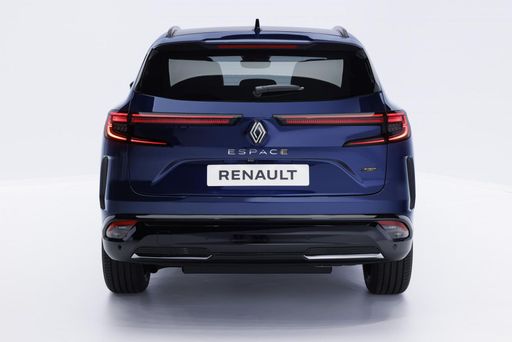
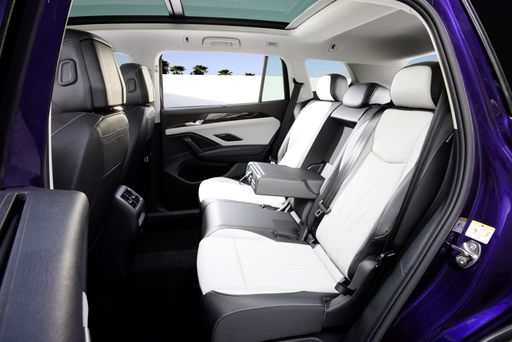
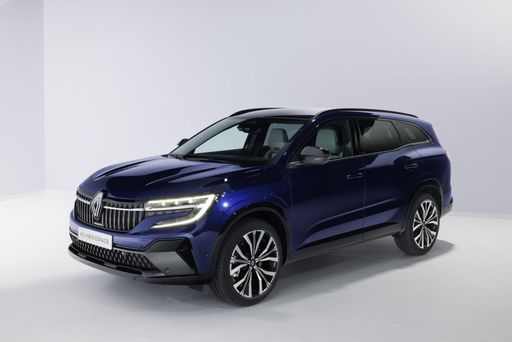
The Renault Espace presents a modern and sleek design, measuring 4722 mm in length, 1843 mm in width, and 1645 mm in height. Its aerodynamic form not only contributes to style but also enhances fuel efficiency. With a spacious trunk capacity of 581 liters, it’s clear that family versatility is a priority for the Espace, which can comfortably accommodate up to seven passengers.

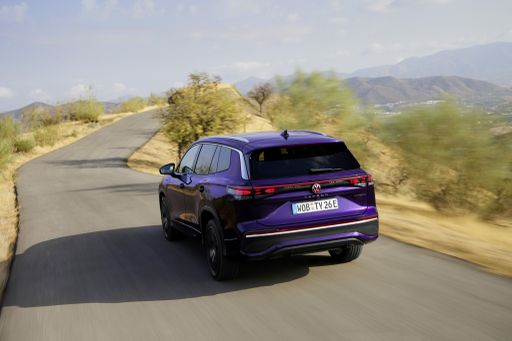
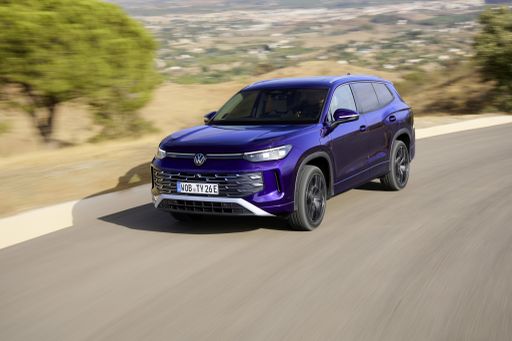
In contrast, the VW Tayron brings a slightly larger presence at 4792 mm long, with a width of 1853 mm and a height of 1668 mm. While it might not seat as many passengers, its trunk capacity of 885 liters offers significant cargo space, ideal for those who prioritize utility. This SUV maintains a robust and somewhat aggressive silhouette, typical of VW's design language.

Espace @ Renault Group Media

Performance and Powertrains

Under the hood, the Renault Espace features a full hybrid engine that produces 200 HP (147 kW) from a compact 1199 cm3 engine. With a front-wheel drive setup, it achieves 0-100 km/h in 8.8 seconds and has a top speed of 174 km/h. Its impressive fuel efficiency of 4.7 L/100 km and CO2 emissions of just 107 g/km make it an eco-friendly option in the SUV category.

The VW Tayron, on the other hand, boasts a wider range of engine options including petrol, diesel, and hybrid variations. Power outputs range from a modest 150 HP up to a robust 272 HP (200 kW), catering to a range of driving preferences. Depending on the engine choice, the Tayron can achieve different acceleration figures, with the fastest model hitting 0-100 km/h in just 6.1 seconds. However, it comes with a higher fuel consumption of approximately 6.3 to 7.8 L/100 km, reflecting its varied powertrains.

Tayron @ Volkswagen AG / VW Media

Technological Innovations

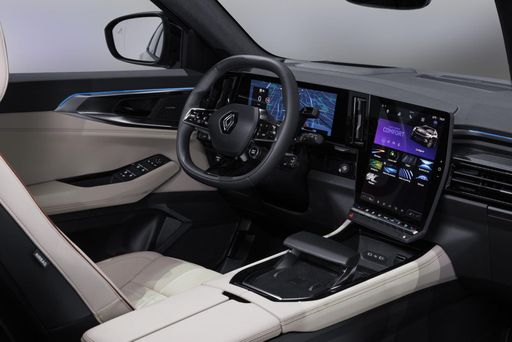
Technology is a pivotal aspect in today’s vehicle designs, and both SUVs are equipped to impress. The Renault Espace stands out with its automated features and hybrid technology, emphasizing efficiency without compromising on comfort and driving dynamics. The automatic gearbox enhances the driving experience by providing smooth shifts, while the spacious interior ensures that families ride comfortably.

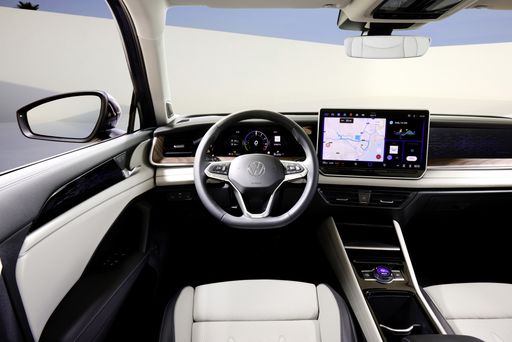
Conversely, VW enhances the Tayron’s appeal with innovative technology, including a dual-clutch automatic transmission that allows for rapid, seamless gear shifts. Advanced infotainment systems and safety features are integrated throughout, reflecting VW's commitment to driver assistance and connectivity.

Espace @ Renault Group Media

Sustainability and Efficiency

Sustainability is becoming increasingly important in car buying decisions. The Renault Espace's hybrid powertrain reflects a commitment to reduced emissions and fuel consumption, making it a standout option for environmentally conscious buyers. With an impressive CO2 efficiency class of C, it’s an eco-friendly choice in urban settings.

The VW Tayron, while offering petrol and diesel options that may appeal to a broader audience, ranks lower in terms of emissions and efficiency. Its CO2 efficiency class varies from E to B depending on the engine choice, which could be a decisive factor for environmentally wary consumers.

Tayron @ Volkswagen AG / VW Media

Conclusion: Making a Choice

Choosing between the Renault Espace and VW Tayron ultimately comes down to personal preference and lifestyle needs. The Espace leans heavily into family functionality and eco-friendliness with its hybrid engine and ample seating. In contrast, the Tayron offers a broader range of powertrains and cutting-edge technology, targeting performance enthusiasts and those who prefer a more dynamic driving experience.

Each model excels in its own right; thus, potential buyers must carefully consider their needs. Whether prioritizing innovation and sustainability in the Espace or the dynamic capabilities of the Tayron, both SUVs promise quality and comfort for their respective markets.

Here’s where it gets real: The technical differences in detail

Espace @ Renault Group Media

Costs and Efficiency:

Price and efficiency are often the first things buyers look at. Here it becomes clear which model has the long-term edge – whether at the pump, the plug, or in purchase price.

Renault Espace has a hardly perceptible advantage in terms of price – it starts at 37500 £, while the VW Tayron costs 39600 £. That’s a price difference of around 2070 £.

Fuel consumption also shows a difference: VW Tayron manages with 1.50 L and is therefore convincingly more efficient than the Renault Espace with 4.90 L. The difference is about 3.40 L per 100 km.

Tayron @ Volkswagen AG / VW Media

Engine and Performance:

Under the bonnet, it becomes clear which model is tuned for sportiness and which one takes the lead when you hit the accelerator.

When it comes to engine power, the VW Tayron has a noticeable edge – offering 272 HP compared to 200 HP. That’s roughly 72 HP more horsepower.

In acceleration from 0 to 100 km/h, the VW Tayron is decisively quicker – completing the sprint in 6.10 s, while the Renault Espace takes 8.80 s. That’s about 2.70 s faster.

In terms of top speed, the VW Tayron performs noticeable better – reaching 240 km/h, while the Renault Espace tops out at 174 km/h. The difference is around 66 km/h.

Espace @ Renault Group Media

Space and Everyday Use:

Whether family car or daily driver – which one offers more room, flexibility and comfort?

Seats: Renault Espace offers evident more seating capacity – 7 vs 5.

In curb weight, Renault Espace is hardly perceptible lighter – 1673 kg compared to 1682 kg. The difference is around 9 kg.

In terms of boot space, the VW Tayron offers noticeable more room – 885 L compared to 692 L. That’s a difference of about 193 L.

In maximum load capacity, the Renault Espace performs barely noticeable better – up to 2224 L, which is about 134 L more than the VW Tayron.

When it comes to payload, Renault Espace barely noticeable takes the win – 581 kg compared to 566 kg. That’s a difference of about 15 kg.

Who wins the race?

The VW Tayron proves to be is largely superior and therefore becomes our DriveDuel Champion!
VW Tayron is the better all-rounder in this comparison.

from about £39,600
Tayron @ Volkswagen AG / VW Media

VW Tayron

  • Engine Type : Petrol MHEV, Diesel, Petrol, Plugin Hybrid
  • Transmission : Automatic
  • Drive Type : Front-Wheel Drive, All-Wheel Drive
  • Power HP : 150 - 272 HP
  • Consumption L/100km : 1.5 - 8.5 L
  • Electric Range : 116 - 123 km

Renault Espace

4 (1)
rate

The Renault Espace is a testament to innovative design, combining versatility with comfort to offer a unique driving experience. Its sleek exterior is complemented by a spacious interior, designed to cater to the needs of families and adventurers alike. With advanced technology and a focus on safety, the Espace seamlessly blends practicality with modern sophistication, making it a standout choice in the MPV segment.

details

VW Tayron

The VW Tayron is Volkswagen's roomy, no-nonsense SUV that pairs clean, familiar styling with a practical cabin built for families and everyday use. It rides comfortably, packs sensible tech and creature comforts, and feels like the sensible sweater of SUVs for buyers who prefer steady value over headline-grabbing drama.

details
Renault Espace
VW Tayron
Espace @ Renault Group Media
Tayron @ Volkswagen AG / VW Media

Costs and Consumption

Price
37500 - 41400 £
Price
39600 - 53300 £
Consumption L/100km
4.90 L
Consumption L/100km
1.5 - 8.5 L
Consumption kWh/100km
-
Consumption kWh/100km
-
Electric Range
-
Electric Range
116 - 123 km
Battery Capacity
-
Battery Capacity
19.70 kWh
co2
110 g/km
co2
33 - 192 g/km
Fuel tank capacity
55 L
Fuel tank capacity
45 - 58 L

Dimensions and Body

Body Type
SUV
Body Type
SUV
Seats
5 - 7
Seats
5
Doors
5
Doors
5
Curb weight
1673 - 1783 kg
Curb weight
1682 - 1948 kg
Trunk capacity
212 - 692 L
Trunk capacity
705 - 885 L
Length
4746 mm
Length
4792 mm
Width
1830 mm
Width
1853 - 1866 mm
Height
1645 mm
Height
1666 - 1668 mm
Max trunk capacity
2054 - 2224 L
Max trunk capacity
1915 - 2090 L
Payload
404 - 581 kg
Payload
489 - 566 kg

Engine and Performance

Engine Type
Full Hybrid
Engine Type
Petrol MHEV, Diesel, Petrol, Plugin Hybrid
Transmission
Automatic
Transmission
Automatic
Transmission Detail
Automatic Gearbox
Transmission Detail
Dual-Clutch Automatic
Drive Type
Front-Wheel Drive
Drive Type
Front-Wheel Drive, All-Wheel Drive
Power HP
200 HP
Power HP
150 - 272 HP
Acceleration 0-100km/h
8.80 s
Acceleration 0-100km/h
6.1 - 9.7 s
Max Speed
174 km/h
Max Speed
204 - 240 km/h
Torque
-
Torque
250 - 400 Nm
Number of Cylinders
3
Number of Cylinders
4
Power kW
147 kW
Power kW
110 - 200 kW
Engine capacity
1199 cm3
Engine capacity
1498 - 1984 cm3

General

Model Year
2025
Model Year
2025
CO2 Efficiency Class
C
CO2 Efficiency Class
E, F, G, B
Brand
Renault
Brand
VW
What drivetrain options does the Renault Espace have?

The Renault Espace is available as Front-Wheel Drive.

The prices and data displayed are estimates based on German list prices and may vary by country. This information is not legally binding.