VS

Renault Espace vs VW Tiguan comparison

Compare performance (200 HP vs 272 HP), boot space and price (37,500 £ vs 33,600 £ ) at a glance. Find out which car is the better choice for you – Renault Espace or VW Tiguan?

Renault Espace vs VW Tiguan: Key differences

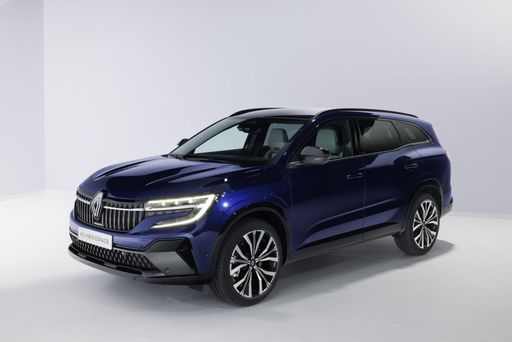
Renault Espace

4.5 (2 Reviews)
rate
  • only slightly more trunk space

VW Tiguan

4.1 (8 Reviews)
rate
  • a bit cheaper
  • clearly more power
  • considerably more efficient
  • substantially quicker 0–100 km/h
  • very slightly lighter

All details on performance, efficiency, range and trunk space can be found in the technical comparison below – including user reviews for both models.

Espace

Renault Espace vs VW Tiguan: A Clash of SUV Titans

As the SUV market continues to expand, two formidable competitors have emerged in the form of the Renault Espace and Volkswagen Tiguan. Each vehicle brings its own unique set of features, technical prowess, and innovative attributes to the table. In this article, we delve deep into the specifics of these two models, aiming to offer clarity for any potential buyer caught in the crossfire of this automotive choice.
Tiguan

Exterior Dimensions and Design

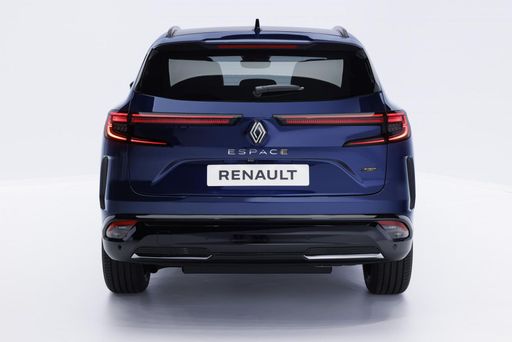
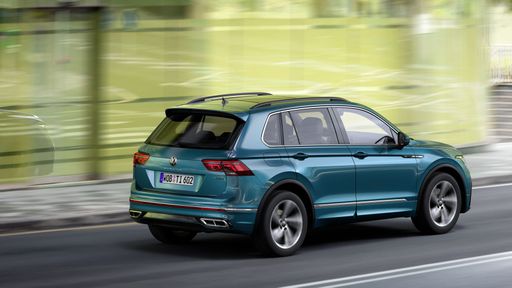
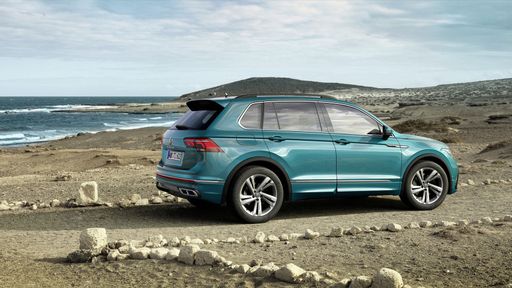
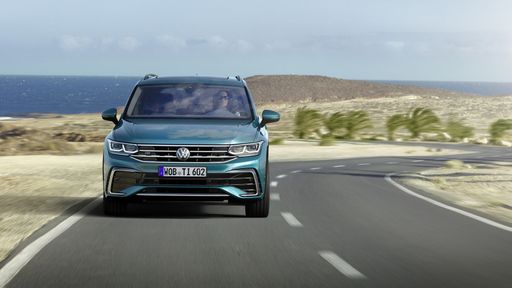
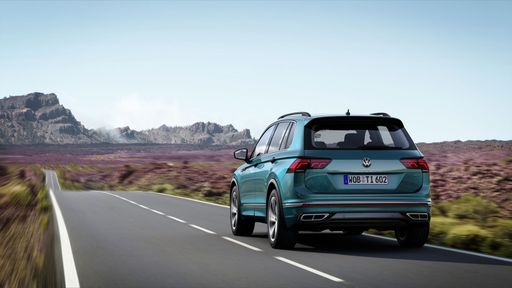
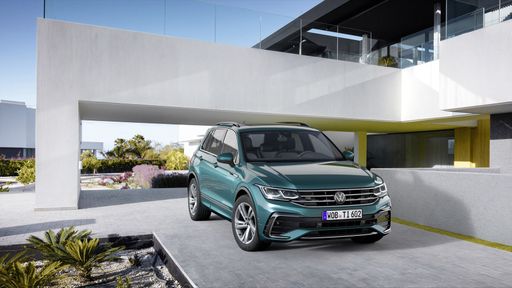
The Renault Espace stretches to 4722 mm in length, 1843 mm in width, and stands at a height of 1645 mm. It conveys a robust appearance typical of an SUV, with a subtle elegance that Renault is known for. On the other hand, the VW Tiguan measures slightly shorter at 4539 mm in length but offers a varied width of up to 1859 mm. Its design leans on more modernistic cues, with sharp lines creating a dynamic visual presence.

Espace

Under the Hood: Engine and Performance

The Renault Espace is powered by a full hybrid system, generating 200 HP (147 kW) from its 1199 cm³ engine. It achieves a fuel consumption of 4.7 L/100km and accelerates from 0-100 km/h in approximately 8.8 seconds, making it quite efficient for an SUV of its size. In contrast, the VW Tiguan offers multiple engine choices catering to various preferences, including a remarkable plugin hybrid variant with a consumption as low as 0.4 L/100km. Its power outputs range from 130 to a strong 272 HP, with maximum speeds reaching up to 242 km/h, ensuring an adaptive and impressive performance line-up.

Tiguan

Interior Space and Comfort

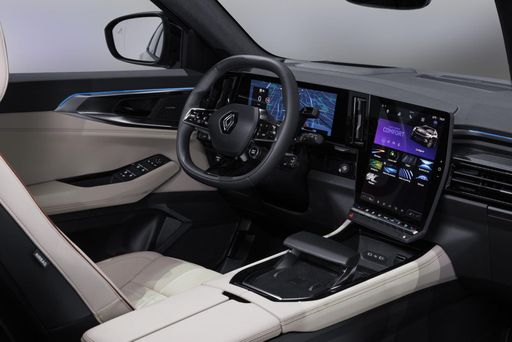
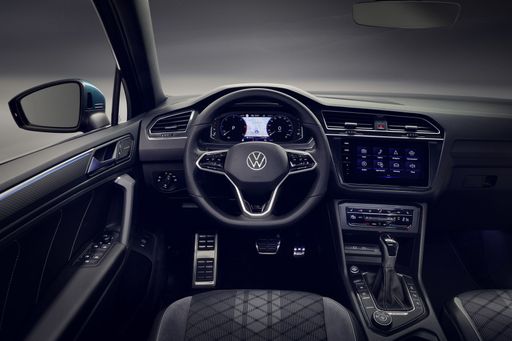
Renault Espace provides flexibility in its seating arrangement, accommodating either 5 or 7 passengers. Its trunk capacity ranges from 159 to a capacious 581 liters, depending on seat configuration, ensuring ample space for cargo. The VW Tiguan, typically seating 5, offers slightly more trunk room, ranging from 490 to 652 liters—ideal for family trips or adventure-packed weekends.

Espace

Efficiency and Environmental Impact

Both vehicles respectably factor in efficiency and emissions. The Espace holds a CO2 emission level of 107 g/km, accentuating its hybrid advantage. Despite the variance in engine and powertrain options, the Tiguan's CO2 emissions differ broadly, ranging from 8 to 193 g/km, aligning with its broader spectrum of engine types. Thus, it provides choices conforming to diverse efficiency needs.

Tiguan

Innovations and Technology

With advancements being the soul of modern vehicles, both SUVs incorporate cutting-edge technology. The Renault Espace includes driver assistance systems integrated seamlessly with hybrid tech, enhancing road safety and energy efficiency. The VW Tiguan impresses with its modern dual-clutch automatic transmission, seamlessly merging power and precision, alongside optional all-wheel drive for those desiring more control.

Espace

Conclusion

In the grand scheme, choosing between the Renault Espace and VW Tiguan boils down to individual preferences and needs. The Espace thrives with its hybrid efficiency and flexibility, while the Tiguan lures with its wide array of engine options and enhanced driving dynamics. Both SUVs symbolize the epitome of modernity in their respective ways, assuring a rewarding driving experience.

Here’s where it gets real: The technical differences in detail

Espace

Costs and Efficiency:

When it comes to price and running costs, the biggest differences usually appear. This is often where you see which car fits your budget better in the long run.

VW Tiguan is a bit cheaper – starting at 33,600 £ , while the Renault Espace costs 37,500 £ . That’s a price difference of around 3,964 £.

Fuel consumption also shows a difference: the VW Tiguan uses 1.4 L/100km and is considerably more efficient than the Renault Espace with 4.9 L/100km. The difference is about 3.5 L/100km.

Tiguan

Engine and Performance:

Power, torque and acceleration say a lot about how a car feels on the road. This is where you see which model delivers more driving dynamics.

When it comes to engine power, the VW Tiguan offers clearly more power – delivering 272 HP compared to 200 HP. That’s roughly 72 HP more horsepower.

When accelerating from 0 to 100 km/h, the VW Tiguan is substantially quicker – completing the sprint in 5.9 s, while the Renault Espace takes 8.8 s. That’s about 2.9 s quicker.

Looking at top speed, the VW Tiguan is a bit faster – reaching 215 km/h, while the Renault Espace tops out at 174 km/h. The difference is around 41 km/h.

Espace

Space and Everyday Use:

Cabin size, boot volume and payload all play a role in everyday practicality. Here, comfort and flexibility make the difference.

Seats: Renault Espace offers more seats – 7 vs 5.

In terms of curb weight, VW Tiguan is very slightly lighter – 1,599 kg compared to 1,673 kg. The difference is around 74 kg.

Looking at boot space, the Renault Espace offers only slightly more boot space – 692 L compared to 652 L. That’s a difference of about 40 L.

For maximum load capacity, the Renault Espace offers noticeably more capacity – up to 2,224 L, about 738 L more than the VW Tiguan.

When it comes to payload, the Renault Espace carries only slightly more – 581 kg compared to 533 kg. That’s a difference of about 48 kg.

Who wins the race in the data check?

The VW Tiguan stands well ahead of its rival in the objective data comparison.
This result only shows which model scores more points on paper – not which of the two cars feels right for you.

from £33,600
Tiguan

VW Tiguan

  • Engine Type : Petrol MHEV, Petrol, Diesel, Plugin Hybrid
  • Transmission : Automatic
  • Drive Type : Front-Wheel Drive, All-Wheel Drive
  • Power HP : 130 - 272 HP
  • Consumption L/100km : 1.4 - 8.4 L/100km
  • Electric Range : 118 - 126 km
Renault Espace
VW Tiguan

Costs and Consumption

View detailed analysis

Engine and Performance

View detailed analysis

Dimensions and Body

View detailed analysis

Renault Espace

The Renault Espace is the sort of roomy, clever family cruiser that makes long journeys feel effortless, its interior prioritising comfort and practical thinking without drifting into blandness. It won't pretend to be a sports car, but its composed ride, smart packaging and a whisper of French flair make it a sensible and subtly stylish choice for buyers who value space and versatility.

details

VW Tiguan

The VW Tiguan blends sensible family practicality with a dash of German polish, delivering a calm, reassuring ride and a cabin that never feels like an afterthought. For buyers who want an SUV that’s easy to live with yet still nicely dressed, the Tiguan is the grown‑up choice that keeps a cheeky wink in reserve.

details
Renault Espace
VW Tiguan

Costs and Consumption

Price
37,500 - 41,400 £
Price
33,600 - 54,600 £
Consumption L/100km
4.9 L/100km
Consumption L/100km
1.4 - 8.4 L/100km
Consumption kWh/100km
-
Consumption kWh/100km
-
Electric Range
-
Electric Range
118 - 126 km
Battery Capacity
-
Battery Capacity
19.7 kWh
co2
110 g/km
co2
32 - 190 g/km
Fuel tank capacity
55 L
Fuel tank capacity
45 L

Dimensions and Body

Body Type
SUV
Body Type
SUV
Seats
5 - 7
Seats
5
Doors
5
Doors
5
Curb weight
1,673 - 1,783 kg
Curb weight
1,599 - 1,879 kg
Trunk capacity
212 - 692 L
Trunk capacity
490 - 652 L
Length
4,746 mm
Length
4,539 mm
Width
1,830 mm
Width
1,842 - 1,859 mm
Height
1,645 mm
Height
1,658 mm
Max trunk capacity
2,054 - 2,224 L
Max trunk capacity
1,486 L
Payload
404 - 581 kg
Payload
460 - 533 kg

Engine and Performance

Engine Type
Full Hybrid
Engine Type
Petrol MHEV, Petrol, Diesel, Plugin Hybrid
Transmission
Automatic
Transmission
Automatic
Transmission Detail
Automatic Gearbox
Transmission Detail
Dual-Clutch Automatic
Drive Type
Front-Wheel Drive
Drive Type
Front-Wheel Drive, All-Wheel Drive
Power HP
200 HP
Power HP
130 - 272 HP
Acceleration 0-100km/h
8.8 s
Acceleration 0-100km/h
5.9 - 10.6 s
Max Speed
174 km/h
Max Speed
210 - 215 km/h
Torque
-
Torque
220 - 400 Nm
Number of Cylinders
3
Number of Cylinders
4
Power kW
147 kW
Power kW
96 - 200 kW
Engine capacity
1,199 cm3
Engine capacity
1,498 - 1,984 cm3

General

Model Year
2,025
Model Year
2,024 - 2,026
CO2 Efficiency Class
C
CO2 Efficiency Class
D, E, F, B, G
Brand
Renault
Brand
VW
DriveDuel uses data analysis and artificial intelligence to evaluate vehicle data and create content. Content is regularly reviewed and improved. The displayed prices are estimates based on German list prices, adjusted to the respective country’s VAT. Country-specific registration taxes are not included. This information is not legally binding.