VS

Renault Kangoo vs Citroen Berlingo comparison

Compare performance (130 HP vs 136 HP), boot space and price (25,700 £ vs 20,300 £ ) at a glance. Find out which car is the better choice for you – Renault Kangoo or Citroen Berlingo?

Renault Kangoo vs Citroen Berlingo: Key differences

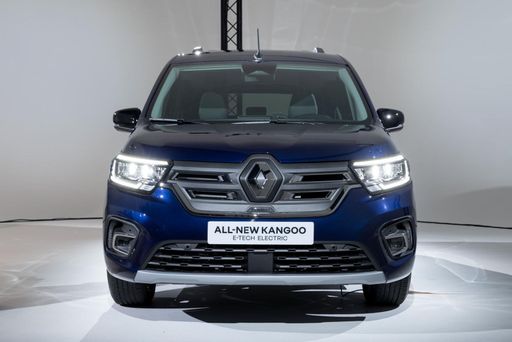
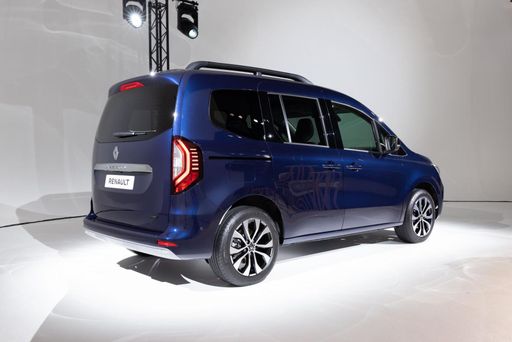
Renault Kangoo

5 (1 Reviews)
rate
  • marginally more efficient
details

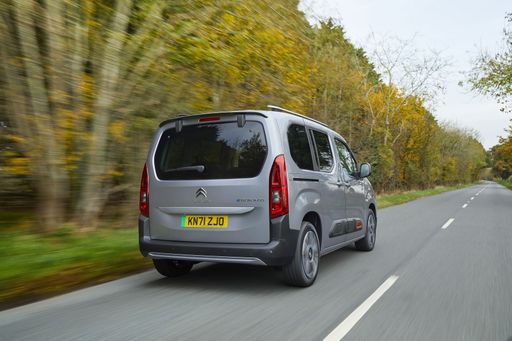
Citroen Berlingo

  • noticeably cheaper
  • barely more power
  • only slightly quicker 0–100 km/h
  • barely lighter
  • significantly more trunk space
details

By Achim Sedelmaier

Kangoo

Crossover Clash: Citroen Berlingo vs Renault Kangoo

In the ever-competitive world of light commercial vehicles, the Citroen Berlingo and Renault Kangoo stand out as popular choices among small business owners and families alike. Both models offer impressive utility features, innovative technology, and versatile body styles, but they each bring unique strengths to the table. This comparison will delve into their technical specifications and innovations, aiding buyers in making an informed decision.
Berlingo

Design and Interior Space

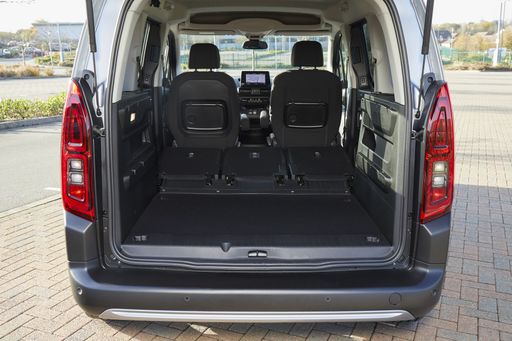
Both the Citroen Berlingo and Renault Kangoo are categorized as high-roof wagons, designed to maximize passenger and cargo space. The Berlingo boasts an impressive maximum trunk capacity of up to 1,050 liters, while the Kangoo slightly edges ahead in cargo capabilities with a maximum trunk capacity of 950 liters.

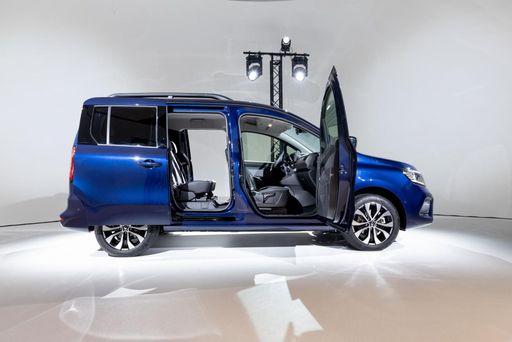
In terms of passenger space, the Berlingo can comfortably seat five people, while the Kangoo offers the flexibility to seat either five or seven occupants, making it an attractive option for larger families or groups. Both vehicles feature a user-friendly interior with intuitive layout and controls, but the style and materials differ. The Citroen Berlingo emphasizes comfort with its softer materials, whereas the Renault Kangoo focuses more on durability suitable for heavy usage.

Kangoo

Powertrains and Performance

Under the hood, both vehicles offer a mix of petrol, diesel, and electric options. The Berlingo comes in power variants ranging from 102 HP to 136 HP, with fuel consumption as low as 5.3 L/100km for diesel variants, showcasing its efficiency. The electric version of the Berlingo has a range of up to 345 km on a single charge, supported by a battery capacity of 46 kWh.

Conversely, the Renault Kangoo features power outputs from 95 HP to 130 HP, with the best fuel consumption figure being around 5.2 L/100km. The electric Kangoo provides a range of 285 km, which is slightly less than its Citroen counterpart. Both models feature front-wheel drive and offer a choice between manual and automatic transmissions, including the Kangoo's advanced dual-clutch gearbox for smoother shifting.

Berlingo

Driving Experience and Handling

When it comes to performance, the Citroen Berlingo excels with quicker acceleration capabilities, recording times of 11.1 seconds to reach 100 km/h. On the other hand, the Kangoo's acceleration is generally slower, with a range from 11.6 to 15.6 seconds, depending on the engine variant. Both models are designed primarily for comfort and efficiency rather than sports performance, so expect a smooth and stable driving experience rather than thrilling dynamics.

Kangoo

Technological Innovations

Both vehicles are equipped with modern technology to enhance safety and convenience. The Citroen Berlingo introduces features such as a touchscreen infotainment system compatible with Apple CarPlay and Android Auto, along with an array of driver-assistance technologies like parking sensors and adaptive cruise control. The innovative “Modutop” storage system in the Berlingo provides additional flexibility for keeping small items organized.

Similarly, the Renault Kangoo incorporates advanced safety features, including lane-keeping assist and emergency braking systems. The Kangoo also offers its own tech-laden infotainment system, as well as a digital rear-view mirror that enhances visibility when the vehicle is loaded with cargo.

Berlingo

Conclusion: Making the Right Choice

In summary, the choice between the Citroen Berlingo and Renault Kangoo ultimately hinges on individual preferences and requirements. The Berlingo shines with superior fuel efficiency and a more powerful electric variant, making it an excellent choice for eco-conscious buyers. Meanwhile, the Kangoo offers flexible seating arrangements and practical technology for more extensive family usage.

As both vehicles cater to different needs, prospective buyers should carefully consider what features resonate most with their lifestyle. Whether opting for the utility-packed Berlingo or the versatile Kangoo, customers can expect practicality wrapped in a modern design.

Here’s where it gets real: The technical differences in detail

Kangoo

Costs and Efficiency:

When it comes to price and running costs, the biggest differences usually appear. This is often where you see which car fits your budget better in the long run.

Citroen Berlingo is noticeably cheaper – starting at 20,300 £ , while the Renault Kangoo costs 25,700 £ . That’s a price difference of around 5,452 £.

Fuel consumption also shows a difference: the Renault Kangoo uses 5.2 L/100km and is marginally more efficient than the Citroen Berlingo with 5.3 L/100km. The difference is about 0.1 L/100km.

Berlingo

Engine and Performance:

Under the bonnet, it becomes clear which model is tuned for sportiness and which one takes the lead when you hit the accelerator.

When it comes to engine power, the Citroen Berlingo offers barely more power – delivering 136 HP compared to 130 HP. That’s roughly 6 HP more horsepower.

When accelerating from 0 to 100 km/h, the Citroen Berlingo is only slightly quicker – completing the sprint in 11.2 s, while the Renault Kangoo takes 11.6 s. That’s about 0.4 s quicker.

There’s also a difference in torque: the Citroen Berlingo delivers very slightly more torque with 300 Nm compared to 270 Nm. That’s about 30 Nm more.

Kangoo

Space and Everyday Use:

Cabin size, boot volume and payload all play a role in everyday practicality. Here, comfort and flexibility make the difference.

Both vehicles offer seating for 7 people.

In terms of curb weight, Citroen Berlingo is barely lighter – 1,476 kg compared to 1,489 kg. The difference is around 13 kg.

Looking at boot space, the Citroen Berlingo offers significantly more boot space – 1,050 L compared to 601 L. That’s a difference of about 449 L.

When it comes to payload, the Citroen Berlingo carries visibly more – 840 kg compared to 610 kg. That’s a difference of about 230 kg.

Who wins the race in the data check?

The Citroen Berlingo stands well ahead of its rival in the objective data comparison.
This result only shows which model scores more points on paper – not which of the two cars feels right for you.

from £20,300
Berlingo

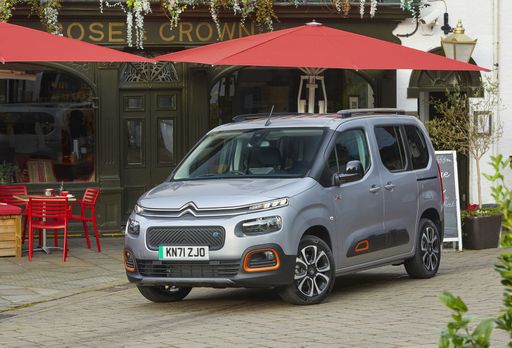
Citroen Berlingo

  • Engine Type : Electric, Diesel, Petrol
  • Transmission : Automatic, Manuel
  • Drive Type : Front-Wheel Drive
  • Power HP : 102 - 136 HP
  • Consumption L/100km : 5.3 - 6.3 L/100km
  • Consumption kWh/100km : 18 - 18.7 kWh/100km
  • Electric Range : 334 - 343 km
Renault Kangoo
Citroen Berlingo

Costs and Consumption

View detailed analysis

Engine and Performance

View detailed analysis

Dimensions and Body

View detailed analysis

Renault Kangoo

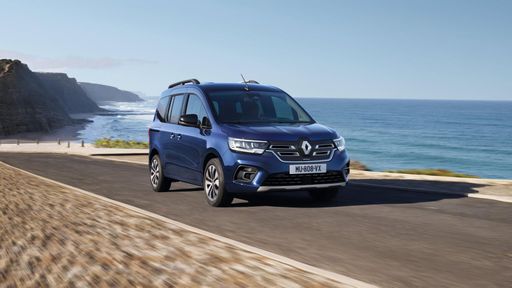
The Renault Kangoo is the pragmatic chameleon of small vans, marrying van-like practicality with carlike comfort and a cheerful, friendly face that suits both family runs and workday hauls. It's sensible, versatile and annoyingly useful — easy to live with, cheap to run and clever where it counts, so you get more space and fewer compromises than the price suggests.

details

Citroen Berlingo

The Citroën Berlingo is a charming, practical MPV that blends everyday versatility with a comfy ride and clever storage tricks that make life easier for families and small businesses. It won’t star in a sports-car ad, but its sensible layout, enormous load flexibility and friendly demeanor mean it often wins on plain common sense — perfect for school runs, weekend escapes and the odd IKEA mission.

details
Renault Kangoo
Citroen Berlingo

Costs and Consumption

Price
25,700 - 32,100 £
Price
20,300 - 34,900 £
Consumption L/100km
5.2 - 7.4 L/100km
Consumption L/100km
5.3 - 6.3 L/100km
Consumption kWh/100km
-
Consumption kWh/100km
18 - 18.7 kWh/100km
Electric Range
-
Electric Range
334 - 343 km
Battery Capacity
-
Battery Capacity
-
co2
136 - 168 g/km
co2
0 - 151 g/km
Fuel tank capacity
-
Fuel tank capacity
-

Dimensions and Body

Body Type
High Roof Estate
Body Type
High Roof Estate
Seats
5 - 7
Seats
5 - 7
Doors
-
Doors
-
Curb weight
1,489 - 1,830 kg
Curb weight
1,476 - 1,922 kg
Trunk capacity
513 - 601 L
Trunk capacity
775 - 1,050 L
Length
-
Length
-
Width
1,860 mm
Width
1,848 mm
Height
-
Height
-
Max trunk capacity
-
Max trunk capacity
-
Payload
459 - 610 kg
Payload
509 - 840 kg

Engine and Performance

Engine Type
Petrol, Diesel
Engine Type
Electric, Diesel, Petrol
Transmission
Manuel, Automatic
Transmission
Automatic, Manuel
Transmission Detail
Manual Gearbox, Dual-Clutch Automatic
Transmission Detail
Reduction Gearbox, Manual Gearbox, Automatic Gearbox
Drive Type
Front-Wheel Drive
Drive Type
Front-Wheel Drive
Power HP
95 - 130 HP
Power HP
102 - 136 HP
Acceleration 0-100km/h
11.6 - 16.7 s
Acceleration 0-100km/h
11.2 - 14.1 s
Max Speed
-
Max Speed
-
Torque
240 - 270 Nm
Torque
205 - 300 Nm
Number of Cylinders
4
Number of Cylinders
3 - 4
Power kW
70 - 96 kW
Power kW
75 - 100 kW
Engine capacity
1,332 - 1,461 cm3
Engine capacity
1,199 - 1,499 cm3

General

Model Year
2025
Model Year
2,024 - 2,026
CO2 Efficiency Class
F, E
CO2 Efficiency Class
A, E
Brand
Renault
Brand
Citroen
DriveDuel uses data analysis and artificial intelligence to evaluate vehicle data and create content. Content is regularly reviewed and improved. The displayed prices are estimates based on German list prices, adjusted to the respective country’s VAT. Country-specific registration taxes are not included. This information is not legally binding.