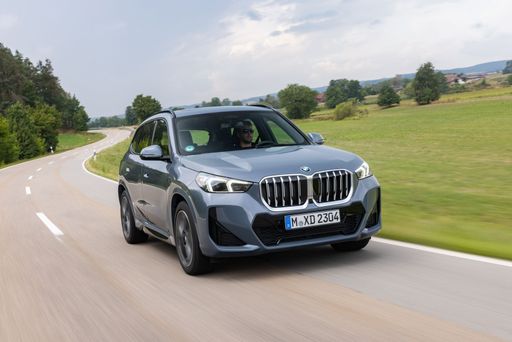
VS

Renault Rafale vs BMW X1 comparison

Compare performance (300 HP vs 326 HP), boot space and price (37,700 £ vs 38,200 £ ) at a glance. Find out which car is the better choice for you – Renault Rafale or BMW X1?

Renault Rafale vs BMW X1: Key differences

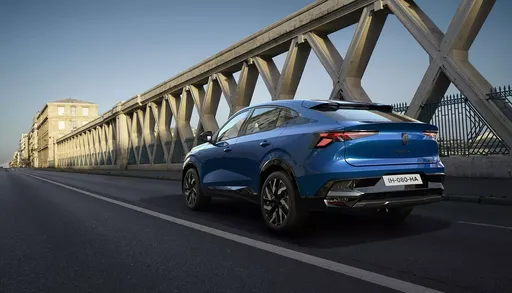
Renault Rafale

4.9 (7 Reviews)
rate
  • very slightly cheaper
  • markedly more efficient
  • moderately more electric range
  • a bit more trunk space

BMW X1

4.2 (6 Reviews)
rate
  • very slightly more power
  • moderately quicker 0–100 km/h
  • a bit lighter

All details on performance, efficiency, range and trunk space can be found in the technical comparison below – including user reviews for both models.

Rafale

The automotive market is a battleground where brands constantly strive to outdo one another, especially in the SUV segment. This article delves into a detailed comparison between two contenders: the BMW X1 and the Renault Rafale. These models not only showcase the innovative spirit of their manufacturers but also offer a spectrum of features that aim to cater to diverse consumer needs.
X1

Design and Dimensions

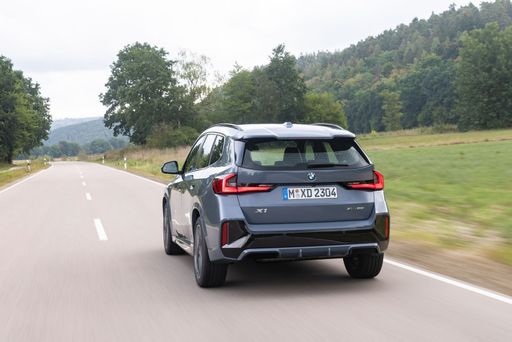
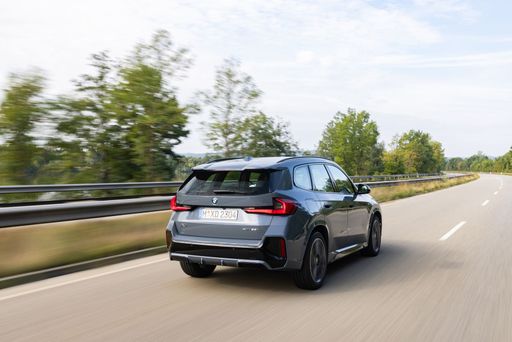
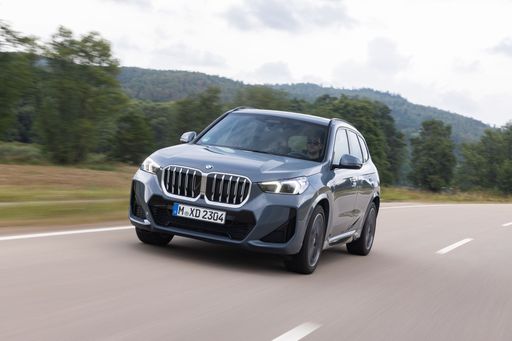
The BMW X1 is an SUV that emanates a strong and sporty presence. With a length of 4500 mm, it’s compact yet spacious enough for urban adventures. The width of 1845 mm and an impressive height reaching up to 1642 mm (depending on the variant) accentuate its robust stance, making it a versatile choice for a variety of drivers.

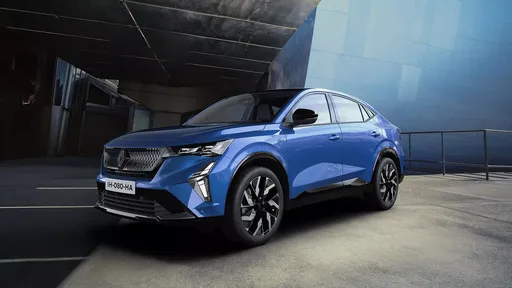
In contrast, the Renault Rafale is slightly longer at 4710 mm and wider at 1886 mm, providing an even larger cabin. Its height of 1613 mm complements its elongated profile by ensuring an aerodynamic and commanding presence on the road.

Rafale

Engine and Performance

When it comes to powertrains, the BMW X1 offers a variety of engine types including Diesel, Petrol, and hybrids, with power outputs ranging from 150 HP to an exhilarating 326 HP. Interestingly, the X1 is equipped with both front-wheel drive and all-wheel drive options, giving drivers flexibility based on their needs and driving conditions.

On the other hand, the Renault Rafale focuses on hybrid technologies, featuring both full hybrids and plug-in hybrids. The power output peaks at 300 HP, providing robust acceleration capabilities. The Rafale is designed primarily for front-wheel drive, which may appeal to urban drivers looking for efficiency.

X1

Fuel Efficiency and Emissions

Fuel efficiency is a significant consideration for many buyers. The BMW X1 showcases a commendable fuel consumption range from 4.6 L/100 km to 7.7 L/100 km depending on the engine choice, indicating its performance-focused engineering. Its CO2 emissions vary between 120 g/km and 175 g/km, aligning with the growing demand for environmentally friendly vehicles.

Contrastingly, the Renault Rafale boasts remarkable efficiency, with consumption figures as low as 0.6 L/100 km for its plug-in hybrid variant. This impressive statistic underlines its commitment to sustainability, coupled with CO2 emissions that reach as low as 14 g/km, marking it as one of the cleaner options in the SUV segment.

Rafale

Technological Innovations

Both the BMW X1 and Renault Rafale are equipped with a suite of innovative technologies. The X1 features the latest in driving assistance systems, integrating intelligent safety features that enhance both comfort and security. The SUV also offers an intuitive infotainment system with wireless connectivity, catering to tech-savvy consumers.

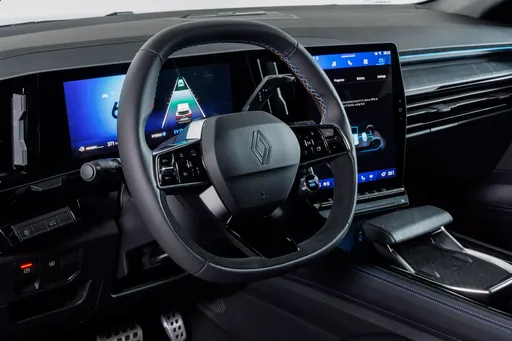
The Renault Rafale, on the other hand, emphasizes connectivity and user experience with its advanced multimedia system. It includes features that respond to over-the-air updates, ensuring that the vehicle remains at the forefront of technology even after purchase. Moreover, the Rafale’s eco-focused driving modes offer drivers opportunities to conserve energy effectively.

X1

Interior Comfort and Capacity

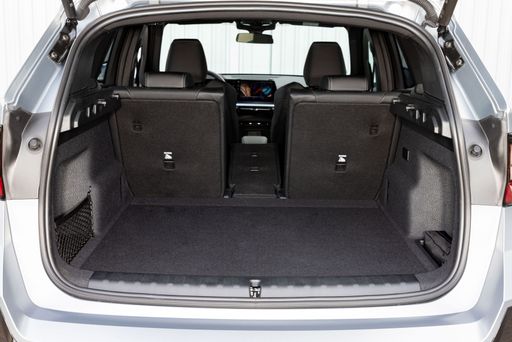
On the interior front, the BMW X1 excels in using premium materials and ergonomic design, accommodating up to five passengers comfortably. It also offers a versatile trunk capacity ranging from 490 L to 540 L, ideal for both everyday use and adventurous getaways.

The Renault Rafale takes a slightly different approach by maximizing interior space with a trunk capacity of 539 L to 627 L. This enhances practicality and convenience for families or individuals who frequently carry larger loads.

Conclusion: Which SUV Reigns Supreme?

In the head-to-head comparison between the BMW X1 and the Renault Rafale, it ultimately comes down to consumer priorities. The BMW X1 appeals to those seeking performance and luxury, promoting a spirited driving experience with its powerful engine options and advanced technology. Meanwhile, the Renault Rafale shines in efficiency, technological innovation, and space, making it an excellent choice for eco-conscious consumers.

As the automotive landscape continues to evolve, both vehicles hold their ground, showcasing the diverse options available in the SUV market today.

Here’s where it gets real: The technical differences in detail

Rafale

Costs and Efficiency:

Looking at overall running costs, both models reveal some interesting differences in everyday economy.

Renault Rafale is very slightly cheaper – starting at 37,700 £ , while the BMW X1 costs 38,200 £ . That’s a price difference of around 514 £.

Fuel consumption also shows a difference: the Renault Rafale uses 2 L/100km and is markedly more efficient than the BMW X1 with 2.5 L/100km. The difference is about 0.5 L/100km.

As for electric range, the Renault Rafale offers moderately more range – reaching up to 97 km, about 16 km more than the BMW X1.

X1

Engine and Performance:

Power, torque and acceleration say a lot about how a car feels on the road. This is where you see which model delivers more driving dynamics.

When it comes to engine power, the BMW X1 offers very slightly more power – delivering 326 HP compared to 300 HP. That’s roughly 26 HP more horsepower.

When accelerating from 0 to 100 km/h, the BMW X1 is moderately quicker – completing the sprint in 5.4 s, while the Renault Rafale takes 6.4 s. That’s about 1 s quicker.

Rafale

Space and Everyday Use:

Whether family car or daily driver – which one offers more room, flexibility and comfort?

Both vehicles offer seating for 5 people.

In terms of curb weight, BMW X1 is a bit lighter – 1,575 kg compared to 1,734 kg. The difference is around 159 kg.

Looking at boot space, the Renault Rafale offers a bit more boot space – 627 L compared to 540 L. That’s a difference of about 87 L.

When it comes to payload, the BMW X1 carries a bit more – 500 kg compared to 444 kg. That’s a difference of about 56 kg.

Who wins the race in the data check?

The BMW X1 is slightly ahead in the objective data comparison.
This result only shows which model scores more points on paper – not which of the two cars feels right for you.

from £38,200
X1

BMW X1

  • Engine Type : Diesel MHEV, Petrol MHEV, Petrol, Diesel, Plugin Hybrid
  • Transmission : Automatic
  • Drive Type : Front-Wheel Drive, All-Wheel Drive
  • Power HP : 136 - 326 HP
  • Consumption L/100km : 2.5 - 7.7 L/100km
  • Electric Range : 81 km
Renault Rafale
BMW X1

Costs and Consumption

View detailed analysis

Engine and Performance

View detailed analysis

Dimensions and Body

View detailed analysis

Renault Rafale

The Renault Rafale dresses bold coupé-inspired lines around a practical crossover body, turning heads without trying too hard. Inside it serves up a comfortable, well-equipped cabin and engaging driving manners, making it a clever choice for buyers who want a bit of panache with their daily commute.

details

BMW X1

The BMW X1 brings a premium feel to compact crossover life, wrapping practical space and agile handling into a tidy, upscale package. It’s ideal for buyers who want BMW driving dynamics without the bulk, offering everyday comfort and a few clever tricks to keep the commute interesting.

details
Renault Rafale
BMW X1

Costs and Consumption

Price
37,700 - 49,700 £
Price
38,200 - 55,500 £
Consumption L/100km
2 - 5 L/100km
Consumption L/100km
2.5 - 7.7 L/100km
Consumption kWh/100km
-
Consumption kWh/100km
-
Electric Range
97 km
Electric Range
81 km
Battery Capacity
-
Battery Capacity
14.2 kWh
co2
43 - 109 g/km
co2
57 - 175 g/km
Fuel tank capacity
-
Fuel tank capacity
47 - 54 L

Dimensions and Body

Body Type
SUV
Body Type
SUV
Seats
5
Seats
5
Doors
-
Doors
5
Curb weight
1,734 - 2,025 kg
Curb weight
1,575 - 1,935 kg
Trunk capacity
539 - 627 L
Trunk capacity
490 - 540 L
Length
-
Length
4,500 mm
Width
1,886 mm
Width
1,845 mm
Height
-
Height
1,630 - 1,642 mm
Max trunk capacity
-
Max trunk capacity
1,495 - 1,545 L
Payload
415 - 444 kg
Payload
490 - 500 kg

Engine and Performance

Engine Type
Full Hybrid, Plugin Hybrid
Engine Type
Diesel MHEV, Petrol MHEV, Petrol, Diesel, Plugin Hybrid
Transmission
Automatic
Transmission
Automatic
Transmission Detail
Automatic Gearbox
Transmission Detail
Dual-Clutch Automatic
Drive Type
Front-Wheel Drive, All-Wheel Drive
Drive Type
Front-Wheel Drive, All-Wheel Drive
Power HP
200 - 300 HP
Power HP
136 - 326 HP
Acceleration 0-100km/h
6.4 - 8.9 s
Acceleration 0-100km/h
5.4 - 9.2 s
Max Speed
-
Max Speed
190 - 233 km/h
Torque
-
Torque
230 - 477 Nm
Number of Cylinders
3
Number of Cylinders
3 - 4
Power kW
147 - 221 kW
Power kW
100 - 240 kW
Engine capacity
1,199 cm3
Engine capacity
1,499 - 1,998 cm3

General

Model Year
2,025
Model Year
2,024 - 2,025
CO2 Efficiency Class
C, B
CO2 Efficiency Class
D, E, F, B
Brand
Renault
Brand
BMW
DriveDuel uses data analysis and artificial intelligence to evaluate vehicle data and create content. Content is regularly reviewed and improved. The displayed prices are estimates based on German list prices, adjusted to the respective country’s VAT. Country-specific registration taxes are not included. This information is not legally binding.