VS

SEAT Arona vs Hyundai i30 comparison

Compare performance (150 HP vs 150 HP), boot space and price (20,700 £ vs 24,600 £ ) at a glance. Find out which car is the better choice for you – SEAT Arona or Hyundai i30?

SEAT Arona vs Hyundai i30: Key differences

SEAT Arona

4.9 (2 Reviews)
rate
  • somewhat cheaper
  • moderately more efficient
  • very slightly quicker 0–100 km/h
  • somewhat lighter
  • very slightly more trunk space

Hyundai i30

4.4 (1 Reviews)
rate

All details on performance, efficiency, range and trunk space can be found in the technical comparison below – including user reviews for both models.

Arona

Hyundai i30 vs SEAT Arona: A Clash of Style and Substance

In the ever-evolving world of automobiles, choosing the right car can be a daunting task. Two contenders that have caught the eye of car enthusiasts are the Hyundai i30 and the SEAT Arona. While one takes the shape of a hatchback and the other embraces its SUV form, both vehicles offer a blend of performance, efficiency, and innovation. Let's dive into the specifics of these 2024 models to help you decide which one might be the right fit for you.
i30

Design and Dimensions

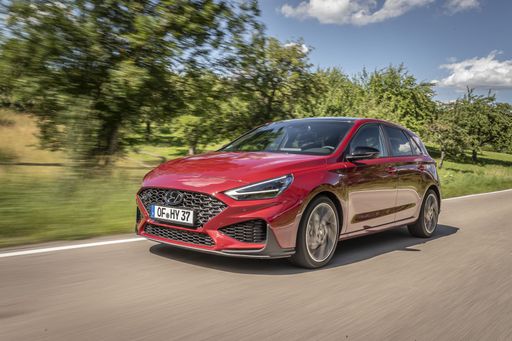
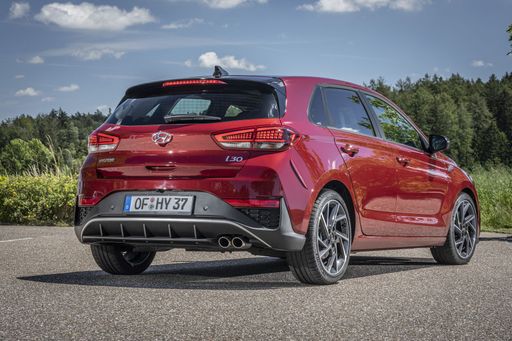
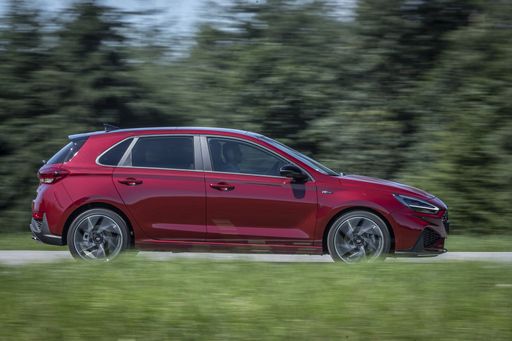
The Hyundai i30 presents itself as a sleek hatchback, stretching 4340 mm in length, 1795 mm in width, and with a height of 1455 mm. Its compact design is complemented by a generous trunk capacity of 395 liters, making it a practical choice for urban driving and family adventures alike.

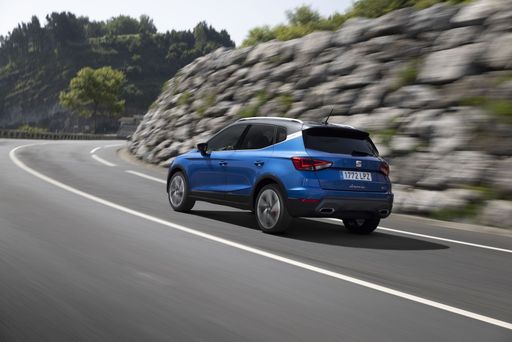
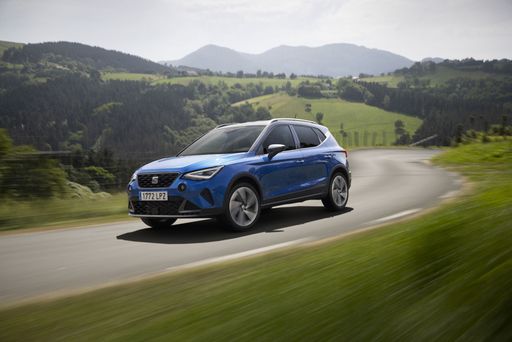
In contrast, the SEAT Arona, with its SUV stance, measures 4153 mm in length, 1780 mm in width, and stands taller at 1537 mm. It offers a slightly larger trunk capacity of 400 liters, catering to those who prioritize cargo space without compromising on style.

Arona

Performance and Efficiency

Under the hood, the Hyundai i30 offers a range of petrol engines with a power output of 100 to 140 HP and torque ranging from 172 to 253 Nm. The vehicle is available with both manual and dual-clutch automatic transmissions, promising a smooth ride whether navigating highways or city streets. With fuel consumption figures between 5.6 to 5.9 L/100km, it balances power and efficiency effectively.

Conversely, the SEAT Arona is equipped with a versatile selection of petrol engines delivering between 95 to 150 HP and torque between 175 to 250 Nm. Like the i30, it offers manual and automatic transmission options. The Arona impresses with slightly better fuel efficiency, consuming 5.4 to 5.6 L/100km, making it an economical choice for those mindful of fuel budgets.

i30

Acceleration and Speed

The Hyundai i30 accelerates from 0 to 100 km/h in 9.6 to 13.1 seconds, depending on the engine variant, with a top speed ranging from 178 to 197 km/h. This assures a balanced performance for a hatchback that doesn't shy away from spirited drives.

The SEAT Arona, on the other hand, offers varied acceleration between 8.4 to 11.3 seconds and can achieve top speeds of 182 to 210 km/h. Its nimble nature and peppy engines make it an engaging SUV for drivers seeking a thrilling experience behind the wheel.

Arona

Payload and Practicality

The Hyundai i30 has a payload capacity ranging from 463 to 509 kg, catering well to families and individuals who require ample carrying capacity without compromising passenger comfort.

The SEAT Arona, with a payload capacity ranging from 502 to 522 kg, delivers versatility for adventures and daily commutes alike, fulfilling the diverse demands of its driver.

i30

Conclusion: The Final Verdict

Both the Hyundai i30 and SEAT Arona bring unique characteristics to the table, making them strong contenders in their segments. The i30, with its sharp design and spirited performance, is ideal for those who enjoy the compact reliability of a hatchback. Meanwhile, the Arona offers the elevated stance and cargo flexibility of an SUV, appealing to those who crave a more commanding presence on the road.

Ultimately, the choice between these two vehicles boils down to personal preference and lifestyle requirements. Whether you lean towards the sleek hatchback or the dynamic SUV, both models promise innovation, quality, and value, continuing to elevate the driving experience in their distinct ways.

Here’s where it gets real: The technical differences in detail

Arona

Costs and Efficiency:

Looking at overall running costs, both models reveal some interesting differences in everyday economy.

SEAT Arona is somewhat cheaper – starting at 20,700 £ , while the Hyundai i30 costs 24,600 £ . That’s a price difference of around 3,857 £.

Fuel consumption also shows a difference: the SEAT Arona uses 5.3 L/100km and is moderately more efficient than the Hyundai i30 with 5.9 L/100km. The difference is about 0.6 L/100km.

i30

Engine and Performance:

Under the bonnet, it becomes clear which model is tuned for sportiness and which one takes the lead when you hit the accelerator.

Both models deliver identical power – 150 HP each.

When accelerating from 0 to 100 km/h, the SEAT Arona is very slightly quicker – completing the sprint in 8.3 s, while the Hyundai i30 takes 8.9 s. That’s about 0.6 s quicker.

Both models offer the same torque – 250 Nm.

Arona

Space and Everyday Use:

Cabin size, boot volume and payload all play a role in everyday practicality. Here, comfort and flexibility make the difference.

Both vehicles offer seating for 5 people.

In terms of curb weight, SEAT Arona is somewhat lighter – 1,188 kg compared to 1,315 kg. The difference is around 127 kg.

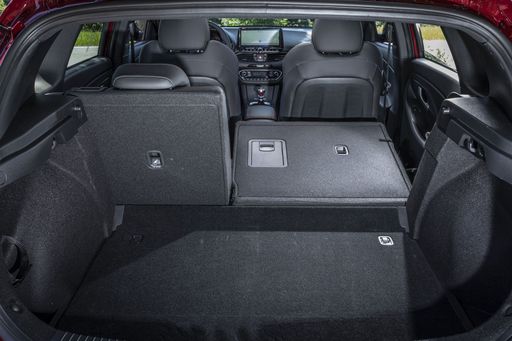
Looking at boot space, the SEAT Arona offers very slightly more boot space – 400 L compared to 395 L. That’s a difference of about 5 L.

When it comes to payload, the SEAT Arona carries marginally more – 522 kg compared to 485 kg. That’s a difference of about 37 kg.

Who wins the race in the data check?

The SEAT Arona stands well ahead of its rival in the objective data comparison.
This result only shows which model scores more points on paper – not which of the two cars feels right for you.

from £20,700
Arona

SEAT Arona

  • Engine Type : Petrol
  • Transmission : Manuel, Automatic
  • Drive Type : Front-Wheel Drive
  • Power HP : 95 - 150 HP
  • Consumption L/100km : 5.3 - 5.8 L/100km
SEAT Arona
Hyundai i30

Costs and Consumption

View detailed analysis

Engine and Performance

View detailed analysis

Dimensions and Body

View detailed analysis

SEAT Arona

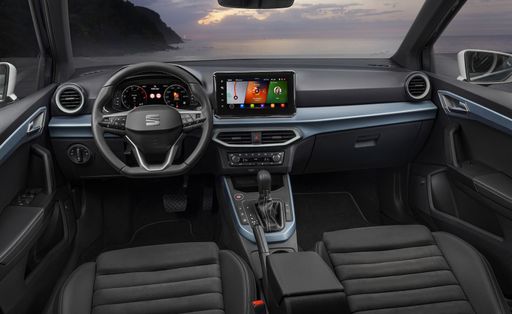
The SEAT Arona is a cheeky urban crossover that mixes sharp styling with sensible practicality, making it an appealing choice for buyers who want personality without fuss. It’s zippy in traffic, comfortable enough for daily driving, and brings enough character to make routine journeys feel a little more fun.

details

Hyundai i30

The Hyundai i30 proves that sensible can also be stylish, offering a confident driving character wrapped in neat, modern design. It serves up a roomy, well-equipped cabin and composed ride that make everyday motoring feel like a clever purchase rather than a compromise.

details
SEAT Arona
Hyundai i30

Costs and Consumption

Price
20,700 - 30,500 £
Price
24,600 - 31,400 £
Consumption L/100km
5.3 - 5.8 L/100km
Consumption L/100km
5.9 - 6.3 L/100km
Consumption kWh/100km
-
Consumption kWh/100km
-
Electric Range
-
Electric Range
-
Battery Capacity
-
Battery Capacity
-
co2
120 - 132 g/km
co2
134 - 142 g/km
Fuel tank capacity
-
Fuel tank capacity
-

Dimensions and Body

Body Type
SUV
Body Type
Hatchback
Seats
5
Seats
5
Doors
-
Doors
-
Curb weight
1,188 - 1,268 kg
Curb weight
1,315 - 1,435 kg
Trunk capacity
400 L
Trunk capacity
395 L
Length
-
Length
-
Width
1,780 mm
Width
1,795 mm
Height
-
Height
-
Max trunk capacity
-
Max trunk capacity
-
Payload
502 - 522 kg
Payload
445 - 485 kg

Engine and Performance

Engine Type
Petrol
Engine Type
Petrol
Transmission
Manuel, Automatic
Transmission
Manuel, Automatic
Transmission Detail
Manual Gearbox, Dual-Clutch Automatic
Transmission Detail
Manual Gearbox, Dual-Clutch Automatic
Drive Type
Front-Wheel Drive
Drive Type
Front-Wheel Drive
Power HP
95 - 150 HP
Power HP
115 - 150 HP
Acceleration 0-100km/h
8.3 - 11.1 s
Acceleration 0-100km/h
8.9 - 11.7 s
Max Speed
-
Max Speed
-
Torque
175 - 250 Nm
Torque
172 - 250 Nm
Number of Cylinders
3 - 4
Number of Cylinders
3 - 4
Power kW
70 - 110 kW
Power kW
85 - 110 kW
Engine capacity
999 - 1,498 cm3
Engine capacity
998 - 1,598 cm3

General

Model Year
2,025
Model Year
2,026
CO2 Efficiency Class
D
CO2 Efficiency Class
D, E
Brand
SEAT
Brand
Hyundai
DriveDuel uses data analysis and artificial intelligence to evaluate vehicle data and create content. Content is regularly reviewed and improved. The displayed prices are estimates based on German list prices, adjusted to the respective country’s VAT. Country-specific registration taxes are not included. This information is not legally binding.