VS

SEAT Arona vs Nissan Qashqai comparison

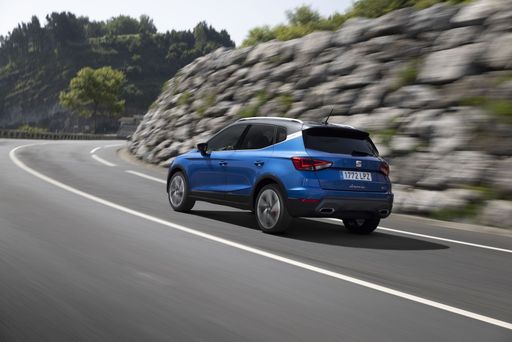
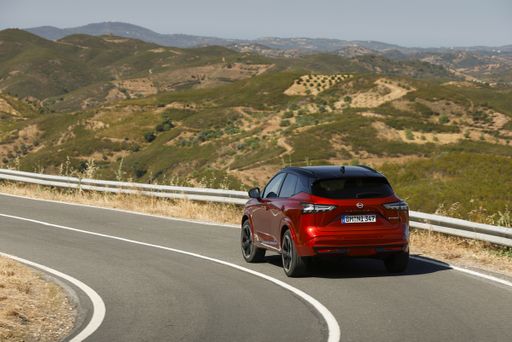
Compare performance (150 HP vs 205 HP), boot space and price (20,700 £ vs 29,600 £ ) at a glance. Find out which car is the better choice for you – SEAT Arona or Nissan Qashqai?

SEAT Arona vs Nissan Qashqai: Key differences

SEAT Arona

4.9 (3 Reviews)
rate
  • substantially cheaper
  • moderately lighter
details

Nissan Qashqai

4.9 (3 Reviews)
rate
  • visibly more power
  • visibly more efficient
  • barely quicker 0–100 km/h
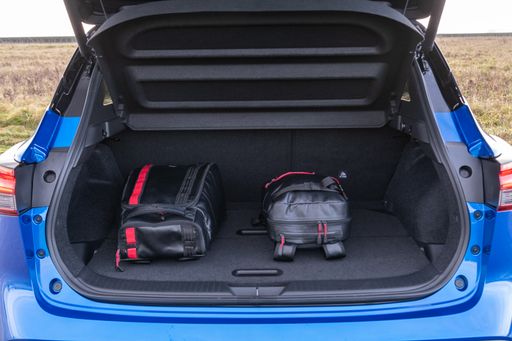
  • clearly more trunk space
details

All details on performance, efficiency, range and trunk space can be found in the technical comparison below – including user reviews for both models.

By Achim Sedelmaier

Arona

Quick comparison overview

Nissan Qashqai and SEAT Arona are compact crossovers that look similar on paper but feel different the moment you drive them. The Qashqai aims for refined comfort and an EV‑like smoothness that soothes daily commuting, while the Arona prioritises agility, a lower entry price and a punchier, more compact driving personality. In everyday terms the Qashqai reads like a calm family shuttle with modern infotainment, whereas the Arona reads like a pragmatic city‑first crossover with a sporty bent. The rest of this comparison explains those trade‑offs in cabin feel, practicality and real‑world usability rather than spec sheets.
Qashqai

Character and driving feel

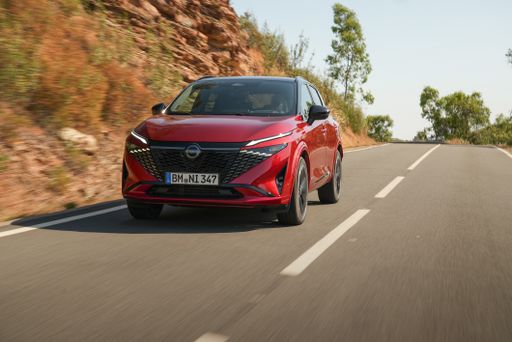
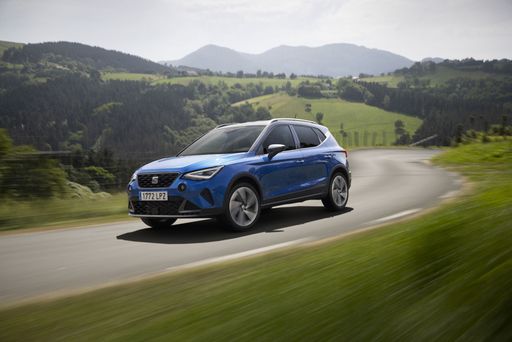
The Nissan Qashqai delivers a composed, low‑stress drive with linear, electric‑like throttle response that masks the combustion engine and makes stop‑start traffic relaxed. The SEAT Arona answers with sharper steering and a livelier chassis that rewards cornering and city maneuvers, but that liveliness comes with firmer suspension and more road feedback. If you want relaxed, predictable progress and an easy right foot, the Qashqai leans into comfort; if you prefer a car that feels eager and communicative, the Arona is the more engaging companion. Each choice is a trade‑off: quiet refinement versus nimble responsiveness.

Arona

Comfort, cabin feel and long‑distance behavior

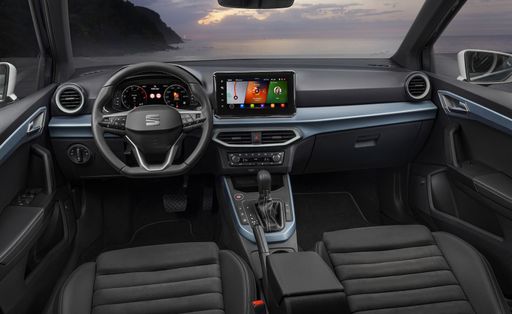
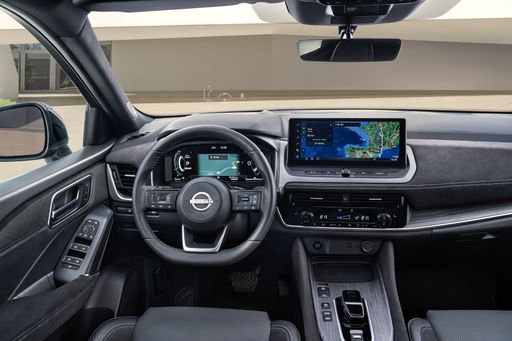
On long runs the Nissan Qashqai feels quieter and less wearing thanks to softer suspension tuning and more substantial front seats that support extended miles without complaint. The SEAT Arona will keep you alert with a firmer ride and noticeable wind and tyre noise at higher speeds, so long distances feel more involving and a touch more tiring. Qashqai’s interior treatments and material choices generally convey a higher perceived quality, while Arona’s cabin is pragmatic and tougher than luxurious. Wheel and tyre choices amplify these differences: smaller rims make the Qashqai notably more serene, and larger wheels make the Arona feel sportier but harsher.

Qashqai

Practicality and family usability

For family duties the Nissan Qashqai offers more usable luggage space and practical touches that make loading and organising gear easier, though a raised load lip and double‑floor options can complicate heavy lifting. The SEAT Arona is perfectly adequate for shopping and weekend trips but its rear room and boot flexibility are more limited, and there’s no sliding rear bench to reclaim space. Both cars make child seats easy to fit with exterior ISOFIX points, but parents who regularly carry three adults or lots of luggage will appreciate the Qashqai’s roomier feel. The trade‑off: Qashqai buys space and convenience at a higher cost and sometimes with a higher loading height, while Arona keeps things compact and simple.

Arona

City friendliness, usability and infotainment

In town the Nissan Qashqai feels forgiving—EV‑like throttle modulation, excellent cameras and a polished Google‑based infotainment package that reduces fiddling under stress. The SEAT Arona’s compact dimensions and direct steering make it the easier car to park and hustle through tight streets, and its wireless smartphone integration is reliable and straightforward. Qashqai’s physical climate controls and 360° camera suite tilt the usability balance toward stress‑free daily driving, whereas Arona’s simpler layout and touchscreen focus keep costs and complexity down. Both serve city life well, but they approach it from opposite angles: tech‑comfort versus nimble practicality.

Qashqai

Buyer fit and what to read next

If your priority is calm, long‑distance comfort and a modern, well‑integrated infotainment and assistance package, the Nissan Qashqai will feel like the smarter, more grown‑up choice; if you prize purchase price, compact agility and a sportier on‑road temperament, the SEAT Arona will suit you better. The choice is largely about what you tolerate: pay more for quieter refinement and space, or accept a firmer, smaller car to save money and enjoy a brisker drive. Next up, the technical comparison breaks down the engine, efficiency, weight and price differences that explain why these real‑world impressions diverge. Use those metrics to confirm which set of trade‑offs—comfort and tech versus compact agility and value—matches your daily life.

Here’s where it gets real: The technical differences in detail

Arona

Costs and Efficiency:

Price and efficiency are often the first things buyers look at. Here it becomes clear which model has the long-term edge – whether at the pump, the plug, or in purchase price.

SEAT Arona is substantially cheaper – starting at 20,700 £ , while the Nissan Qashqai costs 29,600 £ . That’s a price difference of around 8,905 £.

Fuel consumption also shows a difference: the Nissan Qashqai uses 4.3 L/100km and is visibly more efficient than the SEAT Arona with 5.3 L/100km. The difference is about 1 L/100km.

Qashqai

Engine and Performance:

Power, torque and acceleration say a lot about how a car feels on the road. This is where you see which model delivers more driving dynamics.

When it comes to engine power, the Nissan Qashqai offers visibly more power – delivering 205 HP compared to 150 HP. That’s roughly 55 HP more horsepower.

When accelerating from 0 to 100 km/h, the Nissan Qashqai is barely quicker – completing the sprint in 7.6 s, while the SEAT Arona takes 8.3 s. That’s about 0.7 s quicker.

There’s also a difference in torque: the Nissan Qashqai delivers clearly more torque with 330 Nm compared to 250 Nm. That’s about 80 Nm more.

Arona

Space and Everyday Use:

Cabin size, boot volume and payload all play a role in everyday practicality. Here, comfort and flexibility make the difference.

Both vehicles offer seating for 5 people.

In terms of curb weight, SEAT Arona is moderately lighter – 1,188 kg compared to 1,420 kg. The difference is around 232 kg.

Looking at boot space, the Nissan Qashqai offers clearly more boot space – 504 L compared to 400 L. That’s a difference of about 104 L.

When it comes to payload, the SEAT Arona carries very slightly more – 522 kg compared to 516 kg. That’s a difference of about 6 kg.

Who wins the race in the data check?

The Nissan Qashqai is far ahead overall in the objective data comparison.
This result only shows which model scores more points on paper – not which of the two cars feels right for you.

from £29,600
Qashqai

Nissan Qashqai

  • Engine Type : Petrol MHEV, Full Hybrid
  • Transmission : Manuel, Automatic
  • Drive Type : Front-Wheel Drive, All-Wheel Drive
  • Power HP : 158 - 205 HP
  • Consumption L/100km : 4.3 - 6.8 L/100km
SEAT Arona
Nissan Qashqai

Costs and Consumption

View detailed analysis

Engine and Performance

View detailed analysis

Dimensions and Body

View detailed analysis

SEAT Arona

The SEAT Arona is a compact crossover that blends practical, city-friendly packaging with a sporty, youthful design. It delivers a comfortable ride, an intuitive cabin and economical running costs, making it a sensible pick for daily drives and weekend getaways.

details

Nissan Qashqai

The Nissan Qashqai is a compact crossover that blends everyday practicality with a comfortable, composed driving experience and a smart, well finished interior. It feels sensible and versatile for city life and longer trips, appealing to buyers who want a reliable, low fuss family car.

details
SEAT Arona
Nissan Qashqai

Costs and Consumption

Price
20,700 - 30,500 £
Price
29,600 - 39,900 £
Consumption L/100km
5.3 - 5.8 L/100km
Consumption L/100km
4.3 - 6.8 L/100km
Consumption kWh/100km
-
Consumption kWh/100km
-
Electric Range
-
Electric Range
-
Battery Capacity
-
Battery Capacity
-
co2
120 - 132 g/km
co2
98 - 152 g/km
Fuel tank capacity
-
Fuel tank capacity
-

Dimensions and Body

Body Type
SUV
Body Type
SUV
Seats
5
Seats
5
Doors
-
Doors
-
Curb weight
1,188 - 1,268 kg
Curb weight
1,420 - 1,624 kg
Trunk capacity
400 L
Trunk capacity
479 - 504 L
Length
-
Length
-
Width
1,780 mm
Width
1,835 mm
Height
-
Height
-
Max trunk capacity
-
Max trunk capacity
-
Payload
502 - 522 kg
Payload
446 - 516 kg

Engine and Performance

Engine Type
Petrol
Engine Type
Petrol MHEV, Full Hybrid
Transmission
Manuel, Automatic
Transmission
Manuel, Automatic
Transmission Detail
Manual Gearbox, Dual-Clutch Automatic
Transmission Detail
Manual Gearbox, CVT, Reduction Gearbox
Drive Type
Front-Wheel Drive
Drive Type
Front-Wheel Drive, All-Wheel Drive
Power HP
95 - 150 HP
Power HP
158 - 205 HP
Acceleration 0-100km/h
8.3 - 11.1 s
Acceleration 0-100km/h
7.6 - 9.9 s
Max Speed
-
Max Speed
-
Torque
175 - 250 Nm
Torque
260 - 330 Nm
Number of Cylinders
3 - 4
Number of Cylinders
3 - 4
Power kW
70 - 110 kW
Power kW
116 - 151 kW
Engine capacity
999 - 1,498 cm3
Engine capacity
1,332 - 1,498 cm3

General

Model Year
2025
Model Year
2,025 - 2,026
CO2 Efficiency Class
D
CO2 Efficiency Class
E, C
Brand
SEAT
Brand
Nissan
DriveDuel uses data analysis and artificial intelligence to evaluate vehicle data and create content. Content is regularly reviewed and improved. The displayed prices are estimates based on German list prices, adjusted to the respective country’s VAT. Country-specific registration taxes are not included. This information is not legally binding.