VS

SEAT Ibiza vs Hyundai i10 comparison

Compare performance (150 HP vs 90 HP), boot space and price (16,800 £ vs 14,600 £ ) at a glance. Find out which car is the better choice for you – SEAT Ibiza or Hyundai i10?

SEAT Ibiza vs Hyundai i10: Key differences

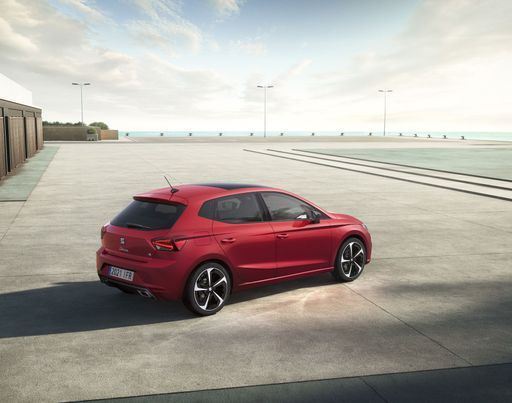
SEAT Ibiza

  • visibly more power
  • significantly quicker 0–100 km/h
  • noticeably more trunk space

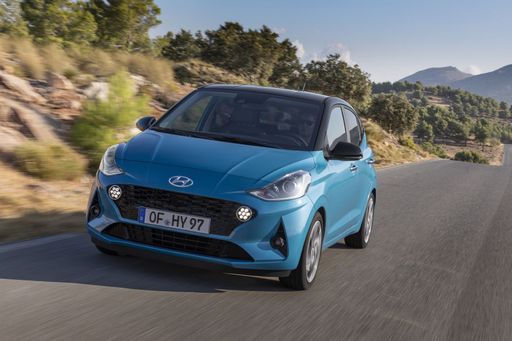
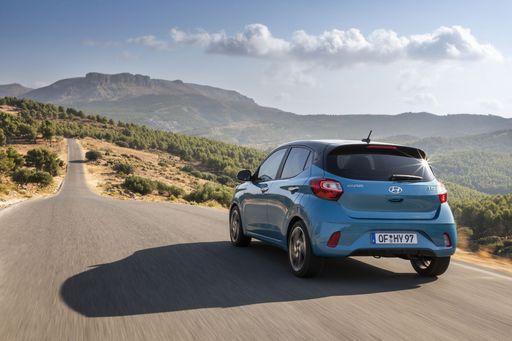
Hyundai i10

5 (1 Reviews)
rate
  • a bit cheaper
  • marginally more efficient
  • slightly lighter

All details on performance, efficiency, range and trunk space can be found in the technical comparison below – including user reviews for both models.

Ibiza

A Clash of Compact Titans: Hyundai i10 vs. SEAT Ibiza

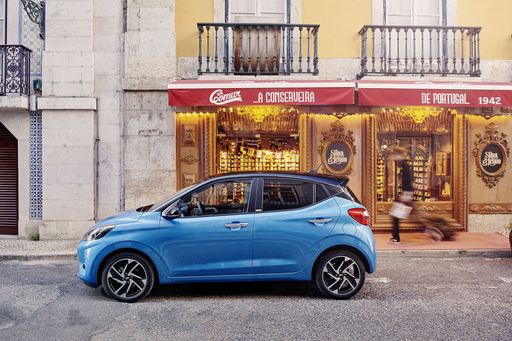
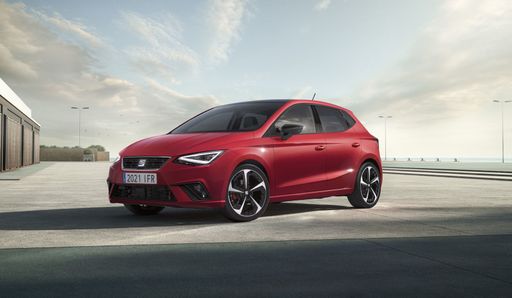
The automotive market is brimming with fierce competition in the hatchback segment, and two models that consistently capture the attention of buyers are the Hyundai i10 and the SEAT Ibiza. Both cars represent a blend of innovative technology, efficient performance, and a stylish design, appealing to consumers seeking reliable urban companions. But which one stands out in the crowded hatchback arena? Let’s dive deeper into their technical specifications and innovations to find out.
i10

Engine Performance and Efficiency

When it comes to engine performance, the Hyundai i10 offers a variety of options that cater to diverse driving preferences. The i10 is available with three and four-cylinder petrol engines, producing power outputs ranging from 63 to 90 HP. Fuel consumption is impressively low—averaging between 4.9 and 5.4 L/100km, making it an economical choice for daily commuting.

On the other hand, the SEAT Ibiza takes the spotlight with a broader range of power, featuring engines that produce between 80 to 150 HP. The efficiency of the Ibiza is largely comparable, with fuel consumption figures from 5.1 to 5.7 L/100km. This slight increase may be overshadowed by its power output, allowing for spirited driving experiences.

Ibiza

Acceleration and Top Speed

In terms of acceleration, the SEAT Ibiza secures the upper hand with impressive 0-100 km/h times ranging from 8.1 seconds to 15.3 seconds, depending on the engine variant. The Hyundai i10, while slightly less powerful, provides reasonable agility, with acceleration times between 11.4 and 18.4 seconds. The Ibiza’s top speed also leads the charge at 186 km/h to 216 km/h, compared to the i10’s maximum of 175 km/h.

i10

Dimensions and Cargo Capacity

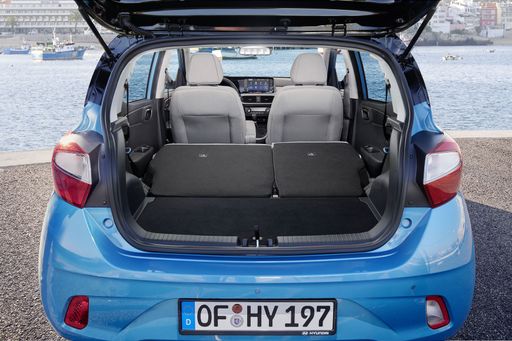
Size matters when it comes to practicality. The Hyundai i10 is compact, measuring 3670 mm in length and offering a trunk capacity of 252 liters. This makes it an excellent choice for navigating tight city streets and squeezing into small parking spaces.

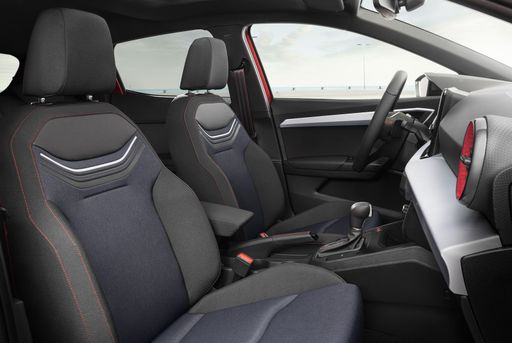
Conversely, the SEAT Ibiza is more spacious, with a length of 4059 mm and a significantly larger trunk capacity of 355 liters. This added space makes the Ibiza a more suitable option for those requiring extra room for luggage or shopping. Both models comfortably accommodate five passengers, though the interior space in the Ibiza provides a more generous feel.

Ibiza

Driving Dynamics and Innovations

Both the Hyundai i10 and SEAT Ibiza utilize front-wheel drive systems, providing stability and control during urban maneuvers. The i10 features a robust suspension system designed to absorb road imperfections, while the Ibiza is lauded for its sporty handling, giving drivers a more engaging driving experience.

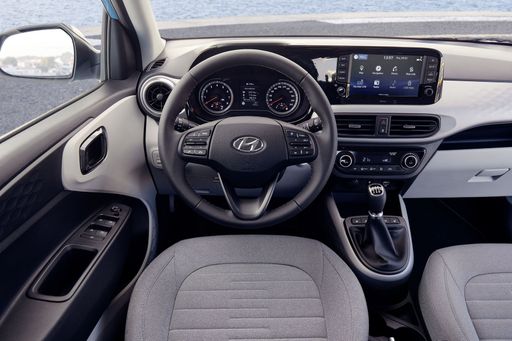
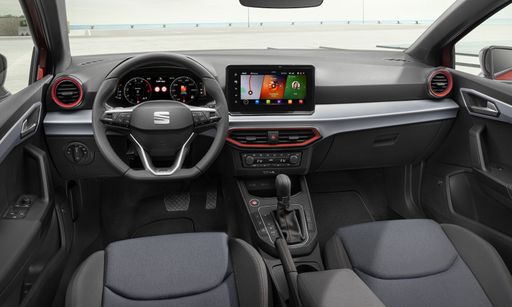
In terms of innovation, the i10 comes equipped with advanced infotainment features and safety technologies, such as lane keep assist and autonomous emergency braking. The SEAT Ibiza, however, shines with its digital cockpit and advanced connectivity options, making it highly desirable for tech-savvy consumers.

i10

Conclusion: Which Hatchback Reigns Supreme?

In the battle of the hatchbacks, both the Hyundai i10 and SEAT Ibiza have their merits. The i10 excels with its fuel efficiency and compact dimensions, making it ideal for city dwellers. Meanwhile, the Ibiza impresses with its engine performance, spacious interior, and advanced technological features.

Ultimately, the choice depends on individual preferences and priorities. If you seek an economical city car, the Hyundai i10 may be your pick. However, for those who desire a balance of performance and practicality, the SEAT Ibiza stands out. Whichever model you choose, both cars promise a fun and reliable driving experience.

Here’s where it gets real: The technical differences in detail

Ibiza

Costs and Efficiency:

Price and efficiency are key factors when choosing a car – and this is often where the real differences emerge.

Hyundai i10 is a bit cheaper – starting at 14,600 £ , while the SEAT Ibiza costs 16,800 £ . That’s a price difference of around 2,280 £.

Fuel consumption also shows a difference: the Hyundai i10 uses 4.9 L/100km and is marginally more efficient than the SEAT Ibiza with 5 L/100km. The difference is about 0.1 L/100km.

i10

Engine and Performance:

Power, torque and acceleration say a lot about how a car feels on the road. This is where you see which model delivers more driving dynamics.

When it comes to engine power, the SEAT Ibiza offers visibly more power – delivering 150 HP compared to 90 HP. That’s roughly 60 HP more horsepower.

When accelerating from 0 to 100 km/h, the SEAT Ibiza is significantly quicker – completing the sprint in 8.1 s, while the Hyundai i10 takes 11.4 s. That’s about 3.3 s quicker.

There’s also a difference in torque: the SEAT Ibiza delivers markedly more torque with 250 Nm compared to 172 Nm. That’s about 78 Nm more.

Ibiza

Space and Everyday Use:

Cabin size, boot volume and payload all play a role in everyday practicality. Here, comfort and flexibility make the difference.

Both vehicles offer seating for 5 people.

In terms of curb weight, Hyundai i10 is slightly lighter – 996 kg compared to 1,111 kg. The difference is around 115 kg.

Looking at boot space, the SEAT Ibiza offers noticeably more boot space – 355 L compared to 252 L. That’s a difference of about 103 L.

When it comes to payload, the SEAT Ibiza carries slightly more – 522 kg compared to 423 kg. That’s a difference of about 99 kg.

Who wins the race in the data check?

The SEAT Ibiza is decisively ahead in the objective data comparison.
This result only shows which model scores more points on paper – not which of the two cars feels right for you.

from £16,800
Ibiza

SEAT Ibiza

  • Engine Type : Petrol
  • Transmission : Manuel, Automatic
  • Drive Type : Front-Wheel Drive
  • Power HP : 80 - 150 HP
  • Consumption L/100km : 5 - 5.7 L/100km
SEAT Ibiza
Hyundai i10

Costs and Consumption

View detailed analysis

Engine and Performance

View detailed analysis

Dimensions and Body

View detailed analysis

SEAT Ibiza

The SEAT Ibiza is a cheeky, well-priced hatchback that blends sharp styling with a grown-up driving character, making it a smart choice for city commuters who still want a bit of fun. Inside it's practical and neatly finished, with sensible kit and easygoing manners that make everyday life less fussy — a car that doesn't try too hard but gets the job done with a smile.

details

Hyundai i10

The Hyundai i10 is a cheeky city car that squeezes big-car confidence into a pocket-friendly package, carving through tight streets with surprising composure and sensible practicality. For buyers after low fuss, sensible equipment and wallet-friendly running costs, it's a smart, no-nonsense pick that makes sense whether you're a first-time driver or need a reliable second car.

details
SEAT Ibiza
Hyundai i10

Costs and Consumption

Price
16,800 - 28,800 £
Price
14,600 - 19,000 £
Consumption L/100km
5 - 5.7 L/100km
Consumption L/100km
4.9 - 5.5 L/100km
Consumption kWh/100km
-
Consumption kWh/100km
-
Electric Range
-
Electric Range
-
Battery Capacity
-
Battery Capacity
-
co2
114 - 128 g/km
co2
110 - 124 g/km
Fuel tank capacity
-
Fuel tank capacity
36 L

Dimensions and Body

Body Type
Hatchback
Body Type
Hatchback
Seats
5
Seats
4 - 5
Doors
-
Doors
5
Curb weight
1,111 - 1,231 kg
Curb weight
996 - 1,099 kg
Trunk capacity
355 L
Trunk capacity
252 L
Length
-
Length
3,670 - 3,675 mm
Width
1,780 mm
Width
1,680 mm
Height
-
Height
1,480 - 1,483 mm
Max trunk capacity
-
Max trunk capacity
1,050 L
Payload
489 - 522 kg
Payload
344 - 423 kg

Engine and Performance

Engine Type
Petrol
Engine Type
Petrol
Transmission
Manuel, Automatic
Transmission
Manuel, Automatic
Transmission Detail
Manual Gearbox, Dual-Clutch Automatic
Transmission Detail
Manual Gearbox, Automated Manual
Drive Type
Front-Wheel Drive
Drive Type
Front-Wheel Drive
Power HP
80 - 150 HP
Power HP
63 - 90 HP
Acceleration 0-100km/h
8.1 - 15.3 s
Acceleration 0-100km/h
11.4 - 18.4 s
Max Speed
-
Max Speed
143 - 175 km/h
Torque
95 - 250 Nm
Torque
93 - 172 Nm
Number of Cylinders
3 - 4
Number of Cylinders
3 - 4
Power kW
59 - 110 kW
Power kW
46 - 66 kW
Engine capacity
999 - 1,498 cm3
Engine capacity
998 - 1,197 cm3

General

Model Year
2,025
Model Year
2,024
CO2 Efficiency Class
D, C
CO2 Efficiency Class
C, D
Brand
SEAT
Brand
Hyundai
DriveDuel uses data analysis and artificial intelligence to evaluate vehicle data and create content. Content is regularly reviewed and improved. The displayed prices are estimates based on German list prices, adjusted to the respective country’s VAT. Country-specific registration taxes are not included. This information is not legally binding.