@ SEAT S.A. / SEAT Media Center
@ Automobili Lamborghini S.p.A.
VS

SEAT Leon vs Lamborghini Urus – Which car suits you better?

Two cars, one duel: SEAT Leon meets Lamborghini Urus.
Which one wins in performance, efficiency and value for money? Find out now!

SEAT Leon

Lamborghini Urus

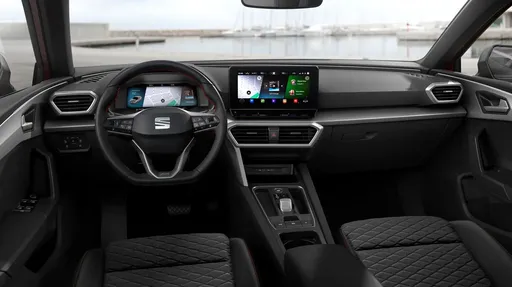
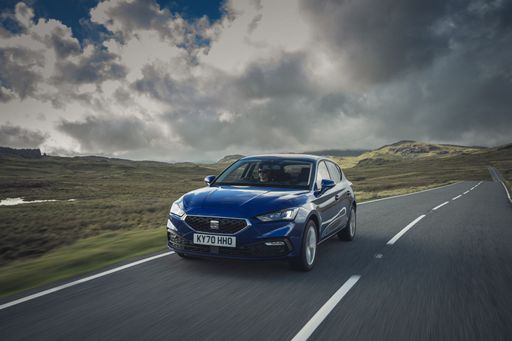
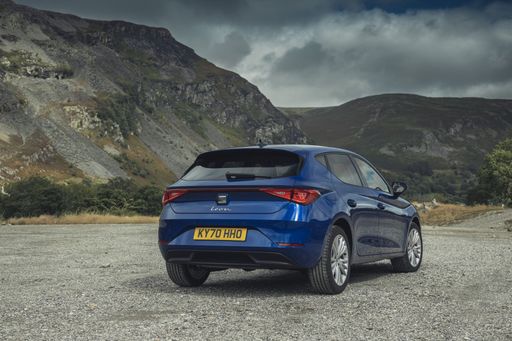
Leon @ SEAT S.A. / SEAT Media Center

León vs. Urus: A Surprising Showdown of Performance and Practicality

When comparing two seemingly different vehicles like the SEAT León and the Lamborghini Urus, the expectation is often to see a stark contrast between practicality and luxury. These two cars excel in their own right, yet for completely different reasons. Let's dive into the technicalities and innovations that define their unique characters.
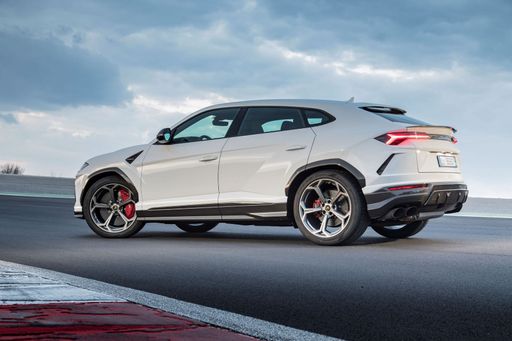
Urus @ Automobili Lamborghini S.p.A.

Performance & Power: A Tale of Two Engines

The SEAT León is available with a variety of engine types, including Petrol, Petrol MHEV, Diesel, and Plugin Hybrid. This diversity allows the León to offer a range of power outputs from 110 HP to 272 HP. Equipped with options like a dual-clutch automatic gearbox, the León is nimble, accelerating from 0-100 km/h in as fast as 7.7 seconds with a top speed of 220 km/h. Designed with efficiency in mind, its engine capacities top out at 1968 cm³.

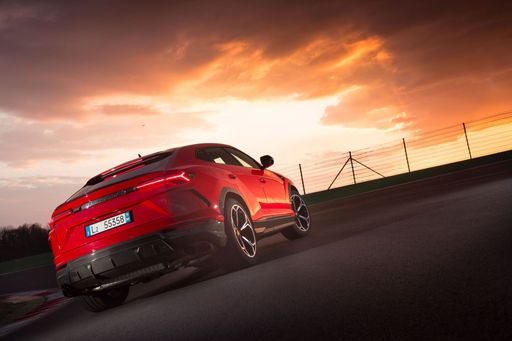
In contrast, the Lamborghini Urus breathes power and performance with its robust Petrol and Plugin Hybrid engine options. Delivering an extraordinary 666 to 800 HP, the Urus accelerates from 0-100 km/h in a mere 3.3 seconds and boasts a top speed of 312 km/h. With a larger engine capacity of 3996 cm³ and a torque reaching 950 Nm, the Urus makes its mark as an SUV built for speed and thrill.

Leon @ SEAT S.A. / SEAT Media Center

Dimensions and Design: Practicality Meets Prestige

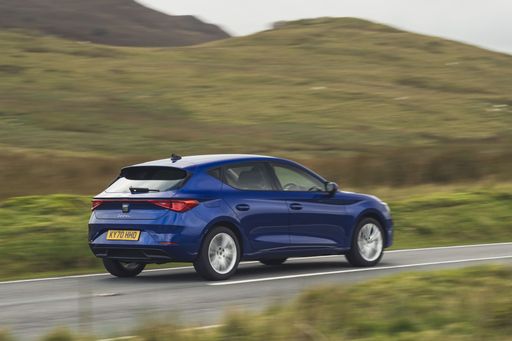
The León, with its hatchback body type, is sleek and compact. At 4368 mm in length and 1799 mm in width, it provides a comfortable ride, with ample space inside given its 5-door design. At a curb weight ranging up to 1670 kg, the SEAT León neatly balances efficiency and utility, making it a practical choice for everyday driving.

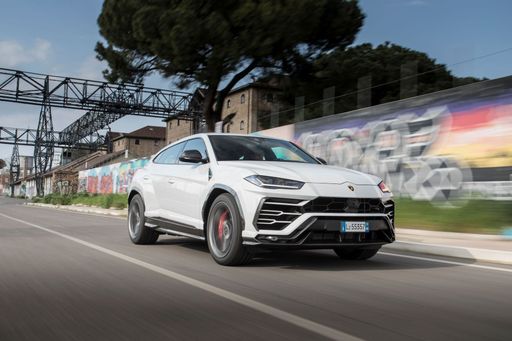
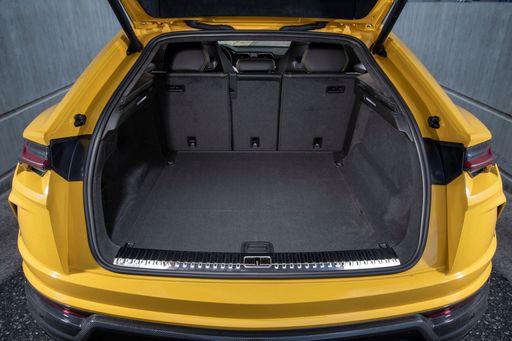
The Lamborghini Urus, true to its SUV stature, commands presence with a length of up to 5137 mm and a width of 2026 mm. Despite its size, Lamborghini has masterfully crafted a vehicle that retains luxurious elegance, offering significant interior space with trunk capacity of up to 616 liters. Even at a heavier curb weight of 2405 kg, the Urus maintains a performance-first philosophy.

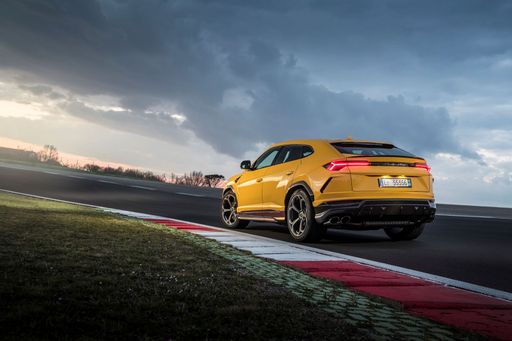
Urus @ Automobili Lamborghini S.p.A.

Innovations and Efficiency: Hybrid Power

Both vehicles embrace the future of automotive innovation through hybrid technology. The SEAT León's Plugin Hybrid model offers an electric range of 133 km, powered by a battery capacity of 19.7 kWh, making it a more environmentally friendly option. Its consumption figures reflect a commitment to efficiency, with as low as 4.5 L/100 km for some variants.

The Lamborghini Urus also joins the hybrid evolution with an electric range of 60 km. Even with consumption figures reaching 14.1 L/100 km, the Plugin Hybrid variant brings this down to a frugal 2.1 L/100 km in hybrid mode, contrasting sharply with its petrol-only models.

Leon @ SEAT S.A. / SEAT Media Center

Conclusion: Diverse Roads, Unique Journeys

The SEAT León and the Lamborghini Urus, though worlds apart in terms of philosophy, demonstrate the range of what modern automotive engineering can achieve. The León stands as a beacon for practical, efficient driving, well-suited for urban environments. Meanwhile, the Urus represents the pinnacle of luxury and performance, perfect for those who seek excitement without compromise.

In a head-to-head comparison, both vehicles carve their path in the automotive landscape, demonstrating that whether you're drawn to practicality or opulence, there is a machine built just for you.

Here’s where it gets real: The technical differences in detail

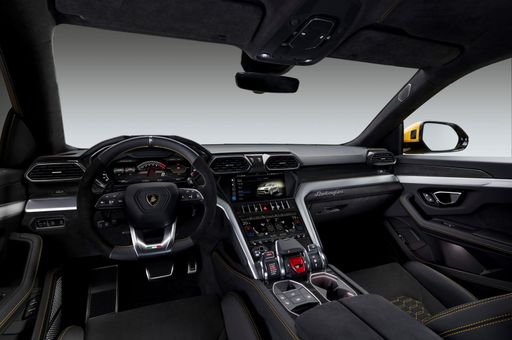
Urus @ Automobili Lamborghini S.p.A.

Costs and Efficiency:

When it comes to price and running costs, the biggest differences usually appear. This is often where you see which car fits your budget better in the long run.

SEAT Leon has a significantly advantage in terms of price – it starts at 24500 £, while the Lamborghini Urus costs 199400 £. That’s a price difference of around 174994 £.

Fuel consumption also shows a difference: SEAT Leon manages with 1.20 L and is therefore clearly more efficient than the Lamborghini Urus with 2.10 L. The difference is about 0.90 L per 100 km.

As for range, the SEAT Leon performs decisively better – achieving up to 133 km, about 73 km more than the Lamborghini Urus.

Leon @ SEAT S.A. / SEAT Media Center

Engine and Performance:

Power, torque and acceleration say a lot about how a car feels on the road. This is where you see which model delivers more driving dynamics.

When it comes to engine power, the Lamborghini Urus has a convincingly edge – offering 800 HP compared to 272 HP. That’s roughly 528 HP more horsepower.

In acceleration from 0 to 100 km/h, the Lamborghini Urus is clearly quicker – completing the sprint in 3.30 s, while the SEAT Leon takes 7.70 s. That’s about 4.40 s faster.

In terms of top speed, the Lamborghini Urus performs evident better – reaching 312 km/h, while the SEAT Leon tops out at 220 km/h. The difference is around 92 km/h.

There’s also a difference in torque: Lamborghini Urus pulls convincingly stronger with 950 Nm compared to 360 Nm. That’s about 590 Nm difference.

Urus @ Automobili Lamborghini S.p.A.

Space and Everyday Use:

Whether family car or daily driver – which one offers more room, flexibility and comfort?

Both vehicles offer seating for 5 people.

In curb weight, SEAT Leon is convincingly lighter – 1344 kg compared to 2150 kg. The difference is around 806 kg.

In terms of boot space, the Lamborghini Urus offers distinct more room – 616 L compared to 380 L. That’s a difference of about 236 L.

In maximum load capacity, the Lamborghini Urus performs somewhat better – up to 1596 L, which is about 295 L more than the SEAT Leon.

When it comes to payload, SEAT Leon evident takes the win – 521 kg compared to 350 kg. That’s a difference of about 171 kg.

Who comes out on top?

Overall, the SEAT Leon shows itself to be leaves the rival little chance and secures the title of DriveDuel Champion.
It convinces with the more balanced overall package and proves to be the more versatile choice for everyday use.

SEAT Leon
Lamborghini Urus

Costs and Consumption

View detailed analysis

Engine and Performance

View detailed analysis

Dimensions and Body

View detailed analysis
from about £24,500
Leon @ SEAT S.A. / SEAT Media Center

SEAT Leon

  • Engine Type : Petrol, Petrol MHEV, Diesel, Plugin Hybrid
  • Transmission : Manuel, Automatic
  • Drive Type : Front-Wheel Drive
  • Power HP : 116 - 272 HP
  • Consumption L/100km : 1.2 - 5.5 L
  • Electric Range : 133 km

SEAT Leon

SEAT Leon pairs sharp, modern styling with a cabin that's sensible and slightly sporty, making it an appealing choice for buyers who want flair without fuss. It drives with eager composure and offers a neat balance of comfort and agility, so you get everyday usability with a wink of fun.

details

Lamborghini Urus

The Lamborghini Urus wears its raging bull badge with SUV practicality, serving supercar drama in a package you can live with every day. It hustles through corners like a sports car while hauling weekend gear with unapologetic style, perfect for buyers who crave attention and usable performance.

details
SEAT Leon
Lamborghini Urus
Leon @ SEAT S.A. / SEAT Media Center
Urus @ Automobili Lamborghini S.p.A.

Costs and Consumption

Price
24500 - 36400 £
Price
199400 - 257100 £
Consumption L/100km
1.2 - 5.5 L
Consumption L/100km
2.1 - 14.1 L
Consumption kWh/100km
-
Consumption kWh/100km
-
Electric Range
133 km
Electric Range
60 km
Battery Capacity
19.70 kWh
Battery Capacity
-
co2
27 - 126 g/km
co2
51 - 320 g/km
Fuel tank capacity
40 - 45 L
Fuel tank capacity
85 L

Dimensions and Body

Body Type
Hatchback
Body Type
SUV
Seats
5
Seats
5
Doors
5
Doors
5
Curb weight
1344 - 1657 kg
Curb weight
2150 - 2405 kg
Trunk capacity
270 - 380 L
Trunk capacity
454 - 616 L
Length
4368 mm
Length
5112 - 5137 mm
Width
1799 mm
Width
2018 - 2026 mm
Height
1442 - 1460 mm
Height
1618 - 1638 mm
Max trunk capacity
1187 - 1301 L
Max trunk capacity
1596 L
Payload
473 - 521 kg
Payload
100 - 350 kg

Engine and Performance

Engine Type
Petrol, Petrol MHEV, Diesel, Plugin Hybrid
Engine Type
Petrol, Plugin Hybrid
Transmission
Manuel, Automatic
Transmission
Automatic
Transmission Detail
Manual Gearbox, Dual-Clutch Automatic
Transmission Detail
Automatic Gearbox
Drive Type
Front-Wheel Drive
Drive Type
All-Wheel Drive
Power HP
116 - 272 HP
Power HP
666 - 800 HP
Acceleration 0-100km/h
7.7 - 10.5 s
Acceleration 0-100km/h
3.3 - 3.5 s
Max Speed
197 - 220 km/h
Max Speed
305 - 312 km/h
Torque
220 - 360 Nm
Torque
850 - 950 Nm
Number of Cylinders
4
Number of Cylinders
8
Power kW
85 - 200 kW
Power kW
490 - 588 kW
Engine capacity
1498 - 1968 cm3
Engine capacity
3996 cm3

General

Model Year
2024 - 2025
Model Year
2022 - 2024
CO2 Efficiency Class
D, B
CO2 Efficiency Class
G, B
Brand
SEAT
Brand
Lamborghini
What drive types are available for the SEAT Leon?

The SEAT Leon is available as Front-Wheel Drive.

The prices and data displayed are estimates based on German list prices and may vary by country. This information is not legally binding.

do not click