@ Peugeot / Stellantis Media
@ SEAT S.A. / SEAT Media Center
VS

Peugeot 208 vs SEAT Leon – Which car suits you better?

Two cars, one duel: Peugeot 208 meets SEAT Leon.
Which one wins in performance, efficiency and value for money? Find out now!

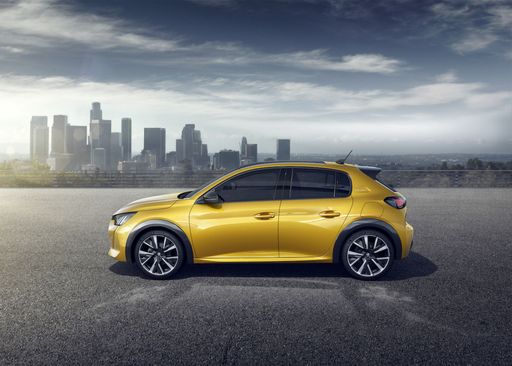
208 @ Peugeot / Stellantis Media

Peugeot 208 vs SEAT León: A Compact Duel

When it comes to choosing between the versatile Peugeot 208 and the dynamic SEAT León, car enthusiasts often face a dilemma between style, performance, and efficiency. Both are leading contenders in the compact hatchback category, but how do they stack up against each other? Let’s dive into the technical aspects and innovative features of these two automotive icons.
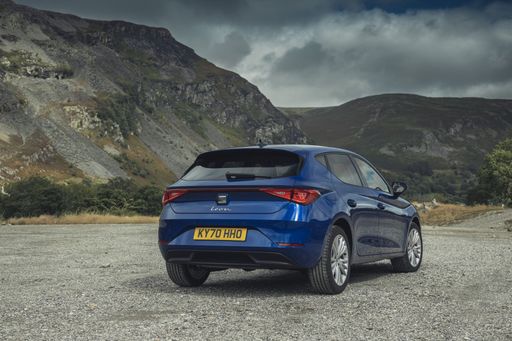
Leon @ SEAT S.A. / SEAT Media Center

Design & Dimensions

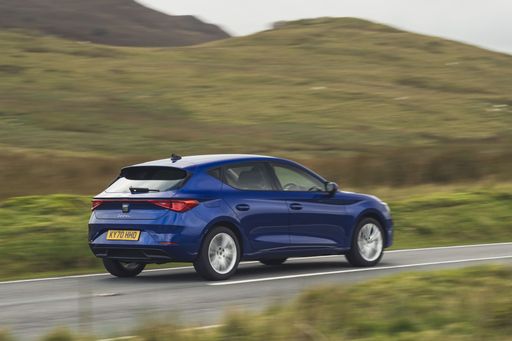
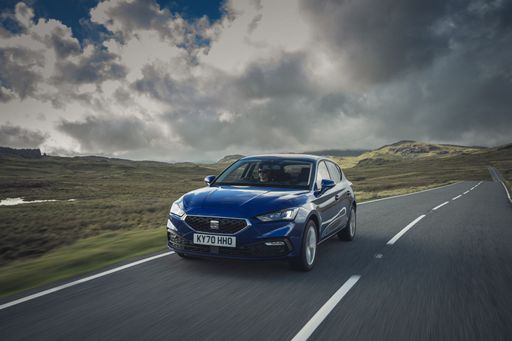
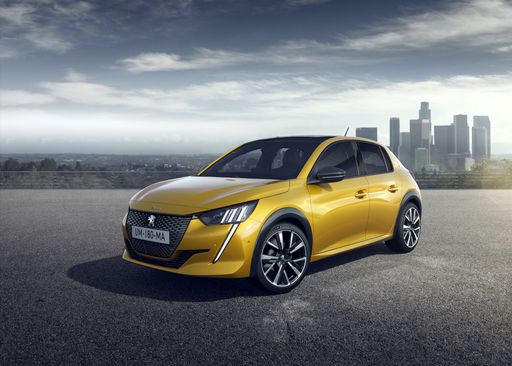
The Peugeot 208 is a trendsetter with its sleek design, measuring 4055 mm in length, 1745 mm in width, and 1430 mm in height. The SEAT León, meanwhile, offers a slightly larger frame (4368 mm x 1799 mm x 1460 mm), contributing to its spacious interior. Both models feature a 5-door hatchback design, providing easy access and practicality for daily driving.

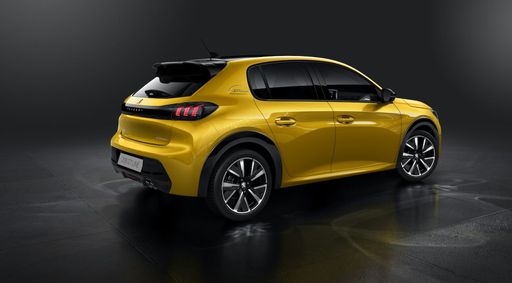
208 @ Peugeot / Stellantis Media

Engine Options & Powertrain

Both the 208 and León offer a range of engine choices catering to various preferences. The Peugeot 208 comes equipped with petrol, mild hybrid electric vehicle (MHEV), and electric engines. Its power output ranges between 101 HP and 156 HP, depending on the variant, coupled with options for automatic or manual transmissions. A notable highlight is its electric variant, which boasts an impressive range of up to 410 km on a full charge.

On the other hand, the SEAT León offers an even broader spectrum with petrol, MHEV, diesel, and plug-in hybrid options. Power ranges from 110 HP to an exhilarating 272 HP in its sportiest models. Additionally, the León’s plug-in hybrid variant provides an electric range of 133 km, making it an enticing choice for eco-conscious drivers.

Leon @ SEAT S.A. / SEAT Media Center

Performance & Efficiency

When it comes to performance, both vehicles impress. The 208 delivers a smooth drive with its front-wheel-drive system, achieving a 0-100 km/h acceleration between 8.3 and 10.9 seconds. Its electric variant provides a torque of up to 260 Nm, ensuring robust acceleration and responsiveness.

The León, boasting a higher power output on its top models, accelerates from 0-100 km/h in as little as 7.7 seconds, thanks to its potent 330 Nm of torque. While its petrol and diesel variants offer traditional fuel efficiency, its plug-in hybrid leads with a consumption as low as 0.4 L/100 km.

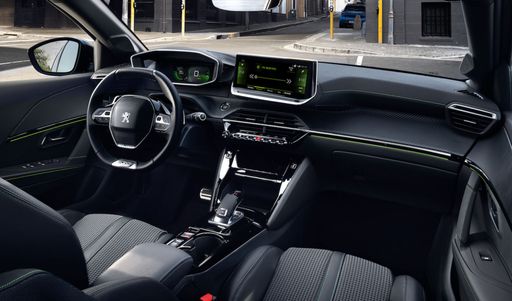
208 @ Peugeot / Stellantis Media

Interior & Comfort

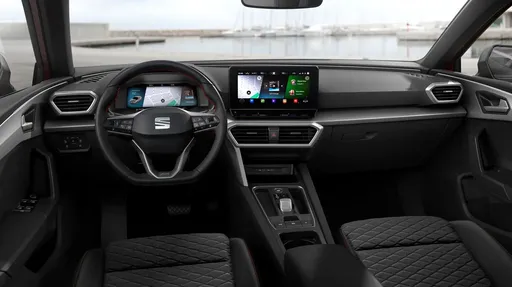
Both models prioritize comfort and practicality. The Peugeot 208 features a modern interior design, complete with a 5-seat capacity and ample technological amenities. Its trunk offers a reasonable capacity of 309 liters, lending itself well to everyday use.

In comparison, the SEAT León provides a larger trunk capacity of 380 liters, enhancing its utility for family outings and road trips. The cabin is spacious and well-appointed, reflecting SEAT's focus on driver comfort and connectivity.

Leon @ SEAT S.A. / SEAT Media Center

Safety & Technology

Safety and technology are front and center in these compact hatchbacks. The Peugeot 208 offers advanced driver-assistance systems such as lane-keeping assist, adaptive cruise control, and parking assistance. Its electric powertrain models boast high efficiency, classified under impressive CO2 efficiency classes ranging up to A.

The SEAT León matches this with its array of tech-savvy features, including a digital cockpit, advanced navigation systems, and an impressive suite of safety options tailored to enhance driving confidence.

208 @ Peugeot / Stellantis Media

Final Verdict

Choosing between the Peugeot 208 and SEAT León largely depends on personal preferences and intended use. The 208 excels in electric range and modern aesthetics, making it a great choice for urban environments. Conversely, the León offers greater power options and interior space, catering to those who value performance and practicality.

Regardless of choice, both vehicles promise a fulfilling driving experience, showcasing the latest in automotive technology and design.

Here’s where it gets real: The technical differences in detail

Leon @ SEAT S.A. / SEAT Media Center

Costs and Efficiency:

Price and efficiency are often the first things buyers look at. Here it becomes clear which model has the long-term edge – whether at the pump, the plug, or in purchase price.

Peugeot 208 has a slightly advantage in terms of price – it starts at 20700 £, while the SEAT Leon costs 24500 £. That’s a price difference of around 3772 £.

Fuel consumption also shows a difference: SEAT Leon manages with 1.20 L and is therefore significantly more efficient than the Peugeot 208 with 4.50 L. The difference is about 3.30 L per 100 km.

As for range, the Peugeot 208 performs decisively better – achieving up to 432 km, about 299 km more than the SEAT Leon.

Engine and Performance:

Power, torque and acceleration are the classic benchmarks for car enthusiasts – and here, some clear differences start to show.

When it comes to engine power, the SEAT Leon has a convincingly edge – offering 272 HP compared to 156 HP. That’s roughly 116 HP more horsepower.

In acceleration from 0 to 100 km/h, the SEAT Leon is barely noticeable quicker – completing the sprint in 7.70 s, while the Peugeot 208 takes 8.30 s. That’s about 0.60 s faster.

In terms of top speed, the SEAT Leon performs slight better – reaching 220 km/h, while the Peugeot 208 tops out at 200 km/h. The difference is around 20 km/h.

There’s also a difference in torque: SEAT Leon pulls distinct stronger with 360 Nm compared to 270 Nm. That’s about 90 Nm difference.

Space and Everyday Use:

Cabin size, boot volume and payload all play a role in everyday practicality. Here, comfort and flexibility make the difference.

Both vehicles offer seating for 5 people.

In curb weight, Peugeot 208 is to a small extent lighter – 1165 kg compared to 1344 kg. The difference is around 179 kg.

In terms of boot space, the SEAT Leon offers hardly perceptible more room – 380 L compared to 352 L. That’s a difference of about 28 L.

In maximum load capacity, the SEAT Leon performs to a small extent better – up to 1301 L, which is about 138 L more than the Peugeot 208.

When it comes to payload, SEAT Leon slightly takes the win – 521 kg compared to 430 kg. That’s a difference of about 91 kg.

Who comes out on top?

Overall, the SEAT Leon shows itself to be outperforms in nearly all aspects and secures the title of DriveDuel Champion.
It convinces with the more balanced overall package and proves to be the more versatile choice for everyday use.

from about £24,500
Leon @ SEAT S.A. / SEAT Media Center

SEAT Leon

  • Engine Type : Petrol, Petrol MHEV, Diesel, Plugin Hybrid
  • Transmission : Manuel, Automatic
  • Drive Type : Front-Wheel Drive
  • Power HP : 116 - 272 HP
  • Consumption L/100km : 1.2 - 5.5 L
  • Electric Range : 133 km

Peugeot 208

The Peugeot 208 feels like a city-savvy fox: compact, stylish and surprisingly grown-up, with a cabin that punches above its weight and enough personality to make daily commutes a little less boring. It’s a smart pick for buyers who want chic practicality without the showroom bluster — easy to park, thrifty to run and oddly fun when the road tightens up.

details

SEAT Leon

SEAT Leon pairs sharp, modern styling with a cabin that's sensible and slightly sporty, making it an appealing choice for buyers who want flair without fuss. It drives with eager composure and offers a neat balance of comfort and agility, so you get everyday usability with a wink of fun.

details
Peugeot 208
SEAT Leon
208 @ Peugeot / Stellantis Media
Leon @ SEAT S.A. / SEAT Media Center

Costs and Consumption

Price
20700 - 35200 £
Price
24500 - 36400 £
Consumption L/100km
4.5 - 5.2 L
Consumption L/100km
1.2 - 5.5 L
Consumption kWh/100km
14.1 - 15.4 kWh
Consumption kWh/100km
-
Electric Range
362 - 432 km
Electric Range
133 km
Battery Capacity
46 - 51 kWh
Battery Capacity
19.70 kWh
co2
0 - 117 g/km
co2
27 - 126 g/km
Fuel tank capacity
44 L
Fuel tank capacity
40 - 45 L

Dimensions and Body

Body Type
Hatchback
Body Type
Hatchback
Seats
5
Seats
5
Doors
5
Doors
5
Curb weight
1165 - 1530 kg
Curb weight
1344 - 1657 kg
Trunk capacity
309 - 352 L
Trunk capacity
270 - 380 L
Length
4055 mm
Length
4368 mm
Width
1745 mm
Width
1799 mm
Height
1430 mm
Height
1442 - 1460 mm
Max trunk capacity
1118 - 1163 L
Max trunk capacity
1187 - 1301 L
Payload
380 - 430 kg
Payload
473 - 521 kg

Engine and Performance

Engine Type
Petrol, Electric, Petrol MHEV
Engine Type
Petrol, Petrol MHEV, Diesel, Plugin Hybrid
Transmission
Manuel, Automatic
Transmission
Manuel, Automatic
Transmission Detail
Manual Gearbox, Reduction Gearbox, Dual-Clutch Automatic
Transmission Detail
Manual Gearbox, Dual-Clutch Automatic
Drive Type
Front-Wheel Drive
Drive Type
Front-Wheel Drive
Power HP
101 - 156 HP
Power HP
116 - 272 HP
Acceleration 0-100km/h
8.3 - 10.9 s
Acceleration 0-100km/h
7.7 - 10.5 s
Max Speed
150 - 200 km/h
Max Speed
197 - 220 km/h
Torque
205 - 270 Nm
Torque
220 - 360 Nm
Number of Cylinders
3
Number of Cylinders
4
Power kW
74 - 115 kW
Power kW
85 - 200 kW
Engine capacity
1199 cm3
Engine capacity
1498 - 1968 cm3

General

Model Year
2023 - 2025
Model Year
2024 - 2025
CO2 Efficiency Class
D, A, C
CO2 Efficiency Class
D, B
Brand
Peugeot
Brand
SEAT
What drive types are available for the Peugeot 208?

The Peugeot 208 is offered with Front-Wheel Drive.

The prices and data displayed are estimates based on German list prices and may vary by country. This information is not legally binding.