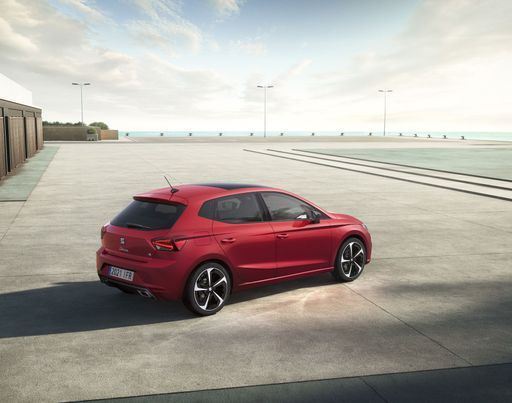
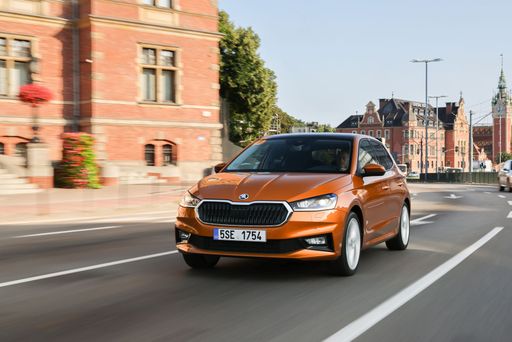
VS

Skoda Fabia vs SEAT Ibiza comparison

Compare performance (177 HP vs 150 HP), boot space and price (17,300 £ vs 16,800 £ ) at a glance. Find out which car is the better choice for you – Skoda Fabia or SEAT Ibiza?

Skoda Fabia vs SEAT Ibiza: Key differences

Skoda Fabia

5 (1 Reviews)
rate
  • somewhat more power
  • marginally more efficient
  • only slightly quicker 0–100 km/h
  • marginally more trunk space

SEAT Ibiza

  • marginally cheaper
  • barely lighter
Fabia

Head-to-Head Snapshot

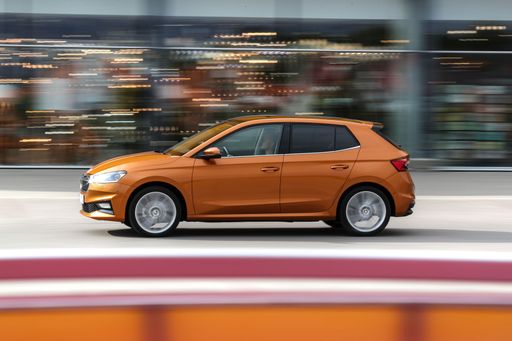
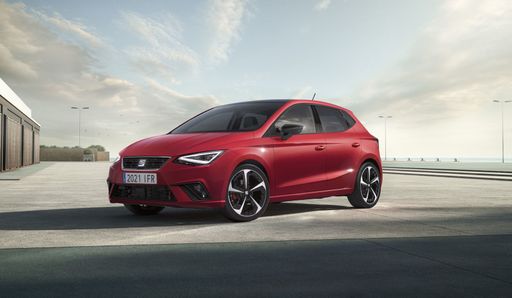
The SEAT Ibiza and the Skoda Fabia face off in a classic small-car duel — think city-savvy hatchback practicality versus sharp styling and personality, a tidy comparison for anyone shopping the supermini segment. The SEAT Ibiza VS Skoda Fabia fight over the same patch of tarmac but they approach it with different attitudes: one aims to wink at you in the mirror, the other quietly gets on with the job. If you type either name into a search you’ll find plenty of similar numbers, but what matters to buyers is how each one lives day-to-day. This page peels back the specs and looks at what those differences actually mean for owners, not just for spreadsheets.
Ibiza

Character and Road Manners

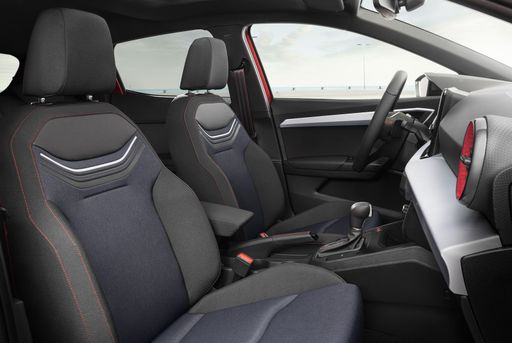
The SEAT Ibiza has a cheeky, sporty edge that makes it feel livelier on twisty roads and more rewarding to hustle through traffic, while the Skoda Fabia projects calm, measured competence that rewards smoothness over theatrics. Ibiza’s sharper steering and tauter setup give it personality, whereas Fabia’s softer tuning and composed ride suggest a focus on comfort and predictability. Both moods are deliberate: SEAT aims for emotion, Skoda for utility, and each choice signals what you value behind the wheel. Expect the Ibiza to entertain and the Fabia to reassure — two different philosophies dressed in similar-sized bodies.

Fabia

Daily Life and Practicalities

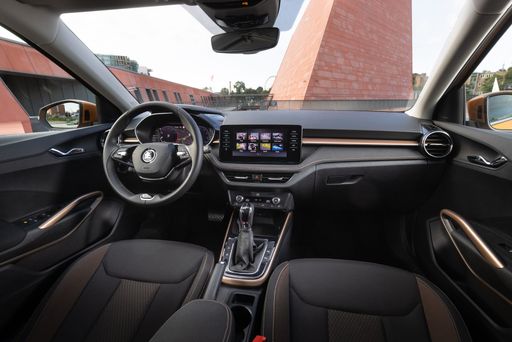
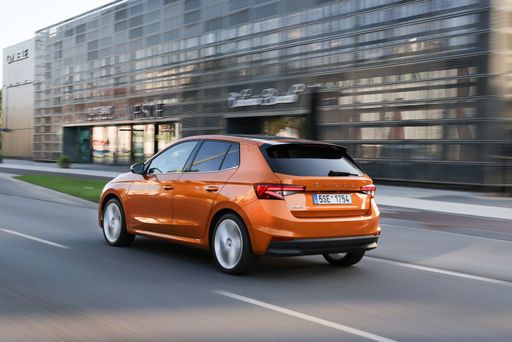
On the school run, supermarket haul and motorway run the two small cars behave differently: the Skoda Fabia leans into clever packaging and usable space, making it an easy living companion for families or a regular traveller, while the SEAT Ibiza trims and proportions favour a more compact, style-first life in the city. Ibiza’s cabin feels snappier and slightly more driver-focused, but Fabia’s practicality shows up when you load luggage, pushchairs or weekly shopping. Both are easy to park and economical to run, yet the real-world trade-off is clear — pick Fabia if you prize usable interior and honest luggage flexibility, pick Ibiza if you prefer a car that’s more about presence and driving feel. That everyday difference is what separates owners after a year, not the badge on the grille.

Ibiza

Why you’ll tell your friends you chose it

If you own a SEAT Ibiza you’ll probably mention how sharp it looks and how engaging it is to drive — it’s the kind of small car that advertises your taste without shouting about it. Meanwhile owners of the Skoda Fabia will more likely talk about how little fuss it is, how much fits in the boot and how sensible it feels every day, the kind of recommendation that comes from lived experience rather than impulse. Both stories work: Ibiza sells on charisma and the thrill of a compact, nimble drive; Fabia sells on reliability, space and low drama. Which tale you prefer is the real buying decision — image and spark, or practical confidence.

Fabia

Who should pick the SEAT Ibiza

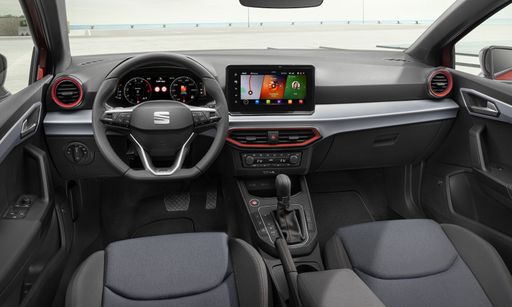
Choose the SEAT Ibiza if you’re drawn to sharp styling, a lively steering feel and a cabin that feels younger and more spirited than practical-minded rivals; it suits urban commuters and style-conscious buyers who want personality as well as utility. The Ibiza rewards short, punchy commutes and weekend escapes where driving enjoyment matters, and it’s the pick for someone who cares about how the car represents them as much as how it functions. It’s less about maximum cargo space and more about daily engagement and looks that age well in city traffic. If you want a small car that’s a bit of an extension of your personality, Ibiza fits that brief neatly.

Ibiza

Who should pick the Skoda Fabia (and why the Ibiza still matters)

The Skoda Fabia is the sensible engineer’s choice: roomy where it counts, easy to live with and aimed at drivers who prioritise low fuss and clear usefulness for family life or long-distance commuting. Fabia’s strength is in making everyday tasks simpler — more luggage space, practical layouts and a composed ride that soothes motorway miles, which appeals to budget-conscious families and pragmatic buyers. That doesn’t make the SEAT Ibiza irrelevant — buyers who value flare and a more involving drive will still find Ibiza the more appealing companion. Read on through the detailed delta to see where those lived differences show up on paper and in the weekly run-around.

Here’s where it gets real: The technical differences in detail

Fabia

Costs and Efficiency:

Price and efficiency are often the first things buyers look at. Here it becomes clear which model has the long-term edge – whether at the pump, the plug, or in purchase price.

SEAT Ibiza is marginally cheaper – starting at 16,800 £ , while the Skoda Fabia costs 17,300 £ . That’s a price difference of around 463 £.

Fuel consumption also shows a difference: the Skoda Fabia uses 4.9 L/100km and is marginally more efficient than the SEAT Ibiza with 5 L/100km. The difference is about 0.1 L/100km.

Ibiza

Engine and Performance:

Power, torque and acceleration are the classic benchmarks for car enthusiasts – and here, some clear differences start to show.

When it comes to engine power, the Skoda Fabia offers somewhat more power – delivering 177 HP compared to 150 HP. That’s roughly 27 HP more horsepower.

When accelerating from 0 to 100 km/h, the Skoda Fabia is only slightly quicker – completing the sprint in 7.4 s, while the SEAT Ibiza takes 8.1 s. That’s about 0.7 s quicker.

Both models offer the same torque – 250 Nm.

Fabia

Space and Everyday Use:

Beyond pure performance, interior space and usability matter most in daily life. This is where you see which car is more practical and versatile.

Both vehicles offer seating for 5 people.

In terms of curb weight, SEAT Ibiza is barely lighter – 1,111 kg compared to 1,143 kg. The difference is around 32 kg.

Looking at boot space, the Skoda Fabia offers marginally more boot space – 380 L compared to 355 L. That’s a difference of about 25 L.

When it comes to payload, the SEAT Ibiza carries somewhat more – 522 kg compared to 437 kg. That’s a difference of about 85 kg.

Who wins the race in the data check?

The Skoda Fabia comes out modestly ahead in the objective data comparison.
This result only shows which model scores more points on paper – not which of the two cars feels right for you.

from £17,300
Fabia

Skoda Fabia

  • Engine Type : Petrol
  • Transmission : Manuel, Automatic
  • Drive Type : Front-Wheel Drive
  • Power HP : 80 - 177 HP
  • Consumption L/100km : 4.9 - 5.6 L/100km
Skoda Fabia
SEAT Ibiza

Costs and Consumption

View detailed analysis

Engine and Performance

View detailed analysis

Dimensions and Body

View detailed analysis

Skoda Fabia

The Skoda Fabia is a clever, no-nonsense small car that turns everyday chores into a breeze thanks to smart packaging and a surprisingly roomy cabin. It won’t set your pulses racing, but it’s a consistently sensible choice — reliable, easy to live with and blessed with a few neat tricks that make city life less faff.

details

SEAT Ibiza

The SEAT Ibiza is a cheeky, well-priced hatchback that blends sharp styling with a grown-up driving character, making it a smart choice for city commuters who still want a bit of fun. Inside it's practical and neatly finished, with sensible kit and easygoing manners that make everyday life less fussy — a car that doesn't try too hard but gets the job done with a smile.

details
Skoda Fabia
SEAT Ibiza

Costs and Consumption

Price
17,300 - 30,500 £
Price
16,800 - 28,800 £
Consumption L/100km
4.9 - 5.6 L/100km
Consumption L/100km
5 - 5.7 L/100km
Consumption kWh/100km
-
Consumption kWh/100km
-
Electric Range
-
Electric Range
-
Battery Capacity
-
Battery Capacity
-
co2
112 - 126 g/km
co2
114 - 128 g/km
Fuel tank capacity
40 L
Fuel tank capacity
-

Dimensions and Body

Body Type
Hatchback
Body Type
Hatchback
Seats
5
Seats
5
Doors
5
Doors
-
Curb weight
1,143 - 1,278 kg
Curb weight
1,111 - 1,231 kg
Trunk capacity
380 L
Trunk capacity
355 L
Length
4,108 - 4,137 mm
Length
-
Width
1,780 mm
Width
1,780 mm
Height
1,458 - 1,459 mm
Height
-
Max trunk capacity
1,190 L
Max trunk capacity
-
Payload
402 - 437 kg
Payload
489 - 522 kg

Engine and Performance

Engine Type
Petrol
Engine Type
Petrol
Transmission
Manuel, Automatic
Transmission
Manuel, Automatic
Transmission Detail
Manual Gearbox, Dual-Clutch Automatic
Transmission Detail
Manual Gearbox, Dual-Clutch Automatic
Drive Type
Front-Wheel Drive
Drive Type
Front-Wheel Drive
Power HP
80 - 177 HP
Power HP
80 - 150 HP
Acceleration 0-100km/h
7.4 - 15.7 s
Acceleration 0-100km/h
8.1 - 15.3 s
Max Speed
175 - 228 km/h
Max Speed
-
Torque
93 - 250 Nm
Torque
95 - 250 Nm
Number of Cylinders
3 - 4
Number of Cylinders
3 - 4
Power kW
59 - 130 kW
Power kW
59 - 110 kW
Engine capacity
999 - 1,498 cm3
Engine capacity
999 - 1,498 cm3

General

Model Year
2,025
Model Year
2,025
CO2 Efficiency Class
D, C
CO2 Efficiency Class
D, C
Brand
Skoda
Brand
SEAT
DriveDuel uses data analysis and artificial intelligence to evaluate vehicle data and create content. Content is regularly reviewed and improved. The displayed prices are estimates based on German list prices, adjusted to the respective country’s VAT. Country-specific registration taxes are not included. This information is not legally binding.