VS

Skoda Scala vs Hyundai i30 Wagon comparison

Compare performance (150 HP vs 150 HP), boot space and price (21,400 £ vs 25,400 £ ) at a glance. Find out which car is the better choice for you – Skoda Scala or Hyundai i30 Wagon?

Skoda Scala vs Hyundai i30 Wagon: Key differences

Skoda Scala

4.9 (7 Reviews)
rate
  • a bit cheaper
  • a bit more efficient
  • somewhat quicker 0–100 km/h
  • slightly lighter

Hyundai i30 Wagon

4.3 (2 Reviews)
rate
  • markedly more trunk space

All details on performance, efficiency, range and trunk space can be found in the technical comparison below – including user reviews for both models.

Scala

Hyundai i30 Kombi vs. Skoda Scala: The Battle of Practicality and Style

When it comes to the compact car segment, two key players stand out: the Hyundai i30 Kombi and the Skoda Scala. Both vehicles offer a blend of style, efficiency, and practicality, making them prime contenders for buyers seeking a reliable daily driver. In this comparison, we will delve into their technical specifications and innovative features, helping you decide which model suits your needs best.
i30 Wagon

Design and Dimensions

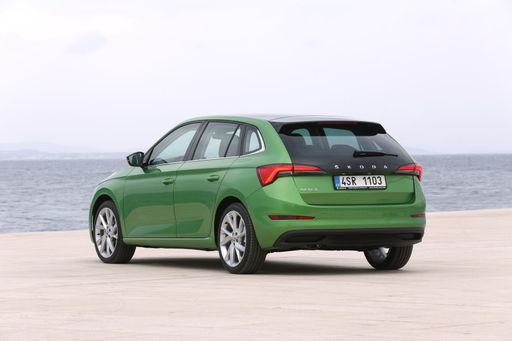
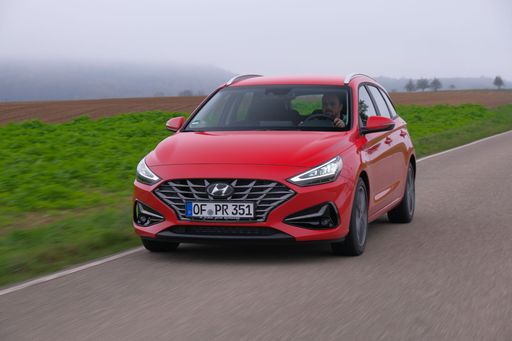
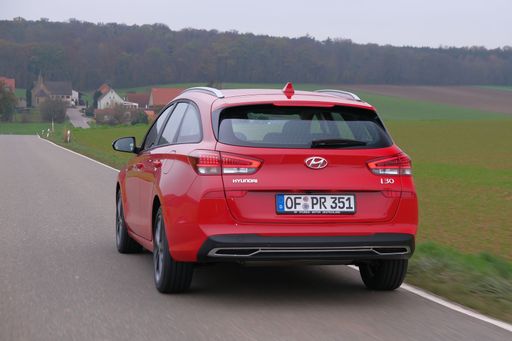
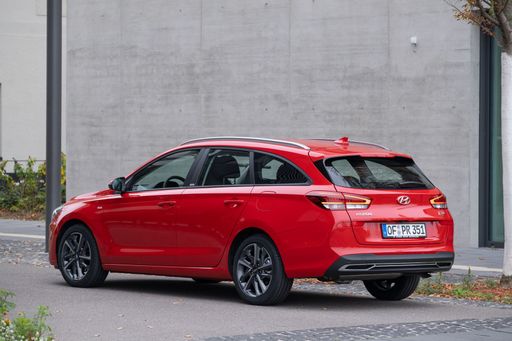
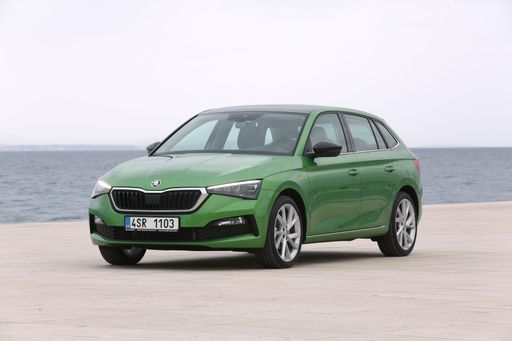
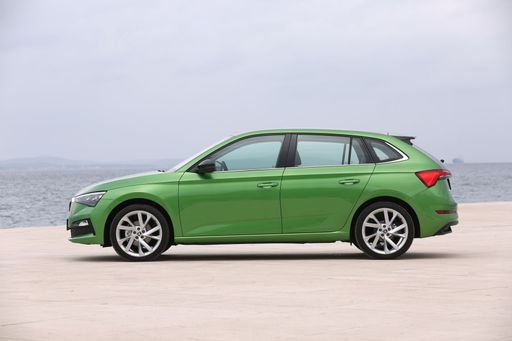
The Hyundai i30 Kombi, with its wagon body type, boasts a length of 4585 mm and a height of 1475 mm, giving it a commanding yet elegant presence on the road. In contrast, the Skoda Scala, classified as a hatchback, measures 4362 mm in length and 1514 mm in height. While the i30 Kombi offers a sportier, elongated silhouette, the Scala's compact design caters to urban environments and tight parking spaces.

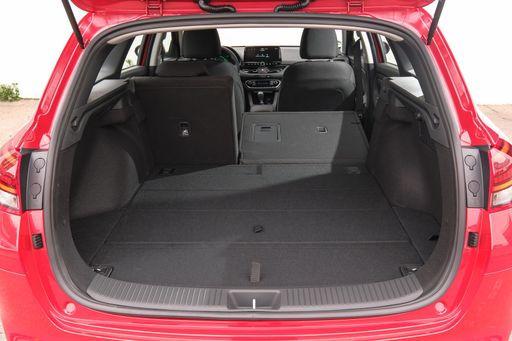
Both vehicles support five doors and accommodate up to five passengers comfortably. However, when it comes to trunk capacity, the i30 Kombi leads the way with a spacious 602 liters, compared to the Scala’s 467 liters. This additional cargo space can be a decisive factor for families or those requiring extra storage.

Scala

Powertrains and Efficiency

The performance philosophy behind both models reflects their manufacturers’ desires to strike a balance between power and efficiency. The i30 Kombi offers a choice of petrol engines, with power outputs ranging from 100 HP to 140 HP and a fuel consumption of 5.6 to 5.9 L/100km. Meanwhile, the Scala offers a range of petrol options that produce between 95 HP and 150 HP, boasting even better fuel efficiency, with consumption figures between 5.1 and 5.6 L/100km.

Both cars utilize a front-wheel-drive layout and provide manual or automatic transmission options, ensuring that drivers can choose their preferred driving style. While the i30 Kombi can achieve a 0-100 km/h acceleration time of 9.8 seconds, the Scala dramatically outperforms it with some variants achieving this sprint in just 8.2 seconds.

i30 Wagon

Driving Dynamics and Comfort

The i30 Kombi is engineered for a comfortable ride, with a well-sorted suspension setup that absorbs road imperfections efficiently, making it an excellent choice for long journeys. In contrast, the Skoda Scala emphasizes sportier performance, providing a driving experience that is both engaging and responsive, particularly in its higher power variants.

In terms of interior comfort, both vehicles feature spacious cabins with modern finishes. However, the i30 Kombi takes the lead in trunk capacity, providing greater utility for family outings or shopping trips.

Scala

Safety and Technology Innovations

Safety features are paramount in this segment, and both Hyundai and Skoda have equipped their models with advanced safety technologies. The i30 Kombi offers a comprehensive suite including lane-keeping assist, adaptive cruise control, and a robust airbag system. Similarly, the Scala boasts exemplary safety ratings, complete with features such as front assist and adaptive lighting systems.

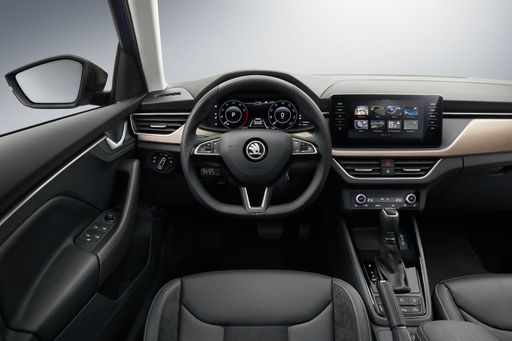
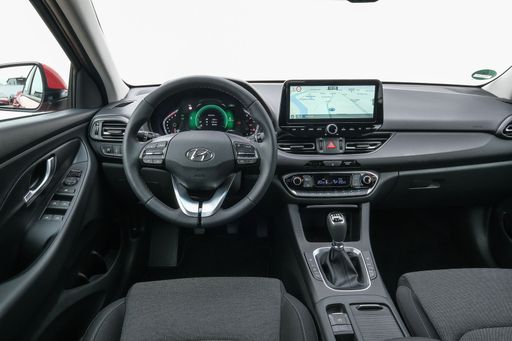
In terms of infotainment, both vehicles come with modern multimedia systems, supporting Apple CarPlay and Android Auto. The i30 Kombi offers an intuitive touchscreen interface, while the Scala enhances connectivity with user-friendly integration features, allowing drivers to stay connected on the go.

i30 Wagon

Conclusion: Which One to Choose?

The choice between the Hyundai i30 Kombi and the Skoda Scala ultimately comes down to individual needs and preferences. If practicality and cargo space are your top priorities, the i30 Kombi stands out as the more versatile option. Conversely, if performance and servicing a compact form are higher on your list, the Skoda Scala may be the better fit. Both cars exemplify quality engineering, making them worthy contenders in the competitive compact vehicle market.

Here’s where it gets real: The technical differences in detail

Scala

Costs and Efficiency:

When it comes to price and running costs, the biggest differences usually appear. This is often where you see which car fits your budget better in the long run.

Skoda Scala is a bit cheaper – starting at 21,400 £ , while the Hyundai i30 Wagon costs 25,400 £ . That’s a price difference of around 3,986 £.

Fuel consumption also shows a difference: the Skoda Scala uses 5 L/100km and is a bit more efficient than the Hyundai i30 Wagon with 5.9 L/100km. The difference is about 0.9 L/100km.

i30 Wagon

Engine and Performance:

Power, torque and acceleration are the classic benchmarks for car enthusiasts – and here, some clear differences start to show.

Both models deliver identical power – 150 HP each.

When accelerating from 0 to 100 km/h, the Skoda Scala is somewhat quicker – completing the sprint in 8.2 s, while the Hyundai i30 Wagon takes 9.1 s. That’s about 0.9 s quicker.

Both models offer the same torque – 250 Nm.

Scala

Space and Everyday Use:

Beyond pure performance, interior space and usability matter most in daily life. This is where you see which car is more practical and versatile.

Both vehicles offer seating for 5 people.

In terms of curb weight, Skoda Scala is slightly lighter – 1,199 kg compared to 1,340 kg. The difference is around 141 kg.

Looking at boot space, the Hyundai i30 Wagon offers markedly more boot space – 602 L compared to 467 L. That’s a difference of about 135 L.

When it comes to payload, the Hyundai i30 Wagon carries a bit more – 490 kg compared to 431 kg. That’s a difference of about 59 kg.

Who wins the race in the data check?

The Skoda Scala comes out modestly ahead in the objective data comparison.
This result only shows which model scores more points on paper – not which of the two cars feels right for you.

from £21,400
Scala

Skoda Scala

  • Engine Type : Petrol
  • Transmission : Manuel, Automatic
  • Drive Type : Front-Wheel Drive
  • Power HP : 95 - 150 HP
  • Consumption L/100km : 5 - 5.6 L/100km
Skoda Scala
Hyundai i30 Wagon

Costs and Consumption

View detailed analysis

Engine and Performance

View detailed analysis

Dimensions and Body

View detailed analysis

Skoda Scala

The Skoda Scala is a tidy, no-nonsense hatch that wraps clever packaging and composed manners into a compact, grown-up package. It’s the sensible choice for buyers who want everyday practicality with a dash of style and personality—no drama, just reliable charm.

details

Hyundai i30 Wagon

The Hyundai i30 Wagon is a practical family hauler that pairs roomy, sensible packaging with clean, modern lines and a surprisingly composed chassis. Comfortable, well-equipped and priced to make rivals sweat, it quietly ticks the boxes for daily life and weekend escapes while still managing a little grin on twisty roads.

details
Skoda Scala
Hyundai i30 Wagon

Costs and Consumption

Price
21,400 - 31,500 £
Price
25,400 - 32,300 £
Consumption L/100km
5 - 5.6 L/100km
Consumption L/100km
5.9 - 6.3 L/100km
Consumption kWh/100km
-
Consumption kWh/100km
-
Electric Range
-
Electric Range
-
Battery Capacity
-
Battery Capacity
-
co2
114 - 126 g/km
co2
134 - 142 g/km
Fuel tank capacity
50 L
Fuel tank capacity
-

Dimensions and Body

Body Type
Hatchback
Body Type
Estate
Seats
5
Seats
5
Doors
5
Doors
-
Curb weight
1,199 - 1,271 kg
Curb weight
1,340 - 1,460 kg
Trunk capacity
467 L
Trunk capacity
602 L
Length
4,362 mm
Length
-
Width
1,793 mm
Width
1,795 mm
Height
1,514 mm
Height
-
Max trunk capacity
1,410 L
Max trunk capacity
-
Payload
403 - 431 kg
Payload
450 - 490 kg

Engine and Performance

Engine Type
Petrol
Engine Type
Petrol
Transmission
Manuel, Automatic
Transmission
Manuel, Automatic
Transmission Detail
Manual Gearbox, Dual-Clutch Automatic
Transmission Detail
Manual Gearbox, Dual-Clutch Automatic
Drive Type
Front-Wheel Drive
Drive Type
Front-Wheel Drive
Power HP
95 - 150 HP
Power HP
115 - 150 HP
Acceleration 0-100km/h
8.2 - 10.8 s
Acceleration 0-100km/h
9.1 - 11.9 s
Max Speed
192 - 221 km/h
Max Speed
-
Torque
175 - 250 Nm
Torque
172 - 250 Nm
Number of Cylinders
3 - 4
Number of Cylinders
3 - 4
Power kW
70 - 110 kW
Power kW
85 - 110 kW
Engine capacity
999 - 1,498 cm3
Engine capacity
998 - 1,598 cm3

General

Model Year
2,025
Model Year
2,026
CO2 Efficiency Class
C, D
CO2 Efficiency Class
D, E
Brand
Skoda
Brand
Hyundai
DriveDuel uses data analysis and artificial intelligence to evaluate vehicle data and create content. Content is regularly reviewed and improved. The displayed prices are estimates based on German list prices, adjusted to the respective country’s VAT. Country-specific registration taxes are not included. This information is not legally binding.