VS

Skoda Superb Combi vs VW Tayron - Differences and prices compared

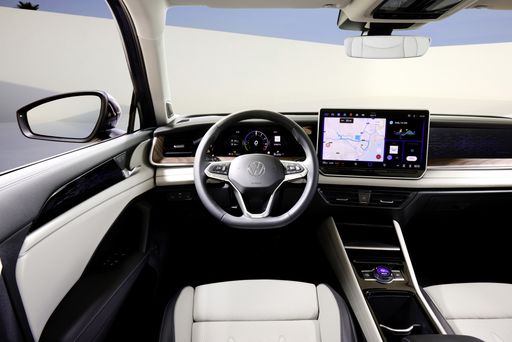
Compare performance (265 HP vs 272 HP), boot space and price (35200 £ vs 39600 £ ) at a glance. Find out which car is the better choice for you – Skoda Superb Combi or VW Tayron?

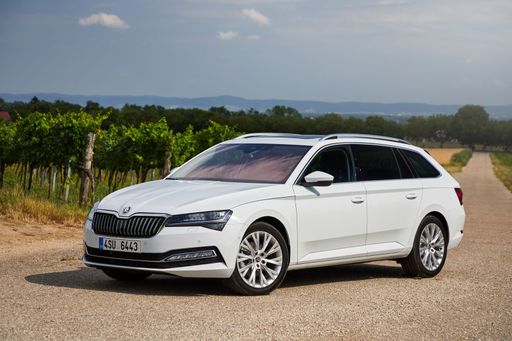
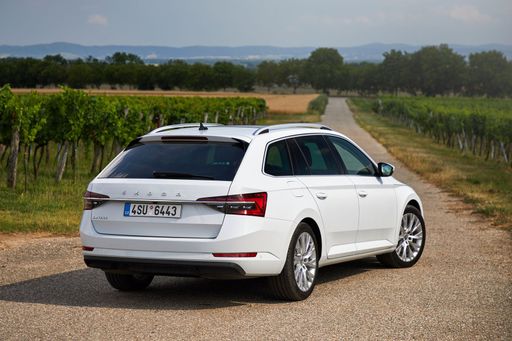
Skoda Superb Combi

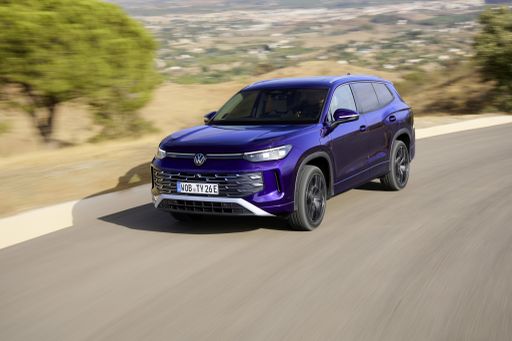
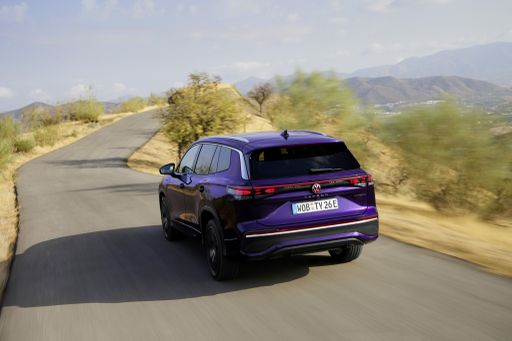
VW Tayron

Here’s where it gets real: The technical differences in detail

Superb Combi

Costs and Efficiency:

When it comes to price and running costs, the biggest differences usually appear. This is often where you see which car fits your budget better in the long run.

Skoda Superb Combi has a somewhat advantage in terms of price – it starts at 35200 £ , while the VW Tayron costs 39600 £ . That’s a price difference of around 4384 £.

Fuel consumption also shows a difference: Skoda Superb Combi manages with 1.20 L and is therefore noticeable more efficient than the VW Tayron with 1.50 L. The difference is about 0.30 L per 100 km.

As for electric range, the Skoda Superb Combi performs slightly better – achieving up to 137 km, about 14 km more than the VW Tayron.

Tayron

Engine and Performance:

Under the bonnet, it becomes clear which model is tuned for sportiness and which one takes the lead when you hit the accelerator.

When it comes to engine power, the VW Tayron has a slight edge – offering 272 HP compared to 265 HP. That’s roughly 7 HP more horsepower.

In acceleration from 0 to 100 km/h, the Skoda Superb Combi is hardly perceptible quicker – completing the sprint in 5.70 s, while the VW Tayron takes 6.10 s. That’s about 0.40 s faster.

In terms of top speed, the Skoda Superb Combi performs slight better – reaching 250 km/h, while the VW Tayron tops out at 240 km/h. The difference is around 10 km/h.

Both models offer the same torque – 400 Nm.

Superb Combi

Space and Everyday Use:

Cabin size, boot volume and payload all play a role in everyday practicality. Here, comfort and flexibility make the difference.

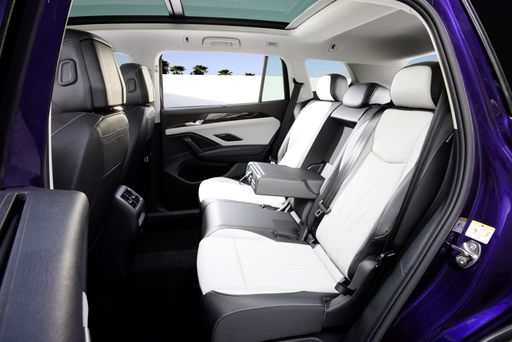
Both vehicles offer seating for 5 people.

In curb weight, Skoda Superb Combi is slight lighter – 1575 kg compared to 1682 kg. The difference is around 107 kg.

In terms of boot space, the VW Tayron offers noticeable more room – 885 L compared to 690 L. That’s a difference of about 195 L.

In maximum load capacity, the VW Tayron performs slight better – up to 2090 L, which is about 170 L more than the Skoda Superb Combi.

When it comes to payload, Skoda Superb Combi barely noticeable takes the win – 584 kg compared to 566 kg. That’s a difference of about 18 kg.

Who comes out on top?

Overall, the Skoda Superb Combi shows itself to be outperforms in nearly all aspects and secures the title of DriveDuel Champion.
It convinces with the more balanced overall package and proves to be the more versatile choice for everyday use.

from about £35,200
Superb Combi

Skoda Superb Combi

  • Engine Type : Petrol, Petrol MHEV, Diesel, Plugin Hybrid
  • Transmission : Automatic
  • Drive Type : Front-Wheel Drive, All-Wheel Drive
  • Power HP : 150 - 265 HP
  • Consumption L/100km : 1.2 - 7.8 L
  • Electric Range : 128 - 137 km
Skoda Superb Combi
VW Tayron

Costs and Consumption

View detailed analysis

Engine and Performance

View detailed analysis

Dimensions and Body

View detailed analysis

Skoda Superb Combi

The Skoda Superb Combi is the practical hero of the estate world, offering cavernous space and a calm, refined ride that makes family life feel effortless. Its clever features, understated design and no-nonsense value make it a smart pick for buyers who want Germanic engineering without the badge premium — and it even manages to stay surprisingly stylish while doing all the heavy lifting.

details

VW Tayron

The VW Tayron is Volkswagen's roomy, no-nonsense SUV that pairs clean, familiar styling with a practical cabin built for families and everyday use. It rides comfortably, packs sensible tech and creature comforts, and feels like the sensible sweater of SUVs for buyers who prefer steady value over headline-grabbing drama.

details
Skoda Superb Combi
VW Tayron

Costs and Consumption

Price
35200 - 51000 £
Price
39600 - 53300 £
Consumption L/100km
1.2 - 7.8 L
Consumption L/100km
1.5 - 8.5 L
Consumption kWh/100km
-
Consumption kWh/100km
-
Electric Range
128 - 137 km
Electric Range
116 - 123 km
Battery Capacity
-
Battery Capacity
19.70 kWh
co2
28 - 178 g/km
co2
33 - 192 g/km
Fuel tank capacity
66 L
Fuel tank capacity
45 - 58 L

Dimensions and Body

Body Type
Estate
Body Type
SUV
Seats
5
Seats
5
Doors
5
Doors
5
Curb weight
1575 - 1853 kg
Curb weight
1682 - 1948 kg
Trunk capacity
510 - 690 L
Trunk capacity
705 - 885 L
Length
4902 mm
Length
4792 mm
Width
1849 mm
Width
1853 - 1866 mm
Height
1482 mm
Height
1666 - 1668 mm
Max trunk capacity
1920 L
Max trunk capacity
1915 - 2090 L
Payload
497 - 584 kg
Payload
489 - 566 kg

Engine and Performance

Engine Type
Petrol, Petrol MHEV, Diesel, Plugin Hybrid
Engine Type
Petrol MHEV, Diesel, Petrol, Plugin Hybrid
Transmission
Automatic
Transmission
Automatic
Transmission Detail
Dual-Clutch Automatic
Transmission Detail
Dual-Clutch Automatic
Drive Type
Front-Wheel Drive, All-Wheel Drive
Drive Type
Front-Wheel Drive, All-Wheel Drive
Power HP
150 - 265 HP
Power HP
150 - 272 HP
Acceleration 0-100km/h
5.7 - 9.3 s
Acceleration 0-100km/h
6.1 - 9.7 s
Max Speed
222 - 250 km/h
Max Speed
204 - 240 km/h
Torque
250 - 400 Nm
Torque
250 - 400 Nm
Number of Cylinders
4
Number of Cylinders
4
Power kW
110 - 195 kW
Power kW
110 - 200 kW
Engine capacity
1498 - 1984 cm3
Engine capacity
1498 - 1984 cm3

General

Model Year
2024 - 2025
Model Year
2025
CO2 Efficiency Class
E, F, D, G, B
CO2 Efficiency Class
E, F, G, B
Brand
Skoda
Brand
VW
Is the Skoda Superb Combi offered with different drivetrains?

The Skoda Superb Combi is available as Front-Wheel Drive or All-Wheel Drive.

The prices shown are estimates based on German list prices, adjusted for local VAT. Local registration taxes (e.g. NoVA, BPM or CO2 malus) are not included. This information is not legally binding.