VS

SsangYong Rexton vs Renault Espace comparison

Compare performance (202 HP vs 200 HP), boot space and price (41,100 £ vs 37,500 £ ) at a glance. Find out which car is the better choice for you – SsangYong Rexton or Renault Espace?

SsangYong Rexton vs Renault Espace: Key differences

SsangYong Rexton

4.7 (3 Reviews)
rate
  • very slightly more power
  • a bit more trunk space
details

Renault Espace

4.1 (3 Reviews)
rate
  • only slightly cheaper
  • clearly more efficient
  • noticeably quicker 0–100 km/h
  • noticeably lighter
details

All details on performance, efficiency, range and trunk space can be found in the technical comparison below – including user reviews for both models.

By Achim Sedelmaier

Rexton

Battle of the Titans: Renault Espace vs. SsangYong Rexton

In the bustling marketplace of versatile vehicles, both Renault's Espace and SsangYong's Rexton emerge as strong contenders deserving closer inspection. While these models both cater to larger families with seating configurations accommodating five to seven passengers, their approach to driving dynamics and features significantly differentiates them.
Espace

Hybrid Efficiency vs. Diesel Durability: The Heart of the Matter

The Renault Espace embraces a modernized drivetrain with its full hybrid engine. Delivering 200 HP, its 147 kW power output and an impeccable fuel economy of 4.7 L/100km set a new benchmark for efficiency in the SUV category. This model accelerates from 0 to 100 km/h in a sporty 8.8 seconds, courtesy of its 1.2-liter, three-cylinder engine. Optimized for urban lifestyles, Espace’s front-wheel-drive system ensures a smooth ride.

In contrast, the SsangYong Rexton relies on its robust 2.2-liter diesel engine, churning out 202 HP and 148 kW. While its consumption of 8.2 L/100km may seem higher, the vehicle emphasizes strength and longevity. The Rexton soars from 0 to 100 km/h in 10.6 seconds, benefiting from its pronounced torque of 441 Nm, delivering undeniable towing capacity and driving confidence over diverse terrains.

Rexton

Design and Dimensions: Elegance vs. Commanding Presence

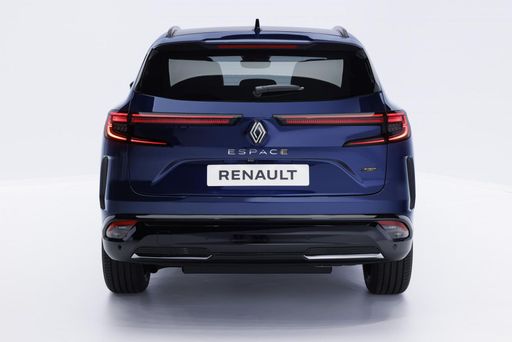
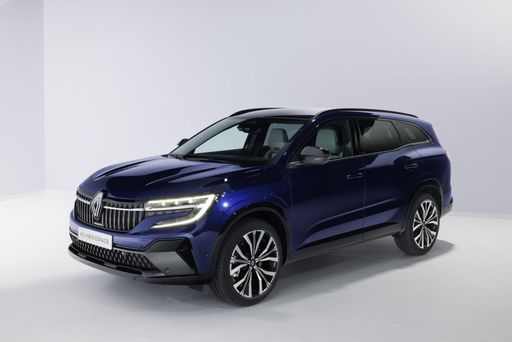
Renault's Espace offers a sleek and modern silhouette, aptly sized at 4722 mm in length, 1843 mm in width, and 1645 mm in height. It balances aerodynamics and spaciousness elegantly. The thoughtful design allows for a trunk capacity of 581 liters – expanding to 159 liters when all seats are occupied – complementing its urban-friendly form factor.

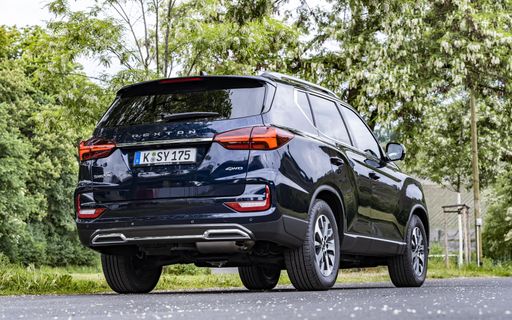
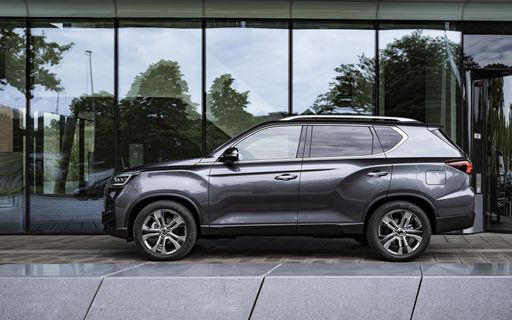
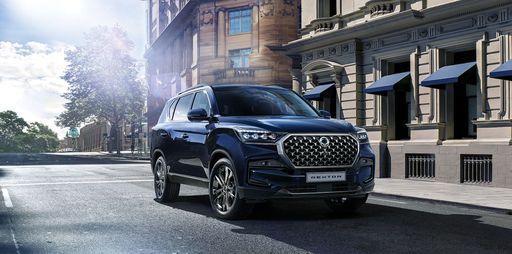
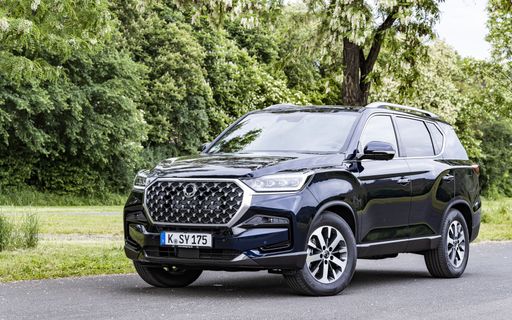
SsangYong Rexton, significantly larger with dimensions of 4850 mm by 1960 mm by 1825 mm, reflects its off-roader DNA. Its commanding road presence and exterior robustness ensure that it stands out in any environment. The expansive trunk space of 784 liters, retracting to 236 liters with full seating, further emphasizes its capability in accommodating both passengers and luggage.

Espace

Comfort and Versatility: Inside the Cabins

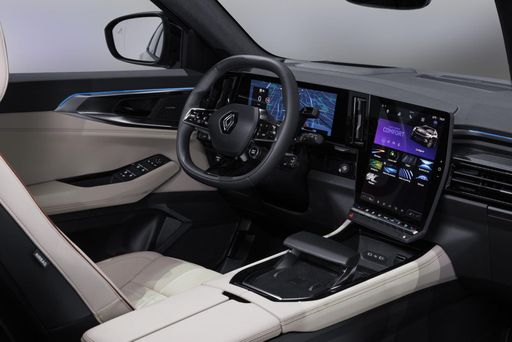
Both models endorse flexibility in seating arrangements, accommodating up to seven passengers effortlessly. The Renault Espace’s interior focuses on a modern aesthetic with intuitive interfaces and a keen focus on CO2 efficiency in class C rankings, emitting 107 g/km.

The Rexton, with a CO2 class of G, concentrates on rugged aficionados who appreciate a diesel powertrain's reliable heft, echoing an assertive drive character with emissions around the 214 g/km mark.

Rexton

On the Road: Drive Types and Handling

The Renault Espace's front-wheel-drive setup prioritizes maneuverability and fuel economy, making it an ideal contender for daily commutes and urban adventures. Meanwhile, the SsangYong Rexton, embracing an all-wheel-drive system, braves untamed terrains with ease, ensuring stability and control under challenging driving conditions.

Espace

Conclusion: Choices Tailored to Purpose

The Renault Espace and SsangYong Rexton showcase innovations that cater to distinct segments of drivers. The Espace beckons those prioritizing economy and modern urban sophistication, whereas the Rexton appeals to those who require durability, ruggedness, and all-terrain prowess. It’s an exciting rivalry where choice hinges on lifestyle and driving preference – efficiency and modernity versus strength and versatility.

Here’s where it gets real: The technical differences in detail

Rexton

Costs and Efficiency:

Price and efficiency are often the first things buyers look at. Here it becomes clear which model has the long-term edge – whether at the pump, the plug, or in purchase price.

Renault Espace is only slightly cheaper – starting at 37,500 £ , while the SsangYong Rexton costs 41,100 £ . That’s a price difference of around 3,592 £.

Fuel consumption also shows a difference: the Renault Espace uses 4.9 L/100km and is clearly more efficient than the SsangYong Rexton with 8.2 L/100km. The difference is about 3.3 L/100km.

Espace

Engine and Performance:

Power, torque and acceleration say a lot about how a car feels on the road. This is where you see which model delivers more driving dynamics.

When it comes to engine power, the SsangYong Rexton offers very slightly more power – delivering 202 HP compared to 200 HP. That’s roughly 2 HP more horsepower.

When accelerating from 0 to 100 km/h, the Renault Espace is noticeably quicker – completing the sprint in 8.8 s, while the SsangYong Rexton takes 10.6 s. That’s about 1.8 s quicker.

Looking at top speed, the SsangYong Rexton is very slightly faster – reaching 184 km/h, while the Renault Espace tops out at 174 km/h. The difference is around 10 km/h.

Rexton

Space and Everyday Use:

Cabin size, boot volume and payload all play a role in everyday practicality. Here, comfort and flexibility make the difference.

Both vehicles offer seating for 7 people.

In terms of curb weight, Renault Espace is noticeably lighter – 1,673 kg compared to 2,145 kg. The difference is around 472 kg.

Looking at boot space, the SsangYong Rexton offers a bit more boot space – 784 L compared to 692 L. That’s a difference of about 92 L.

For maximum load capacity, the Renault Espace offers slightly more capacity – up to 2,224 L, about 247 L more than the SsangYong Rexton.

When it comes to payload, the SsangYong Rexton carries markedly more – 770 kg compared to 581 kg. That’s a difference of about 189 kg.

Who wins the race in the data check?

The Renault Espace holds a decisive overall lead in the objective data comparison.
This result only shows which model scores more points on paper – not which of the two cars feels right for you.

from £37,500
Espace

Renault Espace

  • Engine Type : Full Hybrid
  • Transmission : Automatic
  • Drive Type : Front-Wheel Drive
  • Power HP : 200 HP
  • Consumption L/100km : 4.9 L/100km
SsangYong Rexton
Renault Espace

Costs and Consumption

View detailed analysis

Engine and Performance

View detailed analysis

Dimensions and Body

View detailed analysis

SsangYong Rexton

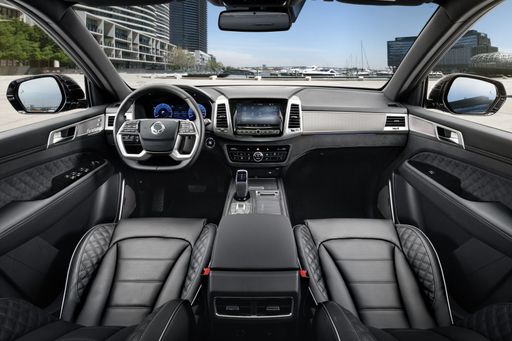
The SsangYong Rexton is a no-nonsense full-size SUV that pairs rugged, go-anywhere bones with a surprisingly plush cabin, making it an appealing choice for buyers who want capability without premium-brand prices. It won’t turn heads like a luxury badge, but its generous space, sensible features and honest practicality make it a smart, down-to-earth family hauler — a savvy pick if you value substance over status.

details

Renault Espace

The Renault Espace is the sort of roomy, clever family cruiser that makes long journeys feel effortless, its interior prioritising comfort and practical thinking without drifting into blandness. It won't pretend to be a sports car, but its composed ride, smart packaging and a whisper of French flair make it a sensible and subtly stylish choice for buyers who value space and versatility.

details
SsangYong Rexton
Renault Espace

Costs and Consumption

Price
41,100 - 51,300 £
Price
37,500 - 41,400 £
Consumption L/100km
8.2 L/100km
Consumption L/100km
4.9 L/100km
Consumption kWh/100km
-
Consumption kWh/100km
-
Electric Range
-
Electric Range
-
Battery Capacity
-
Battery Capacity
-
co2
214 - 216 g/km
co2
110 g/km
Fuel tank capacity
70 L
Fuel tank capacity
55 L

Dimensions and Body

Body Type
Off-Roader
Body Type
SUV
Seats
5 - 7
Seats
5 - 7
Doors
5
Doors
5
Curb weight
2,145 - 2,180 kg
Curb weight
1,673 - 1,783 kg
Trunk capacity
236 - 784 L
Trunk capacity
212 - 692 L
Length
4,850 mm
Length
4,746 mm
Width
1,960 mm
Width
1,830 mm
Height
1,825 mm
Height
1,645 mm
Max trunk capacity
1,806 - 1,977 L
Max trunk capacity
2,054 - 2,224 L
Payload
655 - 770 kg
Payload
404 - 581 kg

Engine and Performance

Engine Type
Diesel
Engine Type
Full Hybrid
Transmission
Automatic
Transmission
Automatic
Transmission Detail
Automatic Gearbox
Transmission Detail
Automatic Gearbox
Drive Type
All-Wheel Drive
Drive Type
Front-Wheel Drive
Power HP
202 HP
Power HP
200 HP
Acceleration 0-100km/h
10.6 s
Acceleration 0-100km/h
8.8 s
Max Speed
184 km/h
Max Speed
174 km/h
Torque
441 Nm
Torque
-
Number of Cylinders
4
Number of Cylinders
3
Power kW
148 kW
Power kW
147 kW
Engine capacity
2,157 cm3
Engine capacity
1,199 cm3

General

Model Year
2,021 - 2,023
Model Year
2025
CO2 Efficiency Class
G
CO2 Efficiency Class
C
Brand
SsangYong
Brand
Renault
DriveDuel uses data analysis and artificial intelligence to evaluate vehicle data and create content. Content is regularly reviewed and improved. The displayed prices are estimates based on German list prices, adjusted to the respective country’s VAT. Country-specific registration taxes are not included. This information is not legally binding.