VS

Renault Espace vs Renault Rafale comparison

Compare performance (200 HP vs 300 HP), boot space and price (37,500 £ vs 37,700 £ ) at a glance. Find out which car is the better choice for you – Renault Espace or Renault Rafale?

Renault Espace vs Renault Rafale: Key differences

Renault Espace

4.1 (3 Reviews)
rate
  • very slightly cheaper
  • very slightly lighter
  • marginally more trunk space
details

Renault Rafale

4.9 (9 Reviews)
rate
  • markedly more power
  • clearly more efficient
  • visibly quicker 0–100 km/h
details

All details on performance, efficiency, range and trunk space can be found in the technical comparison below – including user reviews for both models.

By Achim Sedelmaier

Espace

Dueling SUVs: Renault Espace vs. Renault Rafale

As the automotive industry steers towards more sustainable transportation, Renault continues to pave its way with innovative and efficient vehicles. Two contenders that highlight Renault's commitment to hybrid technology are the Renault Espace and Renault Rafale. While both models are SUVs decked out with full hybrid engines, each offers a unique driving experience and distinct features. In this article, we delve into the technical aspects and innovations that set the Renault Espace and Renault Rafale apart, helping you decide which model best suits your needs.
Rafale

Engine and Performance

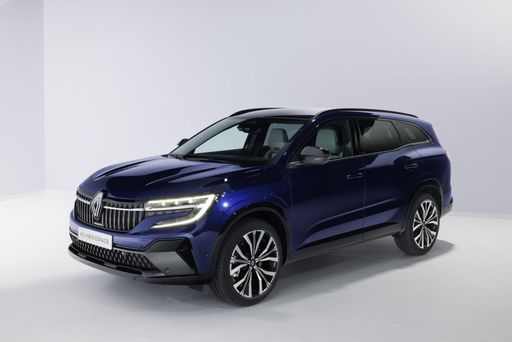
The 2024 Renault Espace features a full hybrid engine with a total power output of 200 horsepower (HP) combined with a 3-cylinder, 1.199-liter engine capacity. This SUV is paired with an automatic gearbox, offering front-wheel drive. The Espace impresses with its fuel efficiency, consuming just 4.7 liters per 100 kilometers, and accelerates from 0 to 100 km/h in 8.8 seconds. Its CO2 emissions are recorded at 107 g/km, falling into the efficiency class C, with a top speed of 174 km/h.

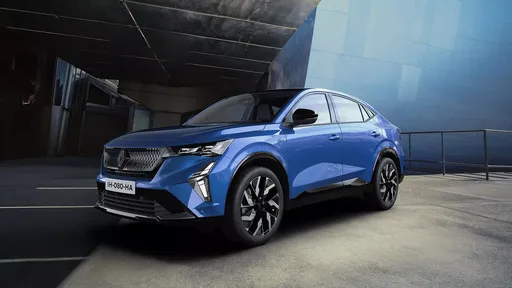
On the other hand, the 2024 Renault Rafale offers more versatility with its engine options. Buyers can choose between a full hybrid and a plug-in hybrid configuration. The base model also outputs 200 HP, mirroring the Espace's specs, but the plug-in hybrid variant ramps it up to an impressive 300 HP. The Rafale's economy excels with fuel consumption of 4.7 liters or as low as 0.6 liters per 100 kilometers for the plug-in variant. It also has the advantage of an electric range of 97 km, all while having a CO2 emission of just 14 g/km for the plug-in hybrid, putting it in a more favorable CO2 efficiency class B. The top speed is slightly higher than the Espace's at 180 km/h, and it can reach 100 km/h from a standstill in just 6.4 seconds.

Espace

Space and Practicality

Space is a luxury in both models, making them excellent choices for families and road trips. The Renault Espace is available in both 5 and 7-seat configurations, offering a trunk capacity ranging from 159 to 581 liters. With curb weights varying between 1,659 kg to 1,773 kg, it manages payloads between 396 kg and 587 kg, ensuring ample space for passengers and luggage alike.

The Renault Rafale, designed as a 5-seater, provides a marginally larger trunk capacity of up to 627 liters. It is slightly more compact with a length of 4,710 mm compared to Espace’s 4,722 mm, but it compensates with a wider body at 1,886 mm, ensuring comfort and roominess inside. With curb weights ranging from 1,728 kg to 2,025 kg, the Rafale has a payload capacity between 415 kg and 447 kg.

Rafale

Dimensions and Design

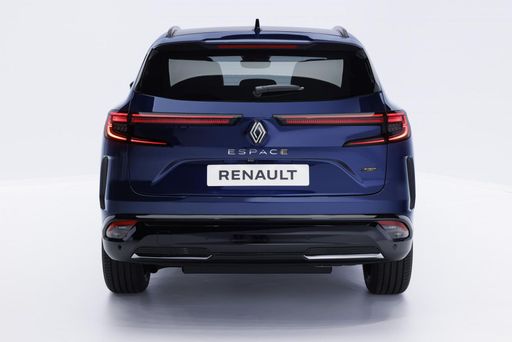
Both models embody Renault's sleek and modern design language, yet each exhibits distinct characteristics. The Renault Espace stands tall at 1,645 mm, while the Rafale is marginally shorter at 1,613 mm, showcasing a more streamlined profile. Both models feature a 5-door configuration, but the Rafale appears sportier with a greater emphasis on width and a lower center of gravity.

Espace

Conclusion: Choosing the Right Fit

When selecting between the Renault Espace and the Renault Rafale, potential buyers need to assess their priorities. The Espace shines with its adaptability for more passengers, making it an excellent choice for larger families. It also offers an impressive balance of performance and efficiency within an SUV package.

Conversely, the Rafale is designed for those seeking a dynamic drive experience with a greener footprint, especially in its plug-in hybrid variant. Its advanced hybrid system promises superior energy efficiency, making it the go-to option for environmentally-conscious drivers who crave a bit more power and range.

In sum, both models showcase Renault's prowess in creating practical, efficient, and stylish SUVs, leaving prospective buyers with the delightful challenge of choosing between two equally compelling options.

Here’s where it gets real: The technical differences in detail

Espace

Costs and Efficiency:

When it comes to price and running costs, the biggest differences usually appear. This is often where you see which car fits your budget better in the long run.

Renault Espace is very slightly cheaper – starting at 37,500 £ , while the Renault Rafale costs 37,700 £ . That’s a price difference of around 172 £.

Fuel consumption also shows a difference: the Renault Rafale uses 2 L/100km and is clearly more efficient than the Renault Espace with 4.9 L/100km. The difference is about 2.9 L/100km.

Rafale

Engine and Performance:

Power, torque and acceleration say a lot about how a car feels on the road. This is where you see which model delivers more driving dynamics.

When it comes to engine power, the Renault Rafale offers markedly more power – delivering 300 HP compared to 200 HP. That’s roughly 100 HP more horsepower.

When accelerating from 0 to 100 km/h, the Renault Rafale is visibly quicker – completing the sprint in 6.4 s, while the Renault Espace takes 8.8 s. That’s about 2.4 s quicker.

Espace

Space and Everyday Use:

Cabin size, boot volume and payload all play a role in everyday practicality. Here, comfort and flexibility make the difference.

Seats: Renault Espace offers more seats – 7 vs 5.

In terms of curb weight, Renault Espace is very slightly lighter – 1,673 kg compared to 1,734 kg. The difference is around 61 kg.

Looking at boot space, the Renault Espace offers marginally more boot space – 692 L compared to 627 L. That’s a difference of about 65 L.

When it comes to payload, the Renault Espace carries markedly more – 581 kg compared to 444 kg. That’s a difference of about 137 kg.

Who wins the race in the data check?

The Renault Rafale holds a decisive overall lead in the objective data comparison.
This result only shows which model scores more points on paper – not which of the two cars feels right for you.

from £37,700
Rafale

Renault Rafale

  • Engine Type : Full Hybrid, Plugin Hybrid
  • Transmission : Automatic
  • Drive Type : Front-Wheel Drive, All-Wheel Drive
  • Power HP : 200 - 300 HP
  • Consumption L/100km : 2 - 5 L/100km
  • Electric Range : 97 km
Renault Espace
Renault Rafale

Costs and Consumption

View detailed analysis

Engine and Performance

View detailed analysis

Dimensions and Body

View detailed analysis

Renault Espace

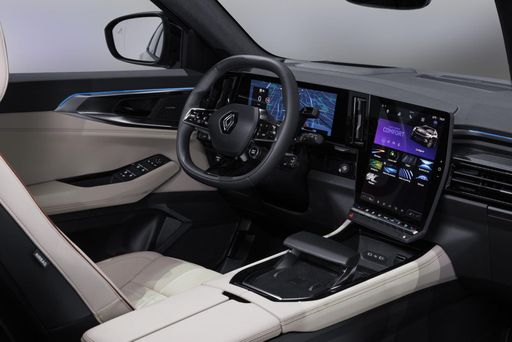
The Renault Espace is the sort of roomy, clever family cruiser that makes long journeys feel effortless, its interior prioritising comfort and practical thinking without drifting into blandness. It won't pretend to be a sports car, but its composed ride, smart packaging and a whisper of French flair make it a sensible and subtly stylish choice for buyers who value space and versatility.

details

Renault Rafale

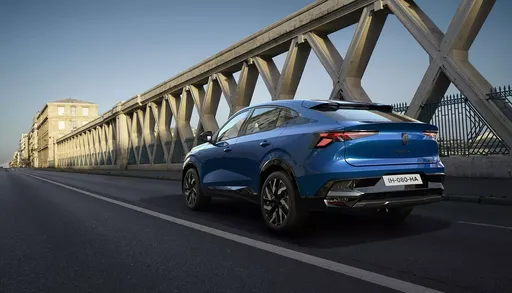
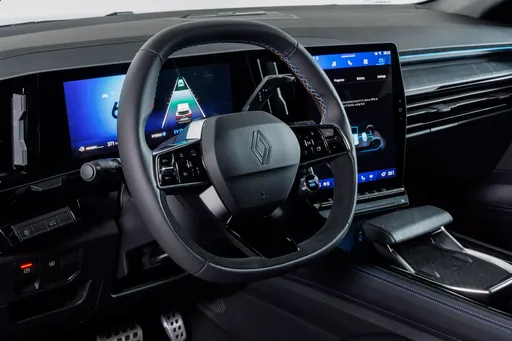
The Renault Rafale dresses bold coupé-inspired lines around a practical crossover body, turning heads without trying too hard. Inside it serves up a comfortable, well-equipped cabin and engaging driving manners, making it a clever choice for buyers who want a bit of panache with their daily commute.

details
Renault Espace
Renault Rafale

Costs and Consumption

Price
37,500 - 41,400 £
Price
37,700 - 49,700 £
Consumption L/100km
4.9 L/100km
Consumption L/100km
2 - 5 L/100km
Consumption kWh/100km
-
Consumption kWh/100km
-
Electric Range
-
Electric Range
97 km
Battery Capacity
-
Battery Capacity
-
co2
110 g/km
co2
43 - 109 g/km
Fuel tank capacity
55 L
Fuel tank capacity
-

Dimensions and Body

Body Type
SUV
Body Type
SUV
Seats
5 - 7
Seats
5
Doors
5
Doors
-
Curb weight
1,673 - 1,783 kg
Curb weight
1,734 - 2,025 kg
Trunk capacity
212 - 692 L
Trunk capacity
539 - 627 L
Length
4,746 mm
Length
-
Width
1,830 mm
Width
1,886 mm
Height
1,645 mm
Height
-
Max trunk capacity
2,054 - 2,224 L
Max trunk capacity
-
Payload
404 - 581 kg
Payload
415 - 444 kg

Engine and Performance

Engine Type
Full Hybrid
Engine Type
Full Hybrid, Plugin Hybrid
Transmission
Automatic
Transmission
Automatic
Transmission Detail
Automatic Gearbox
Transmission Detail
Automatic Gearbox
Drive Type
Front-Wheel Drive
Drive Type
Front-Wheel Drive, All-Wheel Drive
Power HP
200 HP
Power HP
200 - 300 HP
Acceleration 0-100km/h
8.8 s
Acceleration 0-100km/h
6.4 - 8.9 s
Max Speed
174 km/h
Max Speed
-
Torque
-
Torque
-
Number of Cylinders
3
Number of Cylinders
3
Power kW
147 kW
Power kW
147 - 221 kW
Engine capacity
1,199 cm3
Engine capacity
1,199 cm3

General

Model Year
2025
Model Year
2025
CO2 Efficiency Class
C
CO2 Efficiency Class
C, B
Brand
Renault
Brand
Renault
DriveDuel uses data analysis and artificial intelligence to evaluate vehicle data and create content. Content is regularly reviewed and improved. The displayed prices are estimates based on German list prices, adjusted to the respective country’s VAT. Country-specific registration taxes are not included. This information is not legally binding.