VS

Kia Sportage vs Renault Rafale comparison

Compare performance (288 HP vs 300 HP), boot space and price (30,200 £ vs 37,700 £ ) at a glance. Find out which car is the better choice for you – Kia Sportage or Renault Rafale?

Kia Sportage vs Renault Rafale: Key differences

Kia Sportage

4.9 (2 Reviews)
rate
  • noticeably cheaper
  • slightly lighter

Renault Rafale

4.9 (7 Reviews)
rate
  • barely more power
  • considerably more efficient
  • visibly more electric range
  • a bit quicker 0–100 km/h
  • very slightly more trunk space

All details on performance, efficiency, range and trunk space can be found in the technical comparison below – including user reviews for both models.

Sportage

The automotive world is always evolving, and two of the most prominent SUVs on the market today — the Kia Sportage and the Renault Rafale — showcase this evolution beautifully. With innovative technology, impressive performance metrics, and stylish designs, both models appeal to different segments of the SUV market. In this article, we delve deep into a comparison of these two contenders to help potential buyers make an informed decision.

Rafale

Design and Dimensions

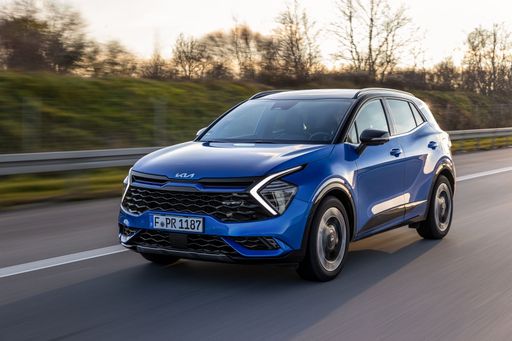
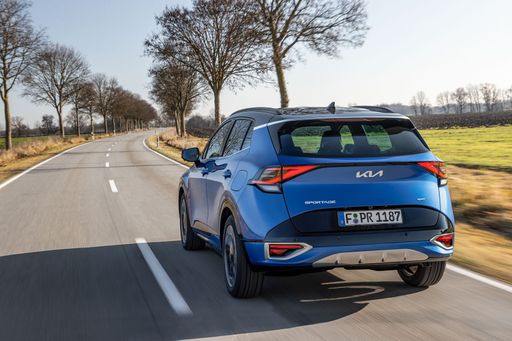
The Kia Sportage exhibits a robust and sporty appearance, measuring 4,515 mm in length, 1,865 mm in width, and standing at a height of 1,650 mm. Its bold lines and sleek profile give it a modern edge that is both appealing and functional.

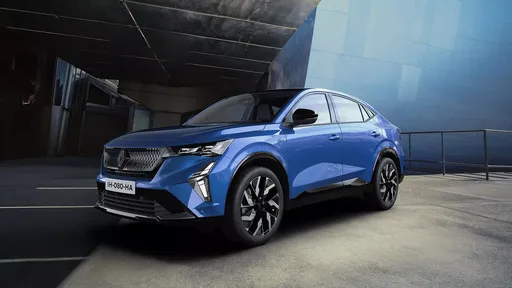
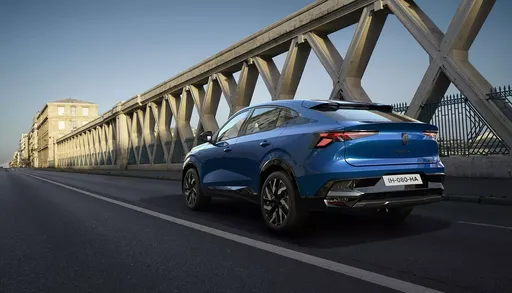
On the other hand, the Renault Rafale takes a slightly larger standpoint, measuring 4,710 mm in length, 1,886 mm in width, and 1,613 mm in height. The Rafale's design is characterized by a contemporary elegance combined with aerodynamic curves that not only enhance its aesthetic appeal but also improve fuel efficiency.

Sportage

Powertrains and Performance

When it comes to power, the Kia Sportage offers a variety of engine options, including Diesel MHEV, Petrol MHEV, Full Hybrid, Petrol, and Plugin Hybrid variations. The four-cylinder engines range from 136 to 252 HP, providing excellent performance across the board. The Sportage also features multiple transmission choices, including both manual and automatic options, allowing for a personalized driving experience. Acceleration from 0-100 km/h ranges from 8.3 to 11.6 seconds, showcasing the model's versatility depending on the specific engine selected.

In contrast, the Renault Rafale is available with full hybrid and plugin hybrid powertrains, producing between 200 and 300 HP from its three-cylinder engines. The Rafale’s automatic transmission ensures a seamless driving experience, while its acceleration from 0-100 km/h can achieve impressive times as low as 6.4 seconds. The choice of a front-wheel-drive layout also lends itself to a lighter, more responsive handling characteristic.


Rafale

Fuel Efficiency and Environmental Impact

Fuel efficiency is a critical aspect for many SUV buyers. The Kia Sportage ranges from 5 to 7.2 L/100 km depending on the engine type selected, with CO2 emissions ranging from 132 to 162 g/km. This provides decent efficiency for the segment, particularly for urban usage.

Conversely, the Renault Rafale boasts remarkable efficiency figures, with consumption as low as 0.6 L/100 km in its hybrid mode and an impressive CO2 output starting at just 14 g/km. Its electric range of up to 97 km means that many short trips can be completed without using any fuel at all, appealing to eco-conscious consumers. This positions the Rafale as a more environmentally friendly option compared to the Sportage.

Sportage

Interior and Technology

Inside, the Kia Sportage is designed with comfort and practicality in mind. The interior features a spacious cabin that accommodates up to five passengers with considerable trunk space ranging from 526 to 587 liters. Technology is a strong point for the Sportage, which includes a user-friendly infotainment system and advanced safety features.

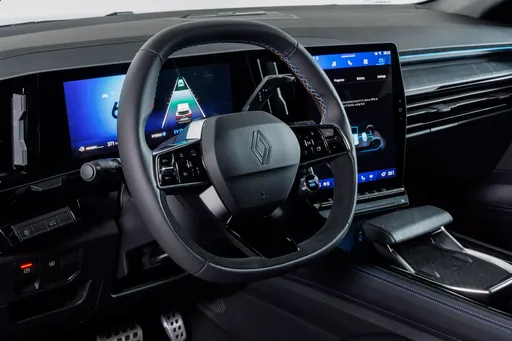
The Renault Rafale is equally impressive, providing a similarly spacious interior that also seats five. With a trunk capacity between 539 and 627 liters, it caters well to those needing extra cargo space. The tech offerings in the Rafale focus on connectivity and driving assistance features, making it a smart choice for tech-savvy drivers.

Rafale

Conclusion: Which SUV Reigns Supreme?

In conclusion, both the Kia Sportage and Renault Rafale bring unique strengths to the table. The Sportage offers a wide range of engine options and a versatile driving experience, while the Rafale excels in fuel efficiency and environmental friendliness. Choosing between these two SUVs will ultimately depend on individual priorities, whether that be performance, efficiency, design, or technology. Each car represents incredible value in the competitive automotive marketplace, making either a commendable choice for modern SUV buyers.

Here’s where it gets real: The technical differences in detail

Sportage

Costs and Efficiency:

Looking at overall running costs, both models reveal some interesting differences in everyday economy.

Kia Sportage is noticeably cheaper – starting at 30,200 £ , while the Renault Rafale costs 37,700 £ . That’s a price difference of around 7,552 £.

Fuel consumption also shows a difference: the Renault Rafale uses 2 L/100km and is considerably more efficient than the Kia Sportage with 2.9 L/100km. The difference is about 0.9 L/100km.

As for electric range, the Renault Rafale offers visibly more range – reaching up to 97 km, about 31 km more than the Kia Sportage.

Rafale

Engine and Performance:

Power, torque and acceleration are the classic benchmarks for car enthusiasts – and here, some clear differences start to show.

When it comes to engine power, the Renault Rafale offers barely more power – delivering 300 HP compared to 288 HP. That’s roughly 12 HP more horsepower.

When accelerating from 0 to 100 km/h, the Renault Rafale is a bit quicker – completing the sprint in 6.4 s, while the Kia Sportage takes 7.5 s. That’s about 1.1 s quicker.

Sportage

Space and Everyday Use:

Whether family car or daily driver – which one offers more room, flexibility and comfort?

Both vehicles offer seating for 5 people.

In terms of curb weight, Kia Sportage is slightly lighter – 1,552 kg compared to 1,734 kg. The difference is around 182 kg.

Looking at boot space, the Renault Rafale offers very slightly more boot space – 627 L compared to 587 L. That’s a difference of about 40 L.

When it comes to payload, the Kia Sportage carries clearly more – 580 kg compared to 444 kg. That’s a difference of about 136 kg.

Who wins the race in the data check?

The Renault Rafale holds a solid overall lead in the objective data comparison.
This result only shows which model scores more points on paper – not which of the two cars feels right for you.

from £37,700
Rafale

Renault Rafale

  • Engine Type : Full Hybrid, Plugin Hybrid
  • Transmission : Automatic
  • Drive Type : Front-Wheel Drive, All-Wheel Drive
  • Power HP : 200 - 300 HP
  • Consumption L/100km : 2 - 5 L/100km
  • Electric Range : 97 km
Kia Sportage
Renault Rafale

Costs and Consumption

View detailed analysis

Engine and Performance

View detailed analysis

Dimensions and Body

View detailed analysis

Kia Sportage

The Kia Sportage proves you don't have to choose between style and sensible family motoring, wrapping modern, confident looks around a roomy, well-equipped cabin. It's an easy car to live with — comfortable on daily runs, pleasantly engaging when you want a bit of fun, and kind to your wallet so you can keep smiling at the fuel pump.

details

Renault Rafale

The Renault Rafale dresses bold coupé-inspired lines around a practical crossover body, turning heads without trying too hard. Inside it serves up a comfortable, well-equipped cabin and engaging driving manners, making it a clever choice for buyers who want a bit of panache with their daily commute.

details
Kia Sportage
Renault Rafale

Costs and Consumption

Price
30,200 - 47,100 £
Price
37,700 - 49,700 £
Consumption L/100km
2.9 - 7.8 L/100km
Consumption L/100km
2 - 5 L/100km
Consumption kWh/100km
-
Consumption kWh/100km
-
Electric Range
63 - 66 km
Electric Range
97 km
Battery Capacity
-
Battery Capacity
-
co2
67 - 177 g/km
co2
43 - 109 g/km
Fuel tank capacity
-
Fuel tank capacity
-

Dimensions and Body

Body Type
SUV
Body Type
SUV
Seats
5
Seats
5
Doors
-
Doors
-
Curb weight
1,552 - 1,896 kg
Curb weight
1,734 - 2,025 kg
Trunk capacity
526 - 587 L
Trunk capacity
539 - 627 L
Length
-
Length
-
Width
1,865 mm
Width
1,886 mm
Height
-
Height
-
Max trunk capacity
-
Max trunk capacity
-
Payload
533 - 580 kg
Payload
415 - 444 kg

Engine and Performance

Engine Type
Petrol, Full Hybrid, Diesel MHEV, Plugin Hybrid
Engine Type
Full Hybrid, Plugin Hybrid
Transmission
Manuel, Automatic
Transmission
Automatic
Transmission Detail
Manual Gearbox, Dual-Clutch Automatic, Automatic Gearbox
Transmission Detail
Automatic Gearbox
Drive Type
Front-Wheel Drive, All-Wheel Drive
Drive Type
Front-Wheel Drive, All-Wheel Drive
Power HP
136 - 288 HP
Power HP
200 - 300 HP
Acceleration 0-100km/h
7.5 - 11.6 s
Acceleration 0-100km/h
6.4 - 8.9 s
Max Speed
-
Max Speed
-
Torque
250 - 380 Nm
Torque
-
Number of Cylinders
4
Number of Cylinders
3
Power kW
100 - 212 kW
Power kW
147 - 221 kW
Engine capacity
1,598 cm3
Engine capacity
1,199 cm3

General

Model Year
2,025 - 2,026
Model Year
2,025
CO2 Efficiency Class
F, D, E, G, B
CO2 Efficiency Class
C, B
Brand
Kia
Brand
Renault
DriveDuel uses data analysis and artificial intelligence to evaluate vehicle data and create content. Content is regularly reviewed and improved. The displayed prices are estimates based on German list prices, adjusted to the respective country’s VAT. Country-specific registration taxes are not included. This information is not legally binding.