VS

SsangYong Tivoli vs VW Tiguan comparison

Compare performance (163 HP vs 272 HP), boot space and price (21,400 £ vs 33,600 £ ) at a glance. Find out which car is the better choice for you – SsangYong Tivoli or VW Tiguan?

SsangYong Tivoli vs VW Tiguan: Key differences

SsangYong Tivoli

  • considerably cheaper
  • somewhat lighter
  • only slightly more trunk space
details

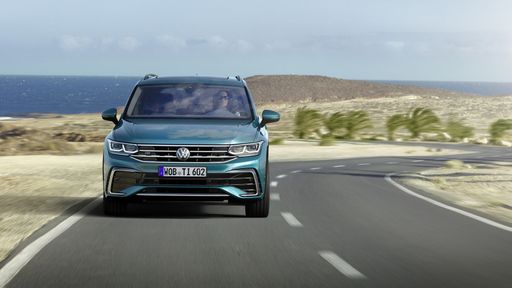
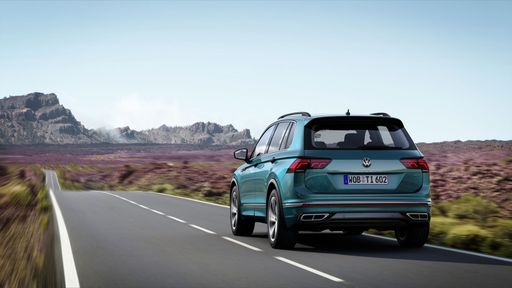
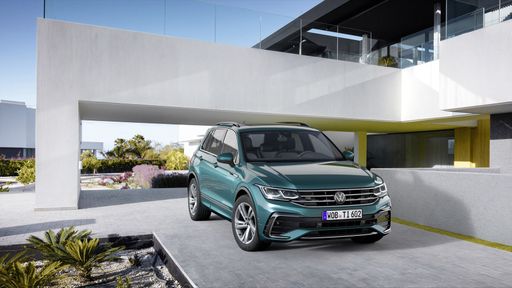
VW Tiguan

4.2 (11 Reviews)
rate
  • clearly more power
  • significantly more efficient
details

All details on performance, efficiency, range and trunk space can be found in the technical comparison below – including user reviews for both models.

By Achim Sedelmaier

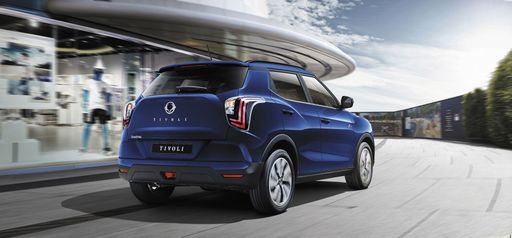
Tivoli

Compact SUVs in Showdown: SsangYong Tivoli vs. VW Tiguan

The compact SUV segment remains fiercely competitive, drawing interest from those seeking versatility, comfort, and performance. Today, we delve into the traits of two popular models: the SsangYong Tivoli and the VW Tiguan. Both vehicles offer distinctive features and technical specifications that cater to varied preferences and needs. Let's explore what sets them apart.
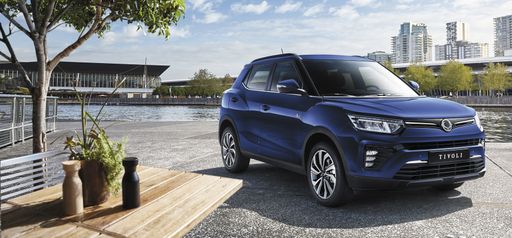
Tiguan

Engine Options and Performance

Under the hood, the SsangYong Tivoli offers a petrol engine with options for manual and automatic transmissions. Producing up to 163 horsepower and a torque of 280 Nm, it establishes itself as a robust contender for everyday driving. This SUV's top speed ranges between 175 to 181 km/h, enabling both city slicking and highway cruising efficiently.

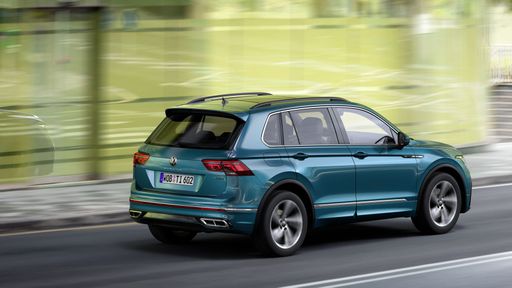
On the other hand, the VW Tiguan showcases a more diversified powertrain lineup, including options for petrol, diesel, and plug-in hybrid engines. With horsepower ranging from 130 to 272 HP and torque output up to 400 Nm, the Tiguan offers a choice for those seeking efficiency or higher performance. The Tiguan's top speed can soar up to 242 km/h, catering to a more dynamic driving experience.

Tivoli

Fuel Efficiency and Environmental Impact

When it comes to fuel consumption, the SsangYong Tivoli showcases a range between 7.0 to 8.3 L/100km, reflecting a practical choice for daily commutes. Despite its power, the Tivoli's CO2 emissions are relatively higher, falling in efficiency classes F and G.

The VW Tiguan offers remarkable efficiency, especially with its plug-in hybrid variant achieving a consumption as low as 0.4 L/100km and an electric range of up to 113 km. This positions the Tiguan as a more environmentally-conscious option, with CO2 emissions spanning from classes B to G, thus catering to the eco-focused driver.

Tiguan

Space and Comfort

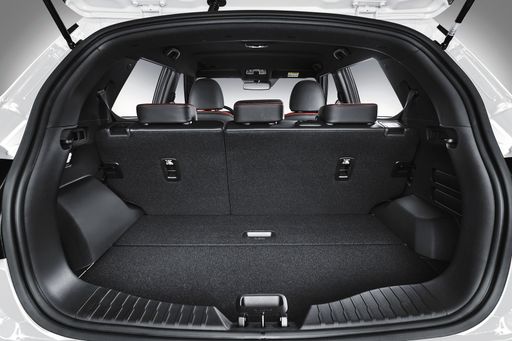
Inside, both SUVs accommodate five passengers comfortably. The Tivoli boasts a generous trunk capacity between 395 to 720 liters, ensuring ample space for luggage and equipment. Its compact dimensions, with a length of 4225 mm, suit urban drives without sacrificing cargo capacity.

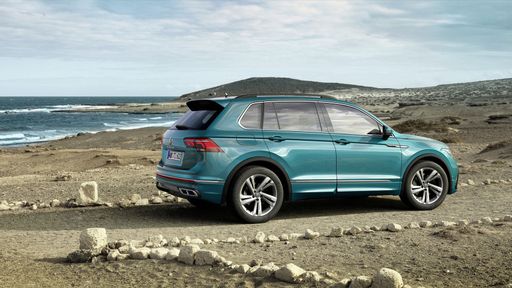
The Tiguan, with a length of 4539 mm, offers a slightly larger footprint and a trunk capacity ranging from 490 to 652 liters. This makes it ideal for families or those requiring additional space without compromising passenger comfort.

Tivoli

Innovations and Features

The Tivoli provides essential features for a comfortable ride, including all-wheel drive options and modern safety technologies. However, it places more emphasis on value and practicality rather than cutting-edge innovations.

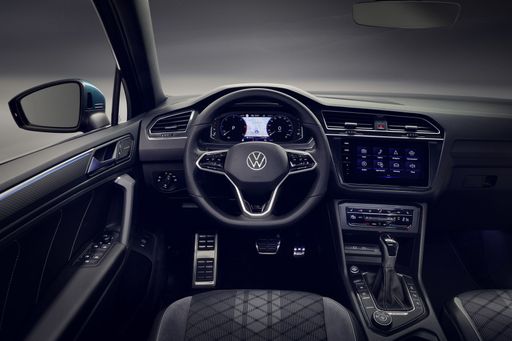
Conversely, the Tiguan stands out with advanced technology integration, from enhanced connectivity features to state-of-the-art driver assistance systems. The hybrid options are a testament to VW's commitment to sustainability through innovative engineering.

Tiguan

Conclusion

Choosing between the SsangYong Tivoli and VW Tiguan ultimately depends on individual preferences and priorities. The Tivoli offers a cost-effective package with respectable performance and space, ideal for conventional users. The Tiguan, meanwhile, provides an expansive array of high-tech options, superior efficiency, and a refined driving experience for the modern driver seeking versatility and eco-friendliness.

Here’s where it gets real: The technical differences in detail

Tivoli

Costs and Efficiency:

Price and efficiency are key factors when choosing a car – and this is often where the real differences emerge.

SsangYong Tivoli is considerably cheaper – starting at 21,400 £ , while the VW Tiguan costs 33,600 £ . That’s a price difference of around 12,158 £.

Fuel consumption also shows a difference: the VW Tiguan uses 1.4 L/100km and is significantly more efficient than the SsangYong Tivoli with 7 L/100km. The difference is about 5.6 L/100km.

Tiguan

Engine and Performance:

Power, torque and acceleration are the classic benchmarks for car enthusiasts – and here, some clear differences start to show.

When it comes to engine power, the VW Tiguan offers clearly more power – delivering 272 HP compared to 163 HP. That’s roughly 109 HP more horsepower.

There’s also a difference in torque: the VW Tiguan delivers clearly more torque with 400 Nm compared to 280 Nm. That’s about 120 Nm more.

Tivoli

Space and Everyday Use:

Whether family car or daily driver – which one offers more room, flexibility and comfort?

Both vehicles offer seating for 5 people.

In terms of curb weight, SsangYong Tivoli is somewhat lighter – 1,375 kg compared to 1,599 kg. The difference is around 224 kg.

Looking at boot space, the SsangYong Tivoli offers only slightly more boot space – 720 L compared to 652 L. That’s a difference of about 68 L.

When it comes to payload, the VW Tiguan carries slightly more – 556 kg compared to 455 kg. That’s a difference of about 101 kg.

Who wins the race in the data check?

The VW Tiguan is decisively ahead in the objective data comparison.
This result only shows which model scores more points on paper – not which of the two cars feels right for you.

from £33,600
Tiguan

VW Tiguan

  • Engine Type Petrol MHEV, Petrol, Diesel, Plugin Hybrid
  • Transmission Automatic
  • Drive Type Front-Wheel Drive, All-Wheel Drive
  • Power HP 130 - 272 HP
  • Consumption L/100km 1.4 - 8.4 L/100km
  • Electric Range 118 - 126 km
SsangYong Tivoli
VW Tiguan

Costs and Consumption

View detailed analysis

Engine and Performance

View detailed analysis

Dimensions and Body

View detailed analysis

SsangYong Tivoli

The SsangYong Tivoli is an unpretentious small crossover that surprises with a roomy, well-finished cabin and an agreeable ride that suits everyday life. It won't win any beauty contests, but it's a smart, economical choice for buyers who value practicality, comfort and a bit of cheeky character.

details

VW Tiguan

The VW Tiguan is a well-rounded compact SUV that delivers a comfortable cabin, composed ride and practical space suited to everyday family life. Its straightforward tech and clever storage make it easy to live with, leaning toward sensible refinement rather than flash.

details
SsangYong Tivoli
VW Tiguan

Costs and Consumption

Price
21,400 - 30,300 £
Price
33,600 - 54,600 £
Consumption L/100km
7 - 8.3 L/100km
Consumption L/100km
1.4 - 8.4 L/100km
Consumption kWh/100km
-
Consumption kWh/100km
-
Electric Range
-
Electric Range
118 - 126 km
Battery Capacity
-
Battery Capacity
-
co2
161 - 191 g/km
co2
32 - 190 g/km
Fuel tank capacity
50 L
Fuel tank capacity
-

Dimensions and Body

Body Type
SUV
Body Type
SUV
Seats
5
Seats
5
Doors
5
Doors
-
Curb weight
1,375 - 1,492 kg
Curb weight
1,599 - 1,879 kg
Trunk capacity
395 - 720 L
Trunk capacity
490 - 652 L
Length
4,225 - 4,480 mm
Length
-
Width
1,810 mm
Width
1,842 - 1,859 mm
Height
1,613 - 1,646 mm
Height
-
Max trunk capacity
1,115 - 1,440 L
Max trunk capacity
-
Payload
425 - 455 kg
Payload
499 - 556 kg

Engine and Performance

Engine Type
Petrol
Engine Type
Petrol MHEV, Petrol, Diesel, Plugin Hybrid
Transmission
Manuel, Automatic
Transmission
Automatic
Transmission Detail
Manual Gearbox, Automatic Gearbox
Transmission Detail
Dual-Clutch Automatic
Drive Type
Front-Wheel Drive, All-Wheel Drive
Drive Type
Front-Wheel Drive, All-Wheel Drive
Power HP
163 HP
Power HP
130 - 272 HP
Acceleration 0-100km/h
-
Acceleration 0-100km/h
5.9 - 10.2 s
Max Speed
175 - 181 km/h
Max Speed
-
Torque
260 - 280 Nm
Torque
220 - 400 Nm
Number of Cylinders
4
Number of Cylinders
4
Power kW
120 kW
Power kW
96 - 200 kW
Engine capacity
1,497 cm3
Engine capacity
1,498 - 1,984 cm3

General

Model Year
2,021 - 2,024
Model Year
2,024 - 2,026
CO2 Efficiency Class
F, G
CO2 Efficiency Class
D, E, F, B, G
Brand
SsangYong
Brand
VW
DriveDuel uses data analysis and artificial intelligence to evaluate vehicle data and create content. Content is regularly reviewed and improved. The displayed prices are estimates based on German list prices, adjusted to the respective country’s VAT. Country-specific registration taxes are not included. This information is not legally binding.