VS

Subaru Forester vs Nissan X-Trail comparison

Compare performance (136 HP vs 213 HP), boot space and price (34,700 £ vs 34,200 £ ) at a glance. Find out which car is the better choice for you – Subaru Forester or Nissan X-Trail?

Subaru Forester vs Nissan X-Trail: Key differences

Subaru Forester

4 (1 Reviews)
rate

Nissan X-Trail

4.6 (5 Reviews)
rate
  • marginally cheaper
  • clearly more power
  • clearly more efficient
  • significantly quicker 0–100 km/h
  • only slightly lighter
  • somewhat more trunk space

All details on performance, efficiency, range and trunk space can be found in the technical comparison below – including user reviews for both models.

Forester

Nissan X-Trail vs. Subaru Forester: The Battle of the Family SUVs

The SUV segment has seen a flurry of activity with models trying to outdo each other in terms of technology, comfort, and performance. Among the chief contenders are the Nissan X-Trail and the Subaru Forester. Both vehicles have been stalwarts of family transportation, offering a great balance of practicality and style. Let's dive into their specifications and innovations to see how they stack up against each other.
X-Trail

Design and Dimensions

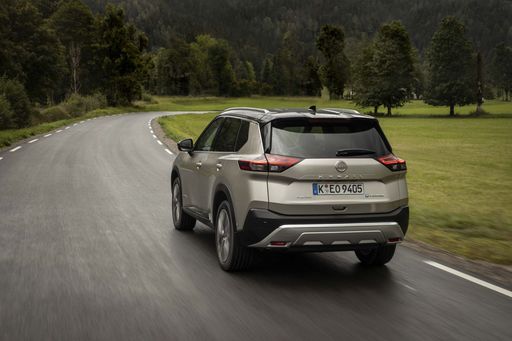
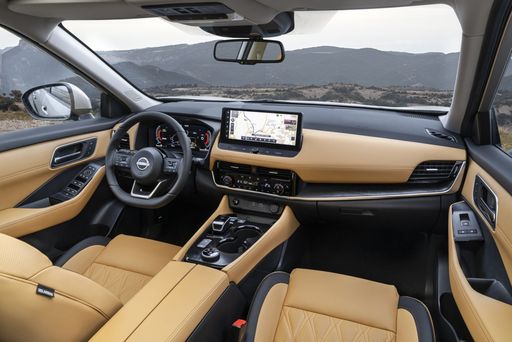
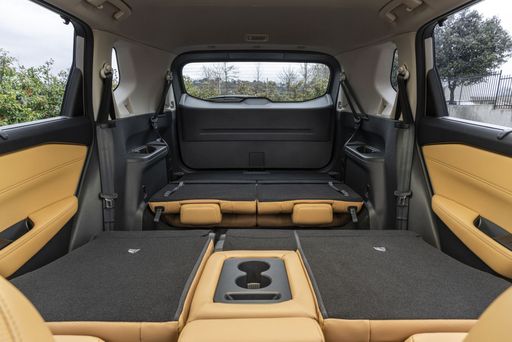
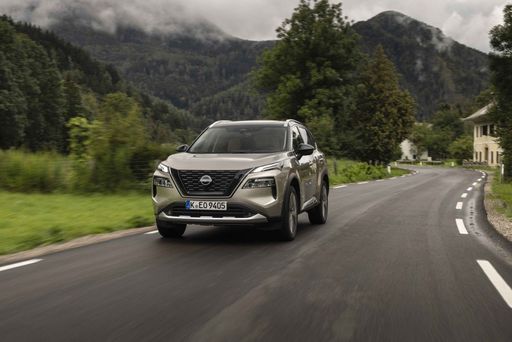
Starting with the Nissan X-Trail, this SUV boasts a more contemporary design with a length of 4680 mm, width of 1840 mm, and height of 1720 mm, giving it a robust road presence. It can accommodate either 5 or 7 passengers, enhancing its family-oriented functionality.

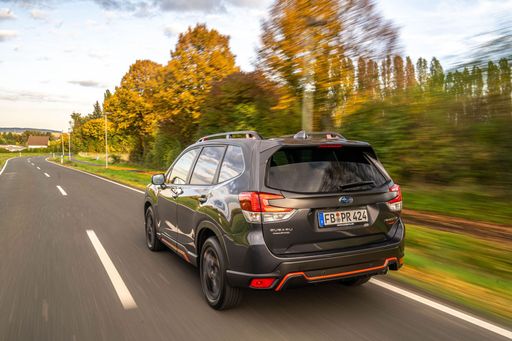
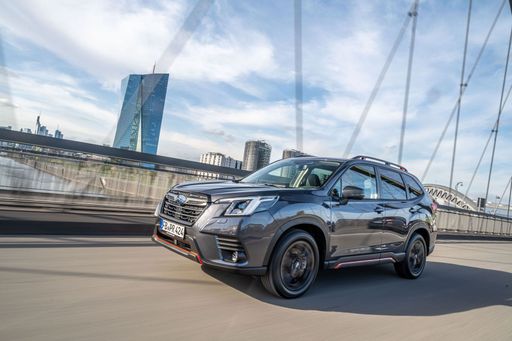
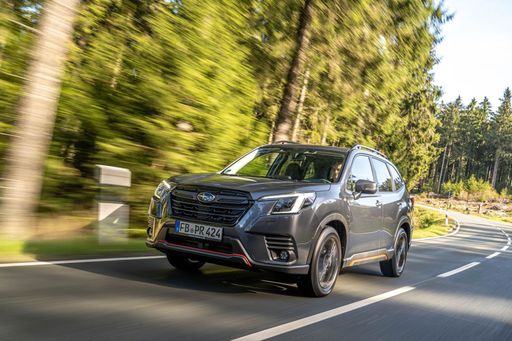
Meanwhile, the Subaru Forester has a slightly more classic SUV appearance. With dimensions of 4670 mm in length, 1830 mm in width, and 1730 mm in height, the Forester offers a similar roomy interior, albeit with a fixed seating capacity of 5.

Forester

Performance and Engine Options

The Nissan X-Trail is a versatile performer, available with both petrol MHEV and full hybrid powertrains. Its engines output between 163 and 213 horsepower, allowing the X-Trail to accelerate from 0 to 100 km/h in as little as 7 seconds, depending on the variant. Coupled with a curb weight ranging from 1668 to 1961 kg and a fuel consumption of 5.7 to 6.9 L/100km, it offers a balanced combination of power and efficiency.

On the other hand, the Subaru Forester sticks to its guns with a reliable petrol MHEV engine. It delivers between 136 and 150 horsepower, which translates to a somewhat more sedate acceleration time of 11.8 to 12.2 seconds for 0 to 100 km/h. With a fuel consumption of 8.1 L/100km, the Forester is designed more for consistent performance than outright speed.

X-Trail

On the Road: Drive Type and Handling

Both SUVs offer all-wheel drive configurations, but the X-Trail gives additional flexibility with a front-wheel drive option for its variants. The Subaru Forester, however, is fully committed to all-wheel drive, ensuring that it remains a stalwart on challenging terrains.

The Nissan X-Trail's modern CVT and reduction gearbox ensure smooth transitions between gear shifts, while the Forester's CVT is known for its reliability and continuous adaptability across various driving conditions.

Forester

Technology and Innovations

When it comes to innovations, both vehicles bring a host of technologies to enhance the driving experience. The Nissan X-Trail is equipped with a cutting-edge hybrid system that not only boosts efficiency but also offers significant torque, reaching up to 525 Nm. In contrast, the Subaru Forester comes with a modest 0.6 kWh battery capacity to support its MHEV setup, providing additional fuel savings and environmental benefits.

Safety is a focal point for both SUVs. The X-Trail features advanced driver-assist technologies, while the Forester delivers with its renowned EyeSight Driver Assist Technology, enhancing road safety for both driver and passengers.

X-Trail

Conclusion

Choosing between the Nissan X-Trail and the Subaru Forester largely depends on what you're seeking in an SUV. If you prioritize power and the flexibility of drive configurations, the Nissan X-Trail stands out with its robust hybrid options and dynamic performance. On the contrary, the Subaru Forester serves as an ideal choice for those who value all-wheel drive reliability and a time-tested design.

In a constantly evolving automotive landscape, both vehicles continue to uphold their reputations as trustworthy family SUVs, each with its own set of strengths and innovations designed to enhance the driving journey.

Here’s where it gets real: The technical differences in detail

Forester

Costs and Efficiency:

When it comes to price and running costs, the biggest differences usually appear. This is often where you see which car fits your budget better in the long run.

Nissan X-Trail is marginally cheaper – starting at 34,200 £ , while the Subaru Forester costs 34,700 £ . That’s a price difference of around 548 £.

Fuel consumption also shows a difference: the Nissan X-Trail uses 5.7 L/100km and is clearly more efficient than the Subaru Forester with 8.1 L/100km. The difference is about 2.4 L/100km.

X-Trail

Engine and Performance:

Power, torque and acceleration are the classic benchmarks for car enthusiasts – and here, some clear differences start to show.

When it comes to engine power, the Nissan X-Trail offers clearly more power – delivering 213 HP compared to 136 HP. That’s roughly 77 HP more horsepower.

When accelerating from 0 to 100 km/h, the Nissan X-Trail is significantly quicker – completing the sprint in 7 s, while the Subaru Forester takes 12.2 s. That’s about 5.2 s quicker.

There’s also a difference in torque: the Nissan X-Trail delivers significantly more torque with 525 Nm compared to 182 Nm. That’s about 343 Nm more.

Forester

Space and Everyday Use:

Whether family car or daily driver – which one offers more room, flexibility and comfort?

Seats: Nissan X-Trail offers more seats – 7 vs 5.

In terms of curb weight, Nissan X-Trail is only slightly lighter – 1,668 kg compared to 1,693 kg. The difference is around 25 kg.

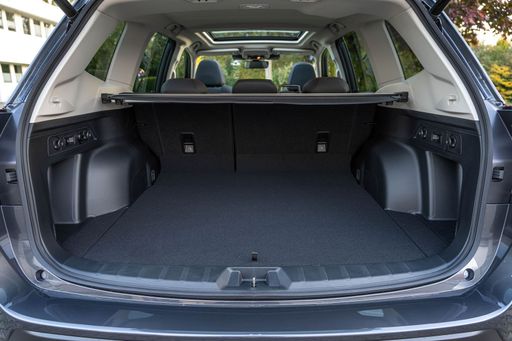
Looking at boot space, the Nissan X-Trail offers somewhat more boot space – 585 L compared to 508 L. That’s a difference of about 77 L.

When it comes to payload, the Nissan X-Trail carries slightly more – 574 kg compared to 492 kg. That’s a difference of about 82 kg.

Who wins the race in the data check?

The Nissan X-Trail stands well ahead of its rival in the objective data comparison.
This result only shows which model scores more points on paper – not which of the two cars feels right for you.

from £34,200
X-Trail

Nissan X-Trail

  • Engine Type : Petrol MHEV, Full Hybrid
  • Transmission : Automatic
  • Drive Type : Front-Wheel Drive, All-Wheel Drive
  • Power HP : 163 - 213 HP
  • Consumption L/100km : 5.7 - 6.9 L/100km
Subaru Forester
Nissan X-Trail

Costs and Consumption

View detailed analysis

Engine and Performance

View detailed analysis

Dimensions and Body

View detailed analysis

Subaru Forester

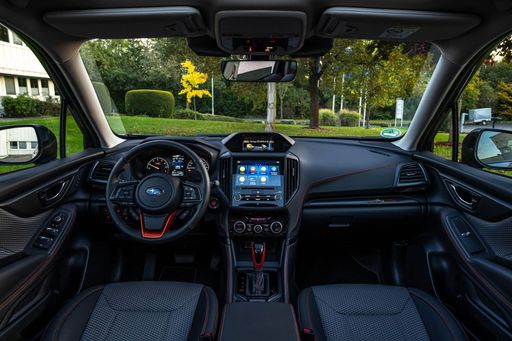
The Subaru Forester is a practical all-rounder that quietly does everything right, with roomy comfort, excellent visibility and a real fondness for weekend adventures off the beaten path. It won't set your pulse racing like a sports car, but for buyers who prize reliability, safety and sensible charm, it's a brilliantly steady companion with a cheeky streak.

details

Nissan X-Trail

The Nissan X-Trail is a roomy, no-nonsense family SUV that mixes sensible practicality with a quietly modern look, making it an easy choice for busy lives and weekend escapes. It drives with calm confidence, delivers a comfortable ride and sensible tech, and won’t demand drama while doing the everyday heavy lifting.

details
Subaru Forester
Nissan X-Trail

Costs and Consumption

Price
34,700 - 42,200 £
Price
34,200 - 50,500 £
Consumption L/100km
8.1 L/100km
Consumption L/100km
5.7 - 6.9 L/100km
Consumption kWh/100km
-
Consumption kWh/100km
-
Electric Range
-
Electric Range
-
Battery Capacity
-
Battery Capacity
-
co2
183 g/km
co2
131 - 161 g/km
Fuel tank capacity
-
Fuel tank capacity
-

Dimensions and Body

Body Type
SUV
Body Type
SUV
Seats
5
Seats
5 - 7
Doors
-
Doors
-
Curb weight
1,693 - 1,739 kg
Curb weight
1,668 - 1,961 kg
Trunk capacity
508 L
Trunk capacity
177 - 585 L
Length
-
Length
-
Width
1,830 mm
Width
1,840 mm
Height
-
Height
-
Max trunk capacity
-
Max trunk capacity
-
Payload
446 - 492 kg
Payload
432 - 574 kg

Engine and Performance

Engine Type
Petrol MHEV
Engine Type
Petrol MHEV, Full Hybrid
Transmission
Automatic
Transmission
Automatic
Transmission Detail
CVT
Transmission Detail
CVT, Reduction Gearbox
Drive Type
All-Wheel Drive
Drive Type
Front-Wheel Drive, All-Wheel Drive
Power HP
136 HP
Power HP
163 - 213 HP
Acceleration 0-100km/h
12.2 s
Acceleration 0-100km/h
7 - 9.6 s
Max Speed
-
Max Speed
-
Torque
182 Nm
Torque
300 - 525 Nm
Number of Cylinders
4
Number of Cylinders
3
Power kW
100 kW
Power kW
120 - 157 kW
Engine capacity
1,995 cm3
Engine capacity
1,497 cm3

General

Model Year
2,025
Model Year
2,025
CO2 Efficiency Class
G
CO2 Efficiency Class
F, D, E
Brand
Subaru
Brand
Nissan
DriveDuel uses data analysis and artificial intelligence to evaluate vehicle data and create content. Content is regularly reviewed and improved. The displayed prices are estimates based on German list prices, adjusted to the respective country’s VAT. Country-specific registration taxes are not included. This information is not legally binding.