VS

Suzuki Ignis vs Kia Picanto comparison

Compare performance (83 HP vs 68 HP), boot space and price (15,600 £ vs 15,300 £ ) at a glance. Find out which car is the better choice for you – Suzuki Ignis or Kia Picanto?

Suzuki Ignis vs Kia Picanto: Key differences

Suzuki Ignis

4.7 (1 Reviews)
rate
  • somewhat more power
  • moderately more efficient
  • somewhat quicker 0–100 km/h
  • visibly lighter
details

Kia Picanto

4.5 (3 Reviews)
rate
  • very slightly cheaper
details

By Achim Sedelmaier

Ignis

The Urban Warriors: Kia Picanto VS Suzuki Ignis

In the bustling realm of compact cars, two standout contenders square off in a match of practicality, economy, and style. The Kia Picanto, a classic hatchback, meets the Suzuki Ignis, a spirited SUV, in a head-to-head comparison. With both vehicles boasting unique attributes, let's delve into their technical aspects and innovations to see which holds the upper hand in the competitive urban landscape.
Picanto

Design and Dimensions

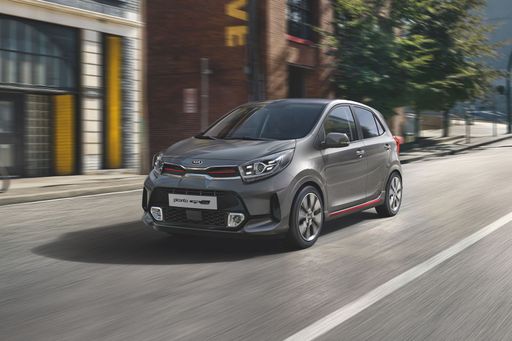
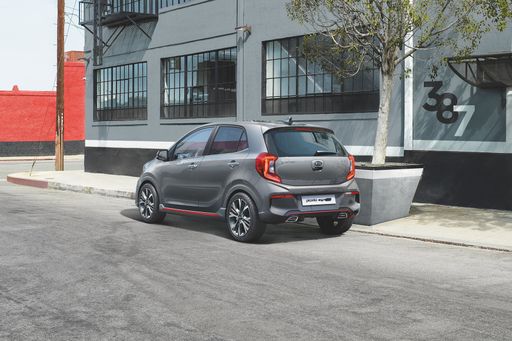
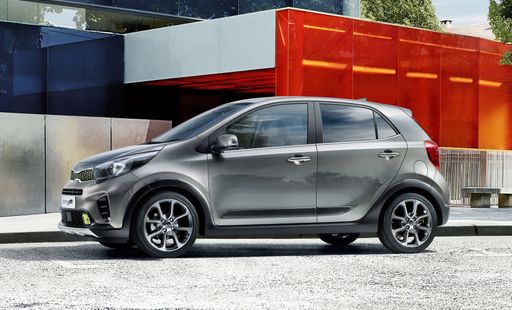
The Kia Picanto flaunts a sleek hatchback design, measuring 3605mm in length, 1595mm in width, and 1485mm in height. Sporting a modern, agile appearance, it emphasizes compactness, crucial for urban driving. With a curb weight ranging from 981 to 991 kg, it's a lightweight contender in its category.

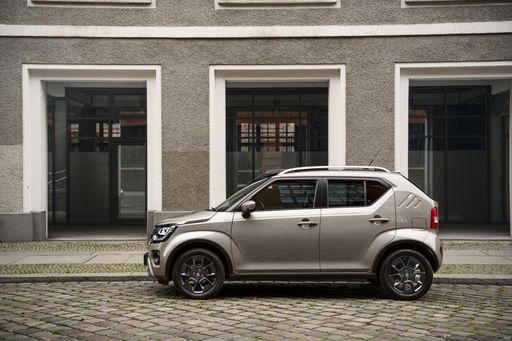
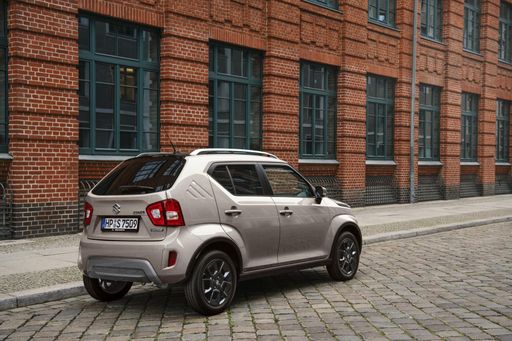
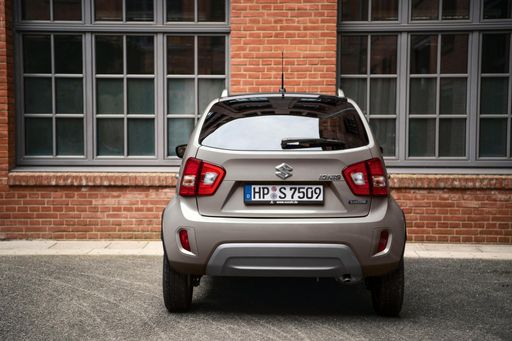
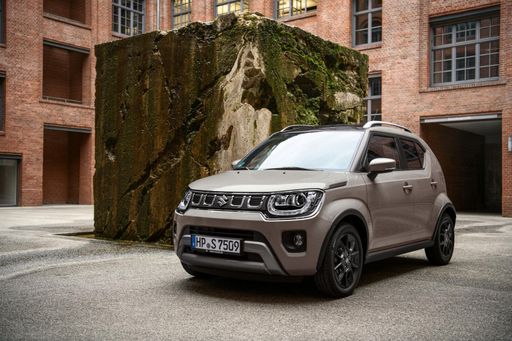
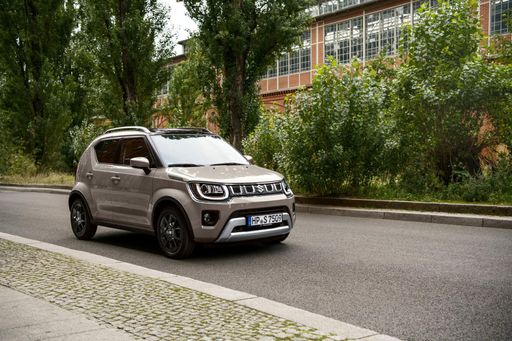
On the other hand, the Suzuki Ignis exudes a charming SUV stance, slightly taller and broader, measuring 3700mm long, 1690mm wide, and 1605mm high. With a curb weight between 935 and 995 kg, it’s an agile performer despite its SUV styling, promising more utility with its raised profile.

Ignis

Performance and Efficiency

Under the hood, the Picanto offers multiple petrol engine options, with power outputs of 63 to 79 HP. Drivers can choose between a manual gearbox or an automated manual transmission, promoting a personalized driving experience. It achieves a fuel consumption of 5.2 to 5.7 L/100km, making it a fuel-efficient choice for city commutes. With a CO2 output ranging from 118 to 130 g/km and a CO2 efficiency class of D, it maintains an eco-friendly profile.

The Suzuki Ignis, powered by a petrol MHEV engine delivering 83 HP, is available with both manual and CVT transmissions. Its fuel efficiency shines, consuming between 4.9 and 5.4 L/100km, and it offers a slightly better CO2 efficiency class of C or D, with emissions ranging from 110 to 122 g/km. Its hybrid capability aids in improved efficiency without sacrificing power.

Picanto

Performance Specs

The Picanto accelerates from 0 to 100 km/h in times ranging from 13.1 to 18.2 seconds, reaching a top speed of up to 159 km/h. It offers a torque range of 95 to 115 Nm, supporting its quick city maneuverability.

The Ignis accelerates to 100 km/h in 12.7 to 12.8 seconds, peaking at a maximum speed between 155 and 165 km/h. Its 107 Nm torque output, coupled with either front-wheel or all-wheel drive, affirms its versatile capabilities over varying terrains.

Ignis

Interior and Convenience

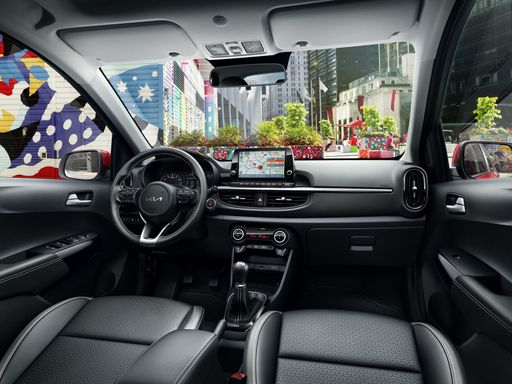
Inside the Picanto, occupants are greeted with a practical layout capable of seating up to five individuals. It offers a trunk capacity of 255 liters, providing ample space for everyday errands. The SUV design of the Ignis accommodates similar seating, but with a slightly more generous trunk capacity ranging up to 267 liters, depending on the setup, ideal for urban explorers requiring additional cargo space.

Picanto

The Verdict

Choosing between the Kia Picanto and Suzuki Ignis largely depends on the driver's lifestyle and urban driving needs. The Picanto serves those seeking compact efficiency and maneuverability, whereas the Ignis appeals to drivers looking for a higher driving stance and versatile functionality. Both vehicles boast impressive efficiency and modern technology, reinforcing their positions as top choices in the small car market. In this showdown, the decision twinkles down to personal taste, driving preference, and lifestyle fit.

Here’s where it gets real: The technical differences in detail

Ignis

Costs and Efficiency:

Price and efficiency are key factors when choosing a car – and this is often where the real differences emerge.

Kia Picanto is very slightly cheaper – starting at 15,300 £ , while the Suzuki Ignis costs 15,600 £ . That’s a price difference of around 308 £.

Fuel consumption also shows a difference: the Suzuki Ignis uses 4.9 L/100km and is moderately more efficient than the Kia Picanto with 5.5 L/100km. The difference is about 0.6 L/100km.

Picanto

Engine and Performance:

Power, torque and acceleration say a lot about how a car feels on the road. This is where you see which model delivers more driving dynamics.

When it comes to engine power, the Suzuki Ignis offers somewhat more power – delivering 83 HP compared to 68 HP. That’s roughly 15 HP more horsepower.

When accelerating from 0 to 100 km/h, the Suzuki Ignis is somewhat quicker – completing the sprint in 12.7 s, while the Kia Picanto takes 14.6 s. That’s about 1.9 s quicker.

There’s also a difference in torque: the Suzuki Ignis delivers slightly more torque with 107 Nm compared to 96 Nm. That’s about 11 Nm more.

Ignis

Space and Everyday Use:

Cabin size, boot volume and payload all play a role in everyday practicality. Here, comfort and flexibility make the difference.

Both vehicles offer seating for 5 people.

In terms of curb weight, Suzuki Ignis is visibly lighter – 935 kg compared to 1,124 kg. The difference is around 189 kg.

When it comes to payload, the Suzuki Ignis carries moderately more – 395 kg compared to 332 kg. That’s a difference of about 63 kg.

Who wins the race in the data check?

The Suzuki Ignis stands well ahead of its rival in the objective data comparison.
This result only shows which model scores more points on paper – not which of the two cars feels right for you.

from £15,600
Ignis

Suzuki Ignis

  • Engine Type : Petrol MHEV
  • Transmission : Manuel, Automatic
  • Drive Type : Front-Wheel Drive, All-Wheel Drive
  • Power HP : 83 HP
  • Consumption L/100km : 4.9 - 5.4 L/100km
Suzuki Ignis
Kia Picanto

Costs and Consumption

View detailed analysis

Engine and Performance

View detailed analysis

Dimensions and Body

View detailed analysis

Suzuki Ignis

The Suzuki Ignis is a cheeky compact crossover that turns city chores into cheerful adventures, with chunky styling and a surprisingly practical cabin. It won't pretend to be a sports car, but its nimble manners, low running costs and ample personality make it an ideal pick for urban buyers who want fun without pretension.

details

Kia Picanto

Kia Picanto is a cheeky city hatch that squeezes surprising style, practicality and a smile-inducing drive into a pocket-friendly package. It’s ideal for urban buyers who want fuss-free running, effortless parking and a car that punches above its class without pretending to be anything it’s not.

details
Suzuki Ignis
Kia Picanto

Costs and Consumption

Price
15,600 - 19,500 £
Price
15,300 - 19,300 £
Consumption L/100km
4.9 - 5.4 L/100km
Consumption L/100km
5.5 - 5.9 L/100km
Consumption kWh/100km
-
Consumption kWh/100km
-
Electric Range
-
Electric Range
-
Battery Capacity
-
Battery Capacity
-
co2
110 - 122 g/km
co2
126 - 134 g/km
Fuel tank capacity
30 - 32 L
Fuel tank capacity
-

Dimensions and Body

Body Type
SUV
Body Type
Hatchback
Seats
4 - 5
Seats
4 - 5
Doors
5
Doors
-
Curb weight
935 - 995 kg
Curb weight
1,124 - 1,131 kg
Trunk capacity
204 - 267 L
Trunk capacity
-
Length
3,700 mm
Length
-
Width
1,690 mm
Width
1,595 mm
Height
1,605 mm
Height
-
Max trunk capacity
1,086 - 1,100 L
Max trunk capacity
-
Payload
335 - 395 kg
Payload
253 - 332 kg

Engine and Performance

Engine Type
Petrol MHEV
Engine Type
Petrol
Transmission
Manuel, Automatic
Transmission
Manuel, Automatic
Transmission Detail
Manual Gearbox, CVT
Transmission Detail
Manual Gearbox, Automated Manual
Drive Type
Front-Wheel Drive, All-Wheel Drive
Drive Type
Front-Wheel Drive
Power HP
83 HP
Power HP
68 HP
Acceleration 0-100km/h
12.7 - 12.8 s
Acceleration 0-100km/h
14.6 - 17.2 s
Max Speed
155 - 165 km/h
Max Speed
-
Torque
107 Nm
Torque
96 Nm
Number of Cylinders
4
Number of Cylinders
3
Power kW
61 kW
Power kW
50 kW
Engine capacity
1,197 cm3
Engine capacity
998 cm3

General

Model Year
2020
Model Year
2025
CO2 Efficiency Class
C, D
CO2 Efficiency Class
D
Brand
Suzuki
Brand
Kia
DriveDuel uses data analysis and artificial intelligence to evaluate vehicle data and create content. Content is regularly reviewed and improved. The displayed prices are estimates based on German list prices, adjusted to the respective country’s VAT. Country-specific registration taxes are not included. This information is not legally binding.